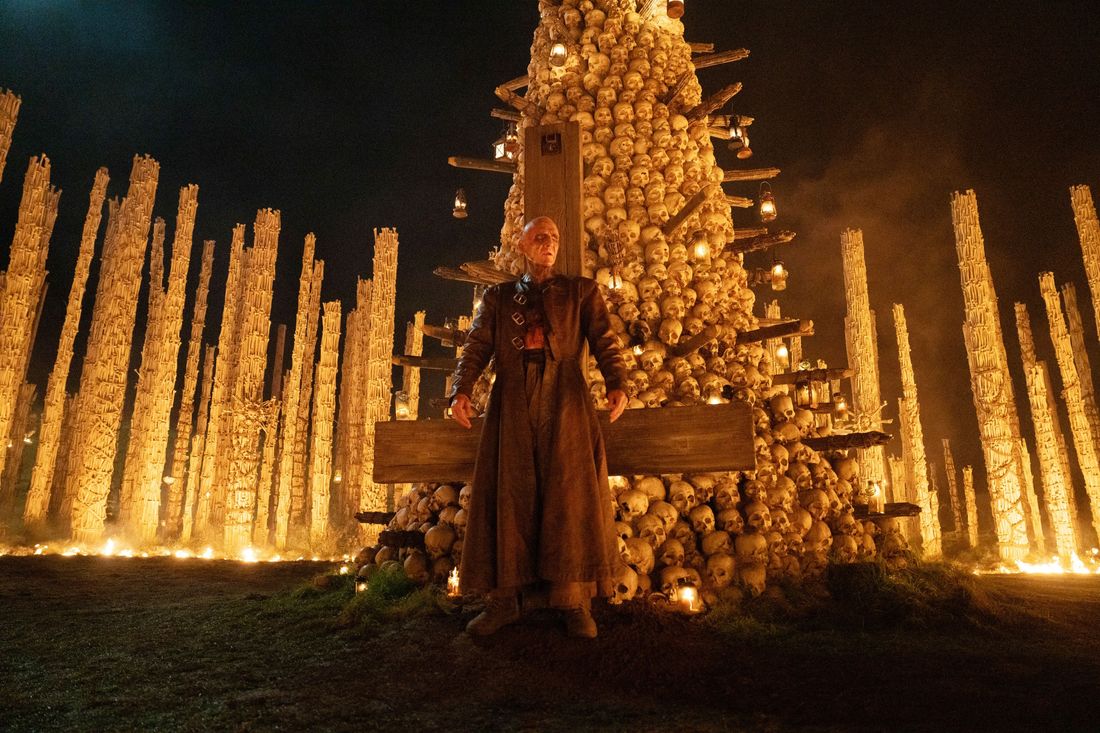
It might sound like an exaggeration to say Ralph Fiennes gives the best performance of his career in The Bone Temple, and I initially thought I was overreacting. But by the end of Nia DaCosta’s sequel to Danny Boyle’s 28 Years Later, I started to genuinely believe it. At the very least, it’s the most complete and nuanced portrayal we’ve ever seen from him. It’s not about showy, dramatic acting; in fact, there’s a surprisingly memorable scene – spoiler alert! – where he performs a dance to Iron Maiden while pretending to be the Devil. Instead, the performance showcases the full range of Fiennes’ talents: his natural ability to play menacing characters, his surprising capacity for tenderness, and his willingness to embrace the unusual, a quality he’s increasingly shown as he’s aged. His character, Dr. Ian Kelson, was already intriguing in 28 Years Later – a doctor turned artist building a monument to death from human bones – in a world where the British Isles are isolated after a second outbreak of the Rage Virus. But in this sequel, he becomes something more: a melancholic figure who embodies the past, one of the few remaining people who remembers life before society collapsed and the values people once held, however imperfectly. There’s a telling moment where, after removing arrows from an infected man, he cheerfully tells him the service is free, as Kelson is part of the National Health Service.
Ralph Fiennes doesn’t just deliver a strong performance; his role is essential to the film’s success. Writer Alex Garland often prioritizes ideas over character development, and while The Bone Temple is an improvement over 28 Years Later, it’s weighed down by heavy themes of nihilism that risk turning it into a bleak and unnecessarily violent experience. This tendency of Garland’s explains why the isolated Britain depicted in the films feels more like a thought experiment than a real place. It’s hard to imagine truly living in constant fear of turning into a monster, or of others doing the same, but the communities we see in both movies don’t quite capture that desperate reality. (Most of the characters seem strangely resilient, considering the circumstances.) Kelson, who sings Duran Duran while collecting bodies in the countryside, is the only character who convincingly portrays someone witnessing the end of the world, or at least its continuation. He has a strange calmness that initially seems like insanity, but closer inspection reveals a deep sadness for what humanity has become. Through him, the film becomes both funnier and more poignant as it explores themes of suffering.
Ralph Fiennes has always excelled at playing villains. He was terrifying as the SS officer Amon Göth in Schindler’s List, a role that earned him an Oscar, and he seemed perfectly cast as the sinister Lord Voldemort. There’s something subtly unsettling about his good looks that makes him more convincing as complex, untrustworthy characters – like his enigmatic Hungarian aristocrat in The English Patient – than as simple romantic leads, as seen in his role as a politician in Maid in Manhattan. In The Bone Temple, a running gag culminates in Sir Lord Jimmy Crystal (Jack O’Connell) and his cult of Jimmy Savile-inspired killers mistaking Kelson for the Lord of Darkness when they first see him from afar. It’s understandable, considering Kelson lives in a palace built from human skulls, his skin is red from protective iodine, and he regularly communicates with the leader of the infected, whom he calls Samson (Chi Lewis-Parry). However, Kelson is essentially a saint in this desolate world, even if he believes the only kindness he can offer is a peaceful death. When Samson begins seeking more of the morphine darts Kelson uses to calm him – even zombies crave relief – Kelson starts tending to his wounds, sharing the drugs, and eventually dancing with him to snippets of 1980s music.
The most powerful moments in the film involve Kelson and a huge, infected creature experiencing a hallucinatory state amidst the beautiful but terrifying British countryside – even more striking than the now-famous scene of Kelson dramatically reciting Iron Maiden lyrics to a group of wild, plague-ridden children who’ve never heard metal music. When Kelson begins spending time with Samson, a man capable of incredible violence, he’s knowingly flirting with danger, accepting a fate he’s already reconciled with. However, Fiennes portrays these scenes not as a reckless pursuit of death, but with surprising gentleness, his eyes radiating compassion despite the grim surroundings. Kelson looks beyond the monstrous exterior of those infected by the virus and sees the remnants of the people they once were, and it moves him. It’s easy to succumb to despair, which is why it’s often presented as inevitable, and why Jimmy maintains control over his followers by letting them embrace destruction instead of trying to rebuild in a broken world. Fiennes, joyfully dancing in the sunlight with his chosen companion, provides a wonderfully unexpected contrast. Kelson isn’t trying to be a hero and save everyone from the virus, though his final act as a doctor does offer a glimmer of hope. Instead, he embodies how to maintain one’s humanity in the face of unimaginable horror – a quieter achievement, perhaps, but one that feels profoundly meaningful.
Read More
- Off Campus Season 1 Soundtrack Guide
- Euphoria Season 3’s New R-Rated Sydney Sweeney Scene Proves The Show Is Trolling Us
- Gold Rate Forecast
- All Golden Ball Locations in Yakuza Kiwami 3 & Dark Ties
- DoorDash responds after customer uses AI to make food look bad and get a refund
- Jon Bernthal Explains Why Marvel Let Him Make The Darkest Punisher Story Ever
- Dutton Ranch Review: Paramount+’s New Western Takes All The Best Parts Of Yellowstone & Makes Them Better
- Taco Bell combines two fan-favorite menu items in new Cantina Chicken Mexican Pizza
- YouTuber arrested after viral AI bodycam videos spark real police complaints
- The 2026 Cannes Film Festival Standing-O-Meter
2026-01-17 16:54