We’ve all seen amazing fan art online – maybe a cool new version of a character from Diablo 4 or a funny comic about the characters in Honkai: Star Rail. It’s special when someone reimagines a world you love, and it can inspire you to create your own art! This isn’t just about learning to draw; it’s about connecting with other fans and sharing your passion for games. This guide is here to help you go from enjoying fan art to making your own, covering the basics of character design, finding your own artistic style, and showing your work to the world.
Key Takeaways
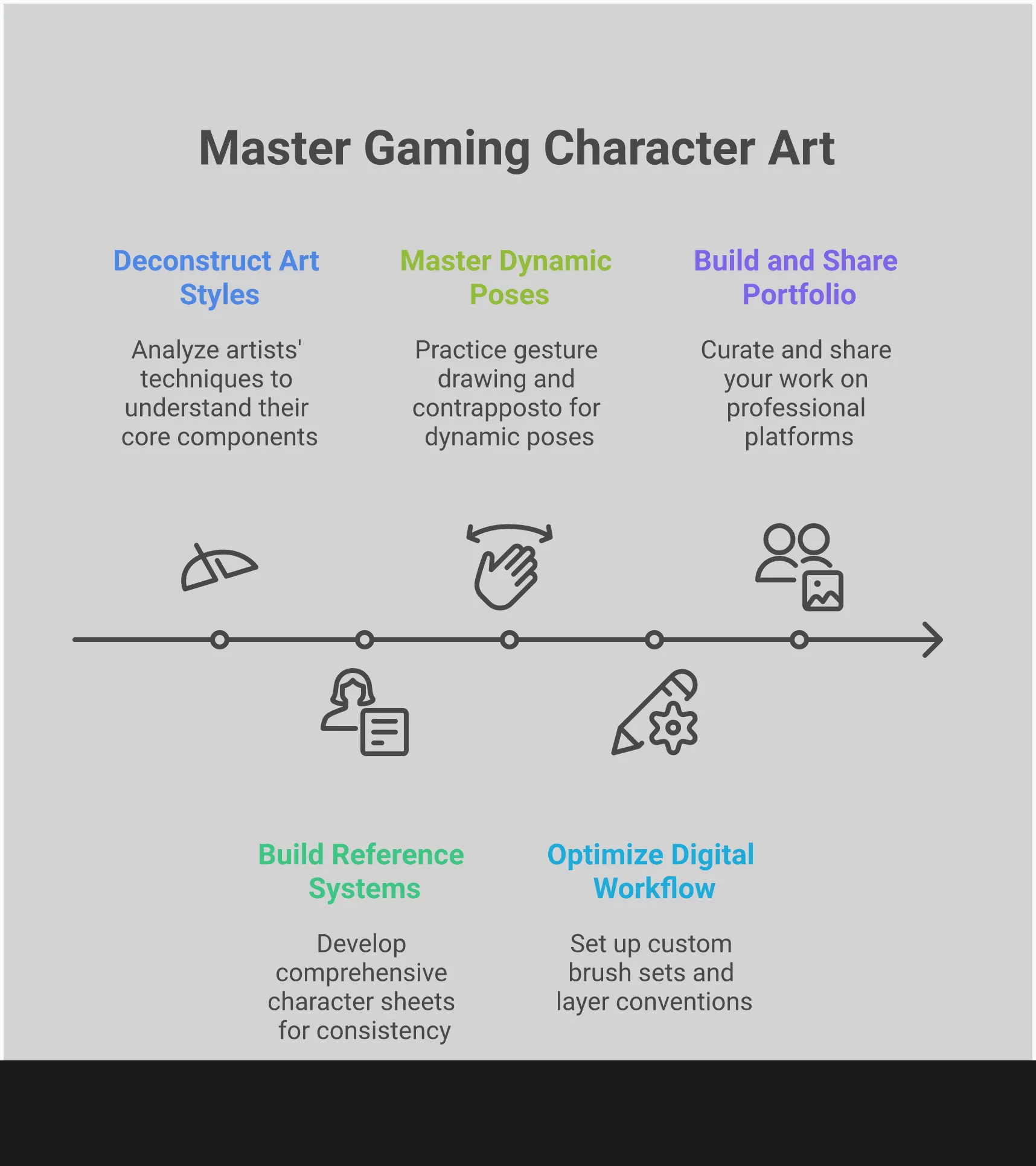
- Break Down the Styles You Love to Understand Them: Instead of just trying to copy an artist, analyze their core techniques—like line weight, color palettes, and shapes—to learn the “why” behind their work.
- Create Your Own Style by Blending Your Inspirations: Your unique artistic voice comes from combining elements from various artists and genres you admire. Mix and match techniques to create something that feels authentic to you.
- Build a Strong Portfolio and Share It with the Community: Curate your best pieces to tell a story about your skills, then post your work on the right platforms to get feedback and connect with other passionate gamers and artists.
Why Is Fan Art So Important to Gamers?
Fan art is essential to many gaming communities. It’s about more than just drawing characters—it’s how players truly connect with the games they enjoy. When fans create art, they express themselves, reimagine game worlds, and bond with others who share their enthusiasm. This creative process turns a personal gaming experience into a collective cultural movement, building strong communities through each piece of artwork.
The Creative Freedom of Fan Art
Fan art is amazing because it lets you be completely creative. You can take your favorite characters and stories and imagine new possibilities – like what if a hero had a different look, or characters from different games teamed up? It’s a chance to blend your own artistic style with existing designs, drawing inspiration from things like anime, graphic design, or even classic paintings to create something fresh and original. You get to share your unique vision and show others how you interpret the game, resulting in everything from funny comics to beautiful, moving artwork that adds depth to the original story.
How Fan Art Strengthens Gaming Communities
Fan art is a key ingredient in building strong gaming communities. When you create and share your work, you connect with other passionate fans and start a conversation. This tradition of creating art inspired by shared interests has existed for centuries and continues to bring people together. Seeing another artist’s interpretation of a character can give you a new perspective on the game and make you feel connected to something larger than yourself. It builds a sense of shared enthusiasm, uniting individual players into a community that celebrates the games they love, similar to the excitement generated by new trailers.
What Defines Vanripper’s Art Style?
I’m a huge fan of Helltaker, and one of the first things that grabbed me was just how unique the art style is. The creator, Vanripper, really managed to make something that feels both classic and totally new. You can definitely see hints of anime in there, but he blended everything together to create a look that’s distinctly Western and perfectly fits the game’s vibe. It’s seriously captivating, and I can see why so many people love it!
Learning from an artist like Vanripper can help you find your own artistic voice. Instead of simply copying his work, you can analyze how he creates his designs – the choices he makes and the reasons behind them. Understanding these core principles will help you develop your own memorable characters. Let’s explore the most important parts of what makes his art so successful.
Bold Lines and Unique Proportions
Vanripper’s art immediately stands out thanks to its strong, clear lines. These aren’t rough or hesitant; they’re confident and give each character a distinct and solid look. This makes the designs easy to see, even when they’re small. Along with the lines, Vanripper uses unique proportions – characters have sharp angles and exaggerated shapes that help create their strong and often funny personalities. This intentional style is what makes the artwork so striking and memorable.
Striking Color Palettes
The color choices in Helltaker are very intentional. The game mainly uses black, white, and red, which creates a strong, unified, and dramatic look that fits the game’s hellish setting. The stark contrast makes the characters stand out, and the careful use of bright red highlights key elements, such as demonic eyes and striking clothing. This demonstrates that you don’t need many colors to make something visually appealing; a limited but powerful palette can be much more effective at creating a particular atmosphere.
Dynamic Poses and Expressions
The characters in Helltaker aren’t stiff or lifeless. The creator, Vanripper, is skilled at drawing them in energetic poses with exaggerated expressions, which gives each scene a lot of personality. Even during simple conversations, the characters feel real and lively because of their faces and body language. This is especially important for a game where character interactions drive the story. By paying attention to how Vanripper uses movement and expression, you can learn to make your own characters more believable and captivating for players.
How to Study and Adapt an Art Style
Many artists start by admiring the style of others – whether it’s the dark characters in Diablo or the clean designs of a game like Helltaker. It’s common to want to learn how those styles are created. Analyzing an art style is similar to learning a new language; you begin by understanding its basic elements. The point isn’t to copy the style exactly, but to learn the techniques and add them to your own artistic toolkit.
Learning from other artists is like a musician covering a song. They start by mastering the original, but great covers aren’t just copies – they add something new and personal. By carefully studying a style, you gain the skills to create your own work that’s inspired by, but distinctly different from, the source. It’s less about imitation and more about learning and growth. You’re building on the foundation laid by artists you respect, which helps you develop your own unique creative voice.
Break Down Signature Techniques
To truly copy an art style, you first need to understand how it works. Don’t just look at the final result – break it down to its basic parts. Notice the linework: is it heavy or light? How does the artist build characters using shapes? Some styles, like Vanripper’s, clearly borrow from others, but also have a special touch that makes them stand out. Your goal is to investigate and find those unique characteristics.
As you study an artist, create a dedicated file or sketchbook page to record your observations. Take notes on how they use color, depict anatomy, and arrange elements within their work. This hands-on approach to art analysis helps you understand the artist’s choices and see beyond just what’s on the surface.
Use Character Reference Sheets
A really helpful way to learn a new art style is to make your own character reference sheets. This process makes you actively use the style’s rules. Think of a reference sheet as a guide that shows all the important details – like body proportions, colors, facial expressions, and poses. It’s a great way to check how well you understand the style and to make sure your drawings stay consistent.
I’ve been trying this really cool exercise to learn a new art style. I decided to redraw one of my own characters, but completely in that style. It’s amazing how much it helps! It’s not just about seeing how things are drawn, but actually doing it yourself. It really forces you to understand the anatomy and design choices, and it feels like the techniques are sinking in way better than just looking at examples. It’s like building muscle memory for drawing – super effective!
Balance Inspiration with Originality
Don’t try to copy your inspirations exactly – use them to get started, not as a strict guide. It’s common for artists to attempt to recreate a style they admire, but their work often feels flat because it’s missing the original artist’s personal touch. That ‘special something’ comes from individual experiences and a unique creative voice, which can’t be duplicated. The best results happen when you combine what you’ve learned with your own personal perspective.
Focus on developing a unique art style instead of simply copying others. Try combining elements you admire from different artists – like one artist’s line work with another’s coloring – and blend them with your own ideas. Don’t be afraid to experiment and try different things until you find what works for you. The more you mix these influences, the more original and personal your art will become.
Character Design Fundamentals for Gaming
To create truly memorable characters, it’s important to first understand the core elements that make them interesting. Great characters in games aren’t just visually appealing—they feel like they have a background and motivations. Whether you’re designing someone completely new or reimagining an existing character, mastering these basics will give you a strong starting point. The key is to think deeper than just how a character looks and consider what drives them.
Creating a character people remember starts with a clear vision. Their appearance – everything from their clothes to how they stand and their facial expressions – should immediately give you a sense of who they are. Consider characters you love from games like Diablo or Honkai: Star Rail; you understand a lot about them just by looking at them. If you focus on a strong core idea, how that idea changes during development, and the character’s unique personality, you’ll create someone truly engaging and believable.
Build Memorable Characters from Concepts
Good character design begins with a solid idea. Before you start sketching, take time to really understand your character. Think about their history, what drives them, and their personality – are they a happy and awkward friend, or a serious and experienced hero? Knowing this will give you a clear direction for how they should look.
Developing a basic character profile—including personality, goals, and weaknesses—is a great way to make thoughtful design decisions. Consider how a character’s appearance reflects who they are. For instance, a resourceful survivor might wear worn, repaired clothes and carry a useful tool, while a noble knight would likely have gleaming, detailed armor. Everything about a character, from their hair to their footwear, should tell a story and show their role in the world.
Adapt 2D Designs to Your Style
Every artist is inspired by others, and that’s completely natural. It’s good to learn from styles you enjoy, but the trick is to make them your own, not simply imitate. Take Vanripper, the artist behind Helltaker – you can see anime elements in his work, but he ultimately creates a unique style. When you admire a particular style, try to figure out what specifically appeals to you. Is it the strong outlines, the way eyes are drawn, or the colors used?
Identify what you like about the work of artists you admire, and then try using those elements in your own creations. For example, you might be drawn to one artist’s bold shapes but prefer another’s gentle colors. Combining these influences can help you develop a unique and original style. Don’t worry about getting it right away—experimenting and trying different things is key to finding what works best for you.
Show Personality Through Design
Great character designs tell us about a character’s personality just by looking at them. A character’s posture, facial expression, and clothes can reveal a lot. For example, someone standing tall shows confidence, while a hunched posture suggests shyness or defeat. These visual clues are very effective at communicating how a character feels and who they are.
Bring your characters to life by making their expressions and body language more energetic and interesting. Consider how they look when feeling different emotions – really emphasize those feelings! This can make them more captivating and easier to remember. Also, think about how their clothes show who they are and how they live. Someone practical will dress differently than someone who loves attention. Every detail you choose helps build a richer, more complex character.
What Tools Do You Need for Digital Art?
Starting digital art can feel overwhelming, like preparing for something new. While your imagination is the most important thing, having the right equipment can make the process easier and more enjoyable. The best tools for you depend on your own tastes, how much you’re willing to spend, and the kind of art you want to make. Some artists prefer to keep it simple, while others like having a lot of technology at their fingertips.
Fortunately, you don’t need to spend a lot of money to create fantastic character art. The key is to find tools – both software and hardware – that feel comfortable and let your creativity flow. Let’s explore some of the most popular and useful options artists use to design gaming characters, covering everything from the digital programs they use as a canvas to the physical tools that help them create.
Essential Software for Creating Characters
Think of your software as your creative workspace – and there are many excellent programs available. If you’re into 3D, Character Creator is a great tool for making and customizing characters for games built in engines like Unreal or Unity. For 2D art, you’ve got lots of choices. While programs like Clip Studio Paint, Photoshop, and Procreate are widely used by professionals, free options like Krita and GIMP are also incredibly powerful.
For artists creating characters on iPads, Procreate is often considered a top choice thanks to its easy-to-use yet powerful features. The best app really depends on personal preference, so it’s good to experiment. Luckily, many professional art programs offer free trials, letting you test them out before you buy.
The Right Hardware for Digital Artists
Although you can create digital art with a mouse, a graphics tablet will dramatically improve your experience. It lets you vary line thickness and create more natural strokes thanks to its pressure sensitivity. Tablets come in two main types: less expensive models where you draw on a pad while watching your computer screen, and more advanced display tablets with a built-in screen for direct drawing. Wacom and Huion are leading brands in the graphics tablet market.
Using an iPad and Apple Pencil is another great choice. With the right app, it’s like having a powerful, portable art studio. Many professional artists consider Procreate to be the best digital art app available for iPad. No matter what you choose, make sure your computer has enough power to run your software without slowing down, especially if you’ll be working with big files or 3D designs.
Create Dynamic Gaming Characters
As a huge fan of games, I’ve always been fascinated by characters that really feel real. It’s more than just how they look – it’s about personality! Think about your favorite heroes or even the quirky sidekicks – what makes you remember them? For me, it’s how their design tells a story. It’s not just luck when a character feels alive; it’s a deliberate choice by the artists. I’ve realized that focusing on things like color, how a character expresses emotion, and keeping their style consistent are key. If you nail those things, you can create characters that players connect with on a deeper level, and honestly, that makes the whole game world so much more immersive and believable.
Use Color to Tell a Story
Color is a remarkably effective way to quickly communicate a character’s personality in design. A thoughtful color scheme can give players a sense of who a character is before they do anything or speak. For example, are they a passionate fighter using reds and oranges, or a secretive character hidden in dark purples and blacks? As one artist observed about a particular style, it was instantly recognizable as unique. This shows how distinctive color choices can create a whole visual style. When selecting colors, don’t just choose what looks good to you. Consider how colors make people feel, and build a palette that represents your character’s personality, history, and place in the story.
Add Humor and Emotion to Your Designs
A character’s personality comes through in more than just what they say—it’s also shown in their body language, facial expressions, and how they move. Adding genuine emotion to your character designs is what makes them feel real and helps audiences connect with them. As one designer noted, combining emotion, action, and setting creates depth. Small details like a slight smile, weary eyes, or a confident posture can reveal a lot. Consider how games like Palworld use humor in unexpected places, or how Honkai: Star Rail creates memorable characters with strong expressions. These emotional connections are key to making players care about a cast. Try practicing sketching different expressions and poses to find creative ways to show your character’s personality, rather than simply telling it.
Keep a Cohesive Style Across Characters
Characters in your game should be unique, but also feel like they inhabit the same world. A consistent art style is what creates that sense of unity. It’s especially important when you have many characters sharing a space, like in a comic or animation. To achieve this, establish clear design rules – think about things like line thickness, the shapes you use, and how you create textures – and then follow those rules consistently. This makes the game world feel more real and engaging. Whether you’re creating heroes or villains, making sure everyone follows the same artistic guidelines will give your game a polished, cohesive look.
How to Develop Your Unique Artistic Voice
Learning from artists you admire is a great way to improve, but the most important thing is to find your own unique style. Your artistic voice is like your signature – it’s what combines your preferences, skills, and personality to make your work instantly identifiable. It’s what lets people look at a piece and immediately know who created it. You don’t need to create a completely original style all on your own, though. Every artist is influenced by those who came before them.
Finding your artistic voice is a journey of self-discovery. It’s about understanding your passions and deciding what message you want to convey through your work. Your voice is shaped by everything you’ve been inspired by, but ultimately comes from your own unique perspective. For example, you might admire the vibrant characters in Honkai: Star Rail and the dark mood of Diablo 4. Your individual style emerges when you combine those influences. The important thing is to go beyond copying others and start putting your own interpretation and creativity into your work. That’s when you transition from learning to truly becoming an artist.
Move Beyond Copying
All artists begin by learning from others – it’s how we master basic skills like drawing or composition. However, eventually you need to develop your own unique style. For example, while artist Vanripper’s work on Helltaker shows hints of anime, it’s clearly his own distinct look. Many have tried to copy it, but as one fan pointed out, they often miss the unique emotional quality that makes his style special. That special quality is an artist’s voice – something that can’t be copied because it comes from their individual choices and how they see the world. Think of copying as a way to learn and understand, not as the end result.
Blend Your Influences
Developing a personal style is about becoming a creative mixer, combining things you love into something original. Don’t limit yourself to just one influence. The most compelling art often comes from surprising combinations – imagine blending the strong lines of comics with the gentle colors of a Ghibli film, or combining character designs from one game with the detailed environments of another. Start collecting inspiration – screenshots, movie scenes, paintings, and art from others – in a digital mood board. This mixing of influences is often what makes fan art so interesting, as artists put a fresh spin on familiar worlds. The more diverse your inspiration, the richer your visual toolkit will become.
Build Your Gaming Art Portfolio
Your portfolio isn’t just a collection of your best work—it’s a showcase of your professional abilities. It’s the most important tool you have for demonstrating what you can do. Whether you’re applying for a job or trying to gain recognition, a strong portfolio is essential. It allows you to present your skills, style, and creative vision in a way that tells your story as an artist. Think of it as the key to landing your ideal opportunity – you need to be ready to impress with your strongest work.
Creating a strong portfolio requires careful selection. Don’t include everything you’ve ever made – instead, choose pieces that showcase your skills and the type of work you want to do. Each item should demonstrate a specific ability, like understanding anatomy, creating exciting poses, or using color effectively. A good portfolio proves you’re not just talented, but also a deliberate artist who knows how to present work professionally. Think of it as the difference between showing someone a disorganized collection and giving them a carefully designed art book that tells your story.
Showcase Your Character Design Skills
Now’s your chance to show you can create memorable characters. Great character design isn’t just about making one cool image – it’s about building a group that feels believable within the same setting. For example, a team of heroes should share a consistent look, even if each member has a distinct design. This demonstrates your ability to build a world and maintain a unified art style, which is essential for game development.
When building your portfolio, showcase a diverse range of characters to highlight your abilities. Include heroes, villains, supporting characters, and creatures to prove you can handle any design challenge. Don’t hesitate to create fan art – reimagining existing characters demonstrates your ability to understand and adapt established designs while still making them your own.
Organize Your Work for Impact
The way you showcase your artwork is crucial – it’s as important as the art itself. A messy or disorganized portfolio can overshadow even amazing pieces. Begin by displaying your strongest work right away to immediately capture attention. Then, arrange your art to create a clear and engaging narrative. Try grouping pieces by project or theme to show a consistent style and flow. For example, if you’re presenting a character, you could start with the first concept sketch, then show a refined version with different angles, and finish with a lively illustration of the character in action.
Presenting your work this way goes beyond just looking good – it reveals how you think as an artist. Showing a character in various poses and with different emotions proves you understand what makes people tick and how to tell a story. It demonstrates your ability to create characters that feel real and engaging. Plus, a neat and organized portfolio helps potential employers and fans easily see your skills and the careful thought you put into your work.
Share Your Art with the Gaming Community
Making art is fantastic, but sharing it is where things truly come alive. It’s how you connect with others who appreciate your work, improve your skills, and become part of the broader gaming community. While it can be scary to put your work out there, it’s essential for finding your own style. Gamers are enthusiastic and love to see fresh, creative interpretations of the games and characters they enjoy. When you share your creations, you’re not just showing off your talent—you’re helping to build the culture around those games.
Fan art isn’t just about showing what you can do; it’s about adding your own special touch to the game’s world. When you share your work, it can start conversations, encourage other artists, and help you connect with fellow fans. To get noticed and improve your skills, focus on sharing your art in the right online communities and actively talking with other creators. This creates a positive cycle where you create, share, get feedback, and grow as an artist.
Where to Post Your Gaming Fan Art
Okay, so you’ve finally finished a piece you’re really happy with – awesome! Now comes the fun part: showing it off! I always think of it like finding the right place to display my art. For me, ArtStation and DeviantArt are go-to’s because they’re full of people who love art and are actively looking for cool stuff. But don’t sleep on social media! Instagram and Twitter are amazing for getting your work seen by tons of people and actually connecting with fans and other artists. And if you’re into games, the fan art community is huge and super welcoming – seriously, don’t be afraid to jump in and share your creations!
Get Feedback from Other Artists
Sharing your artwork isn’t just about getting attention—it’s a fantastic way to improve! When someone new looks at your work, they can often spot things you’ve overlooked. Great places to share and get feedback include online art forums, Discord servers, and subreddits. When you post, be specific with what you’re asking for. Instead of a general “What do you think?”, try asking questions like “Does this color scheme work?” or “How can I make this look more lively?” Don’t forget that supporting other artists is important too—leaving helpful comments on their work will likely encourage them to do the same for you.
Frequently Asked Questions
If you’re just starting out with art, should you learn the basics first, or jump right into drawing in a style you admire? The best approach is actually to do both! Trying to create art in a style you love will keep you motivated and make the process enjoyable. At the same time, dedicate some effort to learning core skills like anatomy, perspective, and color. Think of it like this: the fundamentals are your tools, and the style you’re learning is the project you’re working on. You’ll pick up those essential skills much quicker when you’re using them for something you’re excited about.
It’s common to wonder about the difference between studying an artist’s style and simply copying it. Studying involves understanding why an artist makes certain choices – things like how they build a face, their color choices, or what gives their lines energy. Copying, on the other hand, is just recreating the image without understanding the reasoning behind it. The best way to tell the difference is to see if you can use what you’ve learned to create something new. If you can apply the principles of that style to your own original artwork, you’re truly studying and learning effectively.
You don’t need to spend a lot of money on a fancy tablet and software to make great art. While professional tools can be helpful, your talent and practice are the most important things. There are excellent free programs, like Krita, that work just as well as paid ones. You can also begin with a simple, less expensive graphics tablet. Remember, the tools don’t make the artist – you do! Focus on finding equipment that’s comfortable and affordable, and then dedicate your time to improving your skills.
There’s no fixed amount of time to develop a personal art style – it’s an ongoing process of growth. Your style will naturally change as you learn and mature, both as an artist and as a person. Rather than trying to achieve a style, focus on exploring different influences. The more you practice, experiment with new techniques, and combine elements you enjoy, the more your work will reflect your unique voice. Be kind to yourself and embrace the journey of finding it.
As a fan, I’ve wondered about this myself! It’s totally okay to include fan art in your portfolio, especially when you’re building it up. It’s a fantastic way to prove you can take an existing character design and really make it your own. I think the best approach is a good balance – show off your original characters to highlight your creativity and ability to build worlds, but also include fan art to demonstrate you can adapt to different styles and work within existing designs.
Read More
- Off Campus Season 1 Soundtrack Guide
- Chainsaw Man Volume 24’s Cover Art Reveals a Brand-New Denji
- DoorDash responds after customer uses AI to make food look bad and get a refund
- Euphoria Season 3’s New R-Rated Sydney Sweeney Scene Proves The Show Is Trolling Us
- Hideo Kojima says Metal Gear Solid 2 became the future he hoped would not happen
- Dragon Quest II HD-2D Remake: Where to get the Magic Key
- How to Get to the Undercoast in Esoteric Ebb
- HSR Banner Schedule (Honkai Star Rail)
- Gold Rate Forecast
- All Golden Ball Locations in Yakuza Kiwami 3 & Dark Ties
2026-01-15 18:06