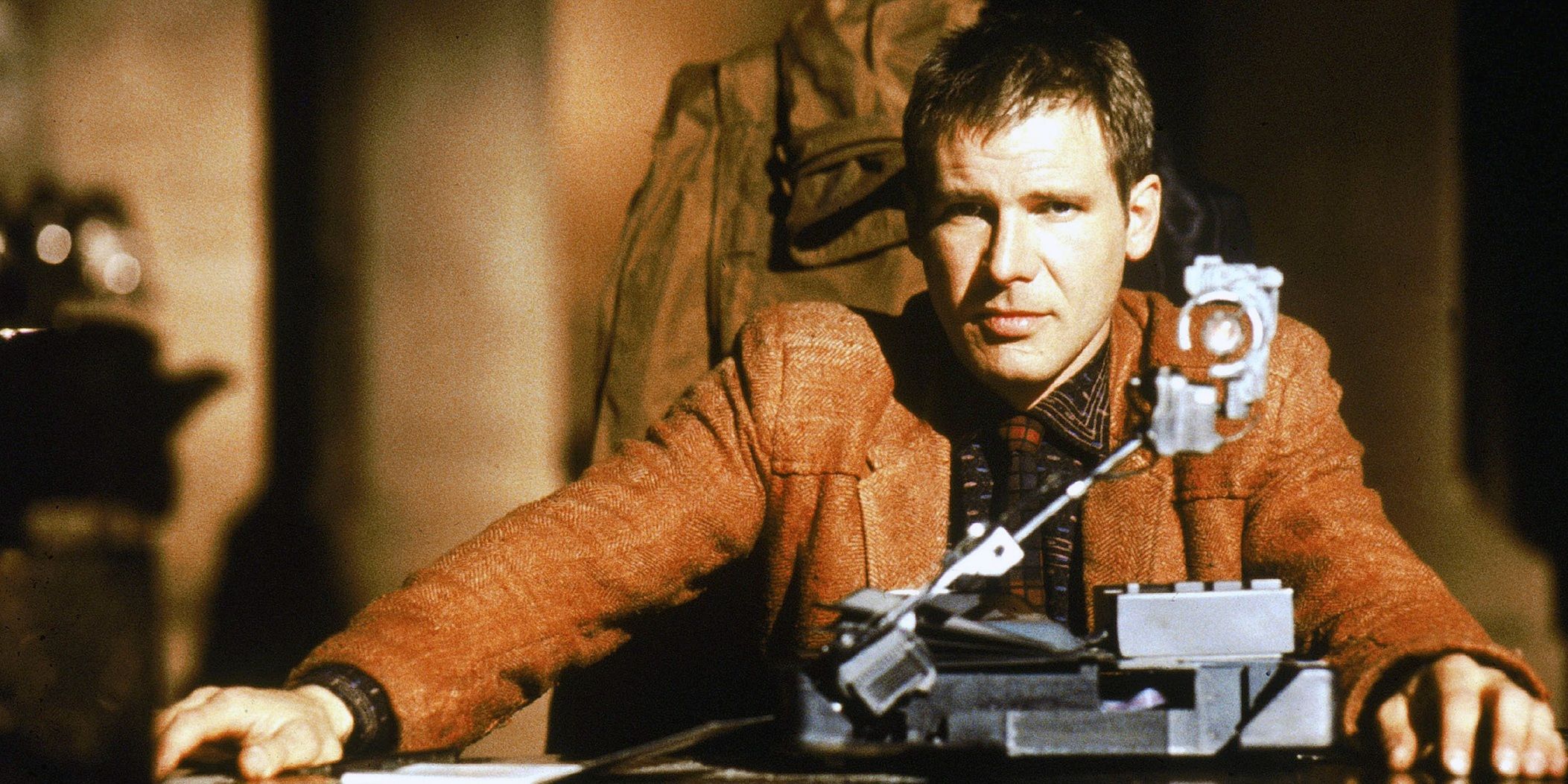
Ridley Scott and Harrison Ford revolutionized science fiction thrillers in 1982 with their film, . Though it wasn’t initially a box office success, the movie has become a highly respected and influential classic, continuing to inspire filmmakers and writers. Its famously ambiguous ending remains a source of intense debate among viewers even now.
Science fiction often makes us think and stretch our imaginations, and the film Blade Runner is a perfect example. Even small details in the movie have sparked debate about its true meaning. Forty-three years after it first came out – and with a sequel now released – the biggest question the film poses still doesn’t have a definitive answer.
How Blade Runner Revolutionized Science Fiction
The film Blade Runner is set in Los Angeles in 2019. By this time, unchecked city growth, war, and technology have devastated Earth’s natural environment, making real plants and animals incredibly scarce. To address this, the powerful Tyrell Corporation has created “replicants”—artificial beings designed to perfectly imitate living organisms.
I’m fascinated by this world where they’ve created incredibly realistic human copies, called replicants. Sadly, these replicants are basically used as slaves, working in dangerous jobs out in space and on other planets. But when one of them breaks free and goes off the rails, they send in these specialized hunters – they call them Blade Runners – to track them down and eliminate them. It’s a really dark and compelling setup.
The movie centers around a special operative tasked with tracking down six bioengineered humans, known as replicants, who have illegally returned to Earth seeking a longer lifespan. Led by the dangerous Roy Batty, their violent actions in Los Angeles draw attention, allowing the operative, Deckard, to pursue them. During the hunt, Deckard confronts Batty, but not before Batty kills his own maker.
Based on Phillip K. Dick’s story “Do Androids Dream of Electric Sheep?”, the film Blade Runner challenges viewers to think about what’s right and wrong, and to consider the implications of Deckard’s choices. After his final confrontation with Batty, Deckard starts to doubt everything he’s done, realizing the replicants are more human than he initially thought. He ultimately understands he’s been acting as the antagonist, essentially killing beings who simply want to live.
After the movie ends, viewers often feel deeply affected, having connected with Batty and the replicants far more than they initially did. This experience also leads them to reconsider Deckard – his choices and even who he is – in a completely new light.
Released in the 1980s—a decade full of classic films—Blade Runner slowly gained recognition as a true masterpiece. It uniquely combined the style of classic detective movies with science fiction, tapping into the growing public interest in artificial intelligence. It took time, but the film eventually earned its place among the greats.
Fans Still Debate the Ending
Right after Blade Runner came out, viewers started arguing about whether Deckard, the main character, was actually a replicant himself. They pointed to small details in the movie – like a fleeting moment where his eyes seem to reflect the same glow as the synthetic humans, and his unusual dreams – as evidence to support their theory.
As a big fan of Blade Runner, I found it fascinating when 2049 came out. Even though Harrison Ford himself didn’t quite agree with it, the sequel actually seemed to support the idea that the powerful figures in that world consistently used artificial beings. Seeing K confirmed as a replicant really made me think that Deckard might have been one of the very first, and that this was a pattern all along.
Many fans believe Deckard is secretly a replicant – a synthetic human – and that his memories are actually those of Gaff, the veteran Blade Runner who helps him. Comments like “you’ve done a man’s job” sound like someone speaking down to an artificial being unaware of its true nature. Given the similarities between the two characters, it’s widely understood that director Ridley Scott intended to reveal Deckard as a replicant.
Even with the hints Scott gave, a lot of fans still believe Deckard is human, and they think the story is actually stronger because of it. They feel it’s more moving and meaningful to see a person realize the humanity of those he’s chasing, even if it’s a sad realization. While Batty ultimately dies, his final act of kindness proves he deserved to be treated with the same respect as any living creature.
With advancements like artificial intelligence and cloning constantly in the news and sparking discussion, the core questions raised by the film Blade Runner feel more important than ever. While viewers still debate whether Deckard is human or not, most agree on the film’s powerful central message, which remains deeply affecting even today.
Even Ridley Scott and Harrison Ford Disagree
The biggest disagreement about what Blade Runner really means comes from the film’s director, Ridley Scott, and its star, Harrison Ford. Scott has always maintained that Deckard was a replicant from the beginning, but Ford believes the character is more impactful if he’s human. Ford was so invested in Deckard’s story that he reportedly became upset with Scott for hinting at the opposite during filming.
The possibility that Deckard is himself a replicant adds depth to the narrative, especially considering the story of K, a synthetic officer. As K searches for Deckard and Rachael’s child – even wondering if he is the child – he begins to understand and respect the rights of artificial beings. Ultimately, while protecting Deckard from the new leaders of the Tyrell Corporation, he uncovers the truth about the child’s origins.
Fans have meticulously analyzed even the smallest details in Blade Runner, like the fact that Deckard seems physically weaker than the replicants. Some believe this proves he’s human, while others suggest it’s a logical trait for a replicant who’s been decommissioned. Ultimately, every aspect of the story is open to interpretation, and viewers often find different meanings in even the tiniest details.
While it might seem confusing, the film’s lack of clear answers is actually one of its best qualities. Classic thrillers and science fiction movies often thrived on mystery and uncertainty, deliberately leaving audiences questioning what they just saw until the very end.
The debate about how the film ends is matched by the disagreement over which version of the film is the real one. Because the movie has been edited and released multiple times, viewers often have a favorite cut that influences how they interpret the ongoing discussion.
Different Cuts of Blade Runner Haven’t Helped
Since its release, the film has gone through several edits, each changing the story in some way. From the controversial original ending, criticized for Ford’s narration, to the more acclaimed Director’s Cut, there isn’t one single, perfect version. Instead, fans can choose the cut that best fits their own understanding of the film, which keeps the discussion going.
The story of Blade Runner has become even more complex due to its connections with films like Soldier, and a potential link to another project that now seems unlikely after Disney bought Fox. This connection to Soldier led viewers to wonder if other films shared the same universe. Some fans believe that all of Ridley Scott’s science fiction movies from that period are part of a single, loosely connected timeline.
People disagree about what really happens in the movie, but that uncertainty is a big part of why it’s so well-remembered. Whether it’s the differing views of those who made it, like Ridley Scott and Harrison Ford, or the ongoing discussions it sparks, Blade Runner is widely considered the best science fiction thriller of all time.
Read More
- Netflix’s Little House On The Prairie Reboot: Release Date, Cast & Everything We Know
- Off Campus Season 1 Soundtrack Guide
- Silver Rate Forecast
- Brent Oil Forecast
- Prime Video’s New R-Rated Spy Thriller Is Officially No.1 On Streaming Despite Poor Reviews
- Infinity Nikki Candlelight Reverie Challenge and Rewards Guide
- Gold Rate Forecast
- Bulgakov’s Take: Koreans Bet the Farm on Chips, Crypto, and Chaos
- EUR ZAR PREDICTION
- KPop Demon Hunters Meets Avatar: The Last Airbender In Netflix’s 3-Part Fantasy Series
2026-01-01 03:41