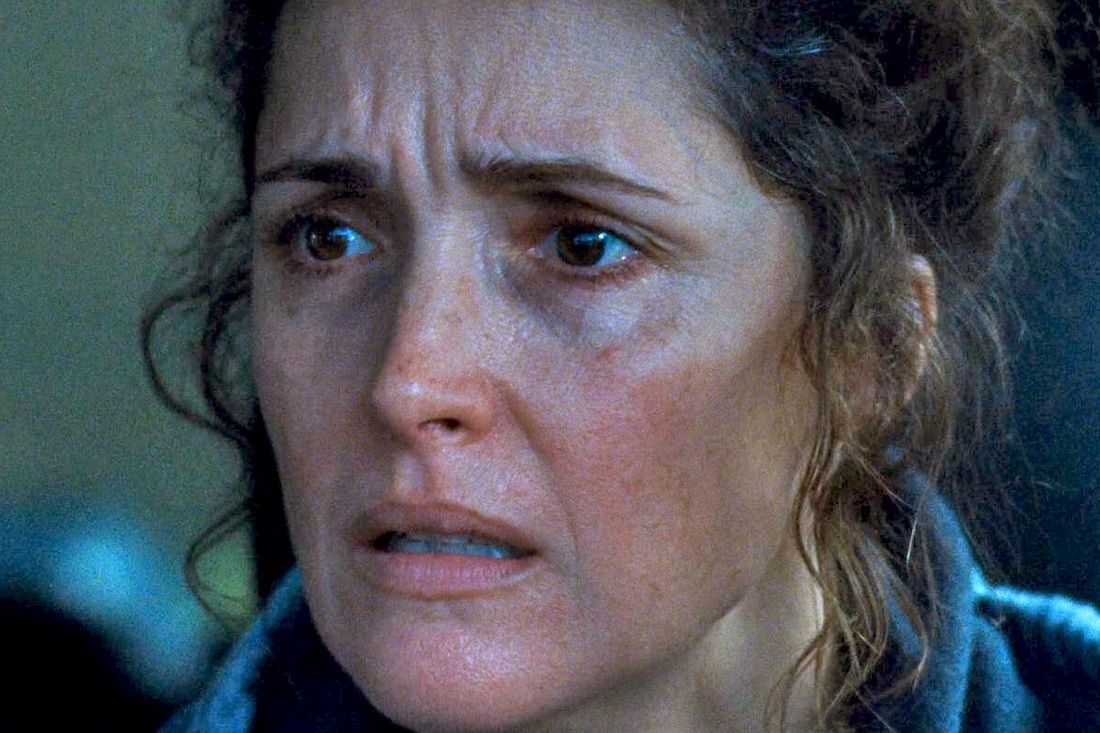
As a film lover, I was immediately struck by Rose Byrne’s performance in If I Had Legs I’d Kick You. Within the first thirty seconds, you can just see how close to the edge her character, Linda, is – it’s all in the tightness of her smile and the sheer exhaustion in her eyes. The director, Mary Bronstein, keeps the camera incredibly close on Byrne’s face, making it the focal point of the entire film. It’s a fascinating contrast because we don’t actually see Linda’s daughter’s face until the very end. The daughter is dealing with a serious feeding disorder, and Bronstein chooses to show us only glimpses – her hands, and we mostly hear her voice. It’s a really clever way of making us experience the story through Linda’s perspective, understanding her daughter not as a person, but as the source of constant worry and need, and seeing how a mother reacts to that overwhelming pressure.
The film opens with Linda’s daughter describing her mother’s struggles, rather than her own, telling a therapist, “Mommy is… stretchable.” This immediately reveals the emotional strain on Linda, as evidenced by the actress’s worried expression. Linda vehemently denies needing therapy, but her reactions show how quickly she’s falling apart. The movie powerfully depicts the constant, overwhelming stress of single-handedly raising a child with complex medical needs—her husband is mostly absent, appearing only briefly at the end. The question becomes: is Linda truly flexible, or is she stretched so thin that she’s on the verge of breaking? A closer look reveals the subtle signs of her struggle.
‘If I Had Legs I’d Kick You’ is a demanding film to watch, both emotionally and energetically. It heavily depends on the strength of the lead performance, and beyond that, it’s built on somewhat unclear symbolism – like the hole that suddenly appears in the ceiling after a therapy session, visually representing the character’s inner turmoil. The film’s repetitive nature mirrors the exhausting cycle of the main character’s life; she’s a mother caring for a child with significant medical needs and a therapist who seems unable to understand her own feelings, making her the last person anyone would confide in.
Several films released this year feature compelling portrayals of mothers struggling with the intense pressures of life, like Teyana Taylor in One Battle After Another and Jessie Buckley in Hamnet. These films explore the challenges of postpartum life and the forces that can either strengthen or destroy a family. However, none affected me as deeply as If I Had Legs I’d Kick You, which centers on Linda, a woman constantly pushed to her breaking point with no support. The film is a relentlessly intense character study, so realistically portrayed it’s almost unbearable to watch. Some have compared it to Uncut Gems, but that doesn’t quite capture it. Linda’s struggles aren’t self-made; they’re imposed upon her. The film’s anxiety stems from everyday problems and powerfully shows how mental distress can distort your perception of others. Every character is filtered through Linda’s overwhelming emotional state.
Slapstick comedy relies on exaggerated physical humor, but what Byrne does is the complete opposite. Instead of light, bouncy movement, she appears weighed down and stiff, creating a sense of unease that makes even ordinary family struggles feel enormous. Every movement, every breath, every line is delivered with the effort of simply surviving each day. It’s more than just a serious performance; it’s almost an ‘anti-comedy’ – so intensely focused on the hardship of Linda’s life that it unexpectedly becomes funny. It’s the kind of humor that makes you laugh to avoid being overwhelmed.
Linda’s life is a relentless cycle of caring for her sick child. It’s filled with navigating support groups for mothers of ill children, difficult conversations with her daughter’s doctor, and everyday frustrations like parking and quick trips to the store. She’s living in a motel to cope with problems at home, finding small moments of connection with a fellow resident named James, and constantly worrying over the medical equipment keeping her daughter alive. Her therapy sessions are intense but unhelpful, and she’s always pleading with her child to eat. This isn’t a story about healing or improvement; it’s a depiction of being stuck. The creator, also a parent of a sick child, explores tough questions about parenthood – questions that resonate with the feeling many have that they’re failing at the overwhelming task of raising children, or that they never truly wanted children in the first place. It asks what happens when there’s no relief, when a child demands constant care, when moments of joy are rare, and when motherhood feels utterly draining.
There’s a really unsettling part in the movie with a hamster, and it just perfectly captures how messed up everything is. About 40 minutes in, Linda tries to bribe her daughter to go into treatment – she promises her a hamster if she’ll just cooperate. It’s heartbreaking to watch. Another parent guides the daughter inside while everyone’s honking their horns, adding to the tension. But honestly, things get worse once the hamster arrives. My heart broke when the daughter, initially so excited, starts to panic. She’s holding the box, and the hamster keeps trying to escape, and she just screams, ‘He’s supposed to love me. I can’t… He’s getting out. He hates us! We’re going to die!’ It’s a small moment, but it feels huge and really highlights everything that’s falling apart.
Linda was trying to wrestle her hamster from the passenger seat and force it into a box when another car crashed into her from behind. “Take it with you! I hate my hamster!” the child yelled as Linda stormed out of her car to confront the other driver, clutching the hamster box. While Linda, visibly upset and fighting back tears, angrily told the man he’d terrified her and asked for his details, the hamster escaped and was tragically hit by a car. The scene, though awful, had a darkly comedic edge. The actress playing Linda was incredibly tense and her performance was gripping – every muscle in her neck and face was strained, and the whole situation felt like it was about to fall apart.
Cinema frequently portrays the ‘mad mother’ – a figure especially common in horror, often used as a symbol rather than a realistic character. However, talented actresses have brought depth to this archetype, creating memorable portrayals in films like Hereditary, Rosemary’s Baby, and Kindred. This year, several dramas explored this theme in interesting ways. In One Battle After Another, Taylor delivers a powerful, though brief, depiction of postpartum depression, showing a mother’s struggle with self-preservation. Jennifer Lawrence anchors Lynne Ramsay’s Die My Love as Grace, a former writer who moves with her husband to Montana and experiences motherhood, where her independent spirit becomes a problem. Lawrence subtly portrays Grace’s internal turmoil. Jessie Buckley’s performance as Agnes, the wife of Shakespeare and a mother facing tragedy, is the most deliberately crafted and complex performance of the year. These portrayals combine to form a modern understanding of motherhood – what it demands of women, and what, if anything, they receive in return.
Linda doesn’t find relief or healing in her anger, as depicted in If I Had Legs I’d Kick You. Instead of becoming more compassionate, she becomes increasingly irritable, sensitive, and frustrated, lacking the necessary support for positive change. In a particularly tense scene, she desperately asks her therapist and colleague, O’Brien, for guidance, but he dismisses her distress with a suggestion to get some rest. She repeatedly pleads with him to listen and help, but to no avail. Her strained relationships with others escalate until she impulsively removes her daughter’s feeding tube. When her estranged husband unexpectedly returns, he demands explanations she can’t provide. Overwhelmed, Linda flees to a desolate beach. It’s only then that the camera focuses on her daughter’s face, revealing a gentle curiosity and kindness that Linda herself is unable to express.
After struggling onto the beach, narrowly escaping the powerful waves, Byrne breaks free from a fading display of sound and light. “I’ll be better, I promise,” Linda tells her daughter. A single tear slips from her eye and lands in the sand beneath her. Her face, no longer forced into a strained smile that hid her pain, now looks hopeful but uncertain, searching for meaning in her words. It’s a delicate, desperate moment – more a wishful hope than a solid promise, reflecting the fragile foundation of parenthood.
Read More
- Netflix’s Little House On The Prairie Reboot: Release Date, Cast & Everything We Know
- Off Campus Season 1 Soundtrack Guide
- Infinity Nikki Candlelight Reverie Challenge and Rewards Guide
- Gold Rate Forecast
- Prime Video’s New R-Rated Spy Thriller Is Officially No.1 On Streaming Despite Poor Reviews
- Silver Rate Forecast
- Brent Oil Forecast
- EUR ZAR PREDICTION
- 24 Jump Street in the works with Jonah Hill and Channing Tatum set to return
- KPop Demon Hunters Meets Avatar: The Last Airbender In Netflix’s 3-Part Fantasy Series
2025-12-19 16:55