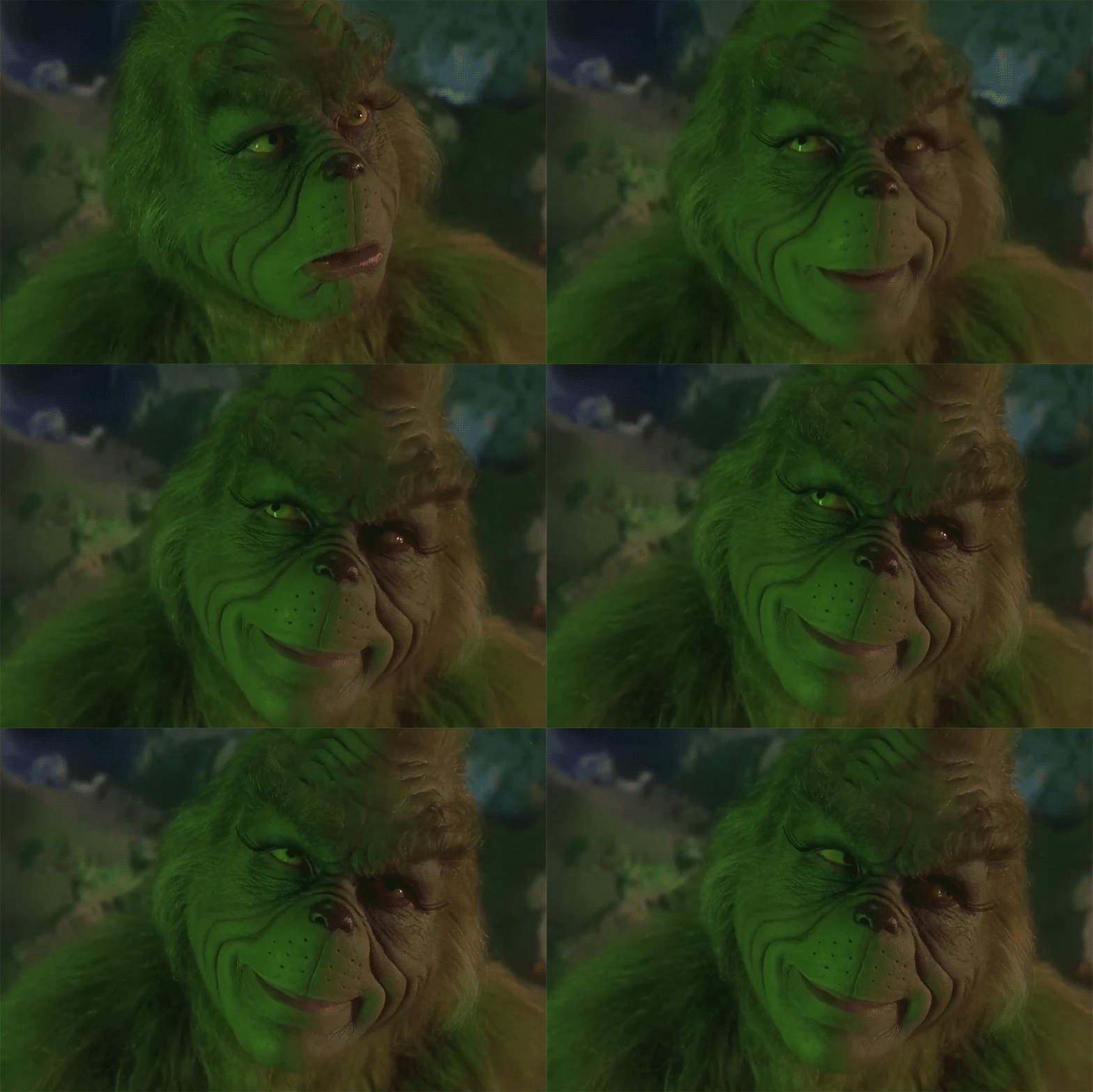
The 2000 film adaptation of Dr. Seuss’s How the Grinch Stole Christmas is surprisingly odd. While many expected a simple, feel-good family movie when director Ron Howard and actor Jim Carrey joined forces, the result was anything but. Howard enjoyed the original book and animated special, but wasn’t initially looking to create another children’s fantasy – his previous film was the satirical EdTV, and he’d soon make the acclaimed A Beautiful Mind. Similarly, Carrey, known for comedy, was exploring more dramatic roles, having recently starred in The Truman Show and Man on the Moon, with The Majestic on the horizon.
Bringing Dr. Seuss’s whimsical world to life on screen presented huge creative hurdles. The filmmakers embraced these challenges, using incredibly detailed costumes, sets, and a unique blend of innocent and slightly strange humor. While computer-generated effects were becoming more common, this film relied heavily on practical effects – especially Jim Carrey’s remarkable Grinch costume, created by special effects master Rick Baker, which was both adorable and a little creepy, allowing for maximum facial expression. The production wasn’t easy. They had to satisfy Dr. Seuss’s widow, who was dedicated to protecting her husband’s legacy, and overcome massive technical difficulties with makeup and prosthetics. Plus, the large cast was hampered by bulky, single-use foam costumes that made even simple tasks, like moving around or using the restroom, difficult.
Howard recently shared that if he made How the Grinch Stole Christmas today, he’d likely rely more on computer-generated imagery. The film really captured a specific moment in time, both in terms of technology and performance. Jim Carrey is fantastic in it, blending his energetic comedy with a surprising depth. It’s a movie that’s funny, exciting, a little unsettling, and surprisingly complex – all at once. While critics weren’t thrilled, audiences loved it, it was a hit on TV, and now it’s a holiday streaming staple. (It’s even back in theaters for its 25th anniversary, with a new 4K version on the way!) Surprisingly, despite the famously difficult production – many involved vowed never to repeat the experience – talk of a sequel has begun.
I. ‘I Want Jack Nicholson to Play the Grinch’
Ron Howard and Brian Grazer, like many people of their generation, first encountered Dr. Seuss’s beloved story when they were children – it was first published in 1957. Howard also remembers frequently watching the animated adaptation from 1966, directed by Chuck Jones and narrated by Boris Karloff. In 1998, Audrey Geisel, Dr. Seuss’s wife, decided to sell the rights to make a full-length movie based on the book, and Hollywood quickly became very interested. However, Mrs. Geisel was determined to protect her husband’s work and wasn’t willing to sell to just anyone, regardless of how much money they offered.
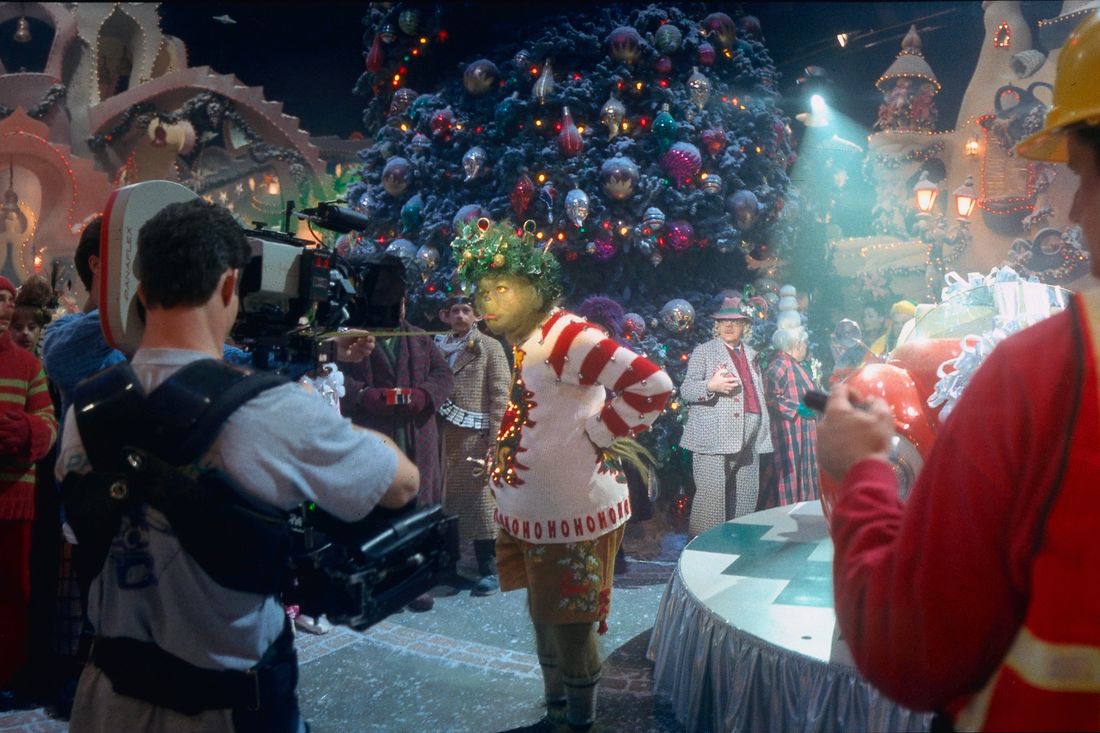
According to Audrey Geisel’s lawyer, they won’t simply sell the rights. Instead, they’re planning an audition process where potential buyers will have to present their ideas to Mrs. Geisel herself.
Universal selected me to present a project on their behalf. I’d gotten some advice from a writer about how to approach it. We met with Audrey Geisel, Dr. Seuss’s widow, and she wasn’t impressed with my initial pitch. I pleaded for another meeting, explaining I had a different idea, but they refused. I then mentioned that Ron Howard was interested in being involved, and that changed their minds.
Director Ron Howard explained that making movies for younger audiences had been surprisingly hard. He cited a TV movie, Through the Magic Pyramid, a quick and low-budget time-travel adventure with King Tut, and Willow as particularly demanding projects. While he was proud of Willow, he wasn’t eager to immediately jump into another similar fantasy or family film.
I managed to get Ron to meet with Audrey Geisel, but he made it clear he wasn’t interested in directing. He told me, ‘I’ll go, but don’t mention anything about me being the director.’
I was flying to LA with my wife, Cheryl, and she was thinking about the story. She pointed out that it was really about how focused everything had become on buying things, and suggested that Cindy Lou Who could react to that. She thought it could be a story about Cindy Lou standing up for what she believes in, and a lesson for the whole town. That gave me an idea for the third act – maybe we could address this commercialism and the Grinch’s feeling of being left out, which fit well with Dr. Seuss’s themes.
We presented the idea, and Audrey immediately thought Ron should direct. She then suggested Jack Nicholson for the role of the Grinch. I explained that while Nicholson is a fantastic actor, I didn’t think he fit the character. The Grinch needed to be grumpy and unpleasant, but also someone the audience could ultimately sympathize with and see some innocence in. When Audrey asked who I had in mind instead, I told her I would only make the movie with Jim Carrey – no one else.
I genuinely believed what I was saying, but I just mentioned Jim Carrey’s name casually. I hadn’t actually asked him if he’d be interested. I was working with him on Liar Liar at the time, and he was eager to do A Beautiful Mind – he wanted a more serious, dramatic role. However, I was already leaning towards Russell Crowe for that part and didn’t want to discuss it with Jim. So, I kept steering the conversation back to the Grinch, suggesting he’d be perfect for that role instead.
Jim Carrey recalls Ron and Brian approaching him about playing the Grinch and asking if he’d be willing to meet with Audrey Geisel, Dr. Seuss’s widow. He met with her at the Peninsula Hotel, where he explained how much Dr. Seuss’s work meant to him as a child and his desire to honor it. He ended up spontaneously performing the Grinch’s facial expressions for her right there, without any makeup, and even delivered one of the Grinch’s famous lines: “I must find a way to stop Christmas from coming.”
The character’s voice reminded me a bit of Boris Karloff, but it mostly came from a deep, internal place. I actually clenched my jaw so tightly while developing it that I cracked my teeth. He’s a deeply wounded person, consumed by feelings of abandonment and isolation, and he harbors resentment towards anyone who seems happy. I portrayed this emotional stagnation by imagining a seven-year-old throwing a tantrum and retreating into himself.
I told Ron he needed to commit to directing the project, even if he changed his mind later after we finished the script. I explained that I really needed him to agree, and he said he would play along for now.
I have a simple way of deciding if I want to work on a project: would I be disappointed if another director took it on? In this case, the answer was a definite no. Jim understood perfectly how to balance the humor, emotional depth, and the Grinch’s signature anger, and that was something I couldn’t pass up.
II. ‘Jim Carrey’s Dentist Has a Credit on This Movie, and We Don’t’
The original How the Grinch Stole Christmas! story is concise. To adapt it into a full-length movie, director Ron Howard needed a script that would expand the world, develop the characters, and add plenty of humor for both children and adults. Audrey Geisel, Dr. Seuss’s widow, stepped in during early drafts to ensure the jokes remained appropriate for a family audience. Howard and Jim Carrey, however, were determined to give the film a distinctive and quirky feel. Achieving this required input from multiple screenwriters, which ultimately led to a difficult dispute resolved by the Writers Guild.
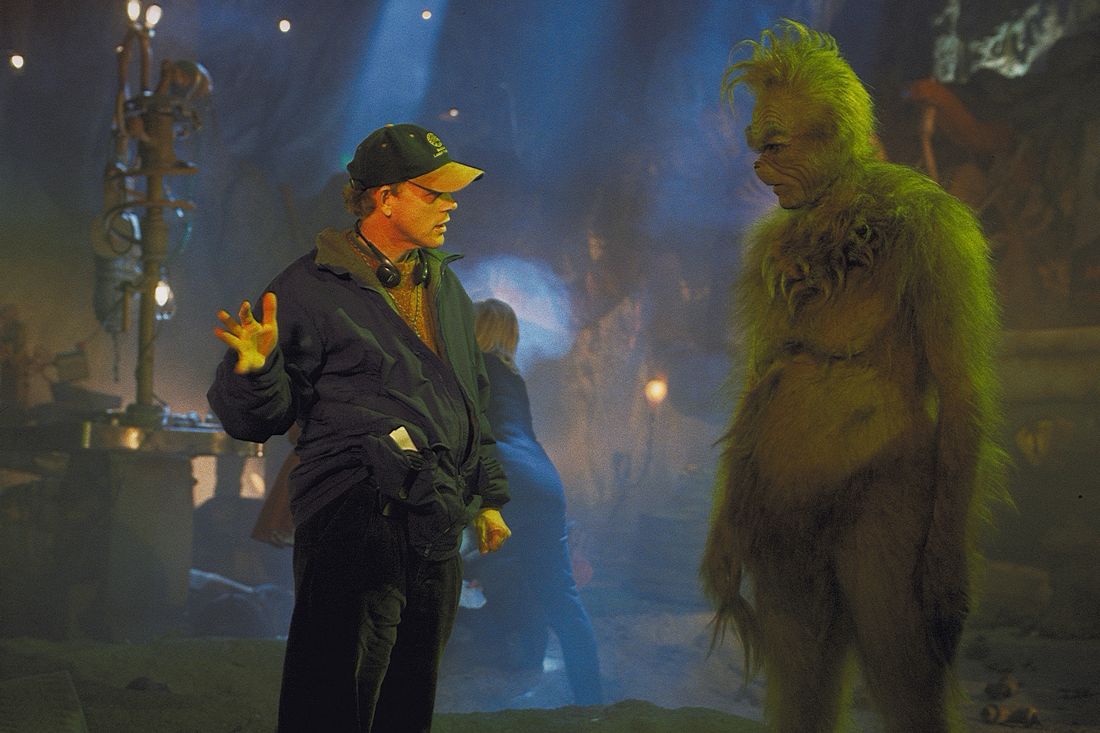
We started with writers Jeffrey Price and Peter Seaman to develop the basic story. Then, Alec Berg, Jeff Schaffer, and David Mandel – all experienced comedy writers from The Harvard Lampoon and recently working on Seinfeld – joined the project and significantly revised the script, though they weren’t officially credited.
After Seinfeld finished, Jeff and Alec made a deal with DreamWorks for new TV shows, and I signed with Touchstone. However, none of our shows actually got made. Despite this, all three of us were highly sought after for comedy movies, because producers wanted us to bring the kind of clever humor that people associated with Seinfeld to their scripts.
Alec Berg, one of the writers, explained that their main task was a two-week period focused on adding funny lines and improving the humor. They worked on a lot of different films.
According to co-writer Jeff Schaffer, this situation was unique because it involved a complete script overhaul. They had a draft that wasn’t quite working, but they also had Jim Carrey attached and were almost there.
Berg: We came in at a pretty late stage. It was fully cast. They were building sets.
We had a really amusing meeting with Judd Apatow. Since Jim didn’t know us, Judd spoke up and confirmed who we were. Then, we all sat down with Jim and carefully reviewed the script, line by line. After that, we started working on the stage.
Schaffer explained that they marked out the Grinch’s cave on the bare stage and worked through his scenes, improvising with Jim Carrey and incorporating those ideas into the script they’d already revised. Carrey was concerned about improvising while wearing the incredibly hot Grinch suit and painful green contact lenses, anticipating it would be too difficult.
Comedy relies heavily on precise timing and surprising the audience. It’s a lot like magic – you need to deliver the punchline perfectly. When it works well, people assume it’s all improvisation, because it happens right there in the moment.
Berg was incredibly dedicated. While his perfectionism could be a bit much for some, we appreciated working with someone so passionate and focused on doing things the right way. His intense commitment was a real asset.
Mandel recalls that in the cave, the person asked about the number of stairs – specifically, there were 37 from the first to the second level. He then described a plan to walk up six stairs, turn around and shout at someone, climb three more, and then come back down.
We actually wrote material in the style of Dr. Seuss for the film. For example, the opening narration that takes place inside the snowflake – that wasn’t written by Seuss himself, it was our creation. We added those Seuss-like passages to bridge the gaps in his original story, which was quite brief.
It’s a difficult line to walk. The original story is so beloved, people have strong ideas about what the Grinch is and isn’t. We had to figure out how much to stay true to that, and how much we could playfully update or poke fun at it.
According to Schaffer, they focused on two main things when working on the project: really developing the characters, particularly the Grinch, and adding humor. They also couldn’t resist including some content specifically for adults, like the ‘Ice Storm’ scene and details such as the key party and the playful dialogue about a cash bar and popcorn shrimp.
Mandel: His day planner, like, “What am I supposed to do today?” “Stare into the abyss.”
Berg told him to indulge in self-pity, then insisted on having dinner together, refusing to cancel their plans again. There was also a memorable scene where Berg dramatically pulled a tablecloth off a table without disturbing the items on it, but then deliberately ruined the effect. That moment perfectly captured the character’s personality and his underlying self-hatred, which was a key part of the film’s overall tone.
A Little Looping Story
As a critic, I’ve learned a lot about filmmaking, and one thing that always happens after shooting is ADR – Automated Dialogue Replacement. Basically, actors come back in to re-record lines for clarity or to tweak their performance. Jim Carrey recently shared a story – and he insists it’s true – about a particularly intense ADR session he did for How the Grinch Stole Christmas. Apparently, looping those Grinch lines took a lot out of him.
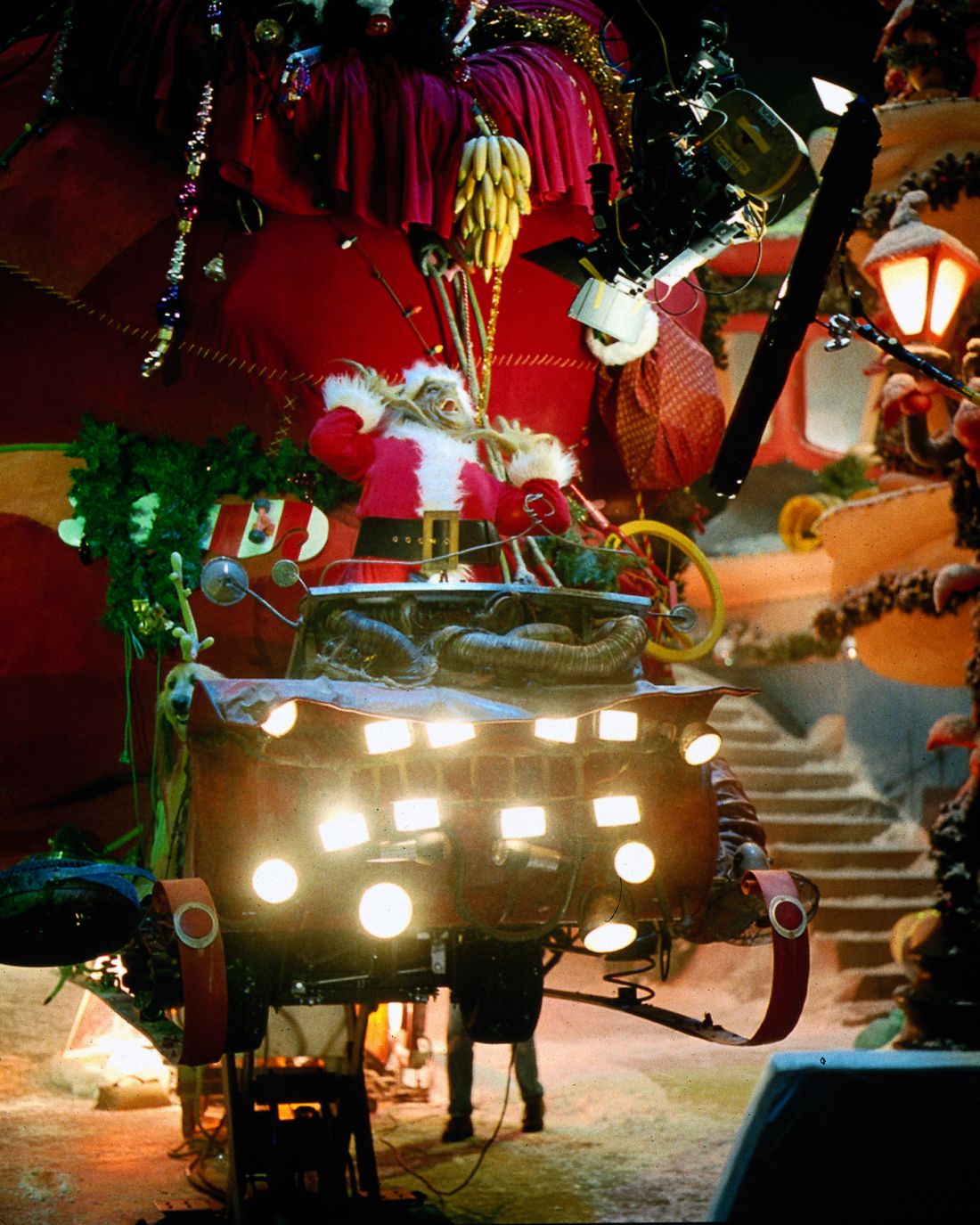
Jim’s performance is truly remarkable, especially considering all the makeup he wore. It was great seeing him rehearse in simple clothes, but the final transformation was incredible. We all learned a lot from Ron about the importance of really listening to actors during the process.
Ron was incredibly open to collaboration. He always said, ‘The best idea wins,’ and truly let us contribute as partners – not just during the writing process, but also when we were editing the film. He even gave us the freedom to re-record lines as needed, which was both amazing and a little chaotic.
Jim Carrey said this was the most looping he’d ever had to do in a film. The combination of breathing through his mouth and the wind machines used to create the snow meant he had to re-record almost the whole movie.
I remember hearing a funny story from Schaffer about Jim during the looping sessions. Apparently, Jim had quit smoking right before they started, and he was really anxious that his voice would sound different now that he wasn’t smoking anymore. He was so concerned it would affect the sound of his performance!
Mandel noticed his voice sounded shallower than it used to, reminding him of how it was when he smoked. He tried smoking again hoping to regain his previous vocal depth.
Carrey: That could be true. I’ve lived a lot of life. Some of the details have slipped my mind.
Mandel: Arbitration was a very strange thing because we were originally given credit.
Berg explains that with the Writers Guild, the studio or filmmakers first suggest how writing credits should be assigned. In this case, they fairly proposed giving ‘story by’ credit to a certain group and ‘screenplay by’ credit to everyone involved.
Mandel: The first teaser trailer has all our credits on it.
According to Berg, any writer involved in a project has the right to request arbitration. Initially, they were told the deadline for requesting arbitration had passed and the screen credits were finalized. They were thrilled, believing they had secured shared screenplay credit on a major film. However, ten days later, they learned that Seaman and Price had switched agents, and the notification about the tentative credits had been sent to their new agent. The problem was, the agent who represented them when the deal for How the Grinch Stole Christmas was made should have been the one to receive that notification. This meant the deadline hadn’t been properly enforced, as Seaman and Price hadn’t been correctly informed. The dispute went to arbitration, which Berg describes as unpredictable. Three people reviewed the various drafts of the screenplay; two sided with Seaman and Price, while one sided with Berg’s team.
Many people who rework existing stories start by simply renaming the characters, claiming they’ve created entirely new ones. They then use this as justification in legal disputes. We, however, have never done that – we’ve never pretended old characters were new.
Schaffer: I distinctly remember the tipping reader said, “Rewriters should never get credit.”
We were really upset when we didn’t receive credit for our work, especially since we’re incredibly proud of it. The dialogue Jim contributed still sounds great today, and we wrote almost all of it. We were hoping to receive residuals, as they would have been significant. Thankfully, Ron and Brian have always acknowledged our contributions, with Ron going above and beyond to make sure we get the recognition we deserve.
Here’s how the Writers Guild arbitration works: if a writer argues for credit and doesn’t receive it, the Guild doesn’t allow any form of compensation, like a ‘special thanks’ in the credits. It’s ironic because Jim Carrey’s dentist actually does have a credit on the movie, but we, the writers, do not.
Schaffer: I want to say something: He’s a fucking great dentist.
Someone has to actually create the things you see on screen, but those writers definitely earned a lot of praise, absolutely.
III. ‘I Will Give All My Money Back. I’ll Pay Interest. But I Quit.’
Rick Baker, a renowned makeup artist with five Oscars already under his belt (and another coming for this film), was brought in to design the Grinch’s mask and costume for Jim Carrey. However, Carrey was famous for his incredibly expressive face, so they needed a way to still show his performance through all the makeup. The solution was a complex prosthetic that was incredibly difficult to apply. This process was so frustrating that it nearly drove Carrey – and the makeup team working on him – to the brink.
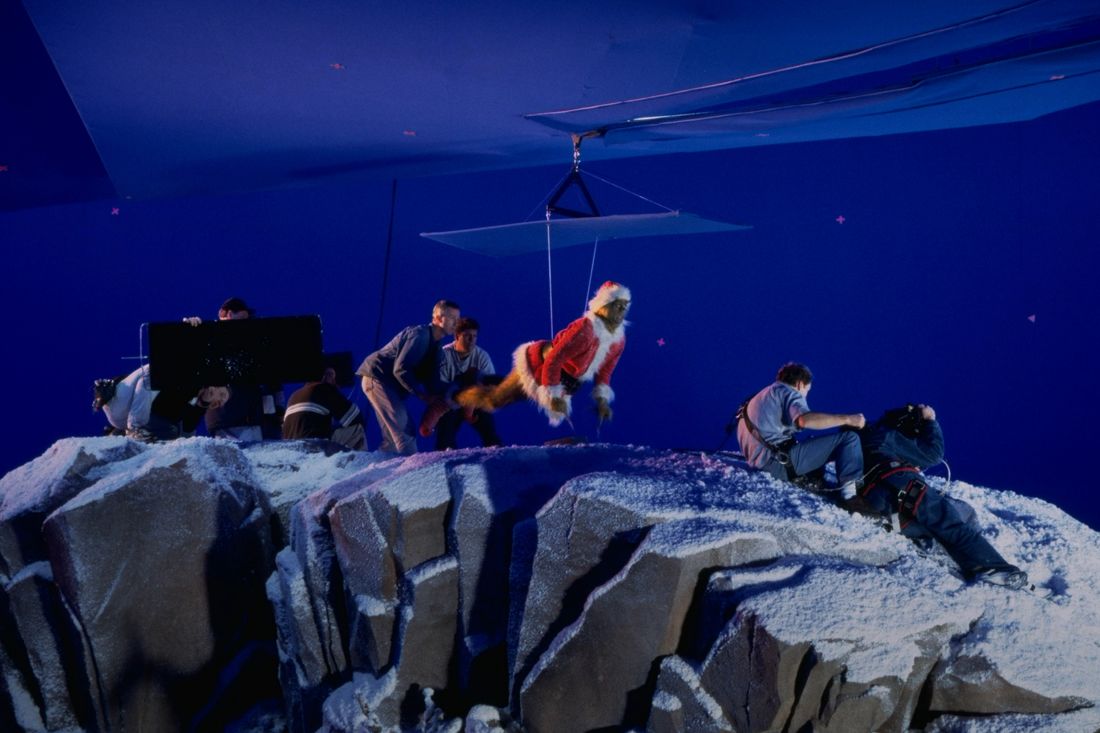
Let me tell you, meeting Rick Baker was a dream come true – the man’s a true makeup wizard. When we started working on How the Grinch Stole Christmas, I was adamant about one thing: I didn’t want a subtle transformation. I wanted to become the Grinch as he was portrayed in the book, not end up looking like something out of Cats! Thankfully, Rick Baker is a master of his craft, and he absolutely nailed it. He truly brought the Grinch to life.
Rick Baker, the special makeup effects artist, explained that he created initial designs and a sculpture, keeping in mind the practical challenges of wearing heavy makeup. Having worn a lot of makeup himself, he knew things like breathing and speaking would be difficult with certain designs. He started with a compromise – positioning the nose where Jim Carrey’s real nose was, allowing him to breathe through the nostrils, even though it made the makeup look a little more canine.
Brian and Ron approved the initial design, but I wasn’t completely satisfied with how it turned out. I felt it lacked the impact it needed. So, I created my own version of the Grinch look, filmed myself acting in the costume, and sent the video to Brian and Ron.
To make the Grinch look right, the makeup team had to cover the bridge of my nose with a prosthetic. This blocked my nostrils, and they struggled to create breathing holes in the mask. As a result, I had to breathe through my mouth for the whole movie.
The studio told us they were giving Jim Carrey $20 million and wanted him on set, but they asked us to make him look like the Grinch, not just paint him green. They wanted a fantastical character, like the one from How the Grinch Stole Christmas, not a green version of Jim Carrey.
Back then, Ain’t It Cool News was a big movie website, and its owner was a fan of my work. I reached out to him, explaining that Universal planned to paint Jim Carrey green for a role, which I thought was a terrible idea. I’d even done a test myself to show them what it should look like. I asked if he could report that he’d seen my test and publicly criticize Universal’s decision. He agreed, and the response was huge – people were furious about the idea of a green Jim Carrey, saying they just wanted to see the Grinch! Eventually, Universal listened and changed their minds.
It was amusing when Ron told me someone had seen the video. I explained that I’d only shared it with him and Brian, and I wasn’t sure how else it could have gotten out. I generally don’t tell lies, but I made an exception this time to help with the film.
During rehearsals, Jim would often wear just a T-shirt, but he’d sweat a lot – almost like an athlete during intense training. You can only imagine how much hotter it got for him once he had to wear the complete costume!
Bill Irwin, who worked with Jim Carrey on ‘Grinch,’ describes Carrey as a uniquely generous and energetic performer. He says Carrey is a dedicated comedian who fully commits to the wildness of his characters, always staying focused on bringing them to life.
Jim had a very specific vision and wouldn’t budge on it. Even though some aspects bothered him, he was set on achieving the exact look he wanted and refused to settle for anything less.
The costume was incredibly irritating – the yak hair it was made of made me itch all day. With my extra-long fingers, I couldn’t even scratch! Plus, the fake teeth made it hard to talk, and the full-coverage contact lenses limited my vision to just a small area directly in front of me.
Howard explained that some new scuba divers struggle with wearing a mask underwater, experiencing a feeling of claustrophobia. He believed this was happening with Jim, and that his contact lenses were the cause.
I used to perform on a high platform, sometimes fifty feet up, wearing a silly costume, and I was always worried about falling off! But I also had to make sure the audience knew I was enjoying myself, and that we could all have fun together. The character needed to feel light and cheerful.
Jim Carrey is a deeply thoughtful actor who really gets lost in his roles. It could be challenging to work with him, like when he played the Grinch, but that intensity seemed to help him create something amazing. He’s similar to how he approached playing Tony Clifton – he fully committed to the character and stayed in character even off-camera. You could say he’s a true Method actor.
The director, Grazer, mentioned they had discussed adding green eyes digitally, but he insisted on practical effects. He wanted the actor to actually have green eyes, which looked quite unnatural and unsettling – almost like discs. It was clear the actor was experiencing a lot of discomfort.
I really wanted this, and I have to take responsibility for it myself. It’s a lesson in being careful what you wish for. When you see an actor portray intense pain, you don’t realize they have to actually experience those feelings, and they don’t just switch them off when they finish filming.
Jim began experiencing panic attacks. I often saw him lying on the floor, breathing into a paper bag during breaks between filming scenes. He was really suffering.
Jim Carrey spent eight hours getting his makeup done on the first day of filming. Afterward, he called his makeup artists, Ron and Brian, into his trailer and told them he was quitting the movie because he didn’t think he could go through with it.
Howard: He was ready to give his $20 million back! I mean, he was sincere.
Grazer: “I will give all my money back. I’ll pay interest. But I quit.”
Howard mentioned that Brian located someone who specialized in training people to survive imprisonment and torture. This was because Jim was on the verge of quitting.
Grazer: I said, “Listen, you can quit on Monday, but just spend time with this guy on the weekend.”
Richard Marcinko, who trained CIA and special forces personnel in surviving torture, gave me a lot of techniques to use when I felt myself getting overwhelmed. Things like hitting myself in the leg, having a trusted friend punch me in the arm, or even eating everything around me. He also suggested changing things in my environment – if the TV was on, turn it off and listen to the radio instead. I even smoked a lot of cigarettes. There are photos of me as the Grinch with a long cigarette holder because the yak hair on the costume was flammable and could catch fire if the cigarette got too close.
I later discovered that the man who helped me prepare for the Grinch role also founded SEAL Team Six. But what really got me through the long makeup sessions – which they eventually shortened to around three hours – was listening to the Bee Gees. I listened to all of their music, and it’s incredibly uplifting. I’ve never met Barry Gibb, but I’m very grateful to him.
We adjusted the filming schedule to help Jim. The original plan was physically damaging his skin, and doctors advised against five consecutive days of work. As a result, he got days off, and on Wednesdays, he only did voice work off-camera.
There was a lot happening beneath the surface while I was in that suit. It wasn’t an easy experience, but that’s often how it is with filmmaking – you push through because the final result can be amazing. Kazu Hiro did my makeup each day, and he was fantastic at transforming my face.
The makeup artist was really struggling and almost quit because the job was so challenging. I went to talk to him and explained that if he left, finding a replacement would mean the makeup would look much worse and take a lot longer. He felt I didn’t understand his difficulties, so I reminded him of my experience playing King Kong. I wore incredibly uncomfortable hard contact lenses all day, a heavy 50-pound suit made of bear hides and foam rubber, and a complicated cable system that I had to manage constantly. The suit even caused me to bleed daily. I told him he had it easy because I’d specifically requested changes to the makeup process to make it more comfortable for him.
Jim really improved after that. But what I truly admired about him, and what must have been incredibly difficult, was the sheer amount of time he spent in makeup – around 92 days, which is an amazing feat.
It was amazing to watch him work. Even when he was clearly tired, he was a real perfectionist – a bit like Charlie Chaplin, from what I’ve heard. He’d insist on doing scene after scene, again and again. There were moments he was completely drained, but he wouldn’t be satisfied with a take until he’d done it around 20 or 22 times.
Despite how difficult he could be, Baker really admired the actor’s dedication. He’d keep shooting scenes over and over until he felt he’d nailed the performance. Baker thought he was perfect for the role – nobody else could have done it better – but wished the actor had been easier to work with.
I need to connect with the emotions of a role. Over time, I’ve learned how to deliver the humor while also creating a genuine emotional core. This was especially important for The Grinch, where you really see his character change. I’ve passed on roles when I didn’t feel right about the emotional journey. But the challenging makeup actually helped me focus and get into character. Ultimately, I was drawn to the story because I believed it would bring people joy – or at least, something close to it.
The Young Grinch
Josh Ryan Evans delivered a memorable performance as the young Grinch in the film. Sadly, he passed away two years later at just 20 years old.
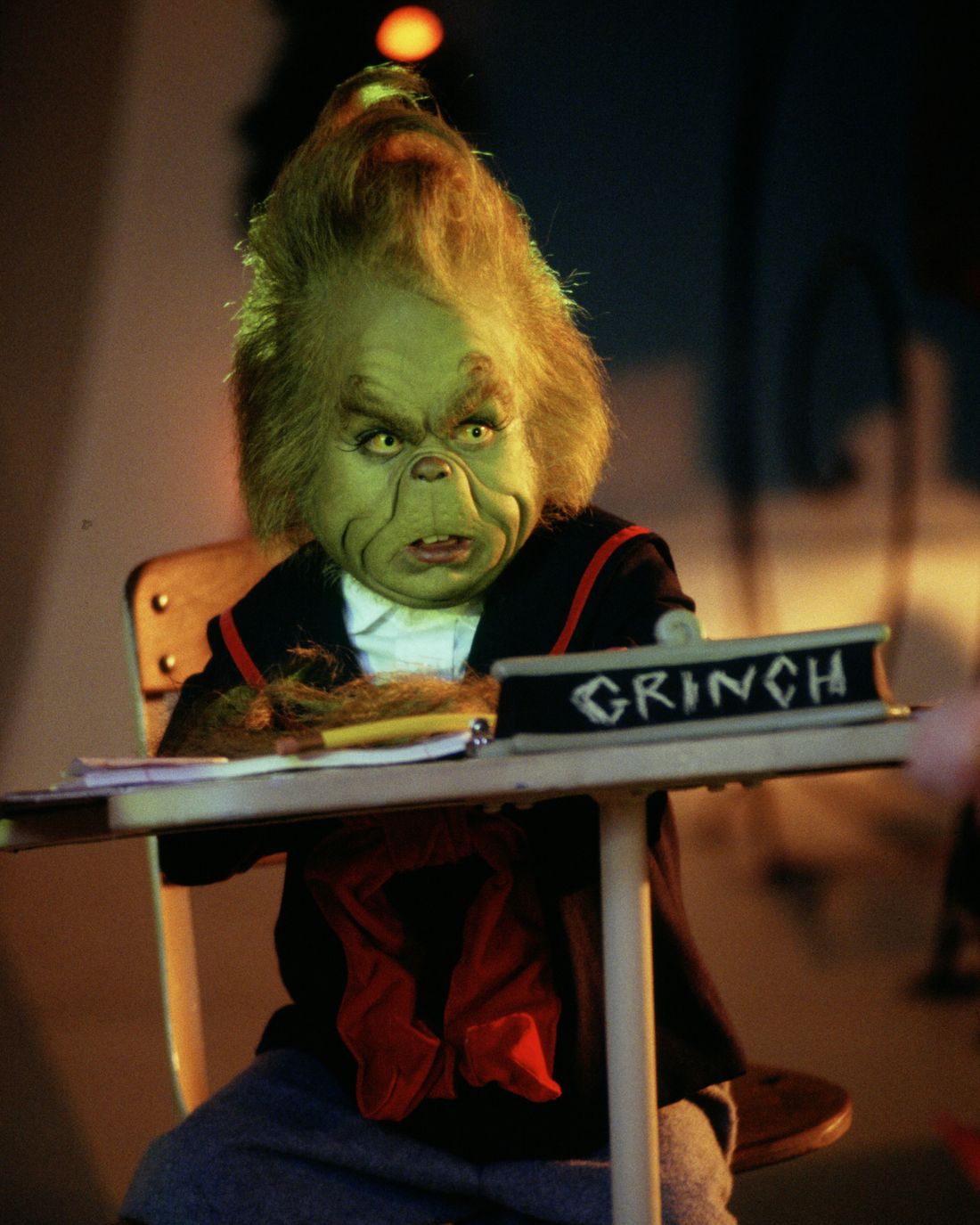
Josh was a really energetic and dedicated young actor – I think he was around 17 years old. Because the makeup process took a long time, we needed someone who could handle longer workdays, which was a practical consideration. I also wanted someone who seemed a bit more sophisticated than the other child actors. Perhaps being a little person himself helped him connect with the feeling of being different. He brought a lot of heart and excellent comedic timing to his scenes. I was very upset when we couldn’t work with him anymore.
Jim Carrey shared that he was very saddened to learn of Josh’s passing, as he hadn’t known for years. He described Josh as a truly fantastic person.
I enjoyed working with Josh a lot. He’d had open-heart surgery, and had a noticeable scar on his chest, which looked great with makeup. I also really liked creating the baby puppet for the Grinch.
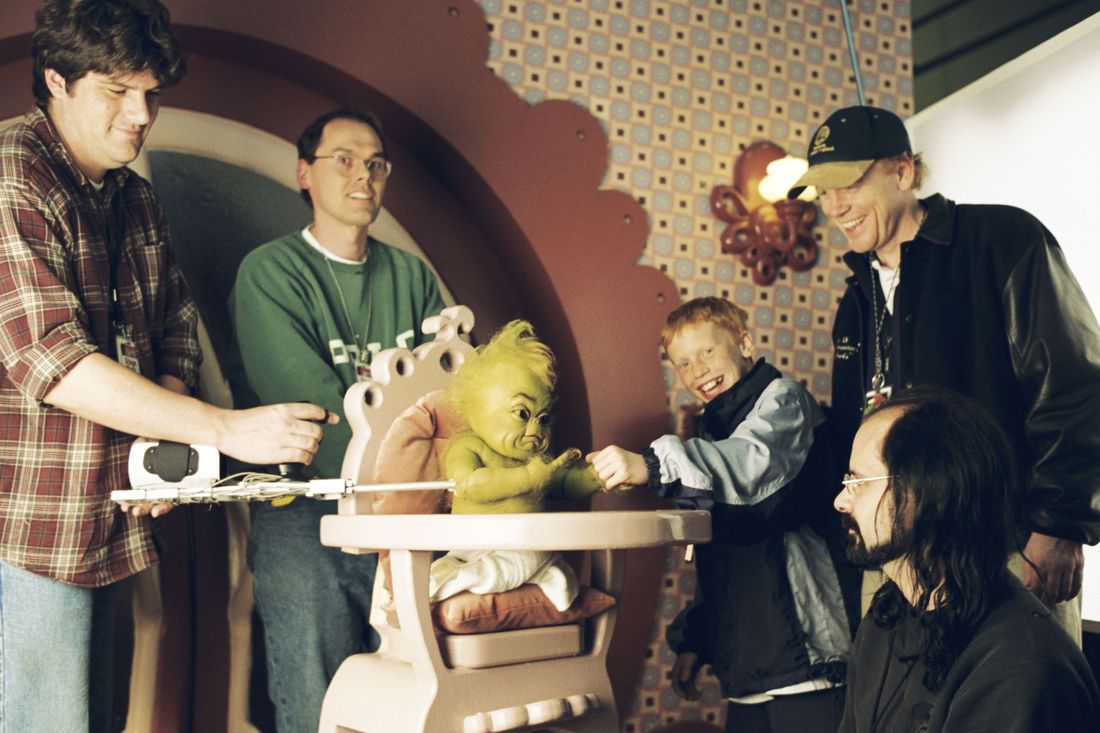
A key part of my vision for the Grinch was to explore his loneliness and how he felt like an outsider, but with a comedic touch. Thankfully, Josh really got it and delivered some brilliantly timed performances. Jim helped him practice some of his mannerisms and attitude. I especially loved those scenes because they allowed us to move beyond the original story and create something truly meaningful to me. I believed it would surprise viewers, but it felt true to the character Dr. Seuss had created.
There was a funny idea for a young Grinch that didn’t make it into the movie. I envisioned him as a rebellious teenager from the 1950s – think a pompadour haircut and a rolled-up cigarette pack in his sleeve. Ultimately, we decided not to go with that version.
IV. ‘When You Start Changing a Human Face Around, It Can Get Grotesque Very Quickly’
Creating the Grinch’s appearance and personality was only one challenge. The movie also needed a young actress, just six years old and new to film, to play the lead role opposite him. Like the Grinch, she and all the residents of Whoville would wear a lot of makeup. Beyond designing how the Whos would look, filmmakers also had to figure out how they would move and behave.
I still remember when I found out I got the part of Cindy Lou Who! I was super young – I’d already been doing commercials since I was three, and How the Grinch Stole Christmas was one of the first big auditions I ever went to. I was back home in St. Louis with my mom when we got the call, and we were just screaming with happiness in the car. I think I was five or just turned six then, and by the time the movie actually came out, I was seven years old. It was such a fun time!
When looking for child actors, girls generally pick things up faster than boys. Around age six, girls who are naturally inclined towards acting often have vivid imaginations and a convincing ability to portray characters, allowing them to easily grasp the concepts. Taylor was one of those kids – she understood the material and came well-prepared.
When I filmed The Grinch, I was too young to read, so someone had to read the script to me so I could learn my lines. They actually read the whole script, so I ended up memorizing the entire movie! While filming with Jim Carrey, the director, Ron Howard, would often stop the scene and point out that I was accidentally mouthing Jim’s lines along with him. It was like the whole film was playing as a song in my head.
Howard said the actress played a challenging part. She was a key supporting player, perfectly balancing the Grinch’s wild behavior. Jim worked really well with her, too.
I didn’t know what Jim Carrey actually looked like until the movie premiere. I was too young to have seen his other films, so for me, he was always just Jim – the guy who played the Grinch.
It’s funny, I hadn’t really considered that before. I arrived incredibly early, long before anyone else. She didn’t even notice me until the premiere, when someone had to tell her, ‘That’s Jim Carrey.’
You know, what I really remember about Jim was how incredibly protective he was. As a kid on set, he always looked out for me, constantly checking in to make sure I was okay. He was such a lively, energetic person, so he really went above and beyond to make sure I was doing alright.
I was moving around very energetically, almost wildly, so I needed to warn her that I was going to be a bit over-the-top, but reassure her that I wasn’t actually scary or intending to cause harm.
I recall filming the sledding scene down the mountain. They used a real sled mounted on a large spring that rocked us back and forth quite violently. Jim was, as always, very animated and expressive. At one point, I nearly fell out, and he immediately stopped filming, concerned for my safety. I was actually having a blast, laughing and not even realizing how dangerous it could have been. I always felt incredibly safe working with Jim and genuinely enjoyed his company. Even at a young age, I was struck by how dedicated he was to his craft, even while playing such a flamboyant character. It was clear how much effort and artistry he brought to everything he did.
Let me tell you, the moment I met her, it was clear she was something special. This kid was incredibly mature for her age, seriously smart, and her comedic timing? Flawless. She was a total professional, I honestly don’t think she stumbled once – not a missed line or a dropped cue. It was really impressive.
When Brian Grazer approached me about making a live-action movie of How the Grinch Stole Christmas, my first reaction was confusion – I didn’t understand who the Whos were or how to visually create them. The book depicted them almost like insects, and I worried that altering a human face too much would look frightening. I specifically asked about Cindy Lou Who, concerned that putting a young actress through three hours of makeup wouldn’t be feasible. They confirmed they wanted to cast a child for the role, so I began experimenting with different designs.
Rick actually made a cast of my face, and I went through the whole process with him. He still has the mold of my face from when I was a baby – he keeps it at his house! I saw it when I visited for Halloween this year. He’s collected casts of everyone he’s ever worked with, and mine was among them.
They initially considered using prosthetics for me, but Ron and the team ultimately decided it would be too difficult for a child to go through.
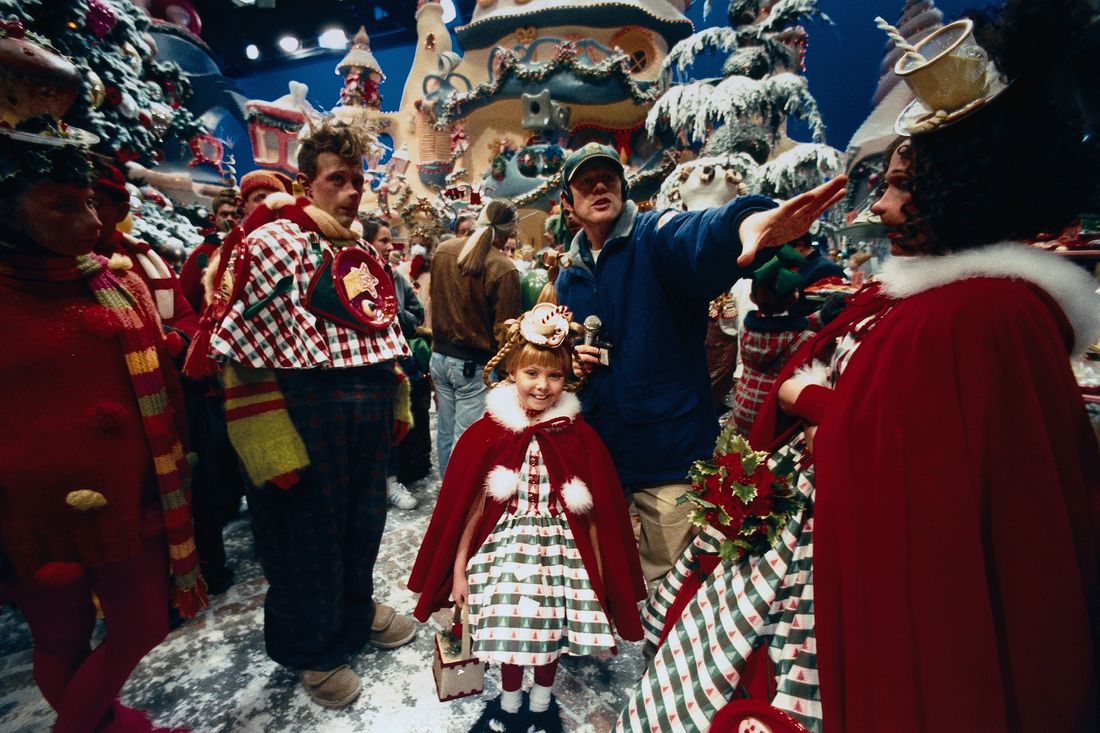
I realized that the younger Whos hadn’t yet developed the upturned noses of the adults. So, we designed Cindy Lou Who with large teeth, long eyelashes, and a slightly red nose to reflect that.
After the movie came out, people were always asking me if my nose was fake, which was strange because it was my real nose! I kept trying to explain that it was just blush, but their questions still made me feel insecure about it.
I remember when the fake teeth really changed the shape of my face – it was pretty strange! I couldn’t stand the taste of the adhesive, so I just left them in all the time. I ate, talked, and even went to school with them in – they basically became part of my face until the end of the day. The fake eyelashes were a blast, though, and I still love wearing them! The wig was amazing, too. Actually, for a Christmas record I did recently, Rick let me borrow the original! When we opened the box at the photoshoot – it hadn’t been opened in 25 years – it still had snow clinging to it, and it smelled so familiar. It instantly brought back a flood of memories.
For films like Apollo 13 and The Paper, we used to do intensive research, almost like training camps. With Apollo 13, we went to mission control and astronaut school, and for The Paper, we spent time at the Post and Daily News to get a feel for how newsrooms really work. I did something similar with the fire department for Backdraft. This was before digital effects were common. We did use some computer-generated imagery – like the sleigh flying down the mountain and Max the dog being tossed around – but we couldn’t create the Whos digitally up close. That’s when I found Charles Croughwell, a stunt coordinator who became the second unit director. He was known for doubling Michael J. Fox in all the skateboarding scenes in Back to the Future.
Stunt coordinator Charles Croughwell explained that he and Ron discussed how to bring the Whos to life. They decided to take inspiration from Cirque du Soleil, and Croughwell suggested hiring some currently available Cirque performers. He knew a particularly talented performer named Terry Bartlett, who became a key part of the project. They developed a ‘Who school’ where the actors could learn skills like walking on balls, ladders, and using trampolines. The set included a full stage of equipment that performers could practice with whenever they had time.
I actually went to stunt school for the role. Since I was doing my own stunts, I had to learn things like how to use wires to fly and how to fall safely. One memorable moment was falling through a trap door! There was also this huge slide with only a rope to climb up – no stairs! The only stunt I didn’t perform myself was being shot out of the trash can at the very end.
I also hired Bill Irwin and invited him to work on the show. He’s a fantastic clown – one of the best – and he was really helpful in developing some of our acts with the Cirque du Soleil performers, especially things involving wires and large unicycles.
Croughwell described school as a really fun experience. Actors often spent time there even when they didn’t have scheduled activities, enjoying things like the trampoline. It felt like a relaxed and playful space for them while preparing for their work.
We developed a particular way of moving and walking for the characters, and also created a collection of physical comedy bits we could use while blocking out scenes.
Berg mentioned a performer who was incredibly flexible – he could fold himself in half and fit into a bucket. They tried writing jokes about this amazing feat, but none of them ended up being used.
V. ‘I Don’t Know If I Ever Need to See Another Wrapped Present in My Life’
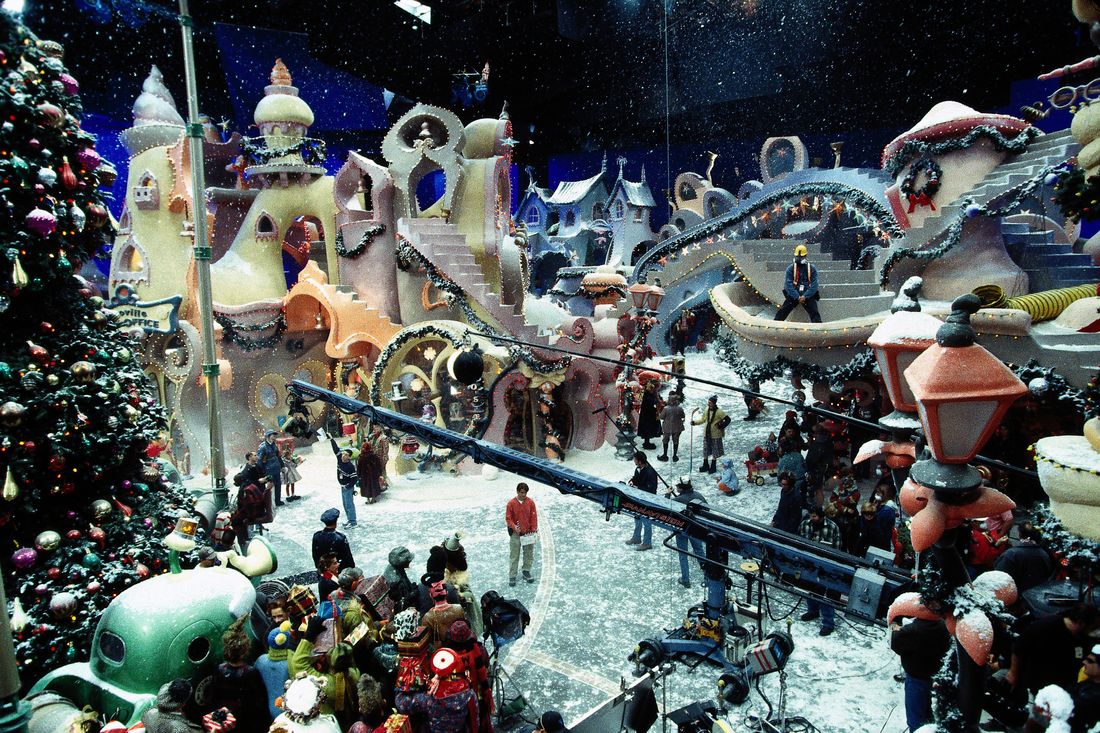
Howard aimed for a deliberately fake, almost Expressionist style in the film to match the quirky designs of Dr. Seuss. This meant building elaborate sets at odd angles, using multiple soundstages, employing a huge cast in uncomfortable costumes, and pushing the lead actor to his limits. One person involved described the whole process as a grueling, exhausting struggle.
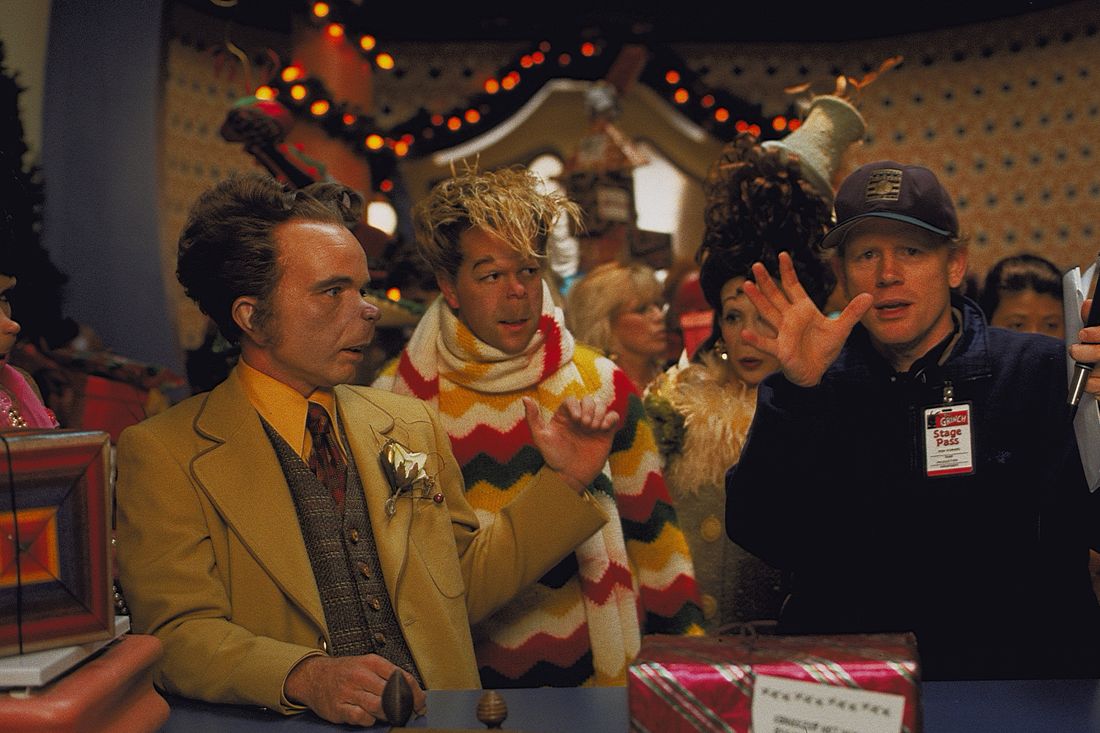
For this film, I experimented with a visual style I hadn’t used before or since. I brought in Don Peterman, my cinematographer from films like Splash and Cocoon – he’d even been nominated for an Oscar for Flashdance and worked on Addams Family Values. I wanted to recreate the look he achieved on those projects. We used very wide, distorting 14-mm lenses and kept the camera moving a lot, particularly in the Grinch’s lair. Jim Carrey was fantastic at hitting his marks perfectly, allowing the camera to smoothly follow his movements and create a kind of wild, close-up effect that would unfold as the shot progressed.
As a fan, I was really struck by how unique, lively, and beautiful Dr. Seuss’s illustrations are. When designing the costumes, I actually looked to old holiday cookbooks from the 1950s for inspiration. I envisioned the Whos as being quite simple in design, often with things balanced on their heads – things like plates of food or even lamps! I have a lot of sketches showing this idea.
Production designer Michael Corenblith explained that creating the film’s whimsical, Dr. Seuss-inspired architecture required practical engineering. He showed examples of the work of Spanish architect Gaudi to illustrate how unusual, curved shapes could be structurally sound and usable. He focused on building things at angles to create visual illusions, while also ensuring performers from Cirque du Soleil had secure places to stand and lean during scenes.
Ryack explained that the Whos had a furry texture, so he designed their clothing using soft mohair sweaters. He also used a fabric similar to a bedspread for Jim’s cape when he’s in disguise. Ryack liked the slightly rough texture of the material, believing it would give the clothing a sense of movement and capture the whimsical, energetic style of Dr. Seuss.
Emily Ferry and I have been hearing from many collectors lately. Some of them even recreate the costumes and dress up as Whos every Christmas!
The Grinch’s unique shape comes from a padded suit made of lightweight foam, which is carved to create his round belly and bottom. This foam is attached to a stretchy Lycra suit that the actor wears first. Over that goes another Lycra body stocking dyed to match the Grinch’s green skin. The hair is created using a full-body wig, where individual strands of yak hair are meticulously tied onto the spandex base with a special needle – each hair is tied twice to ensure it stays put. Creating just one of these full body suits takes about six months, and the team made around 300 custom wigs for the production.
I used to wear so many layers! It started with six pairs of tights, then we’d add these Who pads that gave you a really strange shape. On top of the tights, I’d wear garters and socks, plus padding inside my shoes that made my toes curl. And underneath it all, I had regular underwear, bloomers, and two layers of crinoline. It took three people to get me dressed, and it took a long time. And every single time I was finally ready, I immediately had to go to the bathroom!
We were once on a snowy mountain, and the snow was so powdery it reminded me of soap. A bit of that ‘snow’ actually got stuck behind one of Jim’s camera lenses and really bothered him. I was with my five-year-old daughter, who used to play with Taylor, when Jim came by. He was his usual self, but he warned us to take her away because he was about to lose his temper. He had a bit of a breakdown, but the fact that he thought to protect her feelings showed me a lot about his character.
After filming finished, the crew made a funny video for the wrap party. It was a five-minute compilation of all the times I swore during production – a real string of colorful language! It was hilarious to watch.
I remember one morning, during my usual early arrival, seeing someone getting into the incredibly detailed Grinch makeup – it took three and a half hours! I assumed it was a stunt performer preparing to do a fall or something. But it turned out to be Ron. He arrived way before he was needed, had the makeup applied, and spent the entire day on set wearing it – it was a tough job!
Okay, so this is a funny story. Ron really felt bad for Jim, so we decided to do something… unexpected. We dressed Ron head-to-toe as the Grinch – full costume, the works! – and he spent the entire day directing everything as the Grinch. It was a way to show Jim some support, and honestly, it was hilarious.
I couldn’t stop laughing when I first saw him walk in, and I really appreciated his understanding. He then sat down in his director’s chair and seemed quite stressed. While he didn’t have to deal with uncomfortable contact lenses, he really gave it his all. He’s just a wonderful person. You really want to do a good job for someone like Ron.
Jim Carrey wasn’t thrilled about the Grinch suit itself, but that was the makeup artist Rick Baker’s concern. I designed all the outfits over the suit – things like the lederhosen and a fishnet bathrobe inspired by Hugh Hefner. Those were a blast to create. Jim even asked what he’d wear to the Whobilation! He was really into the character and had a whole dressing-room scene where he requested a beehive hairstyle. I actually made one – a veil covered in bees – and it’s still beautiful. I think that whole scene might be in a longer cut of the movie.
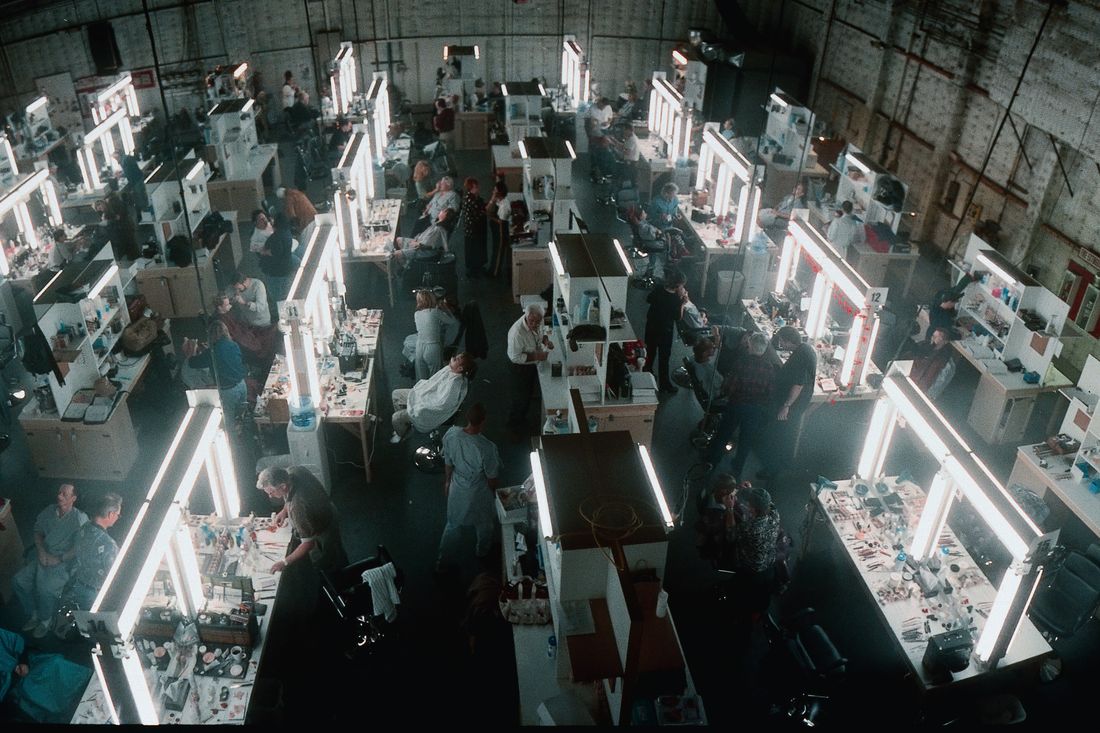
I really enjoyed the experience, but the sheer size and complexity of the production were challenging. It was one of the few films I’ve worked on that went over budget. We had a lot of special effects, like dogs suspended on wires. Taylor Momsen was wonderful, although she was only six years old at the time. I was constantly moving around set in my golf cart. At one point, we had three separate filming crews working simultaneously across nine different sound stages. We even dedicated an entire soundstage just to makeup, with 40 or 50 people getting made up daily – it was surreal seeing characters from the film taking breaks and grabbing cigarettes. It felt like one of those old-fashioned Hollywood movies showing the backstage chaos, with people in outlandish costumes just wandering around.
We built the Whoville set on the studio’s biggest soundstage – it’s been there for years! My son said it felt like walking into a theme park. We also filmed a few scenes outdoors. One memorable scene involved Christine Baranski’s character decorating with Christmas lights while holding a machine gun – it was my son’s favorite! That was filmed on a hillside on the studio lot, near the house used in the original Psycho movie. We’d spend time watching the crew set up shots and then film, and it was great to be outside with fresh, crisp air.
A Moment for Christine Baranski
“She’s hot.”
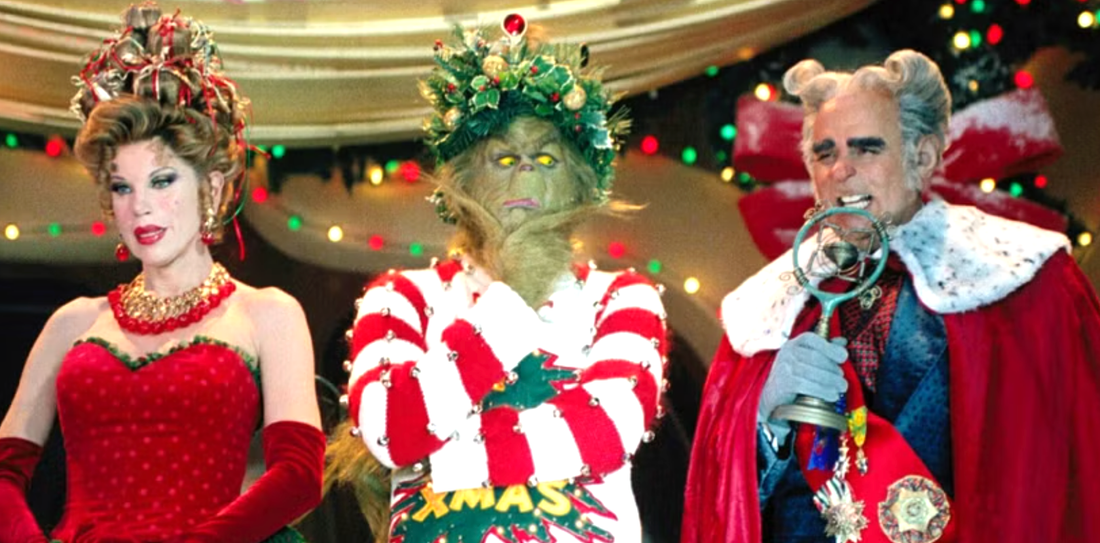
As a huge movie fan, I loved working on Martha May’s look – Christine Baranski was amazing! I really wanted her wardrobe to feel like high fashion from that era. I had no idea she had such a dedicated following, but apparently she’s a total icon for the LGBTQ+ community, which honestly made me so happy. I’ve heard so many stories of people saying they first realized their attraction to women watching her! I wasn’t necessarily aiming for ‘sexy,’ but she really owned those costumes. That Santa outfit she wears while decorating? Pure camp! And the machine gun? That image is just iconic, honestly.
My mom was famous for her over-the-top Christmas lights in our neighborhood back in Burbank. It wasn’t fancy, just a ton of lights! I remember one year my dad and Clint were filming Gentle Ben in Florida and were coming home for the holidays. I was old enough to want to help, but also young enough to be pretty lazy. As it got closer to Christmas, my mom got increasingly stressed about getting the lights up, and it started to rain. I vividly remember her on a ladder, trying to hang the lights with a cigarette in her mouth and wearing a muumuu. I offered to help, but she kept saying, “No, you can’t!” and “Go inside, it’s raining!” She wouldn’t even let me hold the ladder.
I designed a dress for Christine, inspired by glamorous 1950s ball gowns. I used a green tulle with textured chenille dots for the skirt to give it depth, and a red velvet for the bodice. I completed the look with a fluffy red marabou stole and jewelry, really making her look like a doll. She also had a beautiful satin negligee adorned with large white feathers.
We felt Christine needed a bit more polish and sex appeal, and her previous look wasn’t quite achieving that. So, we enhanced her glamour.
On the set of ‘Who’, there were a lot of hidden details and interesting people. I remember giving the nurse a necklace with a tiny, symbolic syringe filled with a drop of blood. There was also a fisherman, and one of the actors even made his own props – the actors were really invested in the production. It was great to see everyone connect so well, and some even formed lasting relationships – there were marriages and reunions, and they stayed in touch long after filming wrapped.
We never had complaints from the Whos, even though they didn’t have to wear the full furry suit. They had similar padding to Jim’s, made from foam latex – a material used in movies since 1939, like in The Wizard of Oz. It’s made from rubber tree sap mixed with zinc, sulfur, and soap, and then whipped full of air to make it soft and flexible. We’d pour it into molds and bake it for eight hours. That was tough because we needed appliances for all 90 Whos! Each piece could only be used once, so we had to create tons of sets. And even after baking for eight hours, not every piece turned out right – I’d say about one in five were successful, as bubbles or other issues could occur. We ended up making thousands of these foam latex appliances for the film.
Honestly, as a film buff, I always found it a bit strange how the studio decided against having all the actors in those suits with easy access. It just seems logical – why couldn’t they all have been designed so the actors could quickly get out of the fat suits when they needed to use the restroom? It would’ve been a simple comfort for everyone involved, really.
Irwin explained it felt like a long, drawn-out struggle where victory came from slowly wearing down the opposition. He recalled people being so exhausted by the experience that they joked about never wanting to see another gift again.
Things were tough back then, so I tried to cheer Jim up a bit. I started brainstorming a list of famous actors – people like Don Knotts or Jerry Lewis – and imagined them dropping by the set to visit. It was just a silly way to lighten the mood.
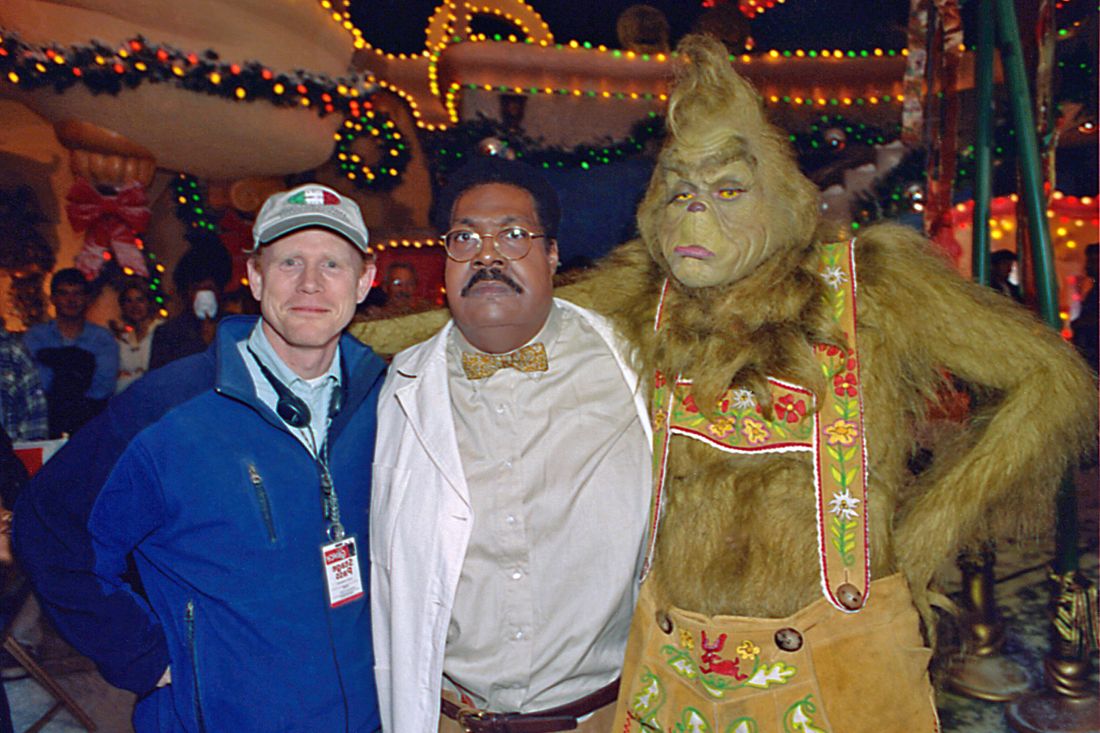
I’ll never forget the day Tony Curtis showed up – you could instantly recognize his voice, and everyone started talking about how he’d filmed Spartacus in the area. Then Eddie Murphy arrived while they were shooting Dr. Doolittle or The Nutty Professor, or something similar. He was in full makeup, greeting people, and we were all still getting our makeup done, chatting with him.
I recall Steven Spielberg visiting the set and just staring at me in amazement. Renée Zellweger was there too – she was dating Jim Carrey at the time, and I remember they playfully dressed her up as a Who character to surprise him.
My dad was a real inspiration on set, almost like a guiding presence. Even at 70, he worked tirelessly on the film. I initially wrote a small role for him, but he was so talented that we ended up giving him little bits and pieces throughout the movie, so he was involved nearly every day. He’d just quietly show up, sit for the required time, and seemed to be genuinely enjoying himself.
Jeffrey Tambor genuinely loved being on set each day. My brother, Clint, shared a story about asking Tambor if the show’s exaggerated style ever felt tiring. Tambor explained that it reminded him of traditional British pantomime – a performance style that many artists devote their careers to. I think he was spot on. We were creating something with a unique and distinctive style that feels like it will endure over time.
I’ll never forget the very last shot of the day on set! Jim Carrey and Jeffrey Tambor, who played the Mayor of Whoville, were in the middle of a huge argument, getting right up in each other’s faces. Then, Jim actually bit Jeffrey’s prosthetic Who nose clean off! The whole set erupted in laughter – it was the perfect way to end filming.
Working with Molly Shannon was fantastic – she’s wonderfully eccentric! I really appreciated the flexible schedule, whether it meant starting at 5 a.m. or later. The prosthetic makeup team, Billy Corso and Kenny Myers, were incredibly talented. Kenny was in charge of Molly’s makeup, and he jokingly warned her not to use her phone. She assured him she wouldn’t. But when she returned from a break, Kenny noticed a clear imprint of a flip phone pressed into her makeup – a perfect phone-shaped indent!
Taylor was absolutely delightful. She really got into playing pretend and loved dressing up in her costumes. I remember she had a sweet little pink coat with a fluffy gray collar and a whimsical animal-shaped backpack we made for her. For her ‘Mount Crumpit’ adventure, she was thrilled with her cape and earmuffs. One day, she was upset when her mom said she couldn’t go hiking, and she cried – it’s a moment I’ve never forgotten.
Croughwell explains that older filmmaking techniques, before the widespread use of computer graphics and now AI, created a genuine, tangible experience. This wasn’t just for the actors, but for the audience too. These films felt grounded in reality, depicting actual places that felt like they truly existed, rather than fabricated worlds.
Looking back a couple of years, we would have been staring right at the tennis balls used as props. Things have improved, but back then, the actor was embarrassed because they weren’t sure where to focus when the prop was placed. The assistant director sets everything up, you do your best to perform, and then when you see the finished movie, you realize you weren’t looking at the intended thing – the monster! You were looking off to the side, and it looked awkward.
Back then, CGI was really costly and complicated – it wasn’t easy to use like it is now. So, we focused on practical effects as much as possible. If we’d made the film just a couple of years later, it would have looked quite different. I’m not sure if it would have had the same appeal, though. I honestly don’t know. I probably would have relied more on those newer CGI tools.
VI. ‘I Did Not Foresee It Becoming This Kind of Classic’
The 2000 film How the Grinch Stole Christmas was a major box office success, achieving the highest opening weekend of any film directed by Ron Howard or starring Jim Carrey at the time. However, critics were largely unimpressed. Todd McCarthy of Variety called it “shrill, strenuous and entirely without charm,” while Stephen Holden of the New York Times compared watching it to being stuck in a crowded Toys ‘R’ Us during the holidays. Roger Ebert of the Chicago Sun-Times predicted many children would find it confusing and unpleasant. Despite the negative reviews, Kenneth Turan of the Los Angeles Times praised Jim Carrey’s performance, describing him as a blend of Chewbacca and Jerry Lewis. Over time, the film became a holiday staple for an entire generation, and its popularity continues to grow. ABC initially paid $60 million for the rights to air the film on television for ten years, and later renewed the agreement. Today, it consistently ranks among the most-watched movies on streaming services and pay-per-view during the holiday season.
I’ll never forget when Audrey Geisel watched it. She was sitting right in the front row of the almost empty Alfred Hitchcock Theater, completely by herself. There were only two of us in the back. She stood up afterwards, absolutely thrilled – she really loved it. Even talking about it now gets me a little emotional. We all poured our hearts into this project, and I actually cried when I saw her reaction.
The reviews were all over the place – people either really connected with the work and understood what Jim was doing, or they were very critical. I try to avoid reading reviews, but I always end up checking them anyway, even now. It feels like a bit of a weak move to ignore them completely, so I prefer to wait before looking at them all at once.
I’ve had the reviews summarized for me, but I avoid reading them directly. For years, I focused on making comedies, and I actually came up with the idea for the movie Housesitter, starring Steve Martin and Goldie Hawn – I wrote the initial outline, though I don’t think I officially received credit. It was a moderate success with generally positive, but somewhat mixed, reviews. I remember one particularly harsh review that criticized the story and suggested it was based on my own life, which really upset me. That same night, I got a terrible cold sore from stress. After that, I started leaving the country whenever reviews came out, just to avoid reading them. I’d often go to a remote part of Costa Rica, the Osa Peninsula, to completely disconnect.
It was tough going up against such a fantastic cartoon by Chuck Jones and the source material – it’s hard to win people over quickly. Still, I was really disappointed Jim Carrey didn’t get an Oscar nomination that year, truly. I’ve seen a lot of great performances in my time, and his work was genuinely special. In fact, the two most challenging performances I’ve been involved with were Russell Crowe in A Beautiful Mind and Jim Carrey in The Grinch. Both were incredible achievements, though in very different ways.
I honestly don’t recall paying attention to professional critics when I was young. I probably didn’t even know who they were! I do remember my classmates being critical, though. Because I was a child actress and moved schools often, it was a strange experience. People weren’t always kind. By the time ‘How the Grinch Stole Christmas’ came out, I was completely known as ‘the Grinch girl’.
We premiered the movie in England and actually met the Queen! However, people there weren’t familiar with the Grinch, and they were a little confused by the film. It was a strange reaction, especially since the book is so well-loved in America. But it’s a Christmas movie, which is great because it means people can enjoy it every year during the holidays.
Howard explained that the movie was very commercially driven. A stunt coordinator he knows jokingly refers to on-set injuries followed by settlements as being healed by “the green salve” – meaning the money helps them feel better. He mentioned this happened with The Grinch, and he’s happy to see the film has become a beloved part of people’s holiday traditions and continues to be popular.
I started my band, The Pretty Reckless, when I was just 14 years old. Every Christmas, fans would point out that I played the little girl who sang ‘Where Are You Christmas’ in The Grinch. They’d connect that young performer with the singer I am today. For fifteen years, they asked me to record a rock version of the song, but I always refused. I thought it was something I would never do. But each year, those requests kept growing and growing.
By 2020, things were tough for everyone, and I had personally experienced a lot of loss. The band was really struggling, and the COVID lockdown didn’t make things any easier. I wondered if revisiting an old song that fans liked might lift our spirits. It was a surprisingly challenging arrangement, considering the song was only about a minute and a half long. When we rehearsed it, something amazing happened. The four of us, who had been feeling miserable, couldn’t help but smile and laugh – it was the first time in a long time we’d felt genuinely happy. That moment sparked the idea, and a couple of years later, we started recording it. I never imagined I’d be dueting with a recording of myself as a 5-year-old. It sounds sweet, but actually doing it was incredibly emotional and brought tears to my eyes.
I ran into Jim at the Rock & Roll Hall of Fame – it had been 25 years! We were both there because he was inducting Soundgarden, and I was performing with them. It was a crazy coincidence, and it felt amazing to see him – like reconnecting with family.
I was amazed to learn Taylor was going to perform with them. I actually turned around in the hallway and there she was! She’s incredibly tall – I don’t even know if she was wearing heels. She just has a really strong presence. I was so happy to see how successful she’s become, especially knowing the difficult things she’s overcome. It was really exciting to reconnect with her. And she even brought me a Crunchie, which is my favorite candy bar – that was fantastic!
I never expected the movie to become such a beloved classic. I originally thought of it as a quirky, unconventional Christmas film. But people often tell me they watch it every year with their families, enjoying it with snacks like cookies and popcorn. It reminds me of how people used to watch The Wizard of Oz. It really shows how talented Ron and Jim were – they created something that’s both unique to the year 2000 and still enjoyable today. Even though critics weren’t fans, the movie clearly resonates with audiences.
I was completely drained after working on The Grinch. Even when the topic turned to Harry Potter, and I was asked for initial ideas, I just didn’t have the energy to get involved. We’ve briefly discussed revisiting The Grinch, and I have an idea Jim enjoys – the team would likely be willing to write it. We’re all hesitant to do it again, though. I’ve told Jim that if we did, he wouldn’t have to physically wear the Grinch makeup – we could recreate the look digitally using footage we already have, so he’d only need the suit, not the contacts or full makeup.
It’s interesting to see the character become part of popular culture, even appearing in commercials now. Despite the challenges of playing him, it was a real honor. It’s such a beautiful story about how much we all need to be more open and compassionate – it really resonates with people. A lot of us are emotionally closed off, and that message always hits home.
The original credited writers did not respond to a request for comment.
The films they worked on included See Spot Run, Shark Tale, Men in Black 3, Monster House, an earlier version of Curious George, and at least one Dr. Dolittle movie.
According to Mandel, Apatow was working as a kind of advisor to Carrey at the time.
Anthony Hopkins is the narrator, who delivers new lines like, “Inside a snowflake, like the one on your sleeve, there happened a story you must see to believe.”
“For example,” Mandel explains, “we came in at the end of Borat, and the three of us are actually the ones that pitched the new ending of Borat, but we never arbitrated. So, if you watch the end credits of that movie, we are given a special thanks. It doesn’t say why, but they were allowed to thank us for the work we did because we never arbitrated.”
In Milos Forman’s 1999 biopic Man on the Moon, Carrey portrayed the late comic Andy Kaufman, and reportedly disappeared into both that role and that of Kaufman’s comic alter ego, Tony Clifton.
Released this past November by her band the Pretty Reckless, “Taylor Momsen’s Pretty Reckless Christmas” is a six-track EP that includes a new cover of the song “Where Are You Christmas,” which she sang as a child in How the Grinch Stole Christmas.
“He also wore a wood stove, and we did have a wood stove made with a little CGI fire inside,” Ryack adds. “His Santa suit was very important, too. Everything was very method-y for me. I thought, well, what would the Grinch have in his lair? It’s made out of terry cloth. Maybe he had some old red towels there. We washed the fabric to death, so it looks like an old towel.”
Howard’s mother, Jean Speegle Howard, had been an actor in her youth and appeared in some of her son’s movies as well. She died September 2, 2000, and How the Grinch Stole Christmas is dedicated to her. “My mom was sick,” during shoots, Howard explains. “We were filming on the Universal lot, and she was at St. Joseph’s Hospital in Burbank, so I could get to her. And my dad and brother, who both had roles in the movie, were popping over to visit as well. I dedicated the movie to her because she just loved Christmas. My mom passed away several months before the movie came out.”
Ron Howard’s younger brother Clint, also an actor, often appears in the director’s films. He plays mayoral aide Whobris in How the Grinch Stole Christmas.
Telling the story of a young boy’s friendship with a large bear, Gentle Ben ran on CBS from 1967 to 1968. Clint Howard, around eight at the time, played the lead role. His father, Rance, was also a series regular and wrote some episodes.
Mary Stein, who plays Miss Rue Who, confirmed that the Who actors stay in touch, though we were unable to track down actual marriage certificates.
As he often did in his films, Howard cast his father, veteran actor Rance Howard, this time as The Elderly Timekeeper.
When the first Harry Potter movie was in development, directors who were considered included Steven Spielberg, Terry Gilliam, and Rob Reiner. Chris Columbus eventually directed the film, which went on to gross $1 billion.
Read More
- Netflix’s Little House On The Prairie Reboot: Release Date, Cast & Everything We Know
- Off Campus Season 1 Soundtrack Guide
- YouTuber arrested after viral AI bodycam videos spark real police complaints
- Silver Rate Forecast
- Prime Video’s New R-Rated Spy Thriller Is Officially No.1 On Streaming Despite Poor Reviews
- Peaky Blinders: The Immortal Man’s Tommy Shelby Is a Better Father Than Michael Corleone
- EUR ZAR PREDICTION
- Gold Rate Forecast
- Bulgakov’s Take: Koreans Bet the Farm on Chips, Crypto, and Chaos
- Resident Evil producer reveals series could finally head to Japan
2025-12-12 18:06