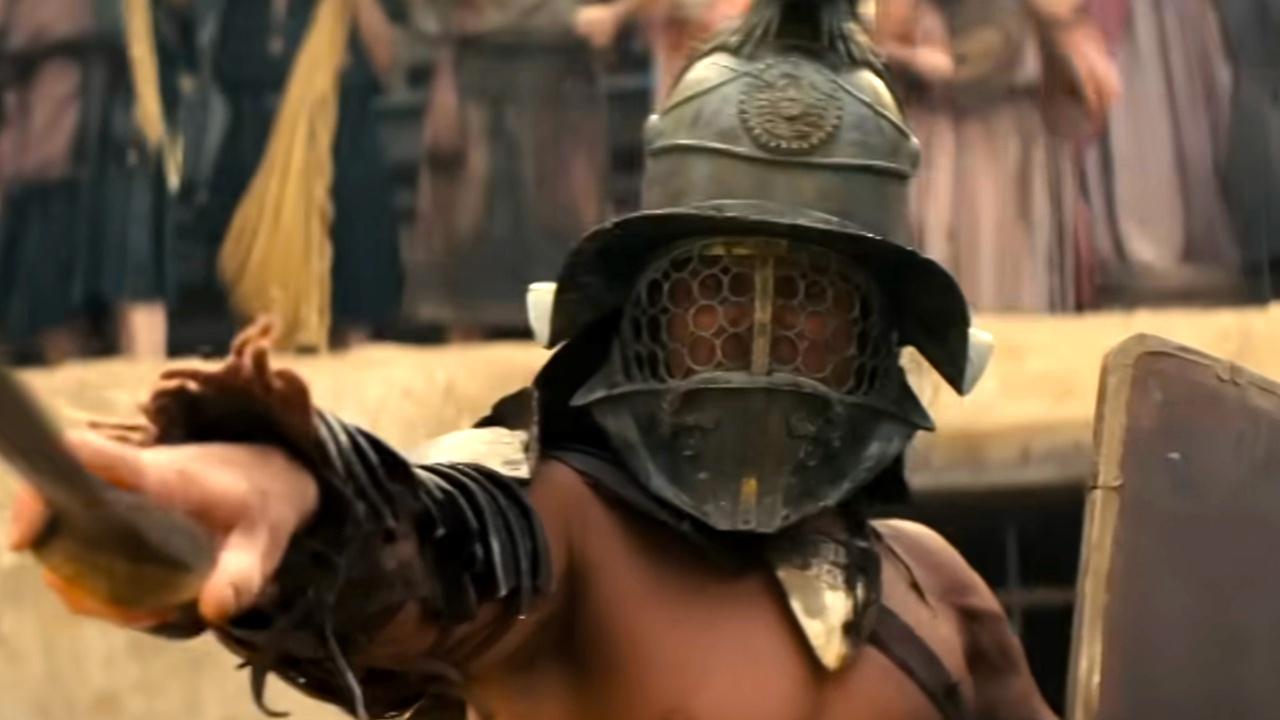
Starz surprised fans of Spartacus by announcing House of Ashur, a new series exploring a different outcome. In this alternate timeline, Nick E. Tarabay’s character, Ashur, lives and defeats Spartacus. The first episode establishes this premise with a supernatural twist, bringing the original Ashur back from the dead and into this new reality, giving him a second chance at life.
I recently read a fascinating interview with Steven S. DeKnight, the showrunner for Spartacus: House of Ashur (he also worked on Daredevil!), and it really got me thinking. He discussed the possibility of introducing more supernatural themes into the show, and – this is the big one – he finally addressed whether Spartacus is really gone in this new timeline. It was a great read for any fan, and I’m so curious to see where he takes the story!
When questioned about whether the intro to Spartacus: House of Ashur hinted at supernatural themes being introduced into the series, DeKnight stated that won’t happen. He explained that the intro was a one-time thing and doesn’t reflect the direction of the show itself.
The show initially established that Spartacus died, but the first episode of House of Ashur hints that Liam McIntyre’s character might still be alive.
Despite this, the showrunner, Phillip DeKnight, definitively confirmed to The Direct that the character is deceased. He also clarified that all characters who died in the original series remain dead, with the exception of Ashur.
You can find more from TopMob’s interview with Steven S. DeKnight, the showrunner of Spartacus: House of Ashur, below. House of Ashur is currently available to stream on Starz.
There Will Be No More Supernatural Elements In Spartacus
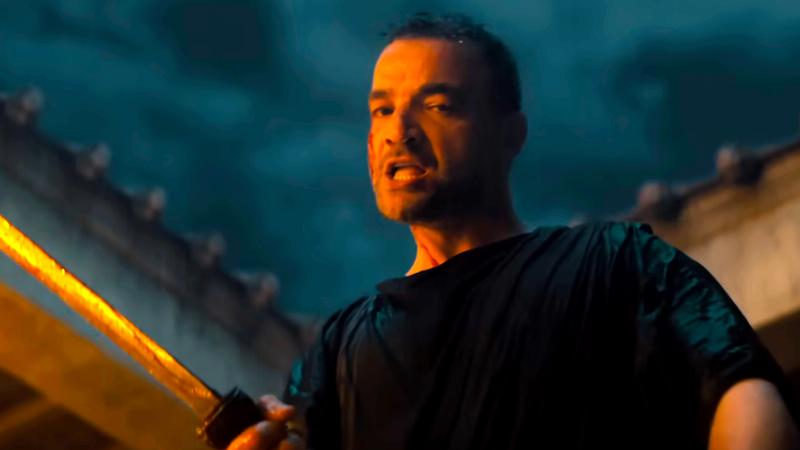
“You’re Not Going to See That Again In the Body of the Show.”
- TopMob: “I know that supernatural intro is very minimal, and it’s just kind of set up. But does that open the door for maybe dabbling a little bit more in the future? Because I know fans have really wanted to see, like the gods, portrayed in some way. So does that open the door to stuff like that?”
Steven DeKnight clarified that the supernatural elements shown in the opening sequence won’t reappear throughout the rest of the series. He explained that Starz and Lionsgate questioned whether they should include more supernatural events, but he insisted on staying true to the original show’s tone. He wants the series to maintain the same grounded feel, with the opening sequence serving as a standalone ‘what if’ scenario – a glimpse into an alternate fate for Ashur.
- TopMob: “It is such a unique setup, I was a big fan of it. It’s great.”
Thank you. This project was ambitious, and we weren’t sure if it would succeed. The opening sequence, in particular, took a lot of work – we revised it around twenty times! We wanted to satisfy longtime fans while also providing enough information for new viewers without overwhelming them. Striking that balance was a real challenge.
- TopMob: “How did you decide to bring Ashur back through supernatural means? What led you to just going, we’re not going to just do a what if show, we’re going to literally take this man at his death, put him in the underworld and go, here’s another timeline.”
Steven S. DeKnight mentioned a line from ‘Spartacus: Vengeance’ that the writing team and he often discussed. It was when Ashur told Lucretia he’d help Glaber defeat Spartacus, and then planned to take over Batiatus’ gladiatorial school and rule alongside her – essentially establishing the House of Ashur. They all thought that would have made a great follow-up series, but unfortunately, the character was killed off, making that storyline impossible.
The showrunner also shared some ideas they considered for a Spartacus spin-off, including a series focusing on Caesar, Crassus, Pompey, and their rise to power as the Triumvirate, ultimately leading to the end of the Roman Republic.
When Lionsgate and Starz asked about bringing ‘Spartacus’ back, my first reaction was no – I didn’t want to retell that same story. However, they suggested something new set in that same world, and I started brainstorming. Naturally, my first thought was a show about Caesar, but that’s been done many times. Then I considered focusing on Caesar, Crassus, Pompey, and the fall of the Roman Republic, but that seemed like a huge and costly undertaking. I wanted to create a show that could last. I briefly thought about doing a series on Anthony and Cleopatra, but that also presented the same problem – it would be incredibly expensive to do it well.
Of course, all roads inevitably lead back to House of Ashur:
I started thinking about the idea of hell and wondered if we could use the House of Ashur as a setting. I imagined Lucretia falling off a cliff with a baby, and Ashur losing his head in the same episode. What if they both ended up in the underworld together, and she became obsessed with the concept of fate? It was just one possibility I was exploring. Then I got really interested because I love the character of Ashur. He’s awful, but in ‘Gods of the Arena,’ you start to understand why he’s awful. Really, he just needed someone to care for him – he wanted love, but everyone rejected him, which made him bitter and cruel. He decided if that’s how people wanted to treat him, that’s how he’d behave.
Honestly, even though Ashur is a really difficult character to like, I was fascinated to hear how DeKnight approached the problem of getting the audience to actually care about him. It must have been a huge challenge to make people root for someone so unlikeable!
I was thrilled by the chance to explore if this character could become a better person, and he genuinely tries. The big challenge was making the audience care about someone who was so unlikeable in the original series. Our solution was to introduce even more villainous characters – the powerful Roman elites – to make him seem comparatively better. I was surprised when Lionsgate and Starz loved the idea and gave us the green light. And that’s how the project began.
Spartacus’ Real Fate Confirmed In House of Ashur
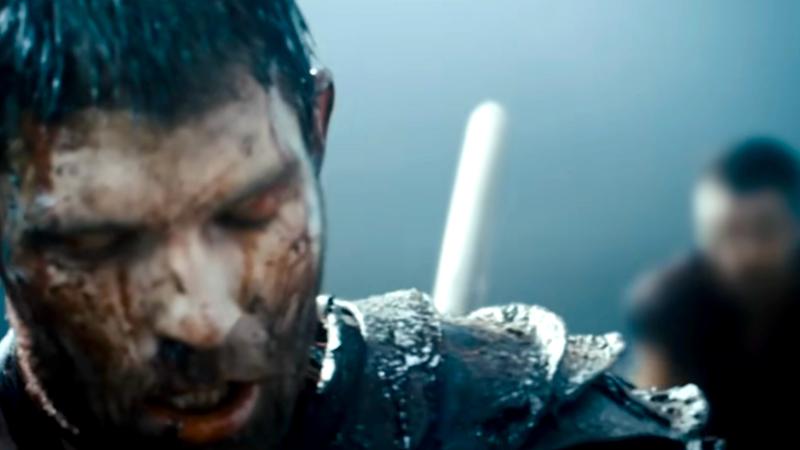
“Oh, No, He’s Dead.”
- TopMob: “In that very first episode, there is a very clear tease of the glimmer of hope that Spartacus could still be alive. Are we gonna, in this alternate history, is Spartacus gonna be here?”
Steven S. DeKnight often gets asked if characters who died in the original series are still alive. He emphasizes that, with the exception of Ashur, everyone who died remains dead. He made this decision to stay true to the original story and preserve its ending, which he felt was perfect. Fans frequently ask about specific characters, like Agron and Nasir, hoping they might reappear, but DeKnight is firm: he wants to respect their peaceful conclusion and doesn’t want to change their fate, or disturb their goats!
- TopMob: “With the inherent concept of the show, obviously, it breaks history. You can do whatever you want. So how freeing was it to know you don’t have to really worry about history? You have substantially more freedom than you’ve ever had before with the show?”
I was really excited about adding female gladiators, or ‘Gladiatrixes,’ to the show. In the original series, Rob Tapert and I had discussed it, but historically, they wouldn’t have appeared for another 80 years. With the war starting in this new version, it allowed us to have women fighting right away, which was fantastic. Another thing I loved about the concept was that Ashur, being desperate for an edge, introduces the gladiators early as a publicity stunt.
That sets off a chain reaction, and as the show goes on, you’ll see the female gladiators become more prominent – we’ll be featuring more of them. We also want to take well-known historical events and twist them, changing things up because Ashur is still alive. His survival fundamentally alters the story, while remaining rooted in real historical occurrences.
- TopMob: “When it comes to Ashur himself, obviously, he’s the main character of this show. How can you describe where he is going into the show, how he is as a character compared to when we just saw him, and how different is this new Ashur going to be? Or is he pretty much the same Ashur, just more room to evolve going forward?”
Steven S. DeKnight explains that the story picks up about six months after Spartacus and his followers were defeated. Ashur has achieved all his ambitions, but he quickly realizes this success is more of a challenge than a reward, and he’s finding it difficult to adjust.
Though he aided the Romans in overcoming Spartacus and his rebellion, his past as a former slave and gladiator means they view him with suspicion and don’t fully trust him. As a non-citizen, he’s also looked down upon. This puts him in a vulnerable position where he must constantly rely on his intelligence and cunning to protect his current gains and strive for more, as he faces challenges from the start.
Read More
- Scientology speedrun trend escalates as viewers map out Hollywood facility
- Makoto Kedouin’s RPG Developer Bakin sample game is now available for free
- NBA 2K26 Season 6 Rewards for MyCAREER & MyTEAM
- Gold Rate Forecast
- Where Winds Meet’s new Hexi expansion kicks off with a journey to the Jade Gate Pass in version 1.4
- How to Get to the Undercoast in Esoteric Ebb
- MrBeast lets fans from every country vote for Beast Games Season 3 contestants
- Vegan nugget startup founder charged with assaulting influencer ex-girlfriend Evelyn Ha
- Seeing Beneath the Surface: AI Advances in Skin Disease Diagnosis
- 24 Years Later, Ian McKellen’s Favorite Lord of the Rings Moment Still Defines Gandalf
2025-12-06 06:09