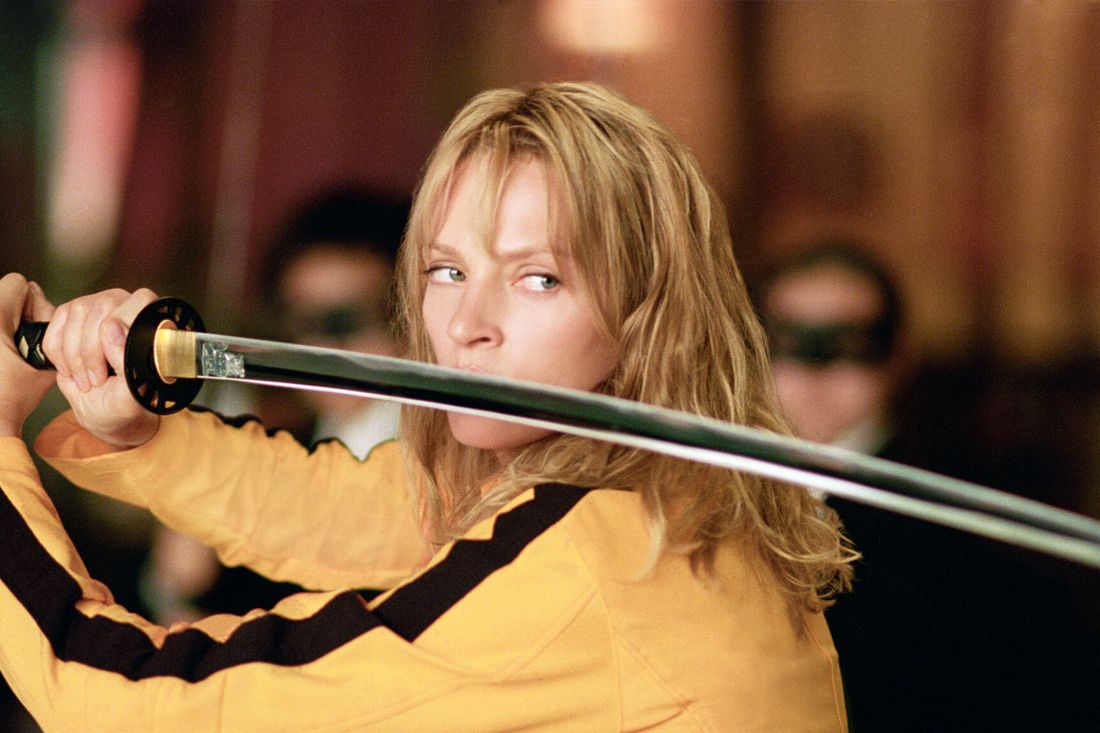
When Quentin Tarantino’s Kill Bill Vol. 1 was released in 2003, many people knew the story behind its creation. Tarantino and Uma Thurman, who developed the idea together, originally planned a single, long martial arts revenge film. However, it became so extensive that they decided to split it into two parts. By the time Kill Bill Vol. 2 arrived a few months later, many felt this was the right decision. Both films were great, but they had very different feels. Vol. 1 was a fast-paced, energetic action movie with a unique style, while Vol. 2 was more reflective and melancholic—a slower, emotionally resonant story leading to a lengthy but powerful conclusion. The story itself was already presented in a non-linear, chapter-based format, so releasing the films as a series felt fitting.
Quentin Tarantino’s complete version of Kill Bill, titled Kill Bill: The Whole Bloody Affair, has been shown at some film festivals and in special screenings, but it’s now getting a proper theatrical release. Clocking in at over four hours with a break, it’s truly impressive. I worried the different tones might make the long movie drag, but it actually makes it even better. The later, more thoughtful part of the film gives new meaning to what you’ve already seen, and the shift from exciting action to a deeper, emotional story is incredibly powerful. Uma Thurman’s already fantastic performance is elevated even further by the expanded narrative. By the end of the four-hour film, you really feel everything her character is going through – her fatigue, happiness, and overwhelming sadness, anger, and joy. She was always great, but seeing the whole story together feels like one of the best performances of the 21st century so far.
The movie’s premise is straightforward: Beatrix Kiddo, a highly skilled assassin, is betrayed and left for dead on her wedding day while pregnant. The film follows her relentless quest for revenge against those who wronged her. It begins in the middle of the action, revealing that she’s already eliminated one target, O-Ren Ishii. This adds emotional weight as the story later reveals O-Ren’s tragic backstory.
Quentin Tarantino enjoys unexpected twists, but he doesn’t worry about revealing key plot points. Like knowing O-Ren Ishii will die, we’re pretty sure The Bride will ultimately win and confront Bill, the man who ordered the attack on her and even shot her in the face. We also know she’ll survive the brutal fight with the Crazy 88, O-Ren’s elite team of sword-fighting assassins – a scene now legendary in action cinema.
Quentin Tarantino is known for saying controversial things in interviews, and he’s done it again recently – and he’ll likely continue to do so. However, that doesn’t diminish his talent as a filmmaker. The Kill Bill films are still among his best work. This new, complete version includes a few additions, mostly an extra, very graphic scene within the animated flashbacks detailing O-Ren’s past. But the most significant change is actually an omission. The original Vol. 1 ended with a teaser for the second film, revealing that the Bride’s daughter, thought to be dead, was still alive. This new version removes that cliffhanger. Instead, the audience learns the daughter is alive at the same time Beatrix does – when she unexpectedly appears at the end of the film.
It’s impossible to say how the scene would have landed without what came before, but even knowing what’s coming, it’s incredibly powerful – especially because of Thurman’s stunned reaction to seeing her daughter. This moment completely changes how we understand everything, shifting the focus to the mother’s emotional experience. Suddenly, all the earlier action and clever storytelling feel like a powerful metaphor for life. This reframing gives the movie back its grand scale and depth. Right before our eyes, Kill Bill: The Whole Bloody Affair transforms into a modern-day Odyssey.
Read More
- Netflix’s Little House On The Prairie Reboot: Release Date, Cast & Everything We Know
- Off Campus Season 1 Soundtrack Guide
- YouTuber arrested after viral AI bodycam videos spark real police complaints
- Silver Rate Forecast
- Prime Video’s New R-Rated Spy Thriller Is Officially No.1 On Streaming Despite Poor Reviews
- Brent Oil Forecast
- EUR ZAR PREDICTION
- Peaky Blinders: The Immortal Man’s Tommy Shelby Is a Better Father Than Michael Corleone
- Gold Rate Forecast
- Bulgakov’s Take: Koreans Bet the Farm on Chips, Crypto, and Chaos
2025-12-05 22:54