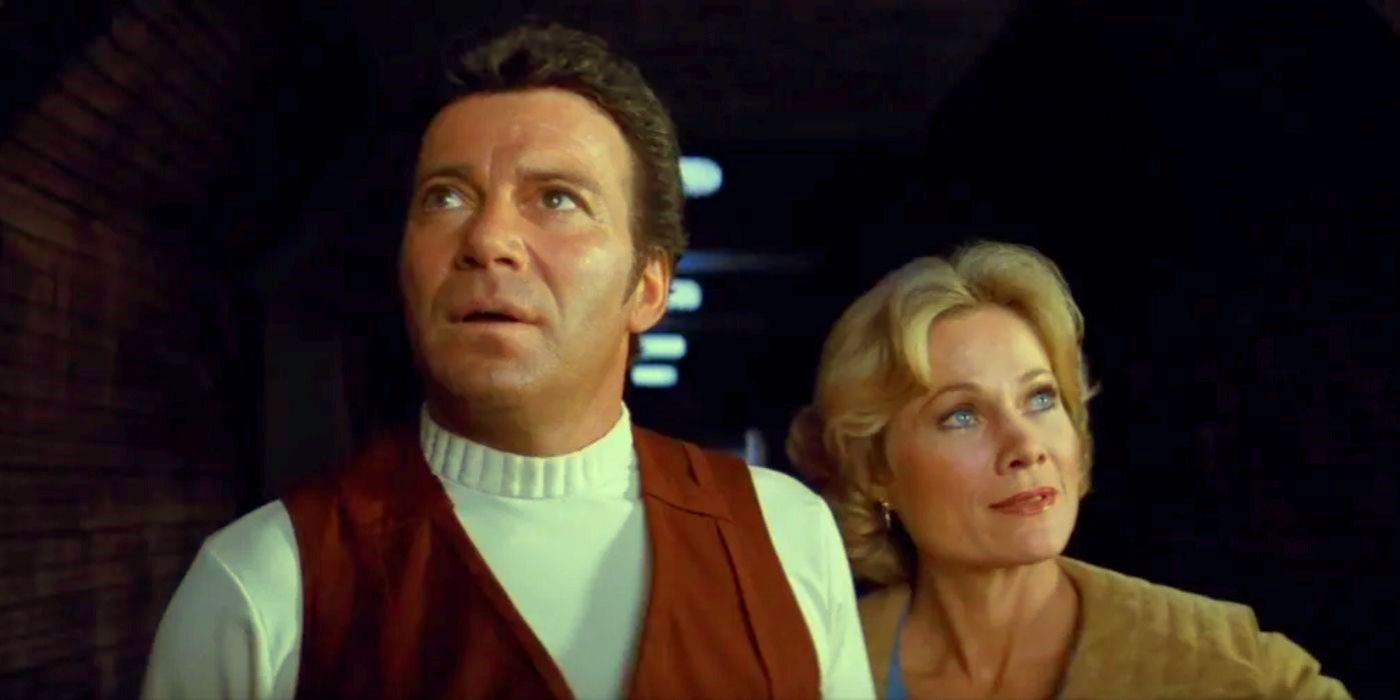
This movie is widely considered one of the best ever made. Released in 1982, it completely transformed the Star Trek series and set a new standard for science fiction franchises. Even after 44 years, it remains a classic and continues to be more impressive than many newer space adventures.
As a huge movie fan, especially of sci-fi, I think The Wrath of Khan is incredibly special – it’s a tough act to follow. But believe it or not, there are a handful of other sci-fi films that really stand up to it. Whether they’re the best of other famous series or completely original stories, these movies are just as good, or even better, than what many consider Star Trek‘s finest hour.
Blade Runner Is the Ultimate Sci-Fi Cult Classic
The story takes place in a dark, futuristic world where artificial people, known as Replicants, coexist with humans. After a group of incredibly advanced Replicants escapes from a top-security facility and flees to Earth, Rick Deckard, a troubled blade runner played by Harrison Ford, is tasked with tracking them down.
Although Blade Runner wasn’t initially a hit with audiences, it has since become a beloved cult classic. Released in 1982, the sci-fi thriller essentially created the dark, futuristic, and technologically advanced world we now frequently see in movies. Its influence even extended to a second acclaimed film, Blade Runner 2049, which came out in 2017.
Aliens Is the Perfect Sci-Fi Action Sequel
James Cameron directed the sequel to Ridley Scott’s classic horror film, Alien, titled Aliens. The film ramps up the action, putting Sigourney Weaver’s character, Ellen Ripley, in another terrifying battle against the deadly xenomorphs. This time, Ripley teams up with new characters at a mining colony on another planet, and she’s determined to protect a young girl while fighting for survival.
Aliens is a standout sequel, surpassing the original in nearly every aspect. The action sequences are larger and more thrilling without becoming over-the-top, and Ripley’s fight for survival feels even more personal and impactful. Released in 1986, the film successfully transformed a sci-fi horror story into a grand-scale action adventure that remains a beloved classic.
The Thing Is the Pinnacle of the Creature Feature Sub-Genre
The film The Thing is based on John W. Campbell Jr.’s 1938 story, Who Goes There? It features a strange alien creature capable of perfectly copying other life forms. As this creature terrorizes a research team stationed in Antarctica, the team members become increasingly paranoid, realizing that anyone among them could be the Thing in disguise.
Despite having a low budget and limited special effects, The Thing is a truly effective monster movie – a perfect example of the genre. Beyond just scares, it’s a classic sci-fi story that, like many of the best, uses a terrifying creature to explore the darker side of human nature and our inherent flaws.
Arrival Is a More Cerebral Take on the Sci-Fi Genre
Denis Villeneuve’s 2016 film, Arrival, is a thought-provoking science fiction story that focuses more on ideas and emotions than typical sci-fi movies. Amy Adams plays Dr. Louise Banks, a linguistics expert who is asked to find a way to communicate with aliens after their spaceship lands on Earth. As pressure mounts, Dr. Banks discovers a remarkable and moving method for connecting with them.
Unlike typical alien invasion movies, Arrival focuses on the quiet, thoughtful process of making contact with a new lifeform. While it doesn’t have the fast-paced action some sci-fi fans expect, the film explores fascinating ideas about life, death, feelings, and what it means to be human. Even ten years after its release, it remains a standout film despite a lot of competition.
2001: A Space Odyssey Is an All-Time Classic
As a huge sci-fi fan, I always say that this movie really kicked things off for the genre as we know it today. It came out in 1968 and is based on Arthur C. Clarke’s writing – it’s all about humanity trying to figure out this strange alien object, a monolith, that just shows up on Earth out of nowhere. But what starts as a simple investigation quickly turns into something much more dangerous when the crew realizes they’re facing a real threat.
2001: A Space Odyssey explores ideas that are still common in science fiction today—like worries about artificial intelligence, our curiosity about alien life, and the possibility of humans evolving beyond our current limitations. This classic film, directed by Stanley Kubrick, also revolutionized special effects, which are now essential to the sci-fi genre.
Dune: Part Two Is One of the Greatest Sci-Fi Flicks of the 21st Century
Dune: Part Two picks up where the first film left off, continuing Denis Villeneuve’s powerful adaptation of the classic science fiction novel that heavily influenced franchises like Star Wars. Timothée Chalamet returns as Paul Atreides, who gains a devoted following among the Fremen people of Arrakis. Seen as a messianic figure, Paul leads a rebellion against the ruthless House Harkonnen – the family responsible for his father’s death – and aims to overthrow the Emperor and take the throne.
Dune: Part Two is a visually stunning film with a compelling story that successfully captures the important warnings found in Frank Herbert’s book. It strikes a rare balance between thought-provoking themes and impressive visuals, something few modern sci-fi franchises achieve. The movie delivers everything fans expect from a blockbuster and expertly sets up the final installment, Dune: Part Three, coming to theaters in December.
The Matrix Changed Hollywood (and Sci-Fi) Forever
The Matrix is widely considered one of the most influential and well-known science fiction movies ever made. Released in 1999, the film takes place in a bleak future where machines have imprisoned humanity within a simulated reality called “The Matrix,” which appears to be a perfect version of our world. After being awakened from this illusion, Neo (Keanu Reeves) becomes a key figure in a fight to free humanity and lead the resistance against the machines.
As a sci-fi fan, I’ve seen a lot of movies try to capture the magic of The Matrix, and honestly, most fall short. What really struck me about it, even now, is how it manages to dive into some pretty complex sci-fi ideas without alienating anyone. It’s a genuinely captivating story, and let’s not forget the action! The fight choreography was revolutionary – it completely changed how action was filmed and still feels fresh today. It’s a film that truly deserves its place as a classic.
Children of Men is a Gritty Vision of a Dreary Future
The film Children of Men takes place in 2027, in a world facing a bleak future: humans can no longer have children, meaning the species is slowly dying out. As society crumbles, a government worker named Theo Faron (Clive Owen) learns about the first pregnant woman in twenty years. Realizing she represents humanity’s last chance, he dedicates himself to protecting her and getting her to safety.
Alfonso Cuarón’s 2006 film, Children of Men, offers a grim vision of the near future, showing the potential for widespread chaos if society loses hope. Unlike many science fiction movies, it feels very realistic, and its groundbreaking long takes – filmed as if in a single shot – remain stunning even today.
Terminator 2: Judgment Day Is the Rare Sequel That Improves a Franchise
Terminator 2: Judgment Day is a follow-up to the popular 1984 sci-fi movie. Released in 1991, it brings back Arnold Schwarzenegger as the Terminator, but this time he’s been changed to protect John Connor, a future leader. When a more advanced Terminator appears with the goal of destroying John and his mother, Sarah, the T-800 joins forces with them to try and save the future.
Terminator 2: Judgment Day is widely considered the best film in the Terminator series, setting a new standard for action and storytelling. While the original Terminator was groundbreaking, Judgment Day takes everything to the next level. Beyond the thrilling action sequences, the film is powerful because of its emotional depth, exploring the question of whether people can alter their destiny. This kind of exploration is what makes science fiction so compelling, and director James Cameron delivers it brilliantly in this sequel.
Solaris Is an Introspective Take on Science Fiction
Andrei Tarkovsky’s 1972 film, Solaris, is based on a novel by Stanisław Lem. It’s set on a remote space station orbiting the planet Solaris, and features a crew of just three scientists. Their mission is disrupted when everyone on board experiences sudden and intense emotional breakdowns. The story then centers on a psychologist sent to the station to investigate what’s happening.
Unlike many early science fiction films that focused on exciting visuals and action, Solaris uses its space setting to explore more personal themes. It’s less about the vastness of the universe and more about the complexities of the human mind and emotions – things like sadness, loss, and finding forgiveness. Similar to Star Trek II: The Wrath of Khan, Solaris prioritizes relatable human experiences over grand spectacle.
Found an error? Send it so it can be corrected.
Read More
- Off Campus Season 1 Soundtrack Guide
- Chainsaw Man Volume 24’s Cover Art Reveals a Brand-New Denji
- X-Men ’97 Finally Gave Gambit the Hero Moment He Deserved
- 46 Years Later, The Mandalorian & Grogu Answers A Major Empire Strikes Back Question
- 10 Worst End-Game Couples In Sitcom History
- HoI4 fans harsh reactions to the announcement of another DLC pack
- DoorDash responds after customer uses AI to make food look bad and get a refund
- Gold Rate Forecast
- Emily Henry Says to ‘Trust the Vision’ For Beach Read Adaptation
- Katanire’s Yae Miko Cosplay: Genshin Impact Masterpiece
2026-05-03 23:17