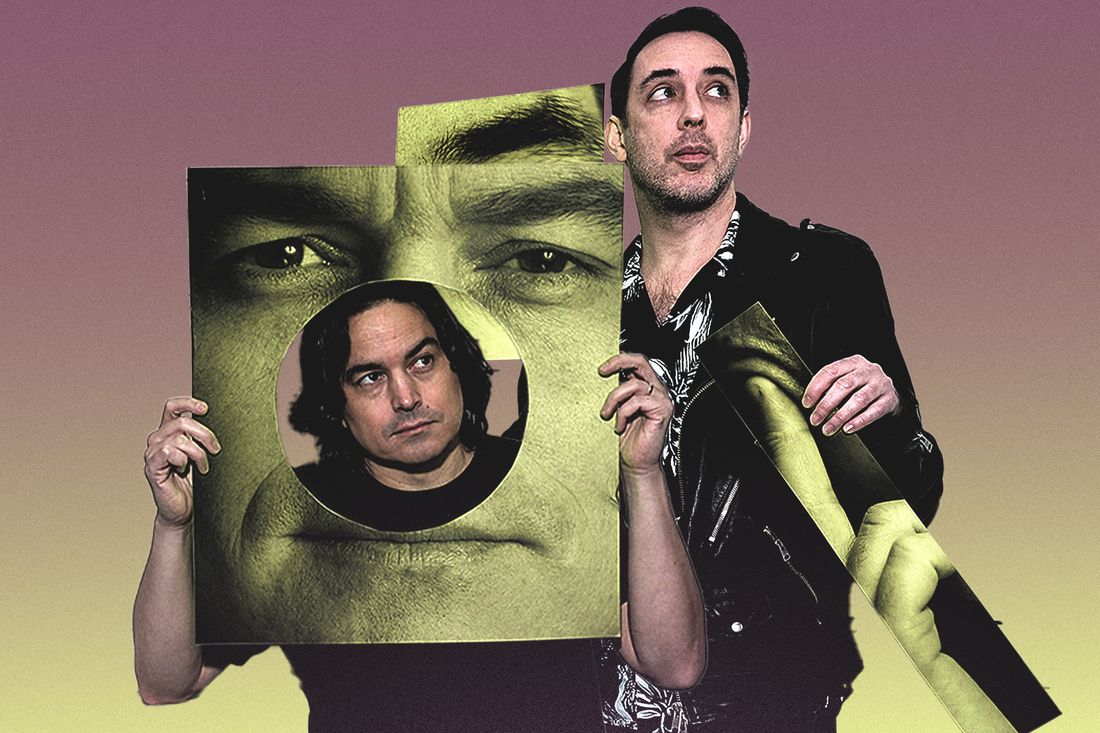
You might not be familiar with the band Wolf Parade, but you’ve almost certainly heard their song “I’ll Believe in Anything” if you watched the show Heated Rivalry. It was featured in several important scenes, including the memorable kiss between Scott and Kip in episode five. Since late December, the song has become incredibly popular, appearing in everything from fan-made TikTok videos to the soundtracks of energetic nights out.
It’s quite a feat that the song is experiencing a comeback after two decades. This revival was sparked by Jacob Tierney, the writer and showrunner of Heated Rivalry, who’s been a fan of Wolf Parade for years. He loved the song so much he built scenes and dialogue around its lyrics – for example, a character advises Kip to seek a relationship filled with “sunshine.”
This is good news for Wolf Parade, a band that’s experienced the typical ups and downs of indie rock since starting in Montreal in 2003. But in today’s music landscape, does featuring a song on a popular TV show still have the same impact as being on shows like The O.C. or in commercials like those from M&M’s back in the early 2000s? We spoke with Wolf Parade members Spencer Krug and Dan Boeckner to get their perspective.
So, Spencer, the story behind your song ending up in Heated Rivalry is that you first met director Jacob Tierney years ago about possibly composing music for a film he was making. That project didn’t pan out, but he promised to remember Wolf Parade for future opportunities. Surprisingly, 20 years later, he followed through! Do you recall that initial meeting?
Spencer Krug: I do. We grabbed drinks on the patio of Casa del Popolo in Montreal. He was hoping I’d score his early film, The Trotsky – it’s a comedy about a kid who believes he’s Leon Trotsky. It didn’t work out – I can’t even recall the exact reason – but it was amicable. It was likely a matter of timing or perhaps he felt I lacked experience with film scoring. He was a really nice guy, though, and said he’d get back to me eventually. It took a long time, but he did!
So, how did the licensing agreement actually happen? Did your team bring the offer to your attention?
Dan Boeckner: We’ve been working with a publishing company called Third Side, based in Montreal, and they’ve always treated us well. It’s a smaller, family-run company – everyone there comes from the independent music world.
Usually, when someone wants to use our music, it comes through our team who tell us about opportunities – like a Canadian film offering $1,000 for a song. We then decide if it’s a good fit. But this request was unique because Jacob clearly explained how he envisioned the song being used in the film, specifically where it would appear in the story and which key moments it would emphasize.
I was really surprised by this licensing proposal – I hadn’t seen anything quite like it before. I was already familiar with Jacob’s work on shows like Letterkenny and Shoresy, but this felt fresh and unique. A lot of licensing deals these days just seem to throw a huge amount of content – mostly series and movies from streaming services – at networks. Having received many of these requests over the past few years, it often feels like little thought goes into putting them together. This one was different, and for me, it was an immediate approval.
I was so struck by how much thought and care went into that moment. You could just feel how much he connected with the song – he really wanted that specific one, and that made our decision easy. It wasn’t like we were a backup plan; it felt like the whole project hinged on us saying yes. Honestly, I got the sense that if we’d declined, he would have had to rewrite parts of the script!
He likely worked so hard on the pitch because he really needed this to happen. SK said that after reading it, they were almost certain they’d approve it. They also thought it was a truly original idea and are excited to be involved.
The show clearly doesn’t have a huge budget, and it doesn’t appear that the kind of big paydays you’d get from a simple endorsement deal – like a major commercial for a brand like M&M’s back in 2006 – are readily available anymore.
It’s unlikely bands like The Shins or Modest Mouse will receive large sums of money for having their songs featured in commercials anymore. The era of big payouts – like The Shins getting $1 million for a McDonald’s ad or Modest Mouse receiving six-figure payments – is finished.
Just to be clear, a six-episode Canadian series isn’t going to fund someone’s child’s education, is it?
DB: That’s right. But I genuinely believe Jacob did the best he could given the circumstances. The offer wasn’t disrespectful, and as Spencer pointed out, the pitch was so well-thought-out that it was an easy decision either way.
I have to say, the music in this show really stood out. It reminded me of a time when creators carefully chose songs to build a specific mood or style. Nowadays, though, it feels like a lot of new shows just grab whatever licenses they can, and it doesn’t always feel as intentional or cohesive. This soundtrack, however, felt different – thoughtfully curated and really adding to the overall vibe.
Sometimes, people just want to use the music from a song – the instrumental part – as background music, and that’s a common request for us. They might like a particular beat or guitar part but don’t want vocals interfering with their dialogue. For example, they could use the music while two characters are talking in a scene. That’s perfectly acceptable. However, as Dan mentioned, it’s different from creating a full soundtrack that complements an entire project.
Are you receiving extra payments now that the show is available in Europe and other countries, or was it just a single payment?
SK: It’s just the single payment. We received our fee, and that was it. We don’t receive any royalties later on. However, the show gaining visibility online through social media and streaming is a nice benefit as it’s released in different countries. That ongoing exposure is great.
I saw a statistic claiming streams of “I Believe in Anything” increased by 3,000 percent after Heated Rivalry was released, but I’m skeptical that you were already getting 10 million streams a month for that song beforehand. What does that 3,000 percent increase actually mean in practical terms for you all? I read that Dan mentioned it only equates to about $215 extra per band member.
Dan Boeckner: We’re still trying to figure that out; it’s too early to say. Wolf Parade is a bit of an odd case because we formed before Instagram became popular. Then, right as Instagram was taking off, we stopped touring for four or five years. So, we’re in a strange position where we still sell a lot of tickets when we do play live shows and we have a dedicated fanbase, but we never really built a strong social media presence, and we still don’t have many followers on those platforms.
Spotify pays around $3,000 for every million streams of a song. The record label gets half of that money, and the band receives the other half, so you can figure out how much the band actually earns.
It’s difficult to track where people are actually hearing a song. While Spotify provides data, it’s unclear if views on platforms like TikTok – where a song might be used in videos – translate into revenue for the artist. It’s hard to determine if bands are compensated when their music appears in TikTok videos, especially if it’s not officially featured.
SK: This is a big question within the industry right now. There’s a lot more activity on TikTok, but nobody knows how it impacts revenue. It’s a mystery, and even when payments are made, it’s likely the figures will be combined with other earnings, making it impossible to pinpoint exactly how much TikTok contributed to a song’s success. We may never get a clear answer on that.
I’ve been really curious about how Wolf Parade’s Canadian tour is going! It sounds like things are looking pretty good, though not a complete frenzy. Spencer said a few shows were already on track to sell out, and while one isn’t quite there yet, he thinks there’s been a bit of a jump in sales. He also mentioned the venues in rural Ontario have a smaller audience naturally. The really exciting news, though, is that they’re adding more dates in both Canada and the US, and their booking agents are getting a lot more offers than usual – which is a fantastic sign!
No offers to play a Heated Rivalry rave?
DB: Not yet, but we’re available!
SK: We should redo the whole record to techno. That seems like a good idea for those raves.
I’ve noticed a growing interest in Wolf Parade, especially over the past couple of years, from younger fans who prefer music played by live bands – not stuff made solely in bedrooms. I think bands like Geese are starting to bring this kind of angular rock music back into the mainstream, and it’s resonating with a new generation.
Recently, I’ve been surprised by how many young musicians – people in their early twenties – tell me they discovered Wolf Parade and really enjoy our music. They often mention that their favorite album is our second one. After our album Heated Rivalry gained popularity, even more younger fans started reaching out. It’s also been heartwarming to hear from people who listened to us in college and are rediscovering the band now, even if they don’t follow music as closely anymore.
It’s fair to criticize Spotify, but it’s great that young people can easily find any record they hear about with just a few clicks. They don’t have to go searching for it or request it from a library.
SK feels this has created a level playing field for music. Their drummer, Arlen, mentioned his 16-year-old daughter sees no difference between a song released yesterday and one from 1973 – it’s all just music available online. So, a kid might not know The Beatles simply because they haven’t been suggested by the streaming algorithm, and that’s okay. It’s a refreshing way to neutralize the importance of release dates and eras, making everything equally accessible.
Spotify sucks because it doesn’t pay artists, but there are some cool things about it.
That’s another plus – maybe the next generation, or even Arlen’s daughter’s, will finally escape our parents’ music. Seriously, wouldn’t it be incredible if a whole generation grew up without ever hearing the Rolling Stones, the Beatles, or “Hotel California”?
Spencer, you mentioned to The Globe and Mail that you felt detached from your song “I’ll Believe in Anything” because it was written and released a long time ago. Now that the song is popular again, has that changed your feelings about it, or helped you understand why people connect with it?
SK: I’ve been playing it a lot lately – I created a solo piano version for a show in Vancouver and am considering recording that version. Going back to it and even changing some of the lyrics has given me a new perspective. We’re also thinking about how Wolf Parade will perform it going forward. It’s always been a staple in our live shows, but now we know we’ll be playing it for years to come.
So, where should we place this in the lineup? I’m tempted to put it first to just get it over with, but I’m worried the audience might leave if we do.
I remember seeing the band Chumbawamba – they’re an anarcho-punk group who unexpectedly had a big hit with the song “Tubthumping.” At the festival, they played it three times! They started with a full version, then did a simpler, stripped-down version in the middle of their set, and finished with a really energetic performance of it.
I was just remembering a funny scene from The Simpsons with the band Bachman-Turner Overdrive. They visit Springfield and announce they’re going to play some of their newer songs.
The audience kept shouting for the band to play their hit song, ‘Taking Care of Business,’ but even when the band started playing, the crowd wasn’t satisfied and wanted them to get to the most popular part of the song.
SK: Yeah, all they want to hear is the chorus.
I really hope I don’t end up disappointed! It’s awesome that the band has such dedicated fans who appreciate all the songs, even the deeper cuts. Of course, “I’ll Believe in Anything” will still be played, which is great. It’s funny though, going back and rerecording everything has made me rethink some of the lyrics. I wrote those songs when I was just 25, before anything really happened with my music! Honestly, I never imagined anyone but my friends and our little band would ever hear them. It started with a few people in Montreal, then spread across the continent, and eventually ended up on a record! It’s strange to think about changing lyrics now, after all this time.
After twenty years, I realized this is my song and I can change anything I want. If a line feels silly, I’ll rewrite it. It’s amusing to see people covering it on TikTok – they stumble over the nonsensical parts and create their own lyrics, which aren’t much better, honestly. But I get it, because the original lyrics weren’t very clear to begin with.
DB: All of this has led me to realize that I’ve been singing this song wrong for 20 years.
SK: You’ve been singing “both legs”?
DB: I’ve been singing “both legs,” buddy. Singing my heart out every day.
People are misinterpreting a line in the first few verses – specifically, the line ‘We’ve both been very brave / Walk around on bowed legs.’ The artist is comparing the way they walk to that of a bow-legged cowboy.
DB: That’s not how I heard it.
Okay, that makes sense. People usually only remember the line about “both legs,” which is understandable. Then the next line says “wait for the scary day,” but it’s often mistakenly changed to “fight for the scary day.” We’re working to correct this misunderstanding.
Have you all watched the show? Does the song fit with what’s happening in the story? Does it feel like what the songwriter was aiming for, or does it capture the emotional impact they envisioned?
SK: Simply put, yes, I think the song and the show work well together. The song is full of positive energy and optimism, and while it sometimes feels like it might become chaotic, it manages to stay grounded.
The song is written in a very typical, upbeat key – C major – and feels intentionally cheerful, avoiding any sad or complex chords. It builds to a point where it feels like a triumphant finish. I think this feeling mirrors what’s happening in the show, which is why it’s connecting with so many people. The characters face challenges, but ultimately experience kindness and empathy. That’s something we all need right now. While it’s just a story, the happy ending reminds us that goodness exists and that it’s okay to be hopeful.
I think the positive response to the show is also due to the genuinely good people who created it. Dan, do you feel the same way? I remember seeing your tweet about Hudson Williams and his stance against AI, where you mentioned feeling completely justified in the Wolf Parade licensing decision. Dan responded, saying he couldn’t have asked for a better project to be involved with.
I’m grateful I grew up in a small Canadian logging town in the 1990s, before the internet was widespread. While things might be a little better for kids now, the social scene in my town was tough. Hockey players were at the top of the pecking order, and many of them were unkind and used hateful slurs – specifically the F-slur – against anyone who wasn’t one of them. That’s why it means so much to me to see the culture around hockey being challenged and changed. I love seeing signs playfully calling the rink a “boy aquarium” and encouraging players to show affection, it genuinely makes me happy.
While major shifts in the NHL’s culture might not happen quickly, the song “I’ll Believe in Anything” could become a unifying anthem for LGBTQ+ fans and their allies at games, signaling a sense of belonging.
This feels like a positive step. Similar to a well-executed performance, it balances excitement with a delicate approach and ultimately succeeds. People are often looking to media for change because they feel powerless to create it themselves. This song offers a glimmer of hope when many feel stuck.
It’s not about fundamentally changing hockey. It’s more about people enjoying this and, as you mentioned, maybe getting a break from hearing the same old songs – like that Jack White bass line. It would be nice to have something fresh, wouldn’t it?
Read More
- United Airlines can now kick passengers off flights and ban them for not using headphones
- Solo Leveling’s New Manhwa Chapter Revives a Forgotten LGBTQ Story After 2 Years
- The Boys Season 5 Spoilers: Every Major Character Death If the Show Follows the Comics
- How to Get to the Undercoast in Esoteric Ebb
- Invincible Season 4 Episode 6 Release Date, Time, Where to Watch
- TikToker’s viral search for soulmate “Mike” takes brutal turn after his wife responds
- All Itzaland Animal Locations in Infinity Nikki
- ‘Timur’ Trailer Sees Martial Arts Action Collide With a Real-Life War Rescue
- Mewgenics vinyl limited editions now available to pre-order
- Gold Rate Forecast
2026-02-09 20:58