
The details of Hind Rajab’s death have been confirmed through multiple reports. On January 29, 2024, Hind’s family was forced to evacuate their home in Gaza City’s Tel al-Hawa neighborhood. Her mother, Wesam Hamada, decided it would be safer for Hind to travel with her aunt, uncle, and cousins in their black Kia, while she walked with her baby brother. Tragically, a tank shelled the car during the journey, killing most of those inside. Hind’s 15-year-old cousin, Layan, managed to contact a dispatcher named Omar at the Palestine Red Crescent Society, saying, “They are shooting at us – the tank is right next to me,” before the call was cut off by heavy shelling.
When Omar called back, 5-year-old Hind answered, her voice small but clear. She told them everyone else was gone and desperately asked Rana, one of the dispatchers, to come get her. Rana and her colleagues kept talking to Hind while they waited for the Israeli military to approve sending an ambulance. The paramedics were only eight minutes away, but the approval process took hours – a delay that made no sense to Hind. They had to follow a route specifically approved by the Israeli Ministry of Defense. Finally, after sunset, they received permission. But as the ambulance neared the car where Hind was waiting, it was hit by a tank. Twelve days later, Hind, her family, and the paramedics, Youssef Zaïno and Ahmed al-Madhoun, were found dead. Investigations by the Washington Post and other groups suggest they were killed in an attack by Israeli forces, though Israel had previously stated its troops weren’t in the area.
Tunisian filmmaker Kaouther Ben Hania first encountered Hind’s voice while waiting for a flight at LAX in February 2024. The Red Crescent had shared short clips of the call shortly after losing contact with its team, before their bodies were discovered. Ben Hania was traveling to promote her film, Four Daughters, which was up for Best Documentary at the Oscars. Once the awards season ended, she was getting ready to film Mimesis, a project about beauty, poetry, and Islamic art she’d been developing since 2014. But Hind’s desperate plea felt personally directed at her. “It sounded like she was asking me to save her,” Ben Hania recalls. This led her to question her role as an artist during a time of immense suffering. She immediately called her producer, Nadim Cheikhrouha, and told him Mimesis would be put on hold—again. Cheikhrouha jokingly thought the film was jinxed, but quickly understood. “When she explained she wanted to respond to what was happening, I completely got it.”
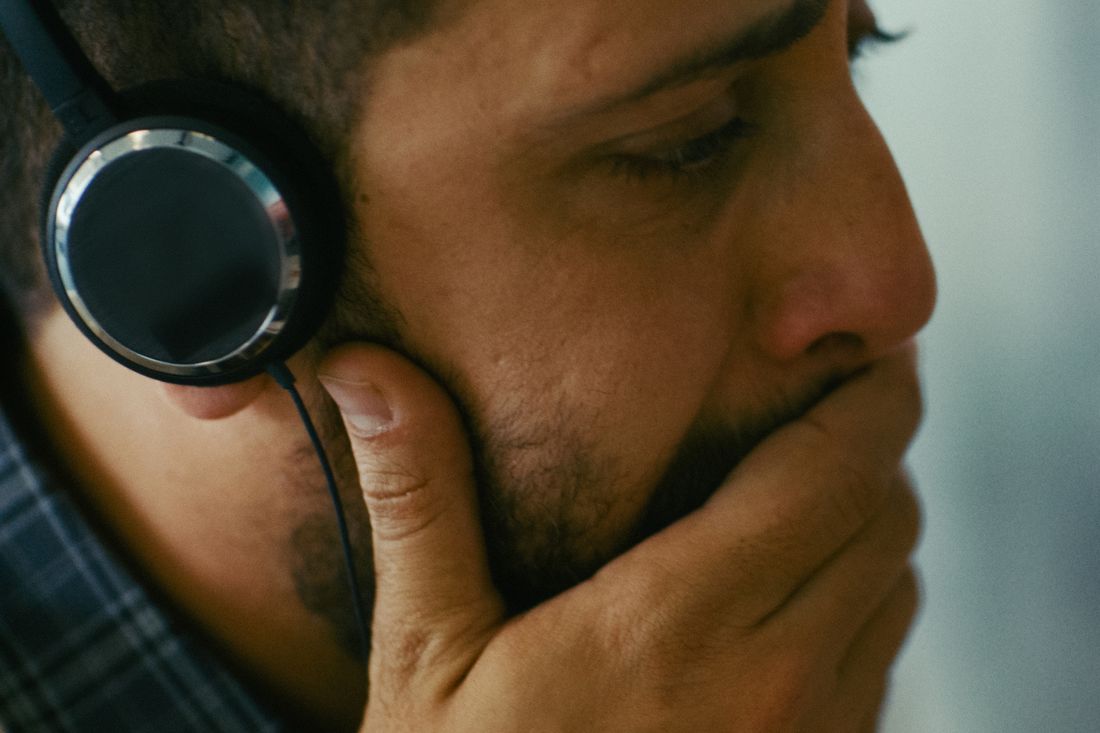
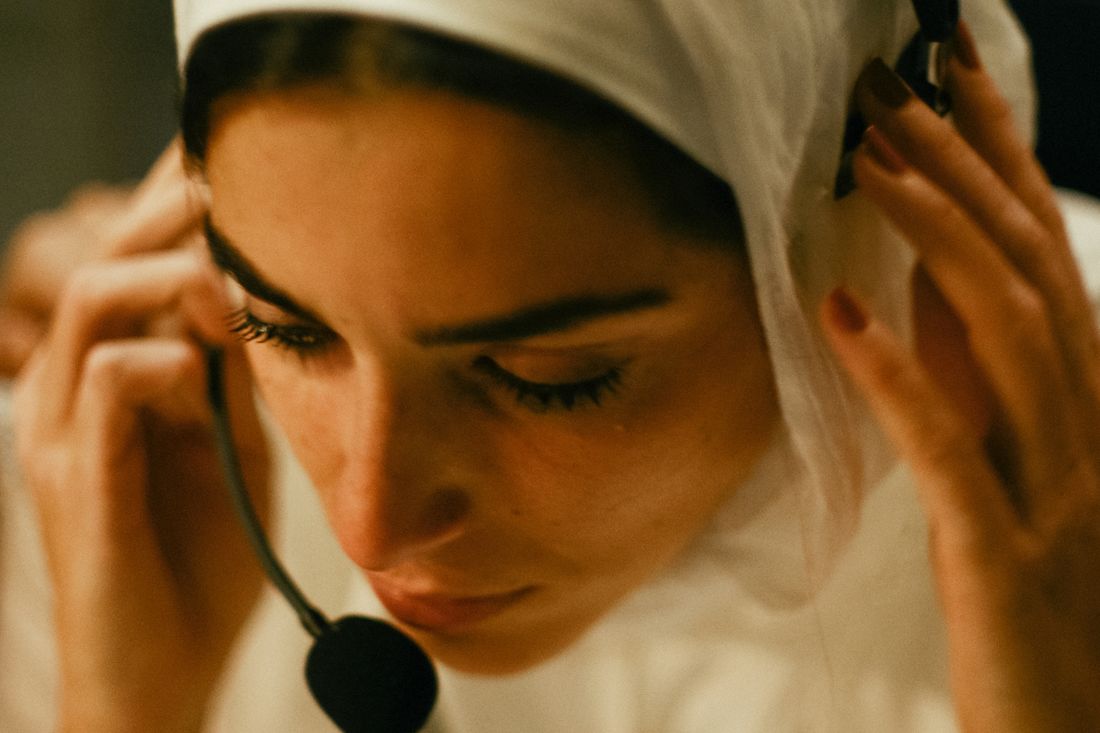
Hind’s death sparked international protests, including a student sit-in at Columbia University where protesters renamed a building in her honor. The tragedy also inspired Macklemore to write a song. Within ten months, director Ben Hania created The Voice of Hind Rajab, an 89-minute film told from the perspective of Palestine Red Crescent Society workers. Like many of Ben Hania’s films, this one blends documentary and narrative techniques, using actual audio from the emergency calls. Hind’s voice, along with those of Layan and the paramedics, is authentic. The film features Palestinian actors who closely resemble the real Red Crescent staffers: Motaz Malhees plays Omar, who first receives the call; Saja Kilani is Rana, his supervisor who comforts Hind with Quranic verses; Clara Khoury portrays Nisreen, the counselor guiding Hind through breathing exercises; and Amer Hlehel plays Mahdi, who coordinates with the Israeli defense ministry to find a safe route. The actors didn’t hear Hind’s full voice until they were on set, allowing for genuine reactions.
The film is deeply affecting and emotionally challenging. The Red Crescent workers, based in Ramallah, serve as a stand-in for the viewer, who witnesses a genocide unfolding through a livestream on their phone. The director’s decision to feature the voice of Hind, a young girl, is both powerful and heartbreaking. Her voice feels incredibly real, creating the sense that rescue was still possible. As director Ben Hania explains, he wanted to transport the audience back to that critical moment. Hearing her voice is a visceral experience; it resonates physically within you. While watching, I found myself instinctively clutching my chest, bracing for impact, and struggling to breathe, fearing a panic attack.
The film’s subject matter is undeniably strong, likely attracting many cautious Hollywood producers to support it. Odessa Rae and James Wilson joined the project early on, during its funding and development stages, and used their industry connections to bring others on board. Jonathan Glazer, a known voice for social commentary – as demonstrated by his Oscar speech for The Zone of Interest – was a fitting addition, having frequently collaborated with Wilson. After the film was completed, prominent names like Joaquin Phoenix, Rooney Mara, and Alfonso Cuarón also signed on, along with the leadership team of Plan B – Dede Gardner, Jeremy Kleiner, and Brad Pitt.
Wow, seeing the premiere of this film at Venice was something else. I heard it really impacted people – press screenings turned into emotional moments with tears and clapping, and the official premiere? It got a 23-minute standing ovation – a new record! There was apparently some debate among the judges about whether it should win the top prize, the Golden Lion. Some felt the filmmakers used Hind’s voice in a way that was too emotionally manipulative. In the end, they awarded the Golden Lion to Jim Jarmusch’s film, but our film, The Voice of Hind Rajab, still took home the Silver Lion, which is amazing!
Ben Hania’s films often blend documentary and fiction, similar to works like Joshua Oppenheimer’s The Act of Killing and Nathan Fielder’s The Rehearsal. Her 2013 film, Blade of Tunis, is a mockumentary shot in a raw, guerilla style. In it, she investigates a local urban legend about a man who attacked women on a motorbike to enforce a strict idea of modesty. While researching, a man suggests he could be the attacker for her, inspiring her to hold auditions. Men arrive hoping to portray the slasher, but the session is unexpectedly interrupted by someone claiming to be the real culprit. Though he was once a suspect, the police had released him, and the actual attacker – and potentially others who copied him – were never caught. The auditions themselves revealed a disturbing truth: anyone could have been the slasher, echoing the famous line “I am Spartacus.”
Ben Hania’s recent film, Four Daughters, focuses on a Tunisian mother and her four daughters whose family is torn apart when the two oldest daughters leave to join ISIS. The film doesn’t explore why they joined, but rather how they arrived at that point. Ben Hania interviewed the mother and younger daughters, then used actors to recreate past conversations and arguments, including difficult moments like instances of abuse. In a particularly poignant scene, the real mother watches an actress portray her physically abusing her daughter and expresses remorse.
When Ben Hania began working on The Voice of Hind Rajab, her first step was to speak with Hind’s mother, Wesam Hamada. She was determined to respect Wesam’s wishes and wouldn’t move forward with the film if Wesam didn’t approve. Thankfully, Wesam gave her blessing, as did the Palestine Red Crescent Society. Ben Hania then obtained hours of audio recordings featuring conversations between Hind, Layan, and the paramedics involved. She also interviewed Red Crescent workers to understand their experiences and the events of that day. The Red Crescent allowed her to use their logo, and from the beginning, Ben Hania committed to sharing any profits from the film between Hind’s mother and the organization.
Ben Hania completed a first draft in August. Audio from Hind was highlighted in green. The dramatic scenes of her colleagues debating whether to break rules to help her were based on her interviews. Early on, Cheikhrouha questioned why the Red Crescent couldn’t simply send an ambulance to rescue Hind. Later, Ben Hania added a section where Mahdi, a Red Crescent leader, used a glass wall to illustrate the complicated process of getting permission from COGAT – a group that works with the Israeli military – to ensure the ambulance’s safe passage.
Filming started in November. They had funding for the first week and planned to secure more for the remainder of the project. As Cheikhrouha recalls telling Kaouther, they had to commit fully. He was prepared to risk financial ruin, even thinking, ‘What does it matter? The world might end anyway.’ He approached potential private investors with the same attitude. He didn’t try to persuade them; instead, he simply said, ‘Join if you’re enthusiastic, but don’t if you have any doubts.’ He found that when people were genuinely on board, the process became much easier.
I was really fascinated to learn how Kaouther Ben Hania cast her film. She contacted actresses like Clara Khoury – who plays the counselor, Nisreen – and asked them to send in self-taped auditions, but she kept the film’s actual story a secret. Instead of giving them lines, she asked most of them to improvise short monologues based on a simple idea. Clara did a take where she was comforting a mother over the phone, promising her daughter was safe, and Saja Kilani, playing Rana, did an incredible improv about talking someone through a birth over the phone. It wasn’t until after they’d done these improvisations that Kaouther revealed the film was about Hind.
Some people were initially unsure about making a film while violence was still ongoing. Malhees, who grew up near Jenin, questioned the purpose of art during such a time, saying, “I was living through it and wondering what art could even accomplish.” Amer Hlehel, a playwright and actor, felt similarly. However, their doubts disappeared when they read the script. The film resonated with their shared sense of powerlessness and became a way to fight against it. Hlehel admits he almost declined the project, but the script felt like a lifeline. It wasn’t about the events in Gaza, but about their own experiences as observers, and that made all the difference. It gave them a sense of purpose and a way to express what they were feeling.
Hlehel, Khoury, and Malhees—three of the actors—had all worked together in Palestinian theater previously. Each actor felt a strong connection to the real person they were portraying. For example, Malhees discovered that the man he played was also a painter and poet. He’d spoken to Hind many times, and her death deeply affected him, making it difficult to even hold his new baby. Taking on these real-life roles added extra weight to the artistic process. Kilani shared that Rana offered him valuable guidance, telling him, “Don’t try to imitate my voice. Just listen to Hind and let her story inspire you.”
As a film lover, I found this detail fascinating. Apparently, the actors practiced their scenes together, but never with the actual recordings of Hind’s voice. They’d heard snippets online, of course, but hadn’t listened to the full conversations. Malhees explained they asked the director, Kaouther, if they could hear everything, but she refused, saying it would be too emotionally devastating. She wanted them to react naturally to the voice during filming, relying on what the script told them. Later, Malhees realized Kaouther was absolutely right – hearing those conversations beforehand would have been incredibly damaging.
The film was shot in order, with the crew aiming to keep takes concise, though one notably lasted 35 minutes. Director Ben Hania, while usually a perfectionist, often let minor technical flaws, like a visible boom microphone, slide because he didn’t want to interrupt genuine emotional performances. He explains that the actors were professionals who could redo the take, but he felt it wasn’t necessary. During the initial days of filming at Tunivisions in Tunis, the scenes were carefully planned out. Cinematographer Juan Sarmiento G. used a handheld camera to create a fluid, intimate feel. The sound team prepared individual audio files for each of Hind’s lines, allowing the actors to hear her voice through earpieces and respond naturally. While the actors knew their lines, hearing Hind’s voice for the first time was profoundly moving. Malhees described the experience as devastating, admitting she felt a futile desire to save Hind. Hlehel emphasized that it moved beyond acting; it felt like a real, unfolding event, and the actors simply reacted authentically to what they heard.
The film deeply affected Malhees, bringing back painful memories from his childhood. He recalled a particularly traumatic event during the Second Intifada when his friend, Amir, was shot. Amir was unable to speak for months afterward, and religious leaders were brought in to pray for him. Around age twelve, Malhees processed the experience by writing and performing a play called The Land. He explains, “I hadn’t really confronted my childhood before, but the movie forced me to.”
In the film, Malhees’s character, Omar, is the first to communicate with Layan, Hind’s cousin. Though the connection is weak, he overhears her say a tank is coming. Malhees was so shaken by the scene that he forgot he was acting. “I was supposed to deliver lines, but I was completely stunned,” he says. “After the director, Kaouther, checked on me, I realized where I was. It felt like she had been killed, and I could almost hear it happen.”
Colombian cinematographer Sarmiento G. doesn’t speak Arabic, and he worried this language barrier might make it hard to connect with Hind on an emotional level. While filming a scene where Omar was playing a video game on his phone, he had a powerful realization. He described feeling a deep connection, saying it reminded him of how people in Western society often use their phones to disconnect from their feelings. This realization moved him to tears, and the crew had to pause filming for half an hour.
Even though The Voice of Hind Rajab premiered with fanfare at the Venice Film Festival, received positive reviews, and attracted interest from Hollywood, it couldn’t secure a major distributor in the U.S. Several executives liked the film, showed it to their teams, but ultimately decided not to move forward, sometimes citing a lack of resources. As director Ben Hania puts it, “Everyone passed. All of them.” He feels it’s important for American audiences to see the film, remarking, “America is crazy.”
The filmmakers received a distribution offer from Watermelon Pictures, a company specializing in Palestinian and Arab cinema. Watermelon Pictures was already releasing two other Palestinian films that year: All That’s Left of You (Jordan’s Oscar submission) and Palestine 36, featuring Jeremy Irons and Hiam Abbass (Palestine’s submission). Ultimately, while Watermelon Pictures contributed financially, the filmmakers chose to work with Willa, a company led by Elizabeth Woodward. Cheikhrouha explained, “It’s better to be a major project for a smaller company than a minor one for a larger company.” Willa, which had co-distributed its first film, You Resemble Me, in 2021, would be able to dedicate its resources to Hind Rajab.
Now that the film is moving beyond film festivals and getting wider release, it’s really opening itself up to more discussion – and scrutiny. Some people initially questioned whether it was ethical to use the actual voice of the child, Hind, while others felt that having an actor try to recreate it would have been even worse. I just read a really interesting piece in Sight and Sound where critic Joseph Fahim argues that the impact of hearing Hind’s real voice actually fades with repeated use, and that ultimately, it kind of takes away from her individuality. It’s a really powerful point. The film isn’t just about Hind, it’s about the specific bureaucratic and military failures that led to her death, and it feels like it represents a much larger tragedy – the devastating fact that an estimated 64,000 children have been killed or harmed in this conflict.
The film offered a sense of release for the Red Crescent workers who experienced the events it depicted. Counselor Nisreen texted Khoury, explaining she’d avoided revisiting the trauma of Hind Rajab for over a year, following her colleagues’ advice. Seeing the film, however, brought her peace, knowing Hind’s story and the stories of the paramedics who died trying to help her would be shared with the world. The cast and crew met Wesam Hamada and the Red Crescent workers for the first time at the Doha Film Festival in late November. Malhees, who frequently dreamt of Hind, was relieved to see her mother smiling. He remembers Hamada explaining his own smile: he often thought about playfully pinching Hind’s cheeks, as he used to do, and once, Hind appeared in his dream and offered him her cheeks to pinch.
Read More
- United Airlines can now kick passengers off flights and ban them for not using headphones
- Crimson Desert: Disconnected Truth Puzzle Guide
- All 9 Coalition Heroes In Invincible Season 4 & Their Powers
- Mewgenics vinyl limited editions now available to pre-order
- Assassin’s Creed Shadows will get upgraded PSSR support on PS5 Pro with Title Update 1.1.9 launching April 7
- Grey’s Anatomy Season 23 Confirmed for 2026-2027 Broadcast Season
- Viral Letterboxd keychain lets cinephiles show off their favorite movies on the go
- The Original Resident Evil is Finally Available on Steam
- All Golden Ball Locations in Yakuza Kiwami 3 & Dark Ties
- Does Mark survive Invincible vs Conquest 2? Comics reveal fate after S4E5
2025-12-11 15:58