
While learning from tutorials and stats is helpful, true skill comes from playing the game. Things like understanding the map without even looking, making smart choices when the pressure is on, and predicting what your opponent will do next can’t be taught – they’re developed through practice and experience. This article focuses on those skills you can only learn by playing, and how to develop that natural ‘feel’ for the game that no guide can fully explain.
Key Takeaways
- Turn theory into instinct through gameplay: Reading guides is a great start, but true skill is forged in the heat of a match. Focus on hands-on experience to build the muscle memory and quick decision-making that wins fights.
- Make your grind count with clear goals: Avoid mindless repetition by setting a specific, measurable goal for each session. Focusing on one skill at a time, like your aim or positioning, turns a long grind into effective, structured practice.
- Embrace failure to build real confidence: Every mistake is a lesson in disguise. Instead of fearing losses, treat them as data to refine your strategy, because true confidence comes from learning what doesn’t work and adapting your approach.
What is “Learning by Doing” in Gaming?
It’s a familiar feeling: you put in the work – watching experts, studying guides, and learning the maps – but when you actually start playing, things don’t go as planned. That difference between understanding the game and actually playing well is where practice comes in. It’s about transforming what you know into real skill through experience.
Strategy isn’t simply having a plan, but actually being able to use it when things get difficult. It’s easy to learn how to respond to an attack, but much harder to actually do it successfully in the heat of battle. Real progress comes from playing, making mistakes, and adapting as you go. You can’t just magically become skilled – you have to build that skill through experience, one game, one fight, and one lesson at a time.
Why Hands-On Experience is King
As a gamer, I’ve learned that you can only get so far with tutorials. Really mastering a game isn’t about what you know, it’s about what your hands just do. It’s about building up that muscle memory so you can react without even thinking. The best players don’t just know where to aim, they feel it, and can make those split-second adjustments that make all the difference. It’s the difference between knowing you should aim for the head and actually hitting that headshot when things get chaotic.
Here, you’ll pick up the subtle strategies that aren’t written down anywhere. You’ll learn to predict when another player will attack, how to use your surroundings to stay safe, and how to win even when you’re outnumbered. These skills come from real experience, not just reading instructions.
Where Game Theory Falls Short
While understanding strategy is a good first step, it doesn’t always reflect the unpredictable nature of an actual game. The concept of ‘grinding’ is also frequently misinterpreted – people often focus on improving their character instead of improving themselves as a player. Real skill isn’t about how powerful your character is; it’s about making smart choices, mastering the game’s controls, and developing a strong understanding of the game itself.
Simply repeating actions isn’t a good way to improve. If you’re just doing something over and over to earn rewards without really trying, it feels pointless. Practice is only helpful when you feel like you’re actually getting better. While learning the concepts is important, truly mastering a skill requires hands-on experience to understand how and when to apply what you’ve learned.
The Trap of Overthinking Your Game Plan
It’s a common experience: you spend a lot of time studying the game – watching experts, reading guides, and learning the best strategies. You build a perfect plan in your head, knowing exactly what to do. But the moment a real match starts and you encounter an opponent, everything seems to disappear. You freeze up, unable to remember your carefully prepared strategy while you’re under pressure.
It’s easy to fall into the trap of overthinking. Learning strategy can help you understand a game, but focusing too much on theory can actually hurt your performance. You might know what to do, but struggle to do it when the pressure is on. Trying to play perfectly can lead to hesitation or even freezing up. Instead, use strategy as a general guide, and rely on the skills you’ve developed by playing the game.
Escaping Analysis Paralysis in Competitive Play
Analysis paralysis happens when you’re overwhelmed by information and options. You get stuck trying to consider every possibility, which prevents you from making a decision. It’s like being unsure whether to act now or wait, or whether to use a powerful ability or save it for later. This fear of making the wrong choice can stop you from acting at all, and in a quick-moving situation, hesitation can be disastrous. Top players usually react instinctively, without overthinking. You can’t do that if you’re constantly analyzing every detail. To overcome this, focus on what’s most important. Instead of trying to plan a perfect strategy, concentrate on one immediate goal, like winning your next direct encounter or capturing the next objective.
How “Perfect” Plans Kill Progress
Forget about having a perfect plan – games are always changing and unpredictable. Your opponents are people, not robots, so they’ll surprise you, and even the best strategies will fail when faced with reality. Sticking stubbornly to a plan that isn’t working will only lead to frustration. It makes the game feel like work and defeats the purpose of playing, because you’re not learning or adjusting. To make progress enjoyable, you need to feel like you’re achieving something meaningful. Instead of trying to be perfect, focus on being adaptable. Think of your strategy as a guide, not a rigid set of rules. Real improvement comes from responding to what’s happening in the game and making quick, smart decisions.
How Practice Sharpens Your Skills
While tutorials and guides can give you a good starting point, real expertise comes from actually playing the game. Practice helps you move beyond just knowing what to do and allows you to do it automatically, even when things get stressful. It’s not enough to simply play for a long time; you need to focus on repeating key actions to train your brain and reflexes. Consistent practice builds the core skills that let you react instantly, anticipate what will happen next, and stay calm under pressure. That’s how all those hours of effort turn into clear, measurable improvements in your game.
Build Muscle Memory with Reps
Have you ever noticed how professional gamers seem to lock onto targets instantly? It’s not just chance – it’s about building muscle memory. When you practice consistently, your hands learn movements so well that they become automatic. This is key for making precise, quick actions, especially in fast-paced situations. Focusing on mastering your equipment and consistently aiming for headshots helps you perform better under pressure. When your basic skills are automatic, you can concentrate on more important things like strategy and where you are on the map.
Recognize Patterns, React Faster
As you spend more time playing, the game feels like it’s moving slower, but that’s because experienced players become better at reading what’s happening. They notice patterns and react quickly, something new players haven’t learned yet. This improved awareness comes from practice – after many hours of gameplay, you start predicting what opponents will do, like where they’ll hide or when a boss will attack, as in games like Diablo 4. It’s not about having special abilities; it’s your brain making connections based on all the previous moments you’ve experienced in the game.
Stay Cool Under Pressure
Winning in competitive games often depends on staying calm under pressure. Skills like precise movement, quick weapon switching, and overall control aren’t learned from books – they come from actually playing the game. The more often you find yourself in difficult, high-pressure situations, the easier they become. Practice helps you get used to the stress, and you gain confidence by overcoming challenges yourself, not just by watching others. This calm, focused state, developed through repetition, lets you make good decisions when opponents are panicking.
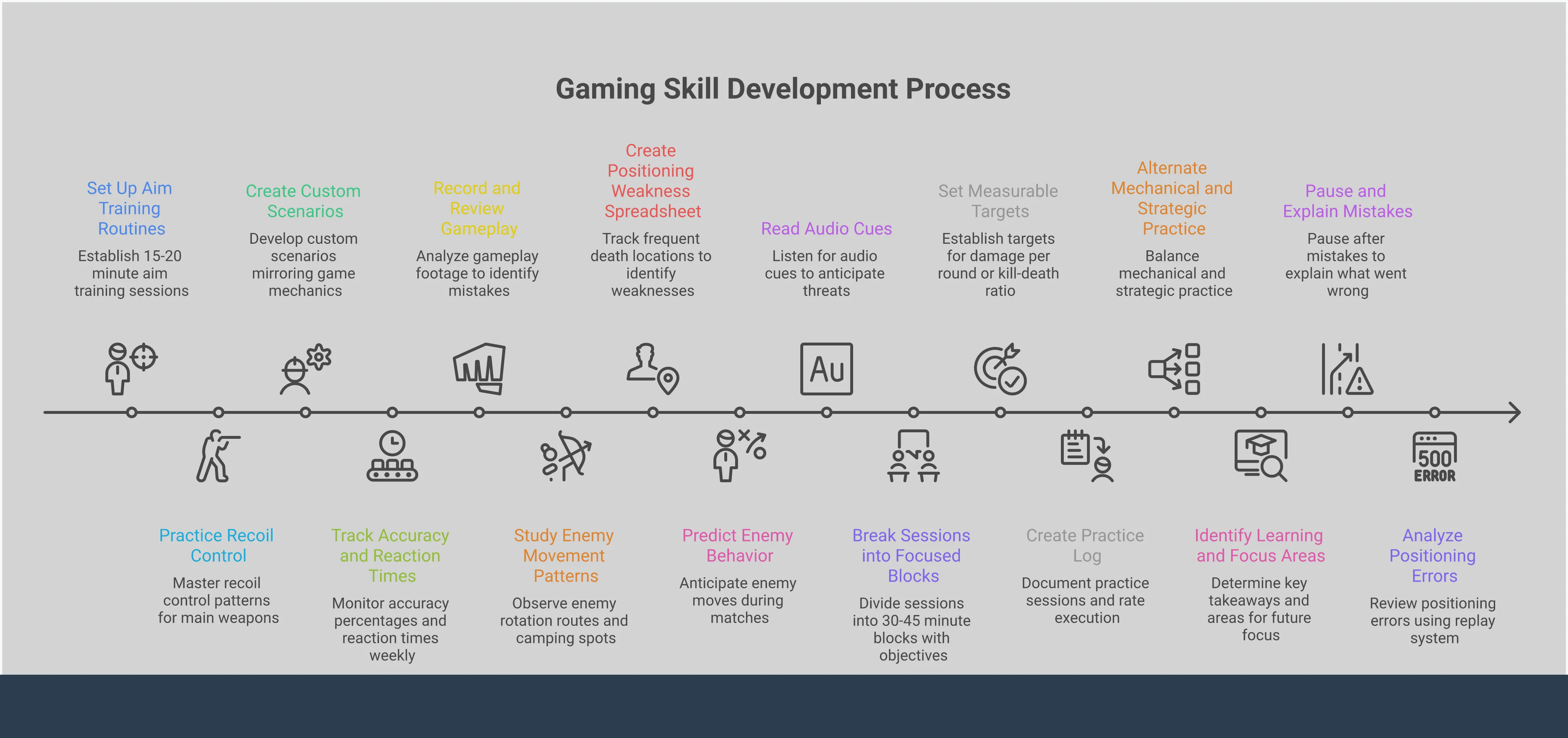
Skills You Can Only Learn In-Game
You can study all the guides and learn all the numbers, but true skill comes from actually playing the game. What separates good players from great ones isn’t just knowledge, it’s experience. These abilities develop through practice, reacting on instinct, and dealing with the pressure of a live match. It’s like the difference between understanding directions and actually taking the journey. Real mastery comes from playing, learning from both victories and defeats, and developing a natural feel for the game that no instruction manual can teach.
Master Map Awareness and Positioning
Understanding a map is helpful, but really knowing where to be and when is a much deeper skill. It’s not just about learning common hotspots from videos; it’s about feeling the rhythm of the game, anticipating where enemies will move, and getting into position before a fight begins. This takes practice with movement, quick weapon switching, and staying calm under pressure. Even the best weapons won’t save you if you’re consistently caught in a bad spot. This kind of instinct develops over time, through experience – learning from every ambush or mistake you make.
Sharpen Your Team Comms
Good team communication goes beyond simply announcing enemy positions. It’s about being clear, well-timed, and building trust with your teammates. During intense moments, there’s no time for lengthy explanations – you need to share vital information quickly and directly. This skill improves by playing with your team, understanding how they operate, and creating a common way of communicating, especially when things get stressful. Adjusting your communication as a situation changes – like when an enemy team attacks – can be the key to winning. That teamwork, often strengthened by successes and shared experiences, is what transforms a group of individuals into a truly coordinated team.
Read and Counter Your Opponents
Top players often seem to know what their opponents will do before it happens. This isn’t luck, but a skill developed by carefully watching and reacting to how others play. With experience, you begin to notice patterns – like when someone is about to attack aggressively, try to go around your defenses, or get flustered. This ability to read opponents lets you respond quickly and stay ahead. You improve by playing against many different players and adjusting your strategy on the fly. Knowing how the player community thinks and typically reacts can even help you predict their moves.
How Grinding Actually Makes You Better
Let’s face it, the term “grinding” often sounds like tedious work. However, if you embrace it with a positive attitude, it’s a fantastic way to improve your skills. It’s not simply about improving your in-game character; it’s about becoming a better player overall. This is where you transform what you know into skills you can actually use under pressure. By practicing repeatedly, you begin to understand the game on a deeper level, eventually reacting automatically instead of having to think through every move.
Unlock Advanced Mechanics
Watching tutorials can only take you so far. To really get good at advanced techniques, you need to practice them repeatedly – and it’s okay to fail a lot along the way. Consistent practice lets you work on the difficult skills like aiming for consistent headshots, predicting when other players will attack, and perfecting your movement. This repetition builds muscle memory, allowing you to perform complex actions automatically, even under pressure. It’s the best way to truly master your preferred Warzone setups and use them effectively when it counts.
Perfect Your Resource Management
All games require you to manage resources like health, ammunition, or ability recharge times. Through gameplay, you discover how valuable these resources are, learning how much you need to get through challenges and when to save them for later. Good resource gathering should always feel productive, not repetitive. This helps you understand how to manage your supplies effectively, which is especially important in games like Palworld where death has consequences. Ultimately, you’ll make better choices and be well-prepared for the toughest battles.
Find Consistency in the Grind
As a fan, I’ve always noticed that the best players aren’t just amazing, they’re always good. And it’s not luck – it’s practice, plain and simple. Really putting in the hours helps you get into a groove, almost like you’re on autopilot. It’s about getting so comfortable with the game that you just know what to do. You start to bridge the gap between what your character can do and what you can do. By repeating tough situations, you learn to react perfectly every time, which builds a solid base for your gameplay. That consistency is what lets them stay calm and win even when things get crazy – they turn chaos into something they can handle.
Find Your Balance: Grinding vs. Practice
I used to think that just playing for hours and hours would make me better, but I realized I was actually heading towards burnout! The biggest improvement doesn’t come from how much you play, but how you play. It’s about turning mindless repetition into focused practice. I’ve been trying to shift my thinking from simply ‘playing more’ to ‘playing smarter.’ When you combine the automatic skills you get from consistent play with really concentrating on what you’re doing, it creates a cycle where you actually see real progress. I’m excited to share how to make your time in the game more effective.
Set Clear Goals for Each Session
Playing matches without a clear goal is like going to the gym without a workout plan – you’re putting in time, but are you actually improving? It’s easy to fall into a repetitive cycle where you’re just playing for rewards, but to avoid that, give each session a purpose. Before you start, decide on one or two specific skills you want to practice. Maybe you want to improve your aim with a certain weapon or work on rotating to a specific location after landing. Having these small, achievable goals turns practice into focused training, making sure every match helps you get better.
Test New Strategies While You Grind
The repetitive tasks in games – often called ‘grinding’ – actually offer a great chance to try out new things. Because you’re repeating the same actions, use that time to experiment! If you always use the same gear or character, switch it up and try something different. Practice with weapons or characters you’re not as familiar with. This keeps the game interesting and helps you learn. When you focus on improving and trying new strategies, the grind feels less like work and more like a chance to get better. This way, you’re always making progress and expanding your skills, instead of just repeating the same thing over and over.
Use Your Stats to Guide Practice
Your game stats aren’t just about winning or losing—they can help you get better. Take a moment to review them. If you notice you’re consistently dealing low damage or dying quickly, those numbers point to areas where you can improve. Use this information to guide your practice. For instance, if you rarely get kills using your special abilities, focus on using those abilities more effectively in your next few games. By concentrating on a specific weakness identified by your stats, you can make real progress and turn it into a strength.
Structure Your Practice for Real Growth
Simply playing match after match won’t help you improve and can actually lead to frustration. To get better, you need to practice purposefully. Planning your practice sessions allows you to concentrate on what you need to work on, develop skills step-by-step, and make your practice time more effective. It’s about practicing smartly, not just putting in more hours. By setting clear goals and using the right methods, you can move from inconsistent gameplay to reliable performance. Let’s explore how to create a practice routine that delivers results.
Start with the Fundamentals
Don’t worry about complicated tactics right away. First, focus on mastering the basics. All skilled players have a strong understanding of their game’s core elements – things like how to move, aim accurately, and what each character or weapon is designed to do. For example, an expert playing ARC Raiders suggests completing expeditions and practicing consistently to earn valuable rewards. This idea applies to improving any skill: building a solid foundation will prepare you for more challenging situations. Practice the simple things until they become automatic.
Set Micro-Goals and Track Everything
Instead of setting broad goals like “get better,” break them down into small, specific targets for each practice session. For example, aim to win half of your one-on-one matches or use your special ability to help a teammate a few times. This helps you stay focused and motivated. Studies show that feeling like you’re making progress is key to staying engaged, otherwise practice can feel frustrating. These small wins create a clear path to improvement. Tracking your stats or goals is a great way to see how far you’ve come, and it’s really satisfying to look back and see your progress.
Use Training Modes and Ask for Feedback
A strong training mode can significantly improve your gameplay. It lets you practice specific skills without the stress of a real match. One player recommended using it to work on things like movement, shooting, and aiming. This is a great space to test different weapon setups or perfect tricky maneuvers until they feel natural. Once you’re comfortable, try getting feedback on your performance. Recording your games and watching them back can help you identify your own errors. Also, ask a reliable teammate for honest advice about your strategy and positioning – a fresh perspective can quickly highlight areas for improvement.
Common Mistakes Holding You Back
I’ve been thinking a lot about improving my gameplay, and I’ve realized that just practicing endlessly isn’t enough. If you’re putting in the time but not getting better, it’s probably something going on inside your head. We can really sabotage ourselves with negative thoughts and bad habits! So, I’ve been trying to identify the biggest mental roadblocks that hold players back, and how to finally overcome them. It’s about figuring out what’s stopping us and then pushing through it.
Stop Overcomplicating Your Strategy
It’s tempting to overthink things with complicated strategies, but the most successful approach is usually the one you can consistently deliver, even when the pressure is on. The key is to find a sweet spot between having a good plan and actually being able to carry it out. If your plan is overly complex or depends on everything going perfectly, it’s likely to fall apart during a real competition. Instead, concentrate on simple, reliable tactics that you can truly master. A clear, easy-to-understand strategy will not only improve how you play, but also make the whole experience more enjoyable. Choose a plan you’re confident you can execute, and then build on that foundation.
Avoid Aimless Grinding
Everyone experiences those gaming sessions where you play for hours but don’t feel any better. That’s often just repetitive grinding – focusing on leveling up your character instead of improving your own skills. Effective practice needs a goal. Instead of endlessly playing match after match, try setting a specific target for each session, like improving your accuracy, learning a new map strategy, or mastering a particular move. Without a clear objective, all that playtime feels pointless. The trick is to always work towards real improvement, so every minute you spend playing actually helps you get better.
Don’t Let Fear of Failure Stop You
It’s natural to feel anxious about losing or making mistakes, but remember that every error is a chance to learn. The quickest way to improve is to accept failure and use it to grow. Don’t be afraid to take risks, try new characters or strategies, or even challenge yourself in tough situations. Pushing your boundaries and getting comfortable with discomfort is what truly sets exceptional players apart. Each loss offers valuable insights that can help you succeed in the future.
Build Confidence Through Action
You don’t build confidence by just reading about it – you earn it through experience. Knowing the theory isn’t enough; you need to practice, learn from what happens, and show yourself you can handle tough situations. Real confidence comes from turning what you know into automatic reactions.
Becoming confident isn’t about eliminating fear, but about gradually building skill and experience. Focus on learning from your mistakes, practicing to improve your weaknesses, and staying mentally focused under pressure. By taking these steps, your confidence will grow organically. You’ll stop doubting yourself and start acting decisively, knowing your skills are solid because you’ve worked hard to develop them.
Get Comfortable Making Mistakes
Everyone makes mistakes, especially when learning. You’ll miss shots, get caught unprepared, and sometimes your decisions will lead to failure. But the key to getting better isn’t avoiding these moments—it’s how you learn from them. Each mistake offers a valuable lesson. Even losing a fight to a well-equipped team can teach you what weapons and gear are currently the most effective. Improving your strategy is like building a muscle: you need to practice making choices, see what happens, and then adjust your tactics. Focus on making progress, not on being perfect.
Create a Practice Routine That Works
Simply playing the game over and over isn’t enough to get better. True improvement comes from practicing with a clear focus and purpose. Instead of repeatedly jumping into random public matches, it’s much more helpful to spend time in training, working on specific skills like movement and shooting. Effective practice means identifying your weaknesses and targeting them directly. If you struggle in close combat, focus on improving your hip-fire accuracy. If you get flustered when another team appears, practice safely backing off and finding a new position. By breaking down your gameplay and practicing individual skills, you’ll build a strong foundation that will hold up even when things get intense.
Stay Focused When It Counts
For me, the last part of really feeling confident is actually doing it when things get crazy. It’s easy to have a plan, but totally different to make it work when you’re under pressure! That’s where practice really pays off. You learn to stay calm by putting yourself in tough spots over and over. Being able to quickly build a fort or use a key item while enemies are attacking isn’t just luck, it’s something you get good at with repetition. I’ve found it really helps to focus on mastering just one or two things you can always rely on – like throwing a perfect grenade or building cover fast. When you know you can do those things without even thinking, you stop freezing up and start seeing ways to win.
Time to Put in the Reps
We’ve emphasized how important it is to actually play the game. Watching experts or reading guides can help, but you’ll only truly improve by practicing yourself. It’s the difference between learning passively and actively. Real progress comes from trying things out, making mistakes, and learning from them in real-time. A great strategy doesn’t matter if you can’t execute it when it counts.
This is when you really start to feel connected to the game’s controls, making it feel like your character is moving exactly as you intend. Knowing how to do something in a game like Warzone is different than actually doing it when the pressure is on. So, let’s focus on making your practice time effective. Simply playing for hours isn’t enough – you need to practice intentionally. Before each game, set a small, realistic goal. Maybe you want to improve your aiming, communicate better with your teammates, or survive longer at the start of the match.
Instead of just going through the motions, focusing your practice helps you make real progress. Each session should feel like you’re improving, not getting nowhere. That’s how you truly develop lasting skills. Improvement isn’t always steady; you’ll have great games and frustrating ones—and that’s okay. The key is to stick with it and trust the process. Every game, whether you win or lose, is a chance to learn. You’re gathering information, building reflexes, and improving your decision-making. These small efforts add up over time, leading to faster reactions, smarter plays, and more confidence when it matters most. So, start playing, set a goal, and get to work. The best way to improve is simply to practice.
Related Articles
- Deus Ex LFG: Connect with Other Augs in LFG Feature on Z League App
Frequently Asked Questions
It’s really common to watch a lot of guides and still struggle in fights. You’re probably not doing anything wrong, you just need to practice putting what you learn into action. Guides can give you a strategy, but they don’t automatically make you react quickly or skillfully during a match. Real improvement comes from applying that knowledge in real fights and learning to adjust when things don’t go as planned. It’s like knowing how to cook a dish versus actually cooking it – practice is key!
Want to get better without just playing the same thing over and over? The trick is to practice with a goal in mind. Before you start playing, choose one specific thing you want to work on – like improving your aim with a particular weapon or learning a new route on a map. Having a clear, focused goal turns practice into a productive session where you can actually see yourself getting better with each game.
Feeling stuck or overthinking during a game? The key is to simplify things. Don’t try to remember complicated strategies; instead, focus on what you need to do right now, like winning your immediate battle or capturing the next point. The more you play, the more natural your reactions will become. Trust your training and let yourself respond to the game as it unfolds, instead of trying to stick to a plan.
It’s definitely worthwhile to study strategy, even though practical experience is crucial. Think of strategy as the base for your skills, not the complete picture. Learning the theory tells you what to do – like which equipment to use or where to position yourself – but actually playing the game teaches you how and when to do it – like mastering recoil control or knowing when to move to a new location. Use guides to focus your practice, and then let your gameplay turn that knowledge into real expertise.
It’s frustrating to lose, but how can you learn from those losses and actually get better? Instead of getting upset, think of each loss as information. Take a moment to figure out why you lost – was it your positioning, a missed shot, or unclear communication? Pinpointing the exact reason gives you something specific to work on. When you see mistakes as learning opportunities, they won’t bother you as much, and they’ll help you improve your game.
Read More
- United Airlines can now kick passengers off flights and ban them for not using headphones
- Crimson Desert: Disconnected Truth Puzzle Guide
- All 9 Coalition Heroes In Invincible Season 4 & Their Powers
- The Boys Season 5 Spoilers: Every Major Character Death If the Show Follows the Comics
- Mewgenics vinyl limited editions now available to pre-order
- Invincible Season 4 Episode 6 Release Date, Time, Where to Watch
- Grok’s ‘Ask’ feature no longer free as X moves it behind paywall
- Assassin’s Creed Shadows will get upgraded PSSR support on PS5 Pro with Title Update 1.1.9 launching April 7
- ‘Timur’ Trailer Sees Martial Arts Action Collide With a Real-Life War Rescue
- Crimson Desert Guide – How to Pay Fines, Bounties & Debt
2026-02-27 14:35