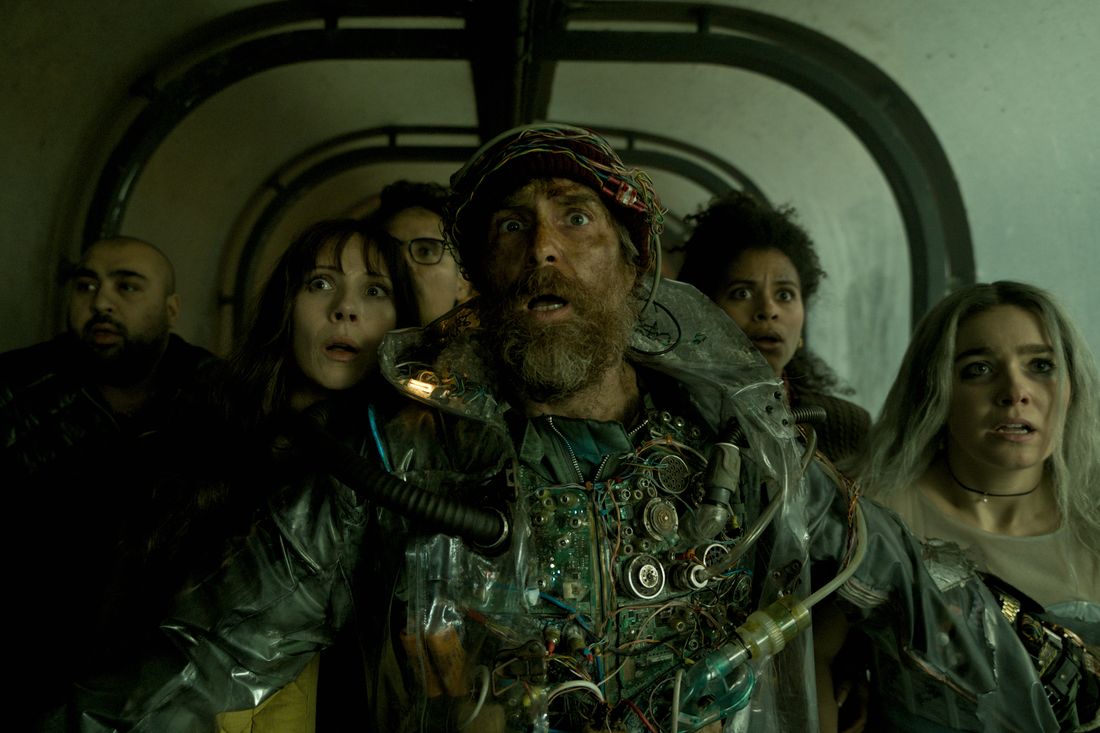
The quirky sci-fi comedy Good Luck, Have Fun, Don’t Die starts with a chaotic scene: Sam Rockwell’s character dramatically enters a Los Angeles diner and announces that six customers must help him prevent a robot apocalypse – or everyone will be killed by explosives. He claims to be from a troubled future and says he’s been to this diner 117 times trying to stop the disaster, and strangely, he seems to know everyone there. He quickly recruits six reluctant and skeptical strangers (including Zazie Beetz, Michael Peña, Haley Lu Richardson, and Juno Temple) for a dangerous mission. They’ll face bizarre enemies like Gen-Alpha zombies obsessed with social media, mountains of killer toys, and a gigantic cat with an enormous appetite and… other features. It’s a wild ride where anything can happen.
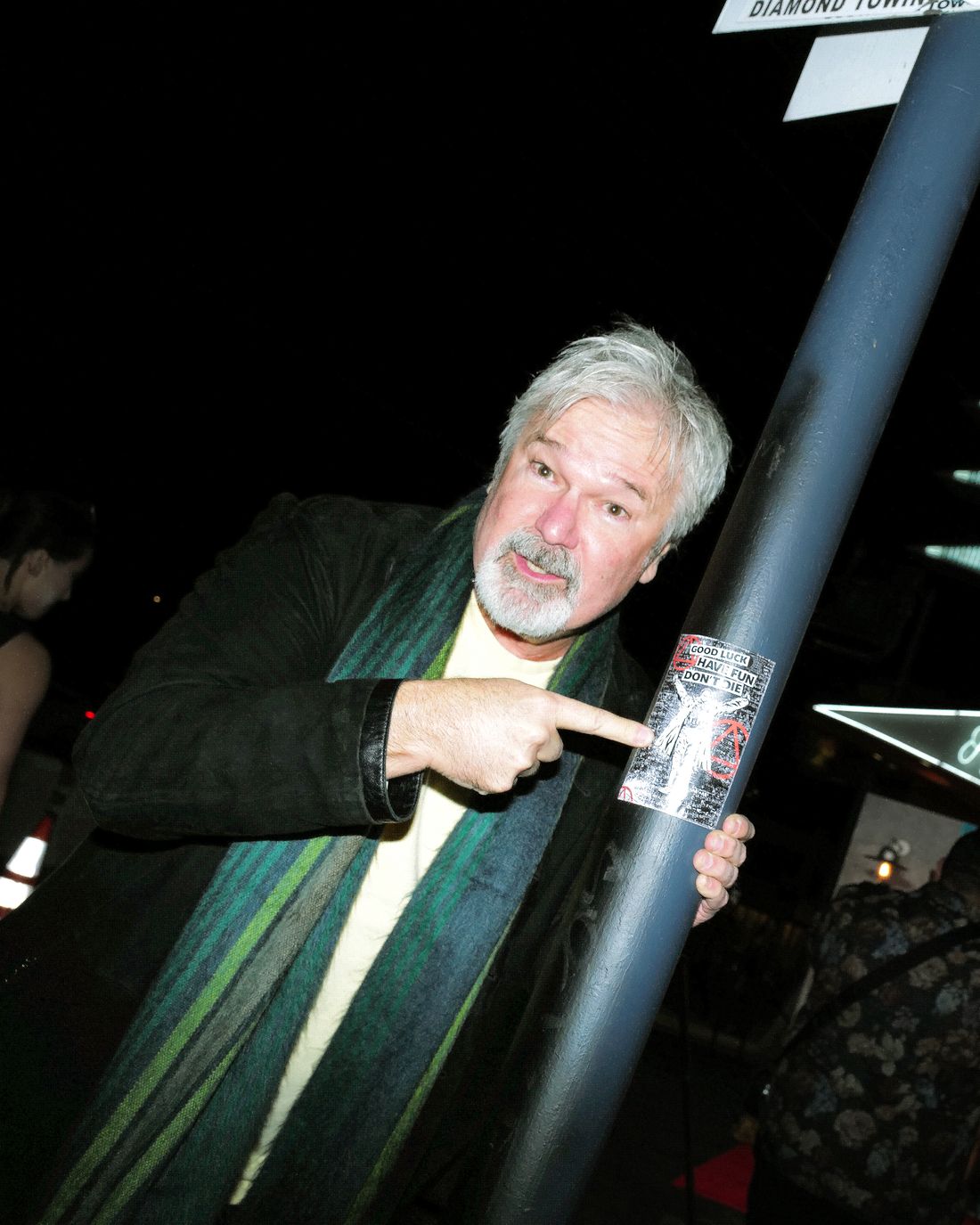
Premiering to enthusiastic reactions at the Fantastic Fest in Austin this September, Good Luck impressed critics and captivated audiences with its unique blend of genres and carefree energy. Director Gore Verbinski, known for blockbuster hits like the Pirates of the Caribbean franchise, the 2012 remake of The Ring, and the animated film Rango (which earned him an Academy Award in 2012), hasn’t released a film since 2017’s A Cure for Wellness, a movie that wasn’t well-received. Some believe he’s been sidelined by Hollywood, while others suggest he simply chose to pursue more personally fulfilling projects after stepping away from the demands of big-budget filmmaking.
Despite a series of successful films – and a well-known disagreement with Disney’s CEO, Michael Eisner, who worried Johnny Depp’s quirky Captain Jack Sparrow would damage the Pirates of the Caribbean franchise during the first film’s production – director Gore Verbinski’s winning streak ended abruptly with 2013’s The Lone Ranger. The $215 million film was a major disappointment, receiving negative reviews, turning off audiences, and ultimately flopping at the box office with only $260 million in earnings. Since then, Verbinski says he’s been working hard to get new projects off the ground, including an adaptation of a George R.R. Martin story and an ambitious animated musical.
Verbinski’s early film, Good Luck, Have Fun, Don’t Die, was a labor of love. He personally managed the film’s modest $23 million budget and distribution through Briarcliff Entertainment, something most big-budget directors wouldn’t dream of doing. The 61-year-old filmmaker acknowledges he doesn’t always fit the mold of modern blockbuster filmmaking, saying his preferred projects might not get approved by studio executives.
This movie is wonderfully chaotic – it feels like they just threw a ton of ideas at the screen and hoped something would connect, and I was really curious about what drew the director to Matthew Robinson’s script. Honestly, the answer seems obvious! I first read it back in 2020 and was immediately hooked. Then, we spent two years refining it, mostly because the world of AI has changed so much since he originally wrote it in 2017. We did a lot of work fleshing out Sam Rockwell’s character, but it just felt incredibly urgent – like this story needed to be told right away. I was already tied up with a long-term animated musical and a couple of other projects, but this one felt different – it needed to come out tomorrow.
Hollywood is known for being slow, and it’s usually difficult to make a movie about current events because the production process takes so long. But this film really captures what people are feeling right now – the fear of AI, school shootings, and the negative impact of social media. What led you to focus on these issues?
When I started out, experienced producers always said, “Don’t combine genres.” But that’s all we do! We blend tones and styles. This movie is like a crazy opera with five different storylines. One is completely bizarre – Sam Rockwell’s character emerges from a dumpster, enters a diner with explosives, and claims to be from the future. I love films like Dog Day Afternoon. The robbers in that movie, Sal and Sonny, are terrible at their jobs, and I find that interesting – perfection is boring. So, we have this group of flawed characters tasked with saving the future, which is in really bad shape. Instead of sending someone like Arnold Schwarzenegger, the future sent us Sam Rockwell, and he’s not a highly trained soldier, he’s just… at a diner.
I haven’t really seen your films directly address social problems like this before. What inspired you to make this one so relevant to current events?
I think the first three Pirates movies were actually about a modern take on Westerns, focusing on corporate greed and the East India Trading Company. They showed that there’s no room for genuine pirates when the world itself is corrupt. I always try to include some meaningful commentary, even if it’s subtle. With this film, though, that message is much more direct. It’s a story for today, and things are already getting pretty bad – we’re seeing signs of real trouble all around us.
This is your first independent film, and I know you were instrumental in securing funding from European investors and working with Good Luck to Briarcliff, a newer Hollywood production company. Can you explain how the project was financed and where the money came from?
Every major studio turned down the script. We wanted to make it like the 1984 film Repo Man – something that felt made with a lot of passion and without needing approval. So, we took the initiative. Our producer, Denise Chamian, and the casting director started holding auditions. I began meeting with actors like Haley Lu, Zazie, and Michael, and we built a great cast around Sam. Then, a company called Constantine learned about our project, read the script, saw our cast, and reviewed the budget. They asked if we could make the film for half the original amount. That meant we had to rely on foreign financing, which was a bit of a rollercoaster – money would come in, then potentially fall through, leaving us constantly working to get the project off the ground.
We initially attempted to film in Los Angeles, but the financial incentives weren’t enough. We then explored Vancouver and Winnipeg, hoping to make the budget work, but ultimately had to shoot the movie in South Africa. That really highlights the challenges facing our industry. Thankfully, Tom Ortenberg at Briarcliff Entertainment still values seeing movies in theaters, so we teamed up with him after finishing the film. They’ve been resourceful and supportive. We also found enthusiastic fans at film festivals like Fantastic Fest and Beyond Fest, and we’re now connecting with the audience we envisioned while making the movie.
You’ve had success with films based on well-known stories and characters. But your current project seems different. What led you to move away from that approach? I’ve always looked for a way to playfully subvert or twist the source material, even with established IPs. I believe a little bit of mischief helps you see the humor and strangeness in life, and I try to bring that to every film, regardless of the budget. When a project has a smaller budget, you’re less likely to rely on data or formulas and more likely to trust your own instincts.
Did you participate directly in the budget negotiations, or did you rely on your partners?
Not at all. I’ve never been so hands-on with all parts of a film. We don’t have a large team at Constantine or Briarcliff—it’s just five of us, and everyone does a little bit of everything. To get the film funded, I had to meet with the German investors and convince them to invest, which I wasn’t particularly excited about. That kind of work isn’t really my strength.
That’s a fair question. It’s been a while since your last theatrical release, A Cure for Wellness back in 2017, and you’ve mentioned working on a long-term animated musical. People are probably wondering what you’ve been up to. So, where have you been? I’ve been consistently working. We have a fantastic script called Sandkings, adapted from a short story by George R.R. Martin. We’re also developing a unique take on The Gashlycrumb Tinies by Edward Gorey, and I’m actively pushing forward three or four original scripts. The challenge is that the kinds of projects I’m passionate about don’t always get approved. But to answer your question directly, I’ve been here, working hard to make things happen.
I don’t want to sound rude, but it felt like you were on a huge streak with blockbuster movies. You even won an Oscar for Rango. But after The Lone Ranger, things seemed to shift. Is that a fair assessment? And does that change reflect a bigger issue – balancing your creative interests as a filmmaker with what studios expect from you?
I think what you’re getting at is the financial side of things, the focus on profits. Honestly, I still approach filmmaking the same way – I’m still the one working hard and experimenting. Sometimes projects succeed, and sometimes they don’t. When someone first suggested The Lone Ranger, I immediately thought we should tell the story from Tonto’s point of view, like a Sancho Panza-style narrative. I never intended to make a traditional version.
I’m not looking for something that’s just technically well-made; I need to connect with a story, and that’s always been my driving force. Looking at my past work, both the successes and failures, you’ll see I always start with a core question: Why is this story important enough to tell? If you can’t answer that, you’re better off doing something else – making a movie is incredibly difficult.
From a business perspective, the previous movies were profitable, but this one wasn’t. The studio never really focused on making money with the successful films – actually, they were worried about repeating past failures. With the first Pirates movie, Disney was very hesitant. By the second one, they were comfortable with our approach. That’s when I started to worry – when they stopped being scared. Essentially, predicting movie success is like trying to predict trends – it’s as unpredictable as fashion fads like bell-bottoms. I’m just doing my job, creating the product.
Given your history of making hugely successful films, I always saw you as someone who relentlessly pursued excellence, not someone who just went against the grain. I even had the crew make shirts that said ‘Relentless,’ which I took as a huge compliment. Because from the start of any project, the biggest threat isn’t failure, it’s settling for just being okay. The real challenge isn’t the studio, the executives, or even fear itself – it’s the lack of daily effort and drive. If you don’t constantly strive for better, you’ll end up with something just… average.
This film was both more challenging and ultimately more satisfying than most. There was a sense of playful rebellion, like we were all in on a secret. It had a real, energetic, and unconventional spirit.
Read More
- United Airlines can now kick passengers off flights and ban them for not using headphones
- How to Complete Bloom of Tranquility Challenge in Infinity Nikki
- Gold Rate Forecast
- Katanire’s Yae Miko Cosplay: Genshin Impact Masterpiece
- All Itzaland Animal Locations in Infinity Nikki
- 8 Actors Who Could Play Blackbeard In One Piece Live-Action Season 3
- A Dark Scream Theory Rewrites the Only Movie to Break the 2-Killer Rule
- How to Get to the Undercoast in Esoteric Ebb
- Netflix’s The OA is a Sci-Fi Masterpiece That Refuses to Die
- 10 Greatest Games of the Last 10 Years, Ranked
2026-02-14 00:56