
For a long time, the Wanderer went by names given to him – Kunikuzushi, Scaramouche, and the Balladeer – each one a reminder of a difficult past he wanted to escape. His story is all about finding out who he truly is and becoming a new person. When the game lets you choose his name, it’s the powerful result of that journey. It’s more than just a name; you’re helping a character who was once controlled by others and seen as a villain finally discover his own identity. This feels so meaningful because it connects you personally to his story and his path to redemption.
Key Takeaways
- Shape His New Identity: Naming the Wanderer is more than a cosmetic choice; it’s your chance to directly participate in his redemption arc. Because the name is permanent and appears throughout the game, your decision gives you a personal stake in his future.
- Test the Limits for Secret Dialogue: The naming system is full of Easter eggs. Trying to use his old titles like “Scaramouche” or the names of other characters will trigger unique, voiced reactions that reveal more about his personality and past.
- Join the Community’s Inside Joke: Choosing a name has become a shared cultural moment for players. Sharing your creative, funny, or meaningful name choice online is a great way to connect with other fans and participate in a massive, ongoing conversation.
Why Is Naming the Wanderer Such a Big Deal?
Choosing a name for the Wanderer in Genshin Impact is more than just a simple detail—it’s a key part of his story. Before this moment, he’s known only by labels like ‘the puppet’ or ‘Scaramouche,’ and fans often call him ‘hat guy.’ This lack of a true name is central to his journey, making the act of finally giving him one feel deeply meaningful and personal.
Giving players the power to permanently name the Wanderer created a special connection rarely seen in games. This decision felt significant, transforming a character with a rich backstory into a character players could truly call their own. The community instantly embraced this, sharing funny and heartfelt name suggestions alike, and that shared experience is what makes this feature so memorable. It’s a fantastic mix of personal stories and community enjoyment, which explains why people are still passionately debating the perfect name. It proves that even a small choice can forge a lasting bond.
A character with no name
The Wanderer is defined by his lack of a name. For a long time, players simply referred to him as “hat guy” due to his distinctive appearance. This isn’t just a funny quirk – it’s central to his character and his sense of not belonging. He’s essentially a blank canvas, and as one player noted, he’s defined by what he isn’t. That’s why naming him feels so impactful. It’s not just choosing a label; it’s giving a part of yourself to a character who has no identity of his own.
How the naming system works
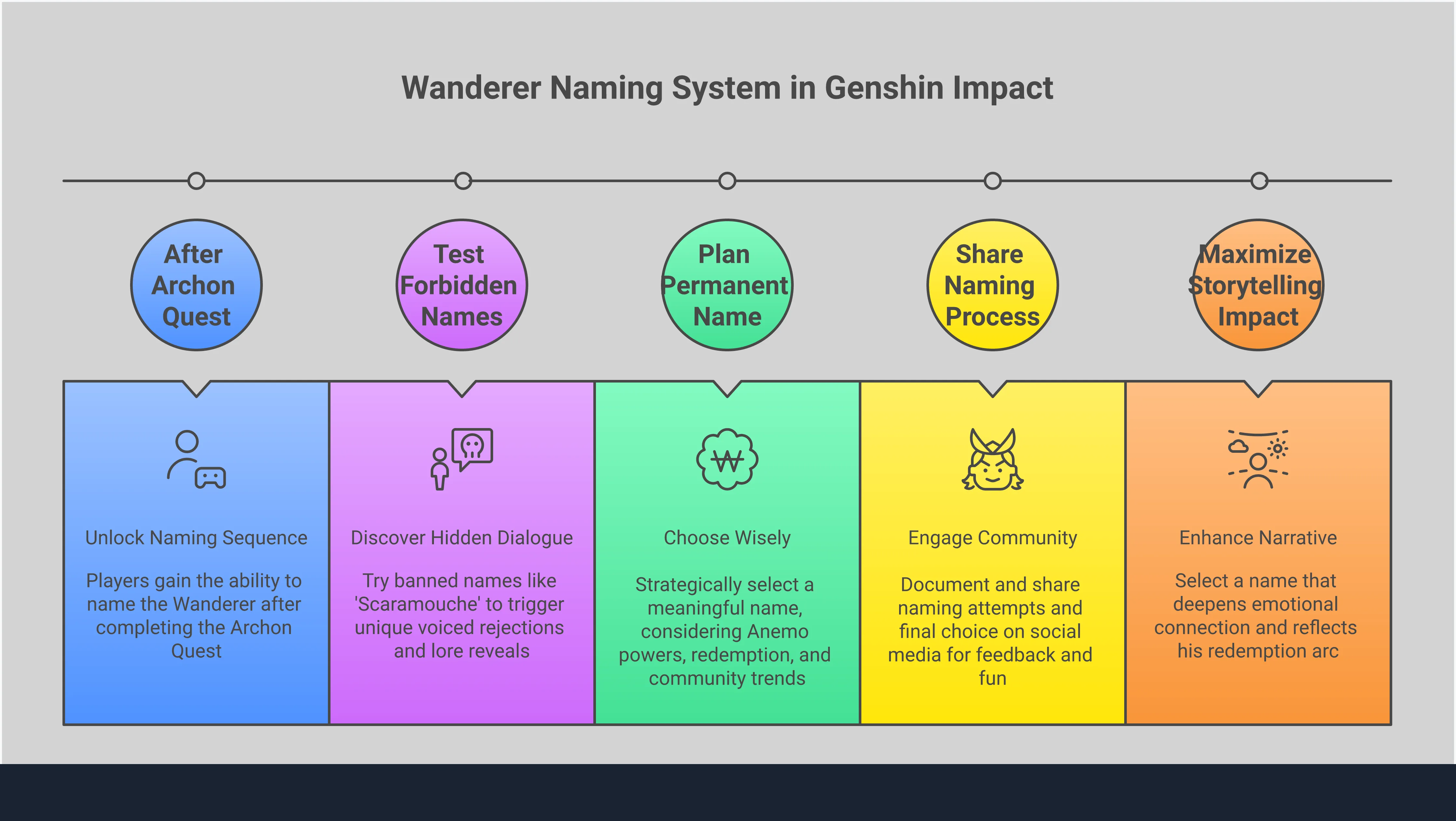
While completing the Archon Quest “Interlude Chapter: Act III,” you’ll have a single chance to name the Wanderer. This isn’t just a temporary nickname – the name you choose will be permanent and displayed in future quests, on your character screen, and even within your Serenitea Pot. Since you only get one opportunity, it’s important to choose wisely! To add to the challenge, certain names are prohibited – you can’t name him after existing characters or his past titles. This limitation actually encourages players to come up with even more unique and imaginative names.
Why this feature resonates with players
Being able to name the Wanderer feels special because it’s a personal touch. It changes how you see him – instead of just controlling a character, you feel like you’re working with a partner and directly shaping who he becomes. This has really excited the community, with players sharing their creative and meaningful names online. It’s a fun way for everyone to feel unique and connect with each other through a shared experience. Ultimately, this feature creates a stronger connection between players and the game world than most other features could.
What Are Players Calling Their Wanderers?
Giving a community the chance to name a key character often leads to hilarious and unpredictable results, and the Genshin Impact community proved that. Players have given their Wanderers names ranging from serious and lore-appropriate to downright silly. It’s more than just choosing a label – it’s a way for players to express themselves. While some opted for names that fit the character’s story and growth, others clearly wanted to test the limits of what the game would allow.
The game boasts a wonderfully creative community. Players are naming their characters after all sorts of things – from favorite anime heroes to everyday objects! This has become a fun way for players to express themselves and add a personal touch to the game’s story. These names actually appear in the game, in conversations and menus, making each playthrough unique. It’s a shared experience that’s led to lots of online conversations, with players excitedly sharing their most inventive and meaningful character names.
Creative and hilarious name choices
Want to see some hilarious creativity? Just ask the Genshin Impact community what they’ve named their Wanderer character! The responses are fantastic. Players are clearly having fun with the naming feature, choosing silly names like “Shorty Mouche,” “Scary Mouse,” and “The Fandango Man.” These choices show they’re treating it as a lighthearted joke rather than a serious lore detail. A lot of the funniest names play on puns or funny misunderstandings of his original name, Scaramouche, proving the Genshin community has a great sense of humor.
Popular naming trends
While many players choose silly or random names, some clear patterns have emerged. A lot of players want names that fit the world of Teyvat, picking options that sound graceful or strong to mark a fresh start. Others prefer to use internet memes or characters from other games. The reason for this careful naming is that your chosen name will appear throughout the game’s story and quests. Because you only get one chance to change it after the initial quest, players really think about picking a name that will either make them laugh or feel impressive every time they see it.
The “Hat Guy” phenomenon
Even before the character was officially named, fans affectionately called the Wanderer “Hat Guy.” The nickname was perfect – it immediately described his most noticeable feature and hinted at his mysterious background. This shows how gaming communities build their own stories and share inside jokes. Some players have even playfully honored the nickname by naming their own characters things like “Hatthew” or “El Hato.” It’s a charming way to remember the character’s origins within the fanbase and a reminder that he’s simply the memorable guy with the hat who captured our imaginations.
Why Do Some Names Get Rejected?
Ever tried naming your Genshin Impact character, only to find the game rejects it? It’s not just a simple profanity filter. While the game does block inappropriate words, it also has a surprisingly complex system that checks names against the game’s lore, preventing you from using certain options.
It’s not simply that you can’t name him after existing characters. The game’s rules are actually connected to his background and who he is. This thoughtful design transforms a potential annoyance into a meaningful way to interact with the character. Instead of a standard error message, you receive a response that feels authentic to the Wanderer, making the search for the perfect name feel like a real exchange with him.
Understanding the name filter
The name filter in the game works similarly to those in other online games by blocking offensive words and phrases that go against the game’s rules. However, it goes beyond that by also preventing players from using the names of important characters within the game world, such as the Archons like Zhongli and Raiden Shogun, or members of the Fatui Harbingers. This makes sense because it would be strange for a player to name their character after someone who already exists in the game’s story. Ultimately, the filter helps keep players immersed in the game and prevents them from disrupting the story with inappropriate or confusing names.
Getting creative with naming rules
The game gets really interesting when you try to name the Wanderer with his old names. If you attempt to name him “Scaramouche,” “Balladeer,” or “Kunikuzushi,” he’ll specifically reject it, showing he’s left those identities behind. This has encouraged players to try all sorts of names to discover hidden dialogue and secret reactions. It’s become a fun community activity to collect and share these unique responses, effectively turning the naming screen into a treasure hunt for easter eggs.
Player reactions to banned names
It’s common for players to have their first name choice rejected in games, but this usually doesn’t upset them. Instead, it encourages them to be more imaginative. Online, players frequently share stories about rejected names and the alternatives they came up with. Some try to bypass the restrictions using symbols, while others see it as an opportunity to create a name with deeper meaning, reflecting their character’s story or sense of liberation. These anecdotes show how much effort players put into naming, often seeking a name that truly represents their character’s identity and path.
How Does the Wanderer React to Your Name Choice?
Naming the Wanderer is more than just selecting a nickname – it’s a fun way to interact with the game and a big topic for players. HoYoverse, the game’s developers, have made it special by giving the Wanderer unique responses based on the name you choose. It’s a detail you’ll see often, as his name appears throughout the game in quests, menus, and even in your personal home space. This makes the naming process feel really personal and meaningful.
This fun addition to the game has made naming characters a playful challenge. Players are trying out all sorts of names – from the character’s past identities to completely made-up words – just to see how the game will react. It’s a great way to appeal to dedicated fans of the game’s story, and also lets everyone create a personal connection with the characters. The community is full of excitement, sharing humorous, thoughtful, and surprising reactions online. It’s a small detail that adds a lot to the game, encouraging players to explore together and making the world of Teyvat feel more vibrant.
Unlocking special reactions
The game gets really interesting when you experiment with names connected to the Wanderer’s history. Instead of letting you use any name, it includes hidden triggers that unlock special conversations. This makes customizing his name more than just a cosmetic change – it’s like solving a puzzle, which is especially cool if you enjoy the game’s backstory. Players quickly began trying out his old titles and the names of other characters to see how he’d react. It’s a great way to connect with his story on a deeper level. Just be careful, because you can only change his name once after the first quest, so choose wisely!
The “Scaramouche” Easter egg
If you know his backstory, you might be tempted to call him “Scaramouche.” Go ahead and try – it unlocks a cool hidden reference in the game! Using his old title from when he was a Fatui Harbinger will cause him to firmly reject it, showing he’s left that part of his life behind. It’s a strong moment that recognizes his past as a villain while highlighting his dedication to change. This little detail is a great way to reward longtime players who have followed his journey from the start.
Finding other hidden responses
The surprises don’t end with the name “Scaramouche.” Players soon found that using his previous names, such as “Kunikuzushi” or “Balladeer,” also triggers unique responses. He has a specific reply for each of his former identities, clearly showing he’s moved on from his past. People have even tried naming him after important figures connected to him, like “Raiden Shogun” or “Ei,” which leads to funny and surprisingly touching conversations. This has caused a huge amount of experimentation, with players sharing their discoveries online and treating the naming process like a collaborative search for hidden story details.
Why Can’t the Community Get Enough of This Feature?
Naming a character might seem minor, but Genshin Impact players are incredibly excited about the ability to name the Wanderer. It’s more than just a cosmetic choice—it’s a chance to truly personalize a character with a rich backstory. The response from the community has been huge, with players sharing funny, creative, and meaningful names online. What’s driving all the enthusiasm? It’s a unique combination of self-expression, shared humor, and the ability to define a character’s identity.
The power of personalizing a character
Being able to name the Wanderer is all about making him feel like your unique character. It’s not just a simple nickname – the name you pick becomes a real part of the game. You’ll see it in quests, during conversations, in your Serenitea Pot, and on the character screen, which makes your choice feel important and lasting. This personalization helps you connect with the character on a much deeper level. Because you only get one chance to change his name after the initial quest, it’s a decision you should really think about. It’s your chance to shape his story and make him truly feel like a companion on your adventure through Teyvat.
How memes drive naming trends
Gamers love sharing inside jokes, and the recent ability to name your character, called the Wanderer, has become a huge source of funny community creations. Players are posting their most creative and silly names – like “Scary Mouse” and “Hat Guy” – all over social media, which has sparked a lot of hilarious memes. Choosing a funny name isn’t just for your own enjoyment; it’s a way to connect with other players, show off your personality, and be part of a larger, shared experience within the game.
Creating an identity through a name
Choosing a name for the Wanderer isn’t just a bit of fun—it’s a way to build his story and personality. Players often pick names that fit his background, how he looks, or the unique story they’re creating for him. Some choose names related to nature, like one player who named him after his “ocean hues.” Others avoid the pressure of finding the perfect name and simply call him “Wanderer.” No matter how you do it, the name you give him helps shape who he is in your game.
How This Feature Became Viral Content
The Wanderer’s naming feature in Genshin Impact quickly became a huge online sensation. Players immediately started using it to be funny and creative, and it spread rapidly across social media and online communities. It was a perfect combination of letting players express themselves and the character’s existing story, allowing the community to collectively create something unique and share a running joke. This shared experience turned a simple feature into something incredibly popular. It appealed to the natural desire gamers have to make their mark on a game world and connect with others. It wasn’t just about the names themselves, but about being part of a larger online conversation, contributing to a meme, and seeing what others came up with. The fact that the Wanderer has such a dramatic backstory made every name choice even more amusing and meaningful.
Naming compilations and challenges
Players quickly started sharing the funniest and most creative names they found for the Wanderer. It became a playful game to come up with the most amusing, yet appropriate, nicknames for the former Fatui Harbinger. Online forums and social media were filled with screenshots of him being called everything from endearing terms like “Babygirl” to references to his past as “Kunikuzushi’s OC.” One Reddit user even compiled a list of hilarious names like “Shorty Mouche” and “Scary Mouse,” perfectly showing the community’s fun and imaginative spirit. These collections weren’t just for entertainment—they highlighted how creative players could be.
Community experiments and discoveries
The community’s interest went beyond simply choosing names. Players began experimenting with the naming system to see what kinds of responses they could trigger. This led to a lot of content where creators shared the Wanderer’s reactions to different names, particularly those considered ‘forbidden,’ like ‘Scaramouche’ or the names of other characters. These tests turned the feature into a search for secret dialogue and hidden surprises. Viewers enjoyed watching these varied reactions, which motivated even more players to try unusual names, continuing the cycle of discovery and content creation.
Sharing naming stories online
More than just a fun addition, this feature actually helped players connect with each other. People started sharing their Wanderer names online, and more importantly, the reasons behind those choices. Discussions sprang up where players talked about their names and the personal stories they represented. Some names reflected the character’s path to forgiveness, while others were deeply meaningful to the players themselves. This sharing transformed a personal choice into a shared experience, letting players connect through their creativity and build a stronger community.
How Naming Sets Wanderer Apart
The ability to name the Wanderer in Genshin Impact isn’t just a playful addition to the game—it’s a brilliant example of interactive storytelling. Unlike most RPGs where you name your character right away, before you know anything about them, Genshin Impact lets you choose the Wanderer’s name much later, as you’ve already learned about his story. This turns a simple naming process into a meaningful moment where you shape his identity, giving you a personal connection to his journey and acknowledging his history.
As a player, I was really blown away by how they handled naming the main character! It’s not just some little thing you do at the beginning; it actually feels like you’re helping shape who he is on his journey to figure things out. The game really drives home that this isn’t a throwaway decision – it sticks with him throughout everything you do, affecting how people react and the quests you experience. Honestly, it made the choice feel incredibly personal and meaningful, and it’s what makes this character feel so different and special compared to everyone else in the world of Teyvat.
The importance of his nameless past
I’m totally fascinated by the Wanderer’s story! It’s amazing to think about all the different people he was – the Balladeer, Scaramouche, even Kunikuzushi. Each name seems to carry so much pain from his past, and when you first meet him, he’s clearly trying to escape all of that. One player really hit the nail on the head – the whole point of him being just ‘hat guy’ or the Wanderer is that he doesn’t have a name. It’s like a fresh start, a blank slate where he can build a new identity without being weighed down by everything that happened before. And the fact that the game lets us name him? That’s brilliant! It feels like we’re actually helping him write the next part of his story, making his journey to redemption feel so much more meaningful and like something we’re a part of.
Player choice vs. character arc
The game cleverly blends player freedom with the Wanderer’s established backstory. While you get to name him, he still feels like his own individual. Your chosen name isn’t just for show – it’s used in conversations, menus, and even your housing system. HoYoLab has confirmed you can change it once after a specific quest, making the decision feel important. It’s more than just picking a name you like; you’re shaping how you’ll experience and connect with this character throughout your game, building a personal connection unique to your playthrough.
How your name choice changes the game
Choosing a name for your character isn’t just a simple step—it actually leads to special reactions within the game. The developers thought about what players might try, and the Wanderer will specifically reject names connected to his history, such as “Scaramouche,” “Balladeer,” or the titles of other Fatui Harbingers. Instead of just getting a standard error message, you’ll hear a unique voiced response, which adds depth to his personality. Many players are enjoying sharing and watching videos of these reactions as they try different names. This makes naming your character feel like a real interaction, and encourages you to be creative and think about your choices.
What This Feature Says About the Genshin Community
As a player, I’ve noticed something really cool about Genshin Impact. It’s amazing how much a simple thing like naming your character says about the community. With the ‘Wanderer,’ it wasn’t just about picking a name and getting on with the game – people really got into it, and it became this huge thing everyone shared. It shows we’re a super creative bunch, and we’re all connected. It feels like Genshin isn’t just something we play, but a world we actually live in. The way everyone embraced naming the Wanderer highlights what we value: a good laugh, sharing experiences, and making the story feel personal. It’s awesome to feel like we’re all contributing to something bigger!
A showcase of player creativity
The recent trend of naming the Wanderer in Genshin Impact has definitely shown how creative and funny the game’s players are! People have come up with tons of hilarious and clever names, from references only fans would understand – like calling him “Hat Guy” – to playful nicknames like “Scary Mouse” and “Shorty Mouche.” But it’s more than just a joke; players are using this simple option to express themselves and add a personal touch to the game’s story. It’s a way to make the Wanderer’s journey feel more connected to their own experience and leave their own mark on this complex character.
Connecting through a shared joke
Okay, so this is kinda hilarious – everyone in the Genshin community is obsessed with naming the Wanderer! It’s not just about picking a name for my character, it’s become this whole thing where we share what we came up with online, and there are tons of funny compilations going around. A big part of the fun is seeing how the game reacts to certain names – seriously, everyone’s trying ‘Scaramouche’ just to see what happens! It’s weirdly awesome that something you do by yourself turns into this shared experience, and it’s really brought a lot of us players closer. It just shows how we all like to mess around and create our own little inside jokes within the game, which is pretty cool.
Why personalization matters in gaming
The focus on letting players name the Wanderer really shows how important personalization is to them. Allowing players to name a key character creates a stronger connection and makes them feel more ownership over him. When you get to choose the Wanderer’s name, he transforms from just a character in the story to feeling like your character. This simple freedom lets you help define who he is, making his journey of redemption and self-discovery much more meaningful and impactful. It’s a small feature, but it significantly increases player investment in both his story and the game world.
Related Articles
- Deus Ex LFG: Connect with Other Augs in LFG Feature on Z League App
Frequently Asked Questions
Wondering if you’re stuck with the Wanderer’s name forever? Not quite! You can name him during his Archon Quest, and you’ll also get a special item that allows you to change it one more time. After that, the name is final. So choose wisely, as you only get one chance to rename him!
The game doesn’t allow names like ‘Scaramouche’ or ‘Balladeer’ for a specific reason – it’s about the story. The Wanderer is intentionally trying to distance himself from who he used to be. If you attempt to use one of his previous names, he’ll respond with unique dialogue, firmly stating that person is gone. This is a smart way to highlight his growth as a character and makes naming feel like a genuine interaction with him.
It’s understandable to feel stressed about choosing the perfect name! A good starting point is to consider what you want the name to mean. You could pick something that highlights his wind powers or his path to becoming a better person. Some players choose names with personal significance, while others simply go for something funny. Ultimately, there’s no right or wrong answer – pick a name that feels right for your version of his story.
Beyond his official titles, are there any other names that cause a reaction? Yes, the game developers included some hidden interactions. If you try naming him after important characters from his past, like “Raiden Shogun” or “Ei,” he’ll respond in a unique way. Players have been having fun testing different names to discover these hidden comments, essentially turning it into a search for secret dialogue.
Your chosen name will be used throughout the game to personalize your experience. You’ll see it during conversations in quests, on your character’s profile, when choosing party members, and even when displaying your character in your Serenitea Pot. That’s why picking a name feels important – it really becomes part of your character’s identity in the game world.
Read More
- United Airlines can now kick passengers off flights and ban them for not using headphones
- Crimson Desert: Disconnected Truth Puzzle Guide
- How to Get to the Undercoast in Esoteric Ebb
- All Golden Ball Locations in Yakuza Kiwami 3 & Dark Ties
- Katanire’s Yae Miko Cosplay: Genshin Impact Masterpiece
- All 9 Coalition Heroes In Invincible Season 4 & Their Powers
- All Itzaland Animal Locations in Infinity Nikki
- Zendaya’s 4 Big 2026 Movies Could Beat Brie Larson’s Box 2019 Office Record
- HBO’s Harry Potter Is Already Breaking My Heart
- The Vanishing Context: When AI Minds Lose Focus
2026-01-05 16:23