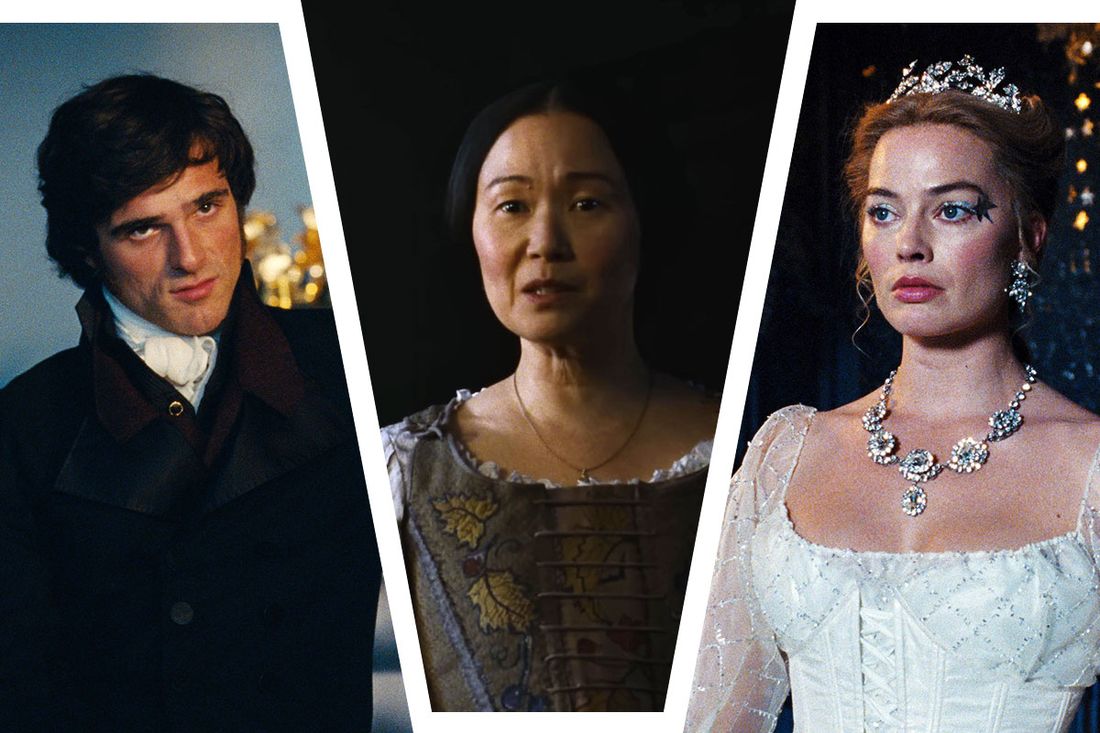
Spoilers follow for Wuthering Heights, in both movie and book form.
The recent film adaptation of Wuthering Heights portrays almost everyone as flawed, manipulative, or uncaring. While Emily Brontë’s original novel already created a dark and emotionally intense world, this new version cuts out significant parts of the story to focus on that atmosphere and the tragic events. (Many fans were disappointed that the ghost of Cathy was left out.) These cuts mean that the characters are either less developed than in the book or are portrayed very differently. The film essentially presents a lineup of unlikeable characters, raising the question: who is the most villainous of them all?
To figure out what’s going on, we’re looking at who made the most harmful decisions in the film – which feels right for Wuthering Heights, since the story is all about blaming others. Just like Cathy and Heathcliff, we often look for someone else to take responsibility. We’re all flawed, really. Let’s get down to the messy details and see what happened.
Mr. Earnshaw
This man, so unlike the character in the book, is largely responsible for everything that goes wrong. He’s a terrible father, struggling with gambling and alcohol, and constantly swings between excessive affection and manipulative guilt trips with his daughter. Mr. Earnshaw is cruel and violent, and his awful treatment of Cathy and Heathcliff clearly fuels their unhealthy codependency. He treats Heathcliff like a servant, presents him to Cathy as a plaything, and prioritizes securing Wuthering Heights’ financial future through a strategic marriage for Cathy – all while squandering any income on his own bad habits. These damaging patterns are established early on, and while the film exaggerates his flaws in his final scenes, he absolutely deserved the disrespectful treatment he receives even in death. (The movie even hints that Heathcliff might have hastened his demise, and while I don’t condone murder, it’s understandable. And yes, his children kissing while he’s being buried? Completely justified!)
Cathy
The idea of one person ordering another to be their “pet” is immediately strange. However, Wuthering Heights largely portrays Cathy as a victim, shaped by her difficult circumstances, her father’s poor financial decisions, and the harsh treatment she receives from Nelly. In her relationship with Heathcliff, she doesn’t initiate intimacy; she appears disturbed even by her own attraction, as seen in her reaction to suggestive activity between Joseph and Zillah, and remains passive when Heathcliff displays physical affection. Later in the story, though, her affair with Heathcliff is undeniably problematic. By explicitly depicting a sexual relationship between Cathy and Heathcliff, the adaptation places some responsibility on Cathy, as she actively chooses to be unfaithful and risks the security of herself and Nelly within the Linton family.
Despite the film portraying a troubled romance, it’s hard to see Cathy as a true villain. The story focuses on her being helplessly drawn to Heathcliff, framing it as a passionate connection. While she could have chosen to be with him, sacrificing her social standing, the narrative doesn’t really explore that option. Instead, it emphasizes her sense of duty to her father and the reasons behind her marriage to Edgar, positioning her more as a self-sacrificing figure. Though she’s unkind to Isabella when Heathcliff tries to provoke her, she doesn’t want to see anyone truly hurt, and is shocked when Heathcliff threatens Edgar. The film largely excuses Cathy’s behavior, especially given her tragic and painful death, making it difficult to view her as the antagonist. She even finds it in herself to forgive Nelly! She certainly has villainous moments, but her intense love seems to drive her actions, making them almost unavoidable.
Heathcliff
Okay, so the film really leans into the idea that Heathcliff is just hopelessly, uncontrollably in love – that’s the justification for a lot of his choices, and honestly, the movie takes some liberties with the book to really emphasize that. We see him protecting Cathy as a kid from her abusive father, and the film even tries to portray him as someone who’s supportive of her sexuality, which…fair enough. (And let’s be honest, that chair-breaking scene? Definitely had a moment.) I could get behind his heartbreak over Cathy’s obsession with social status and, of course, being rejected for Edgar. But then things took a turn. When he suddenly reappears with a mysterious fortune and starts, shall we say, aggressively pursuing Cathy right in front of her husband? In the room Edgar built for her? In their carriage? In their garden?! It just felt…excessive, Heathcliff. Way too much.
Considering his cruel teasing of Cathy, his violent threats against Edgar, and the way he treats his new wife Isabella – who, while consenting to a dominant dynamic, is naive and less experienced than he is – it’s clear that Heathcliff is a villain. The film tends to excuse characters driven by passionate desperation, which sets Heathcliff apart from figures like Mr. Earnshaw or Nelly. The ending, with Heathcliff and Cathy reunited, suggests they were always meant to be together. So, while Heathcliff is definitely a bad person, he isn’t the most villainous character in the story.
Nelly
Nelly, along with Mr. Earnshaw, undergoes a major transformation in this adaptation. In the original novel, she’s the main storyteller – a longtime servant who observes the complex relationship between Cathy and Heathcliff and its lasting impact. While her account might have some personal slant (even in her descriptions of Heathcliff), she’s generally considered trustworthy. However, this version reimagines Nelly as the illegitimate daughter of a nobleman, sent to live with the Earnshaws as a companion to Cathy. She’s well-educated and refined, but trapped by her social status, and spends her life catering to Cathy’s demanding and self-centered behavior. It’s easy to see how constantly being around someone so spoiled and dramatic would be incredibly frustrating.
Nelly in Wuthering Heights comes across as scheming and controlling. She actively makes sure Heathcliff overhears Cathy dismissing him as a potential husband, destroys his letters, discourages Edgar from forgiving Cathy, dismisses Cathy’s concerns about her miscarriage, and fails to recognize the severity of Cathy’s illness. While Hong Chau delivers a wonderfully sarcastic performance as Nelly (particularly when commenting on Cathy’s tears), it’s ultimately undermined by Edgar’s accurate description of her as Cathy’s tormentor. One could argue Nelly is simply protecting her social standing by ensuring Cathy marries Edgar, securing her own comfortable future, but this doesn’t explain why she disregards Cathy’s claims about the lost baby. The film portrays Nelly as both deeply malicious and strangely inconsistent. It’s unclear whether she’s simply returning Isabella to the Linton estate in her final scene or having her committed due to her disturbing interest in Heathcliff’s behavior. Similarly, Nelly’s suggestion that Cathy intentionally hurt her feels like an unnecessary attempt to excuse Cathy’s actions. Despite these inconsistencies, Nelly is clearly the film’s villain, and Hong Chau’s performance is exceptional.
Edgar
Edgar seems genuinely good-hearted, especially considering how he treated Cathy. He had no idea she was unhappy or wished for someone else when they married, and they enjoyed five pleasant years before Heathcliff’s return caused problems. He even financially supported Cathy’s difficult father, which shows how generous he was, and he was thrilled when Cathy became pregnant. It’s understandable why he was devastated and angry to discover Cathy’s affair, and he rightfully wanted her to move on after Heathcliff married Isabella. He just wanted her to act responsibly.
Edgar is definitely at fault for cutting Isabella off after her marriage to Heathcliff, but his understanding of what’s happening is skewed because he only gets information from Nelly. He’s not making informed decisions. While he’s flawed – a wealthy man trying to win his wife’s love with gifts – it’s not entirely his fault that Catherine sees those gifts as restrictive. He simply wants a peaceful life with his family and believed Catherine reciprocated his feelings. Ultimately, he’s a fundamentally kind person. The real problem, though, lies with the show’s creators, who didn’t allow Shazad Latif to showcase his usual charisma while playing Edgar.
Isabella
Isabella undergoes a significant transformation and, despite everything, remains largely sympathetic – and often funny. A particularly striking visual joke involves her embroidery, which subtly hints at her repressed desires. Her most extreme act is destroying a doll that represents Cathy, after Cathy cruelly dismisses Isabella’s feelings for Heathcliff. Cathy arguably deserved it, and frankly, Isabella would have been justified in damaging more of Cathy’s belongings, considering Cathy took away her beloved ribbon room!
Isabella’s actions do hurt Edgar when she elopes with Heathcliff, but she’s established early on as an impulsive, romantic young woman. Given her personality and Heathcliff’s intense, provocative presence, it’s perhaps understandable she’d run away with him. While it’s unkind that she mocks Heathcliff’s lack of education, the story portrays Isabella as actively involved in the complex dynamic between her and Heathcliff, suggesting his behavior might even be appealing to her. It’s hard to predict what these two might do next. Ultimately, however, Isabella isn’t the primary villain of the story.
Classism
The true source of conflict in Wuthering Heights isn’t a person, but the rigid social structure of the time. If Cathy hadn’t been pressured by society to marry someone other than Heathcliff, their tragic story might have unfolded differently. The real enemy is the system of land ownership and social class that kept them separated.
Read More
- United Airlines can now kick passengers off flights and ban them for not using headphones
- How to Complete Bloom of Tranquility Challenge in Infinity Nikki
- Gold Rate Forecast
- How to Solve the Glenbright Manor Puzzle in Crimson Desert
- All Itzaland Animal Locations in Infinity Nikki
- All Golden Ball Locations in Yakuza Kiwami 3 & Dark Ties
- 8 Actors Who Could Play Blackbeard In One Piece Live-Action Season 3
- All 10 Potential New Avengers Leaders in Doomsday, Ranked by Their Power
- A Dark Scream Theory Rewrites the Only Movie to Break the 2-Killer Rule
- Star Trek: Starfleet Academy Season 1 Unanswered Questions: Exploring The Plot Holes
2026-02-13 20:56