The Oscars are introducing a new award for the first time in over two decades: Achievement in Casting. This award will be presented for the next two years, until a new award for Best Stunts is added in 2028.
The new Casting Oscar generated a lot of discussion before the nominations were announced. People wondered if the nominees would all come from Best Picture contenders, and whether voters would understand the unique skills of casting directors or simply see it as an award for the overall acting ensemble.
As a film buff, I’ve been following the Casting nominations, and it looks like the Academy is recognizing great work in this area. It’s exciting to see that all five nominees – Hamnet, Marty Supreme, One Battle After Another, The Secret Agent, and Sinners – were also Best Picture contenders. While films like Weapons and Sirāt were in the running, the Casting branch ultimately highlighted films where the acting really elevated the entire project. What I especially noticed is that these films all showcase the power of casting directors. Three of them feature incredible new talent – young actors who are truly captivating. Some directors went even further, using non-professionals to create a really authentic feel. Others faced unique challenges, like finding actors who could sing or convincingly deliver period dialogue. Kim Taylor Coleman, a casting director I admire, puts it perfectly: these nominations show the range of approaches – from established stars to completely unknown faces – that make casting such a vital part of filmmaking.
This pattern also appears in films that the casting branch overlooked. For those following the Oscars, a notable omission in the first year of the Casting category was Joachim Trier’s Sentimental Value, which ultimately received four acting nominations. It seems odd that a film with so many acting nominees wasn’t recognized for its casting. This might be because the Academy wanted to reward casting choices made directly by directors, rather than by dedicated casting directors. For instance, Renate Reinsve’s role was specifically written for her by Trier, and Stellan Skarsgård was a director’s choice as well. (This isn’t to diminish the excellent work of casting directors Yngvill Kolset Haga and Avy Kaufman, who each discovered one of the film’s Supporting Actress nominees, Inga Ibsdotter Lilleaas and Elle Fanning.)
The Oscars’ casting category, like some others, uses a “bake-off” process. Before nominations are finalized, the ten films being considered present their casting work to Academy members, both in person and online. While only members of the casting branch vote for the nominees, all Academy members are invited to these presentations, as they ultimately choose the winner. Those involved in casting say the bake-off was very effective, helping people appreciate the work that goes into it.
According to Coleman, they explained their role in the filmmaking process. They’re among the first team members brought on board during pre-production, and they establish the overall feel and style of the movie. They aim to create a unified and natural aesthetic, comparing it to assembling a puzzle where every element needs to connect perfectly.
As a total cinema lover, I’ve been thinking about the five films up for the big casting award and what that says about what the Academy really values. I chatted with some casting directors who are actually working in the industry, and I also looked closely at how each film presented its casting choices, to try and figure it all out.
Nina Gold, Hamnet

Finding the right actors for Hamnet might seem simple on the surface – just cast two well-known, Oscar-nominated actors in their thirties, preferably Irish. However, casting big stars is often more complicated than it appears. Most established actors don’t audition, so casting directors create a shortlist and discuss potential choices with the director. That’s how Chloé Zhao and Nina Gold ultimately chose Jessie Buckley and Paul Mescal for the lead roles in Hamnet. It proved to be an excellent decision. As one casting director explained, it’s a win when modern actors can convincingly portray people from another era while still feeling relatable. Buckley’s performance is even generating Oscar buzz, suggesting the casting was particularly successful.
The team behind Hamnet believes their biggest achievement wasn’t just making the film, but finding the perfect actor to play Hamnet, Shakespeare’s 11-year-old son. Casting director Kharmel Gold has a reputation for discovering talented young actors – she found many of the child stars in Game of Thrones. She described the search for Hamnet as a massive undertaking, explaining that finding the right child actor requires seeing a huge number of hopefuls, often multiple times. After auditioning countless kids, they finally found Jacobi Jupe, whom Gold had previously considered for a role in The Roses. He hadn’t been right for that part, but was perfect for Hamnet. The search led to another idea: casting Jacobi’s older brother, Noah Jupe (known from A Quiet Place), in a cameo as the actor playing Hamlet within the film. Initially, scheduling issues prevented this. However, a lucky break – Noah’s film finished filming early – allowed the older Jupe to add a special layer of emotional resonance to the film’s ending.
Jennifer Venditti, Marty Supreme
Venditti explained that many people are interested in what she does, but few are willing to put in the necessary work to achieve it. She noted that her approach to casting is quite different from the usual methods.
Venditti began her career in fashion before directing the documentary Billy the Kid in 2007. This film gained her recognition among film enthusiasts. She excels at finding everyday people for projects that strive for a raw, realistic feel – like American Honey, Euphoria, and the films Good Time and Uncut Gems by the Safdie brothers, which ultimately led to her working on Josh Safdie’s Marty Supreme. (It’s worth mentioning, following recent news, that Venditti wasn’t responsible for casting Buddy Duress in Good Time.) She once explained to a YouTuber that she’s more interested in observing people than making movies, describing herself as fascinated by “the cinema of real life.”
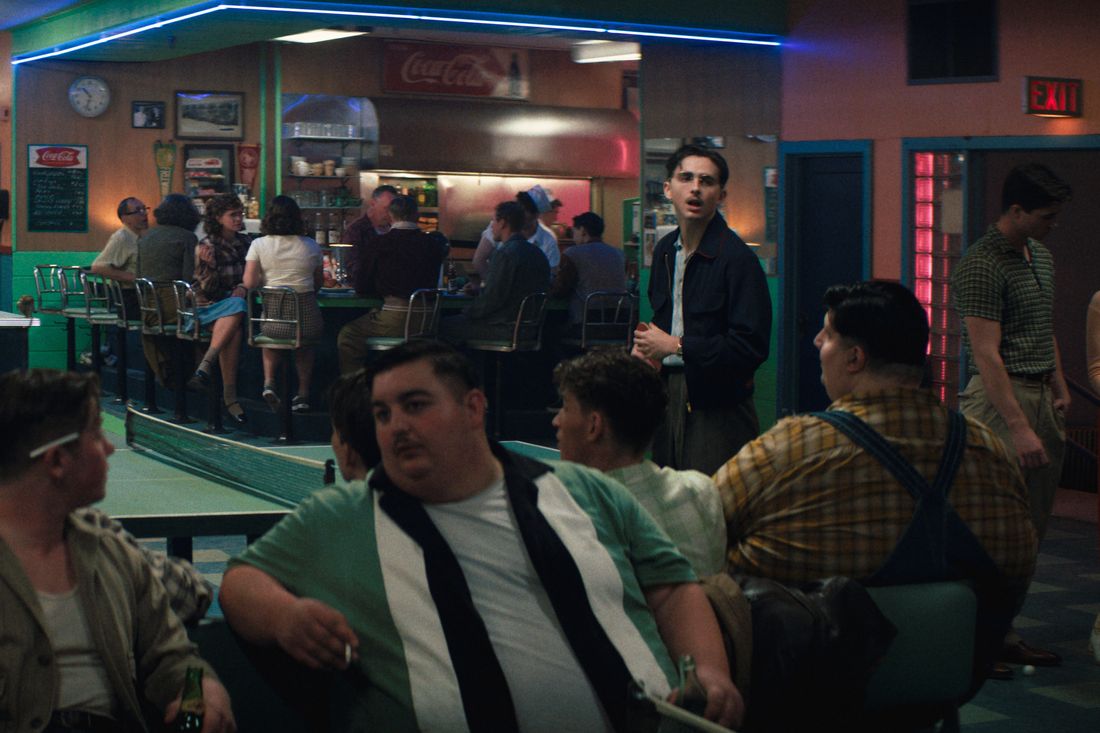
Casting director Venditti meticulously searches for actors, even for small parts. She uses thorough interviews and improvisation to help those with no prior experience feel at ease. She specifically seeks out people who stand out, not blend in. Her work on Marty Supreme featured cameos from well-known figures acting alongside Timothée Chalamet, including writer Pico Iyer, grocery store owner John Catsimatidis, filmmaker Abel Ferrara, and playwright David Mamet, among others. While Kevin O’Leary from Shark Tank plays the villain, co-writer Ronald Bronstein is credited with suggesting him. According to Richard Brody of The New Yorker, Marty Supreme relies more on an actor’s personality and presence than on technical skill, which is why the film features a lively combination of professional actors and people from other fields.
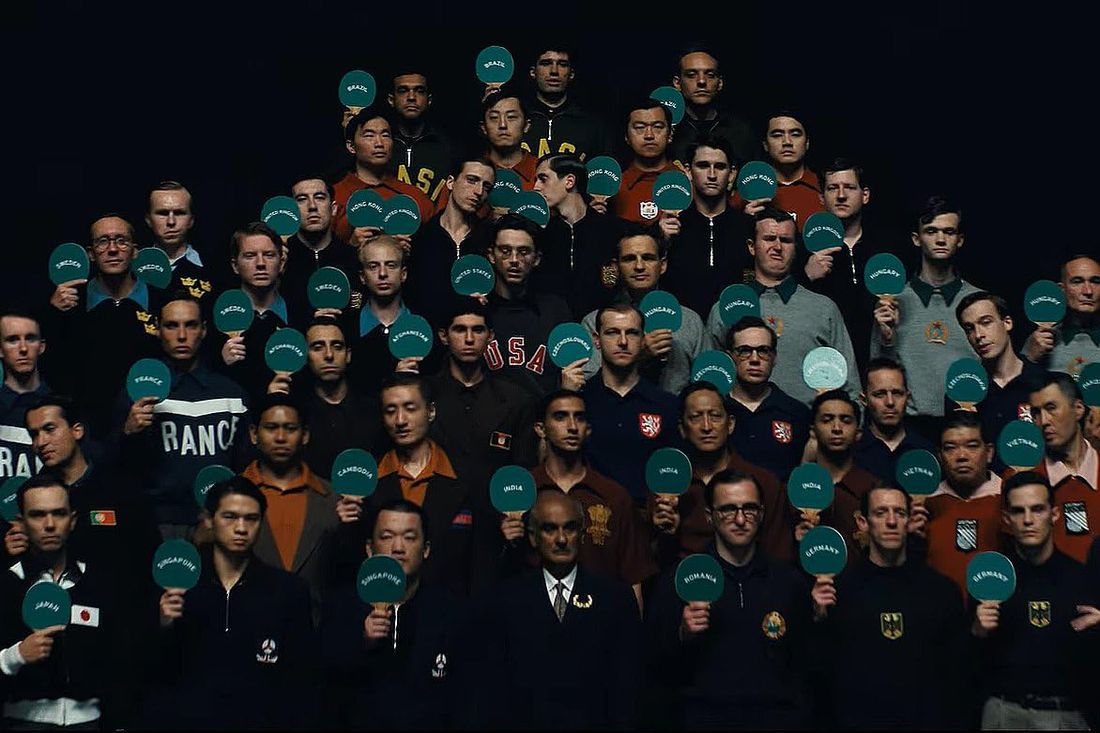
Just as Jack Fisk’s production design perfectly recreates the look and feel of 1950s New York, director Venditti’s realistic casting choices make Marty Supreme feel like a film pulled straight from that era. With a cast of hundreds filmed all over the world, it’s remarkable how convincingly everyone embodies a time before cell phones existed.
Cassandra Kulukundis, One Battle After Another

Like Venditti and the Safdies, Lucy Kulukundis consistently works with director Paul Thomas Anderson, essentially being his go-to casting director. She began as an intern on his first film, Hard Eight, and has cast every movie he’s made since Magnolia. While Leonardo DiCaprio was already set for a project, Kulukundis was responsible for finding all the other actors. Another casting director notes she did a fantastic job creating a diverse cast for each film—from revolutionaries and skateboarders to families and Christmas characters. The latest film, One Battle After Another, which is based on a Thomas Pynchon novel, mixes different genres in an unusual way—think The Big Lebowski meets Civil War. But Kulukundis’s casting choices—using both professional actors and everyday people, even a real federal agent—helped bring it all together. There’s even a surprising connection to another film, Marty Supreme, with Yale professor Paul Grimstad appearing in both.
The casting director notes that these projects are all really interesting and challenging. They explain that finding the right actors when a show has a very specific mood or tone can be difficult, but it’s exciting to work with such a diverse range of characters and stories.
The film featured a strong cast, with director Paul Thomas Anderson personally hiring actors like Regina Hall. However, casting the role of Willa, Leonardo DiCaprio’s character’s daughter, proved particularly challenging, and casting director Cassandra Kulukundis led the extensive search. They needed a biracial actress who looked like a teenager but could convincingly act opposite DiCaprio and Sean Penn, and ideally, had martial arts skills. The search, which took over five years, is detailed in the One Battle campaign. Kulukundis found Chase Infiniti through a friend’s video of her K-pop dance group. While Kulukundis immediately recognized Infiniti’s potential, Anderson needed more convincing. After months of auditions and screen tests, Anderson finally agreed, recognizing the unique quality Kulukundis had seen. As Kulukundis explained to Backstage, Infiniti possessed a rare combination of innocence and intensity – a captivating duality.
Gabriel Domingues, The Secret Agent

Casting directors often talk about wanting things to feel “organic.” As one director explained, they don’t want to see that actors are acting. Instead of looking like a group of performers, they want the ensemble to feel like a genuine collection of people you might encounter in real life.
Gabriel Domingues’s work on The Secret Agent has received a lot of praise, especially considering it’s the only film nominated for Casting that wasn’t originally made in English. Set in Brazil during the late 1970s, the film’s incredibly realistic portrayal of people and places makes viewers feel like they’re truly there. Those who actually lived in Brazil at the time were even more impressed. One casting director shared that a friend who lived in Brazil watched the film and said it triggered vivid memories, noting that every detail felt authentic and accurately captured the atmosphere of the time, truly immersing the audience in that world.
Much of the story in The Secret Agent takes place in a Recife home filled with a diverse group of people seeking refuge from the country’s military regime, all under the watchful eye of the unforgettable Dona Sebastiana (played by Tânia Maria, in a role created just for her). Director Kleber Mendonça Filho aimed to realistically capture the feel of the 1970s, as described by Domingues in an Indiewire interview. This meant casting actors who genuinely looked like they belonged to that era. Beyond representing the variety of people in northern Brazil, the casting process involved unique research—one character, a hitman, was specifically modeled after a notorious serial killer from the time. According to Domingues, Brazil faced even greater economic and social inequality in the 1970s than it does today, making it crucial to find actors who could authentically portray the people who would have held specific jobs during that period.
Out of the five films nominated for Casting, The Secret Agent is the only one that wasn’t also recognized with a SAG Actor Award for Best Cast. However, if it wins at the Oscars, it will likely be due to its vibrant and well-balanced cast, featuring both newcomers and experienced actors.
Francine Maisler, Sinners
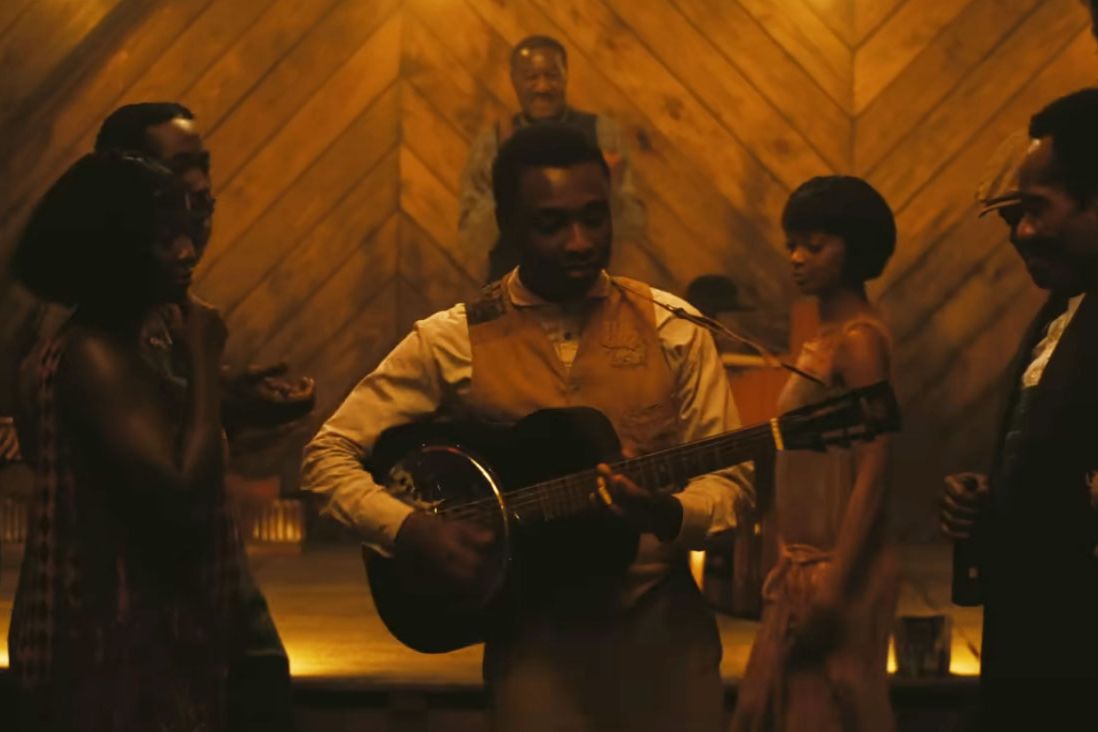
Last year, when I spoke with casting directors about how they choose Oscar nominees, several mentioned the challenge of finding actors who can also sing and dance. The upcoming film Wicked was often cited as a prime example of this need. This proved particularly difficult for Francine Maisler while casting Sinners, a movie centered around impressive musical performances, especially because the character of Sammy, a young performer, was secretly the film’s main character. After what she described as “thousands” of auditions, Maisler chose Miles Caton, a promising musician from Brooklyn with no prior acting experience.
Though she isn’t religious, casting director Maisler was deeply moved by Miles Caton’s voice, describing it as something special and almost supernatural. She felt it was incredibly beautiful and profoundly touched her. This performance also resonated with the Screen Actors Guild, earning Caton a nomination for best supporting actor.
While Sinners is set even earlier in history than Marty Supreme or The Secret Agent, it doesn’t prioritize historical accuracy as much, because it’s a vampire thriller. According to one casting director, finding actors for genre films is different than for serious dramas. It’s not about taking it any less seriously, but rather embracing the heightened reality of the story and its often playful tone. Actors like Jack O’Connell and Delroy Lindo are great because they can play up the drama while still feeling authentic. Similarly, Hailee Steinfeld, who might seem too contemporary for a traditional 1930s film, perfectly suits the darkly atmospheric Southern Gothic style director Ryan Coogler envisioned.
Another major strength of the campaign for Sinners is casting director Nina Maisler. Considered by many in Hollywood to be the best in the business—one source called her “first among equals”—Maisler has an impressive track record, including over a dozen films nominated for Best Picture, with wins for 12 Years a Slave and Birdman, as well as the hit series Succession. If the Academy wants the first-ever Casting Oscar to acknowledge years of unrecognized work, Maisler would be a fitting choice.
Read More
- United Airlines can now kick passengers off flights and ban them for not using headphones
- Crimson Desert: Disconnected Truth Puzzle Guide
- All 9 Coalition Heroes In Invincible Season 4 & Their Powers
- Mewgenics vinyl limited editions now available to pre-order
- The Boys Season 5 Spoilers: Every Major Character Death If the Show Follows the Comics
- Invincible Season 4 Episode 6 Release Date, Time, Where to Watch
- Assassin’s Creed Shadows will get upgraded PSSR support on PS5 Pro with Title Update 1.1.9 launching April 7
- Grok’s ‘Ask’ feature no longer free as X moves it behind paywall
- TikToker’s viral search for soulmate “Mike” takes brutal turn after his wife responds
- ‘Timur’ Trailer Sees Martial Arts Action Collide With a Real-Life War Rescue
2026-02-07 02:57