In July, chef and media personality Eddie Huang received an urgent text from Jason Ropell, an executive at the film streaming service Mubi. Mubi was planning to release Huang’s documentary, Vice Is Broke – which details the story of his former company, Vice Media – in August. They had purchased the rights to the film in January for a significant amount of money, and the deal included some showings in theaters – a positive outcome for Huang given the current documentary landscape. However, Huang says Ropell then called to inform him that those theatrical screenings were being canceled.
According to Mubi, director Huang essentially asked them to stop showing his film. This came after Huang publicly criticized Mubi’s decision to accept $100 million in funding from Sequoia Capital. The investment, announced in May, sparked controversy because Sequoia had also invested in an Israeli defense company, Kela, following the attacks on October 7th and during the ongoing conflict in Gaza. In an Instagram post, Huang explained he wouldn’t promote his film unless Mubi dealt with the situation, stating, ‘We have to start saying ‘NO.’’ and that he wasn’t being overly sensitive about it.
Ultimately, the film Vice Is Broke debuted on Mubi in August, but it didn’t have a traditional cinema release and the director, Huang, wasn’t involved. Meanwhile, Mubi was facing increasing difficulties. A group called Filmworkers for Palestine started an online campaign to have Andrew Reed, a partner at Sequoia, removed from Mubi’s board. Over the past six months, at least 10,000 Mubi subscribers have canceled their subscriptions to protest Sequoia’s investment. Several festivals and brands have also ended or paused their work with the streaming service, hundreds of Mubi employees have expressed their disagreement, and some filmmakers have even pulled their films and canceled ongoing projects.
Efe Cakarel, the founder and CEO of Mubi, was surprised by the criticism following Sequoia’s investment. He points out that other film studios have received investments from questionable sources without causing similar outrage. For example, A24, the studio behind acclaimed films like Moonlight and Uncut Gems, received $75 million from Thrive Capital last year. Thrive Capital invests heavily in Israeli start-ups and even a military-AI company called Anduril Industries, but this didn’t harm A24’s reputation. In fact, The New Yorker described A24 as a company where even the investors are passionate about film.
Mubi is different from typical film studios like A24. When it started in 2007, it was mainly an online forum for serious film lovers to share their thoughts. The founder had a bold vision: to build a major global studio dedicated to independent and art-house films – and he actually did it. Mubi became a significant distributor in the U.S., releasing groundbreaking American films like My First Film by Zia Anger and The Cathedral by Ricky D’Ambrose, as well as acclaimed international works like Do Not Expect Too Much From the End of the World by Radu Jude. The company attracted a new, younger audience by showcasing unique and often unconventional films, and fostered a strong online community known for its progressive political views.
As Mubi expands—with its 2024 film The Substance earning over $80 million and receiving several Academy Award nominations—there’s a risk of losing the audience that initially supported it. Founder Efe Cakarel hoped the investment from Sequoia would demonstrate Mubi’s ability to broaden the appeal of independent and art-house films. However, this genre has always been specialized because it requires viewers to truly connect with the artists and their work. By attempting to turn art-house cinema into a mainstream global brand, Mubi could potentially lose the qualities that made it unique and valuable.
According to Efe Cakarel, the inspiration for Mubi struck him during a 2006 vacation. While in a Tokyo café, he really wanted to watch Wong Kar-wai’s In the Mood for Love, but couldn’t find it streaming online. He later recalled that he would have happily paid any amount to watch it, but no service offered the film.
Kerem Cakarel didn’t come from a film background. Born in Turkey in 1976, he grew up in a family of business owners and pursued studies in electrical engineering and computer science at MIT, followed by an M.B.A. at Stanford. He worked as an investment banker at Goldman Sachs and as an app developer at SAP. In 2009, he admitted he knew very little about distributing films, but he was confident in his abilities to build web applications – covering everything from initial ideas to design and programming – and to negotiate successful deals.
In 2007, Cakarel started his independent film streaming service, the Auteurs, from a small office in Palo Alto. He funded it with help from friends and family and quickly developed the platform. He secured films by making a deal with the Criterion Collection, and even assisted them in building their own streaming service – essentially sharing his platform’s code with a new brand. As Gabe da Silveira, the Auteurs’ lead engineer, explained, they simply rebranded their existing code for Criterion.
The second key development was a collaboration with Celluloid Dreams, the well-known Parisian film company established by the late Hengameh Panahi. They contributed 200 films from their collection and Panahi joined the advisory board of The Auteurs. The rights to distribute these films – including lesser-known titles like Harmony Korine’s Mister Lonely and Hirokazu Kore-eda’s Maborosi – were available. According to Edward King, The Auteurs’ product and marketing manager, these films hadn’t been getting much attention. “They only appealed to dedicated film buffs,” he explained. “They were the type of movies no one else was purchasing.”
I really admired Efe’s vision for Cakarel. He wanted to build a subscription service, kind of like the Netflix we know today, where people paid a monthly fee to watch a lot of content. But honestly, I thought it would be a huge uphill battle. Back then, streaming was still new, and most companies weren’t convinced it was worth working with streamers. Or, if they were, they wanted crazy amounts of money just to license their content. I remember Ted Hope, who was running an indie streaming service at the time, saying they’d ask for something like $250,000 for a three-year license to a film – even something like an early Penélope Cruz movie! We just couldn’t afford that. We were lucky if we could pay $10,000.
As a film fan, I remember when streaming services started buying up indie movies, it was a huge gamble. They weren’t always sure anyone would actually watch them! I was talking to someone named King, who used to work at a streaming service called Jaman – it actually went out of business. He told me they spent millions on thousands of independent films, but almost nobody tuned in. He explained it wasn’t really the time yet – things like Roku and Fire TV sticks hadn’t really taken off, and let’s be honest, people weren’t exactly lining up to watch black-and-white French documentaries on their phones or laptops back then!
King recognized a unique potential within The Auteurs, which by 2009 had evolved into a global online community for film lovers. The site featured a blog called Notebook and a lively message board where users discussed all things cinema – one popular topic was even a memorable ox from the film Apocalypse Now. Having previously worked at Myspace, King noticed that the message board was the only part of the website attracting substantial traffic. He suggested to Efe that they create a dedicated social network centered around film, believing this would build an audience ready to watch films when the rights became available. Mubi maintains that this social network was already established before King joined the team.
Long before Letterboxd, this platform allowed users to both talk about movies and contribute helpful information about them. The team realized that films from major festivals like Cannes and Venice were often missing from IMDb until their official release, or weren’t added at all. So, they created their own movie database, quickly listing films as soon as festival lineups were revealed. They also offered better ways to save favorite movies and organize them into custom lists. Users could follow each other and see what movies their friends were watching and sharing in a personalized news feed.
The website quickly gained a dedicated following through personal recommendations, particularly in Europe, and grew to 40,000 members by 2009. As a result, Cakarel started traveling to Paris frequently for meetings. In 2010, he moved the company’s headquarters to London.
He also renamed the company. The name, Mubi – a blend of “movie” and “business” – came from a Japanese advertising agency he’d brought on board. It didn’t have a specific meaning, but it was easy to pronounce. This branding aligned with his goal, as he told IndieWire, “to make the best films ever created accessible worldwide in any language.” He believes it’s an achievable vision and is confident they’ll reach it.
In 2012, Mubi introduced a unique streaming approach, focusing on carefully selected films. For just $5 a month, subscribers had access to 30 movies, which changed daily. Each day, Mubi added a new film and removed one that had been available for 30 days. This limited selection became a key strength, as every movie was hand-chosen for quality. The constantly rotating selection created a sense of immediacy, encouraging viewers to watch films before they disappeared. This model also kept costs down, as Mubi only needed to license around 365 films a year on shorter-term agreements. According to da Silveira, who later became Chief Technology Officer and co-founder, this strategy was about building a dedicated audience who understood and appreciated their vision.
I started noticing Mubi really stand out in 2016. Like a lot of other streaming services, they began buying films from major festivals, but they did things differently. They weren’t just picking up movies from famous directors like Philippe Garrel, or those already well-established like Miguel Gomes, but also giving a platform to exciting new filmmakers like Oliver Laxe. What really impressed me was that, unlike Netflix, Mubi didn’t just drop films online. They actually gave these movies a proper theatrical release and really promoted them. I remember reading in Variety that Efe Cakarel believed strongly in the experience of seeing a film in a cinema, and they were planning a huge release for Luca Guadagnino’s Suspiria – over 100 locations in the U.K., which was a big deal for them at the time.
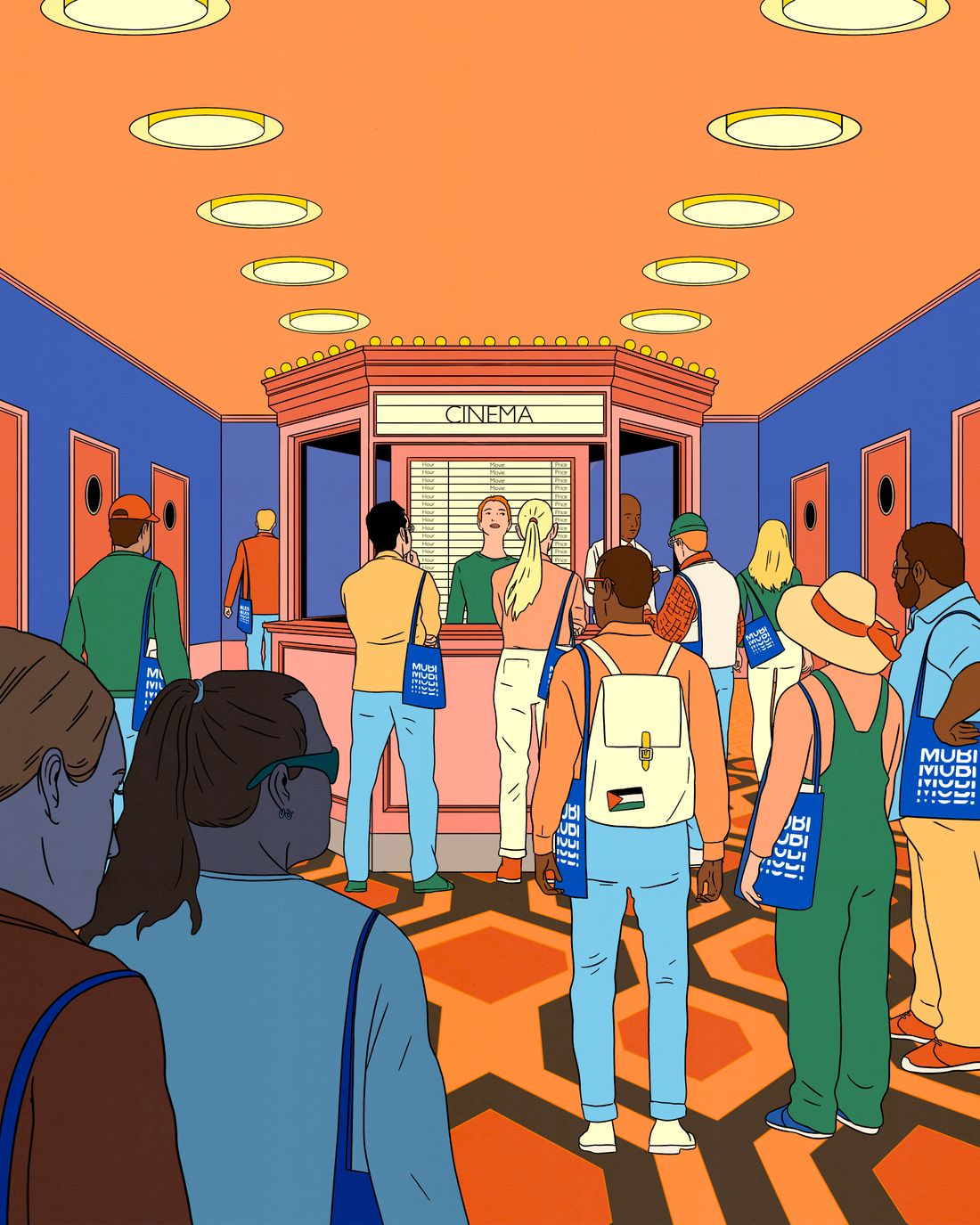
Mubi didn’t just stream films; they also supported the art-house film community directly. They sponsored film festivals, hosted special screenings at museums and smaller theaters, and collaborated with local arts publications. Soon, their distinctive cadmium-blue tote bags became ubiquitous at these events. According to Jon Dieringer, founder of Screen Slate, Mubi was incredibly effective at getting their brand noticed. “You couldn’t attend an art-house film event without seeing someone with one of their tote bags,” he said.
Mubi’s advertising campaigns sometimes backfired. In 2018, they put up ads in the New York subway that actually discouraged people from subscribing if they weren’t familiar with famous film directors. One ad famously said, “If you think Tarkovsky composed Swan Lake, don’t try Mubi.” This was a reference to the director Andrei Tarkovsky, not the composer Tchaikovsky. The ad, which many found snobby and off-putting, quickly spread online, but not in a good way. Mubi’s head of marketing, Cakarel, later apologized.
According to da Silveira, building a trustworthy brand is what allowed Mubi to become a successful, long-term business. He emphasized how easily that trust could be lost, noting that a single misstep could damage it quickly.
The audience Mubi attracted increasingly opposed the war in Gaza. For years, Mubi had focused on attracting young, well-educated viewers in major cities across Europe and South America – groups not generally known for strong support of Zionism, and who leaned politically to the left. The platform gained a reputation for showcasing documentaries on topics like revolutionary movements (such as Free Angela and All Political Prisoners), LGBTQ+ rights (F.H.A.R.), and even the killing of Gazans by Israel (Samouni Road). Yuval Abraham, co-director of the Oscar-winning documentary No Other Land, explained that Mubi presented itself as a streaming service that was different, one that actively featured politically charged films, unlike larger U.S. streamers. “That’s how we perceived it, at least,” he said.
News about Sequoia’s investment appeared in Puck in May. Then, the following week, Variety published a cover story detailing the company’s success and its new billion-dollar value. The article was overwhelmingly positive, featuring Cakarel in a photoshoot at his historic, sunlit home in Notting Hill. He spoke with Variety over chocolates from Prada’s pastry shop, Marchesi 1824, explaining, “We want to be a company that stands for something in a world where many don’t.”
Very quickly, Mubi faced increasing criticism and lost support. Several prominent cultural institutions, including the Centre for Contemporary Arts in Glasgow, Mexico City’s Cineteca Nacional, and the Cinemateca de Bogotá, withdrew from Mubi Fest—a high-profile, two-day film event where influencers attend screenings, dine, and share content. Film festivals in Melbourne, Los Angeles, and Valdivia, Chile, either ended their collaborations with Mubi or refused to screen its films. Additionally, businesses in the U.K. and New York, and film groups in Toronto, also severed ties with the company.
Filmmakers responded to the news as well. A team of animators from India and Pakistan pulled their films from Mubi’s streaming service. The creators of No Other Land were actually discussing a deal with Mubi to help the people of Masafer Yatta in the West Bank when the Sequoia story broke. According to Abraham, they were shocked and very upset, and the potential agreement was cancelled.
Employee morale at Mubi was declining. Initially, management dismissed criticism as online trolling, though a spokesperson later said they took the feedback seriously once they realized how widespread it was. During a company-wide meeting, the CEO revealed that over 10,000 users had canceled their subscriptions in protest. According to one former senior employee, the situation felt deeply damaging to the company, eroding the enthusiasm and dedication of its workforce more than impacting its finances.
Over 200 employees sent an anonymous letter to management expressing their worries. The letter stated that the Sequoia investment would likely damage the company’s reputation and work, potentially jeopardizing partnerships and its core mission.
I heard that Cakarel actually handled the deal negotiations personally, but apparently he wasn’t aware Sequoia had investments in Israel. What’s even more surprising is that he didn’t really check Sequoia out as a company – which is odd, because he’s usually really meticulous about details, even looking over the wording in our email newsletters. It just seems like a big thing to miss!
A former employee explained that Mubi focuses heavily on branding, going beyond just being a film company. They pointed to things like placing Mubi-branded tote bags at events and using a specific ‘Mubi blue’ lighting scheme. The employee believes this emphasis on lifestyle makes Mubi’s investment from Sequoia Capital problematic, as many of their customers are concerned about human rights and global conflicts.
Following a letter published in Variety from prominent Mubi filmmakers – including Radu Jude and Aki Kaurismäki – who called on the company to take action, Mubi CEO Cakarel responded with several changes. He issued a statement recognizing the “immense suffering, displacement, and starvation of the Palestinian people” as a humanitarian crisis that needs to be resolved. He also announced a new “Ethical Funding and Investment Policy” to guide future funding decisions, an artists’ advisory council to help shape the policy, and an “Artists at Risk” fund dedicated to supporting filmmakers facing conflict, displacement, or censorship, including those from Palestine.
This time, he did not apologize.
The independent film world is struggling. There are fewer and fewer companies buying films, and overall funding is shrinking. As one filmmaker explained, independent creators are often desperate for support, which gives platforms like Mubi a lot of power – they can offer funding when few others will.
Now that Mubi has more funding, it’s worth wondering if they still need the dedicated audience they’ve worked so hard to build. Over the past year, they’ve started adding bigger, more mainstream movies. For example, they paid a record $24 million for Lynne Ramsay’s film starring Jennifer Lawrence and Robert Pattinson at the Cannes Film Festival in May. The first look at the film, released in September, even presented Mubi as “the studio behind The Substance,” signaling a shift towards attracting and releasing award-winning movies.
Although Cakarel has publicly stated Mubi isn’t focused on maximizing profits, the company is now trying out content approaches similar to what Netflix and Amazon did when they shifted away from independent films to aggressively expand their businesses.
Mubi, the streaming service, has been growing rapidly, recently bringing on leaders from Netflix and Discovery. This year marked a new direction with its first original TV series: Mussolini: Son of a Century, a dramatic and engaging portrayal of Mussolini’s rise to power, and Hal & Harper, a realistic family drama directed by and starring Cooper Raiff alongside Lili Reinhart. Mubi is also expanding physically, building theaters in Los Angeles and Mexico City, and even explored a potential sale with New York’s Metrograph cinema. All of these moves are aimed at growth, with a recent investment from Sequoia intended to prepare the company for a public offering (IPO) in roughly ten to twelve years.
The company executive described their TV shows as essentially multi-part movies, emphasizing their dedication to high-quality filmmaking. Efe Cakarel, who models his approach after leaders like Mark Zuckerberg at Meta and Elon Musk at Tesla, maintains strong control over Mubi, holding a majority of the board seats and intending to keep that control even if the company goes public.
As a film buff, I’m a little skeptical of this guy’s confidence. He seems to believe he can protect his company from the usual streaming pressures, but honestly, that feels like a gamble against how things usually play out. We’ve seen big players like Netflix and Amazon try the ‘prestige director’ approach before – remember House of Cards with David Fincher, or Nicolas Winding Refn’s Too Old to Die Young? Those shows were aiming high, but let’s be real, they weren’t that far removed from the endless stream of low-budget, quickly-forgotten content like Stranded With My Mother-in-Law or Cocaine Quarterback. He might be underestimating how easily things can slide towards the bottom.
Sequoia Capital thinks Mubi benefits from the rise of low-quality, quickly-made streaming content. According to Andrew Reed at Sequoia, there’s a real chance for a company to differentiate itself by focusing on high-quality films. He wonders, “What could be better than investing long-term in a company dedicated to cinema and independent stories?”
Currently, Mubi’s film selection strongly reflects the artistic vision of its founder, Efe Cakarel. Beyond recent releases from directors like Ramsay, Jim Jarmusch, and Kelly Reichardt, Mubi has added Jafar Panahi’s Palme d’Or-winning film, It Was Just an Accident, and has projects planned with Park Chan-wook and Julia Ducournau for next year. This impressive lineup is comparable to those of leading independent distributors like A24 and Neon. For Mubi, maintaining the loyalty of its dedicated audience – sophisticated film lovers whose view of the company has shifted significantly in the last year – is proving to be a greater challenge than attracting top filmmakers, who haven’t indicated the recent investment will change their willingness to work with Mubi. As Dieringer explained, this situation has been a real eye-opener for everyone involved.
A sign of changing times appeared in July with a new tote bag spotted at independent cinemas in New York and Los Angeles. Designed and sold by the film group Hollywood Entertainment, it closely resembled a bag from the streaming service Mubi – same blue color and logo – except this one said “Tubi” instead. Tubi is a free streaming platform owned by Fox, offering a wide range of content, from low-budget movies to critically acclaimed films by directors like Lucio Fulci and Claude Chabrol. Like Mubi, Tubi has gained a dedicated following through positive recommendations.
Hollywood Entertainment announced a new tote bag for sale, with all profits going to a support fund for Palestine. It quickly sold out, within just a few days.
Read More
- United Airlines can now kick passengers off flights and ban them for not using headphones
- Gold Rate Forecast
- How to Solve the Glenbright Manor Puzzle in Crimson Desert
- All Golden Ball Locations in Yakuza Kiwami 3 & Dark Ties
- How to Get to the Undercoast in Esoteric Ebb
- 8 Actors Who Could Play Blackbeard In One Piece Live-Action Season 3
- How to Complete Bloom of Tranquility Challenge in Infinity Nikki
- Netflix’s 4-Part Crime Thriller Is One Of Its Very Best
- Binance’s Bold Bitcoin Bet: $1B SAFU Fund Dives Into Crypto’s Deep End
- $2B AI cow collars use “cowgorithm” to herd cattle with no fences
2025-12-31 15:59