Ethereum struggles to stabilize, as if a soul shamed by the chorus of despair after weeks of brutal selling. The price clings to the 1,950 zone, up a mere 6 percent from the trough of last nightmarish weeks. And yet the greatest whales, those iron-hearted specters, have begun to accumulate with a cold zeal.
Yet the short-term sellers and the derivatives traders move with caution, pulling at opposite ends like a man wrestling with his own conscience, a tug-of-war inside the market’s diaphragm.
Biggest Ethereum Whales Accumulate as Bullish Divergence Stays Intact
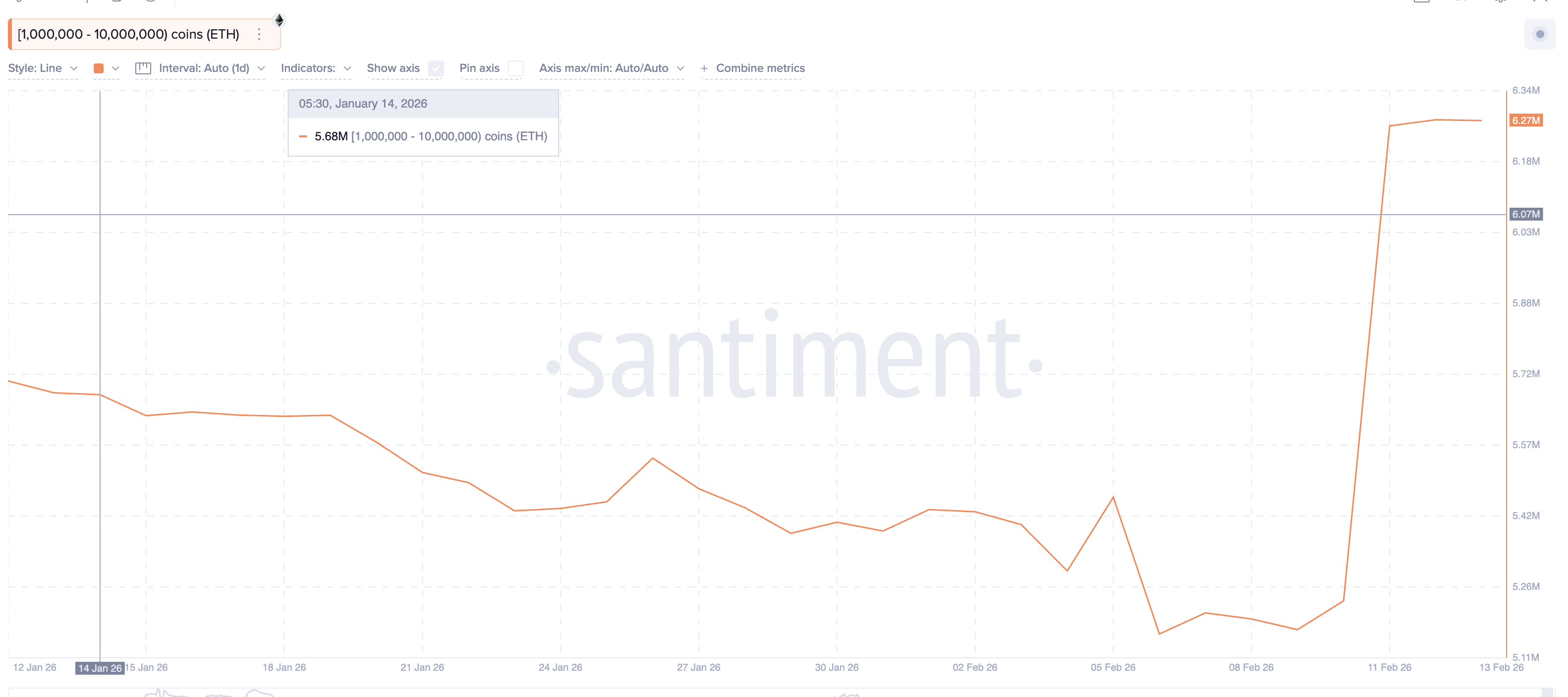
On-chain data reveals the largest holders rehearsing a rebound. Since February 9, addresses holding between 1 million and 10 million ETH have grown from about 5.17 million to nearly 6.27 million ETH, adding over 1.1 million ETH – worth roughly $2 billion at current prices. A monstrous arithmetic that makes one smile wryly as fortune smiles from the shadows while virtue trembles in fear of the ledger.
Want more token insights like this? Sign up for Editor Harsh Notariya’s Daily Crypto Newsletter here.
That accumulation lines up with a bullish whisper on the 12-hour chart, as if the market were listening for a distant bell and mistook the echo for salvation.
Between January 25 and February 12, Ethereum’s price carved a lower low, while the Relative Strength Index, or RSI, carved a higher low. RSI measures momentum by comparing recent gains and losses; when price falls, but RSI rises, one suspects the grip of selling is weakening, or perhaps the universe playing a cruel joke.
This bullish divergence suggests downside momentum is fading.
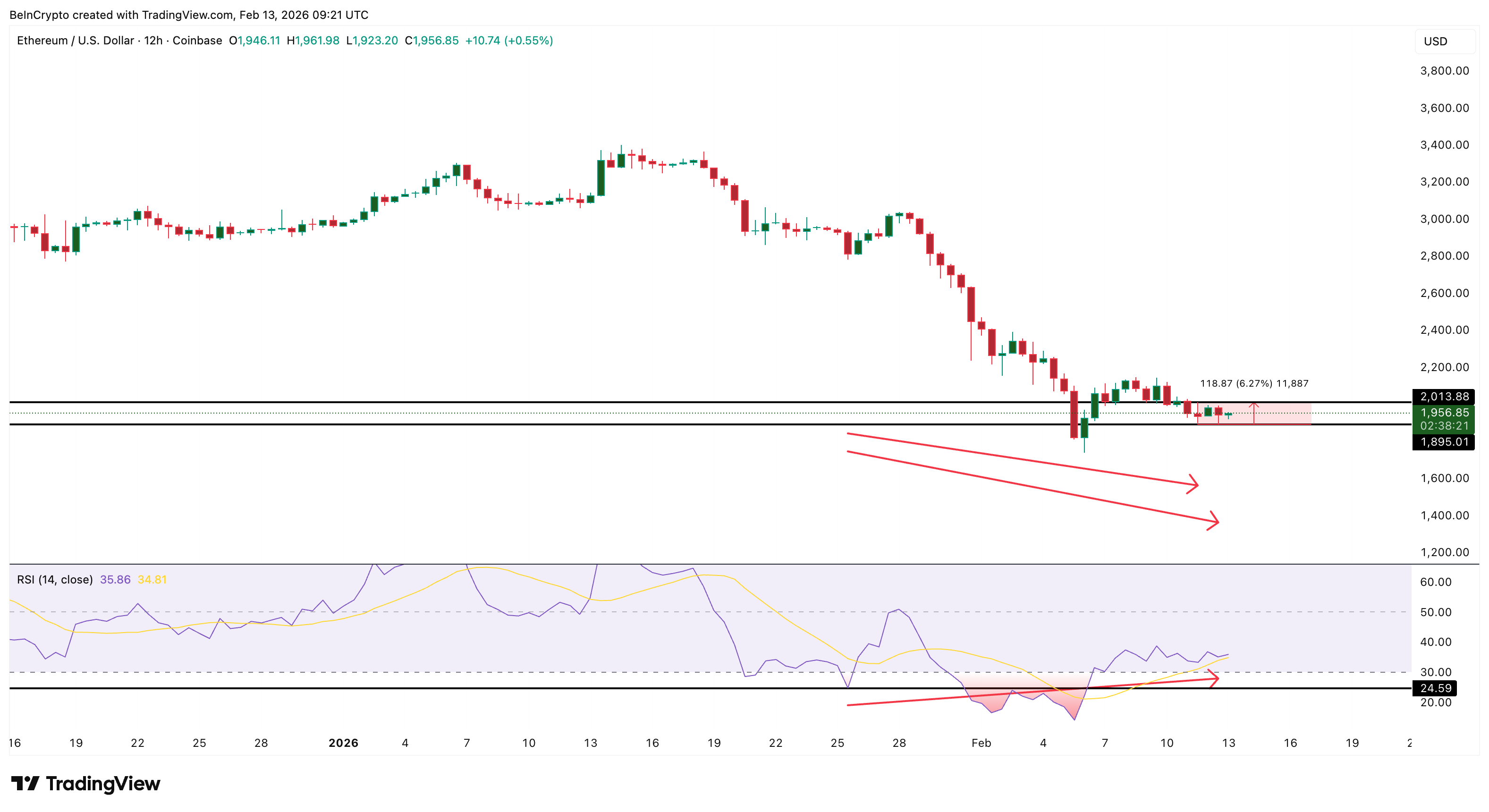
The structure remains valid as long as Ethereum holds above $1,890, the same signal that flashed on February 11 and still seems to hold. A breakdown below this level would invalidate the divergence for now and weaken the rebound case.
For now, whales appear to be betting that this support will hold, as if they know the script and we merely guess the ending.
Short-Term Holders Are Selling?
While large investors are accumulating, short-term holders move with a different, almost comic, sense of urgency.
The Spent Coins Age Band for the 7-day to 30-day cohort has surged sharply. Since February 9 (the same moment the whale pickup began), this metric has risen from around 14,000 to nearly 107,000, an increase of more than 660%. This indicator tracks how many recently acquired coins are being moved. Rising values usually signal possible profit-taking and distribution-because nothing says “my fortune is secure” like motion sensors on coins.
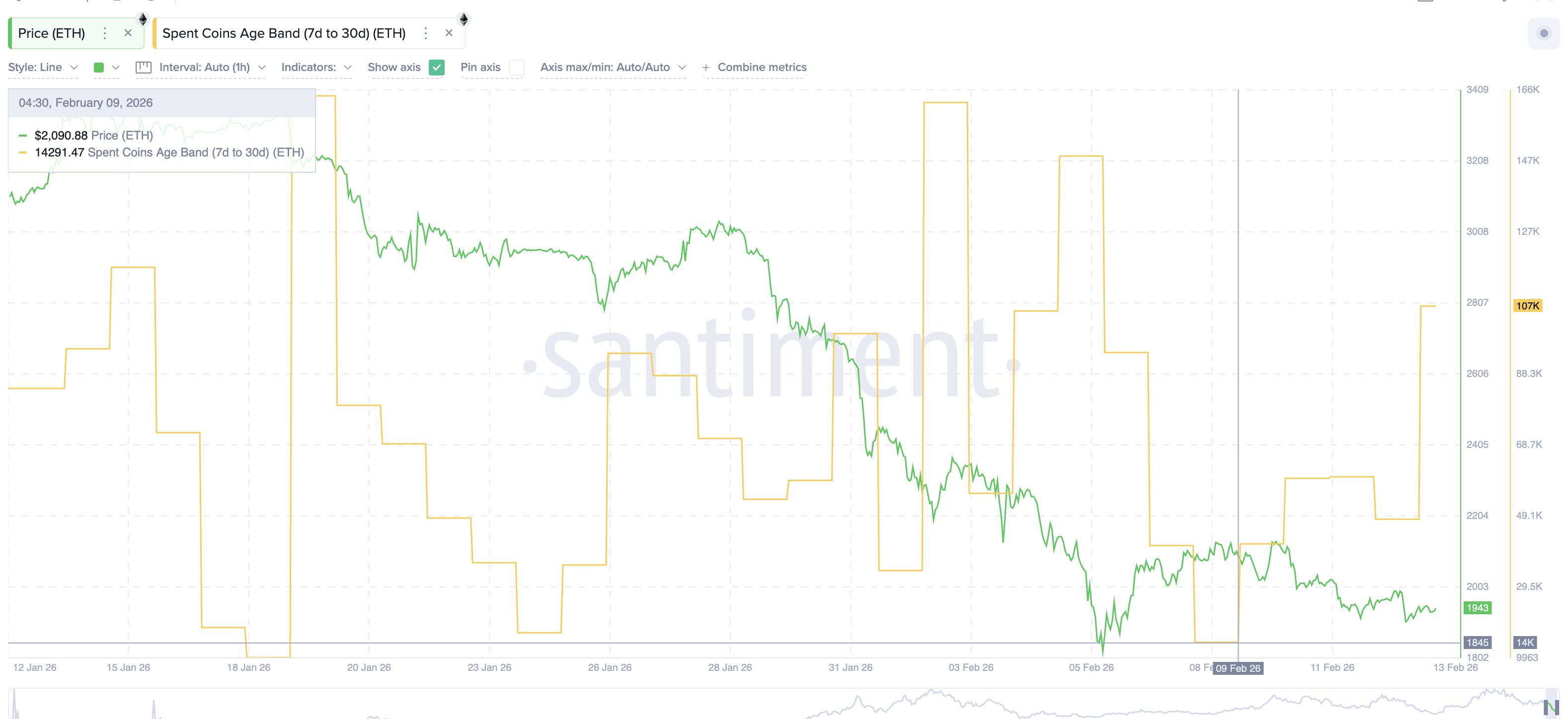
In simple terms, short-term traders are exiting positions. This pattern appeared earlier in February as well. On February 5, a spike in short-term coin activity occurred near $2,140. Within one day, Ethereum dropped by around 13%-a reminder that haste makes markets look ridiculous and losses feel personal.
That history shows how aggressive selling from this group can quickly reverse moves. As long as short-term holders remain active sellers, upside moves are likely to face resistance with a grim chuckle from the clock.
Derivatives Data Shows Heavy Bearish Positioning
Derivatives markets are reinforcing this cautious outlook. Current liquidation data shows nearly $3.06 billion in short positions stacked against only about $755 million in long leverage. This creates a heavily bearish imbalance with almost 80% of the market betting on the short side.
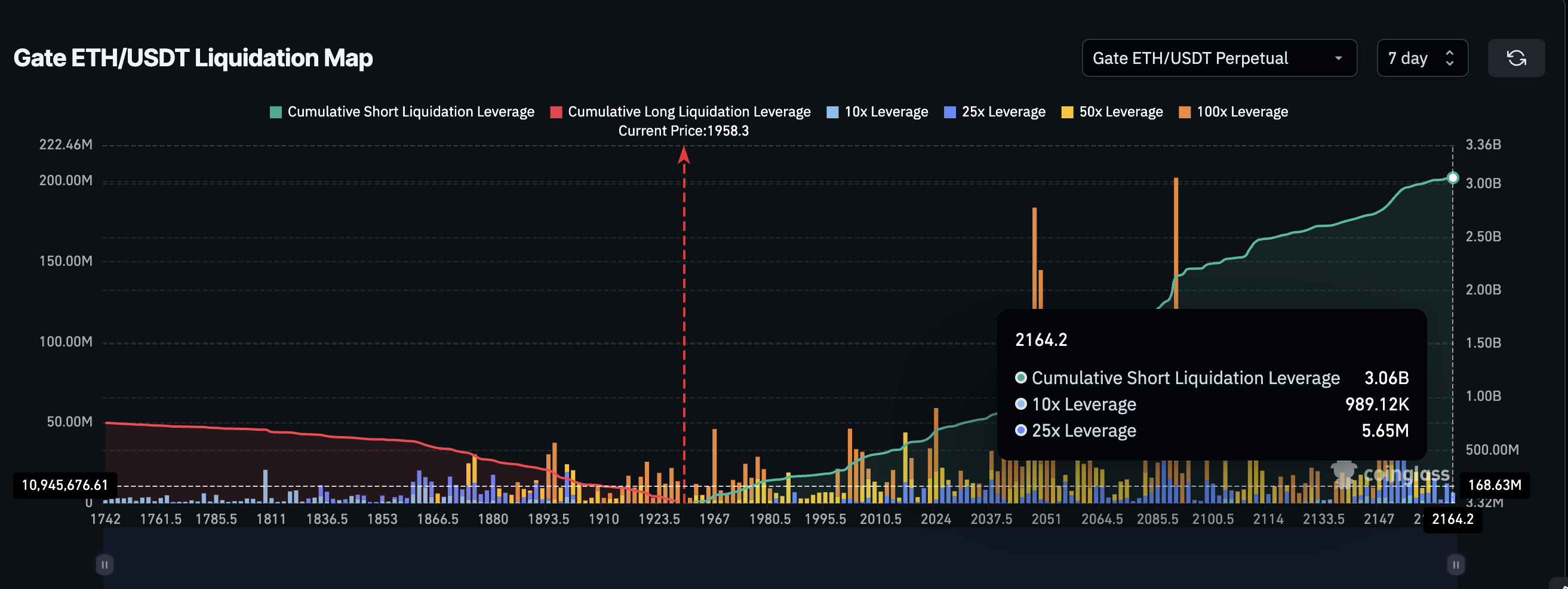
On one hand, this setup creates fuel for a potential short squeeze if prices rise. On the other hand, it shows that most traders still expect further weakness. This keeps momentum muted but keeps the faint glow of a bounce alive if the whale buying nudges prices upward, even if only a little, crossing past key clusters.
On-chain cost basis data helps explain why Ethereum struggles to break higher. Around $1,980, roughly 1.58% of the circulating supply, was acquired. Near $2,020, another 1.23% of supply sits at breakeven. These zones represent large groups of holders waiting to exit without losses.
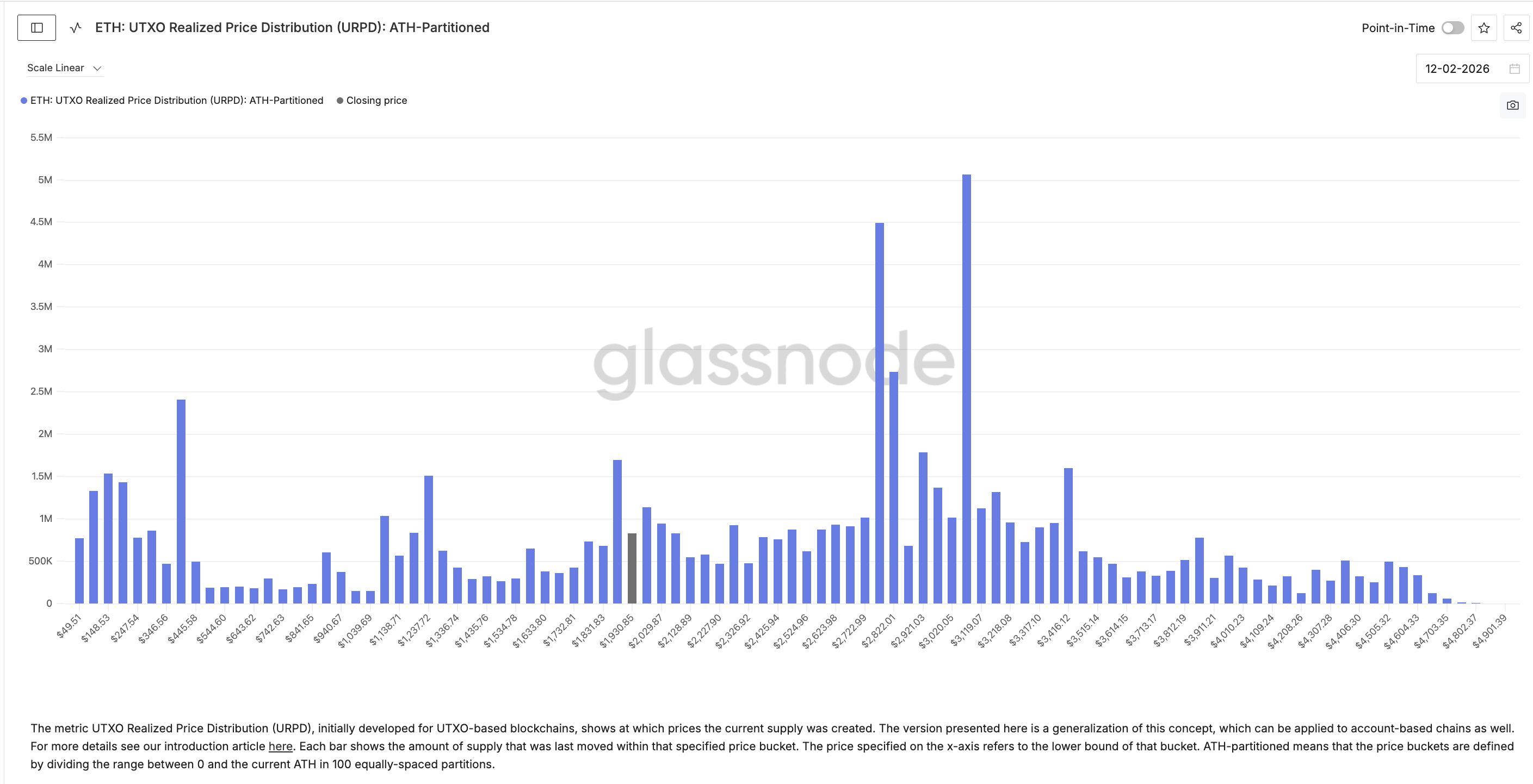
When price approaches these levels, selling pressure increases as investors try to recover capital. This has repeatedly capped recent bounces. Only a strong leverage-driven move or short squeeze would likely be powerful enough to push through these supply clusters.
Until then, these zones remain major barriers.
Key Ethereum Price Levels To Track Now
With whales buying and sellers resisting, Ethereum price levels now matter more than grand narratives.
On the upside, the first major resistance sits near $2,010. A clean 12-hour close above this level would increase the probability of short liquidations. And it sits near the key supply cluster.
If that happens, Ethereum could target $2,140 next, a strong resistance zone with multiple touchpoints. It also sits around 10% from the current levels. On the downside, $1,890 remains the critical support. A break below this level would invalidate the bullish divergence and signal renewed downside pressure. Below that, the next major support sits near $1,740.
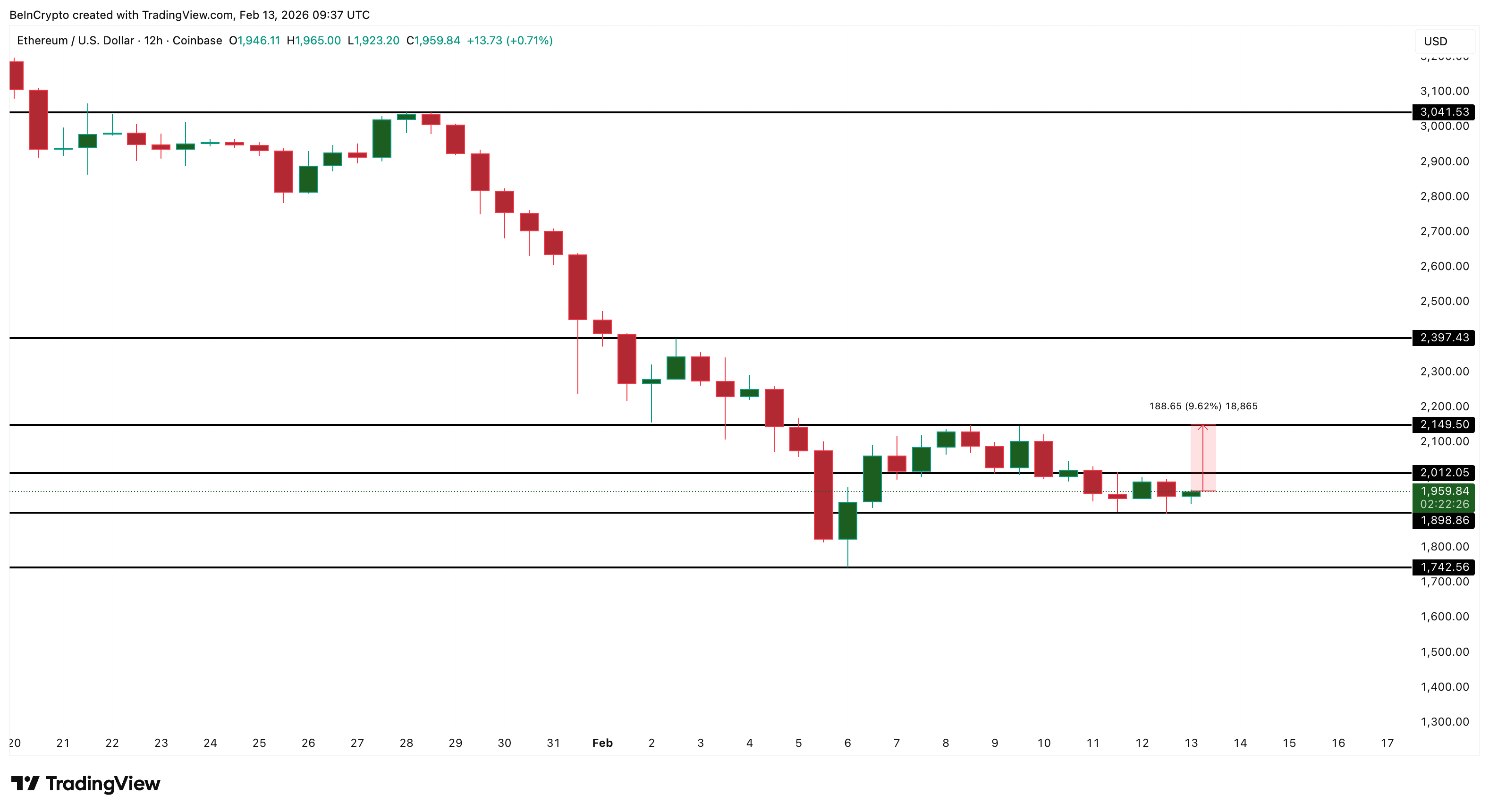
As long as Ethereum holds above $1,890 and continues testing $2,010, the rebound structure remains intact. A sustained breakdown below support would cancel the current recovery attempt.
Read More
- United Airlines can now kick passengers off flights and ban them for not using headphones
- How to Complete Bloom of Tranquility Challenge in Infinity Nikki
- Gold Rate Forecast
- How to Solve the Glenbright Manor Puzzle in Crimson Desert
- 8 Actors Who Could Play Blackbeard In One Piece Live-Action Season 3
- All Itzaland Animal Locations in Infinity Nikki
- All Golden Ball Locations in Yakuza Kiwami 3 & Dark Ties
- DC Comics’ Absolute Two-Face and Absolute Penguin Confirmed
- A Dark Scream Theory Rewrites the Only Movie to Break the 2-Killer Rule
- All 10 Potential New Avengers Leaders in Doomsday, Ranked by Their Power
2026-02-13 15:16