Spoilers follow for the second season of The Pitt through the 11th episode, “5:00 P.M.”
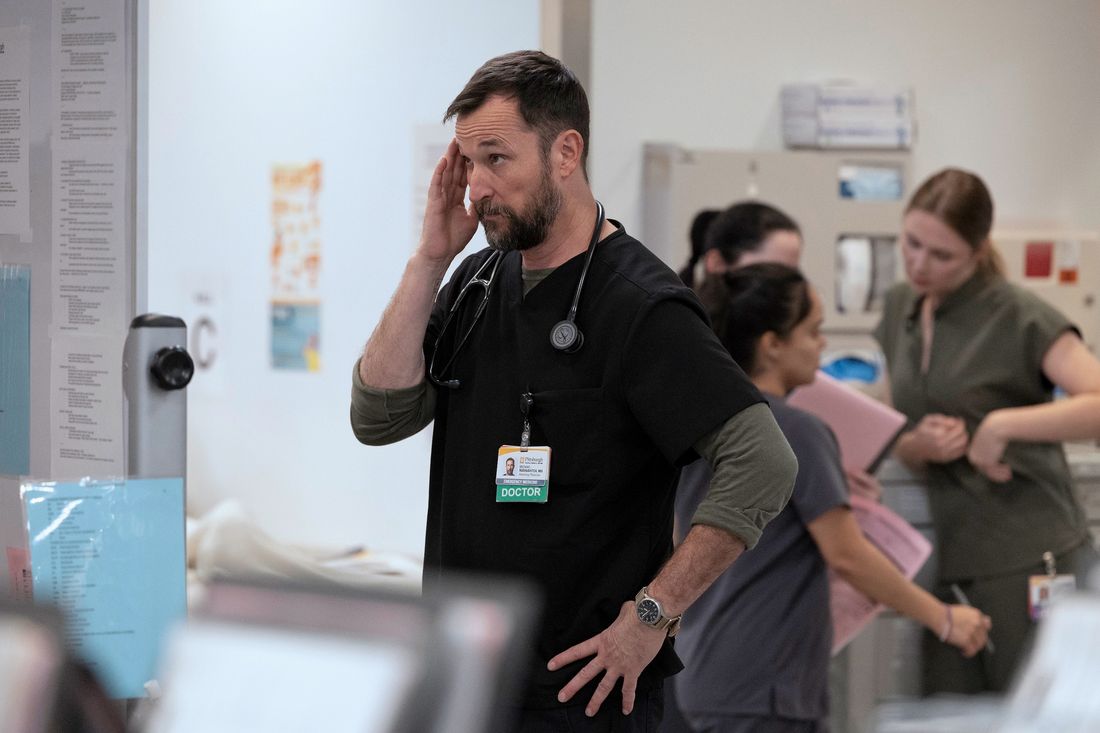
Dr. Michael “Robby” Rabinovich undergoes a significant transformation between the first and second seasons of The Pitt. Initially, he’s portrayed as a strong, though somewhat traumatized, leader – firm but fair to his coworkers, and struggling with personal issues like supporting his stepson after a loss and realizing he was emotionally unavailable in a past relationship. He’s flawed, but ultimately someone you’d want on your side in a crisis. However, season two reveals a much darker side. Robby becomes quick-tempered and disrespectful, openly complaining about his job and colleagues, and exhibiting discriminatory behavior. He’s dishonest about his risky habits and fails to safeguard his patients and coworkers from external threats. By the end of a long shift, his positive traits – his practical approach to medicine, mentorship, and adaptability – have eroded into dismissiveness and defensiveness. This season showcases Robby at his worst, and it’s more difficult to watch than any of the show’s graphic medical scenes.
I always liked Robby. He wasn’t perfect, sure, but he was a good doctor who genuinely cared about his patients. He’d definitely push boundaries to help them, and he always respected the opinions of his colleagues. He had a bit of a god complex, always favoring certain doctors – mostly white men like Abbot, Langdon, and Whitaker – but honestly, the ER needed someone to take charge, and he filled that role. He was kind of the ‘go-to’ guy, you know? But this season? Something’s totally different. From the very first scene, as he heads into what’s supposedly his last shift before a long-deserved break (that we all know is probably a lie), he’s just…off. He’s got this attitude, instantly dismissing anyone who dares to question him. It’s really frustrating to watch, because the Robby I knew was so much more collaborative.
Robby’s increasingly unpleasant behavior is central to the season’s plot, representing the exhaustion everyone at the ER feels after the events of ‘PittFest.’ While Dana acts as a positive force – her experience being assaulted by a patient in the first season has made her very protective of the new nurse, Emma – Robby’s change feels overly emphasized. The show uses his PTSD and burnout as a key plot point – signaled even by a location named ‘Head-Smashed-In Buffalo Jump’ – but it’s doing so at the expense of developing other characters. Interactions now feel one-sided: Robby lashes out, others appear upset but don’t get a chance to respond or show their own personalities, and the cycle repeats. While Robby’s shift towards being a villain is intentional, the show seems to be sacrificing the development of its other characters to make it happen.
Over the past ten months, some of the doctors have become more self-assured – both Whitaker and Javadi seem more comfortable in the ER this Fourth of July. But Robby is now acting paranoid and distant, particularly towards the doctor who’s temporarily replacing him. Even though he chose to take time off, he now sees Dr. Baran Al-Hashimi as an enemy. The show seems to be framing the situation from Robby’s point of view, portraying Dr. Al-Hashimi as “pushy” instead of showing things from her perspective as the new person trying to improve things. Dr. Al-Hashimi is knowledgeable, experienced in challenging environments, and dedicated to raising the standard of care at PTMC. While her ideas might be a little idealistic – the “patient passport” is questionable – she doesn’t deserve to be undermined by Robby on her first day. He’s explaining “how things are done,” questioning her decisions, and trying to isolate her from the other residents. She even brought bagels – give her a break!
Al-Hashimi’s AI app isn’t a success, and it’s just one part of her work as a doctor. However, the show, The Pitt, presents her through Robby’s perspective, using his tendency to dramatically prove points to guide our feelings. Noah Wyle’s delivery of a line about AI increasing efficiency but also leading to more work and job losses is classic Robby – meant to highlight the struggles of doctors. But this season, these speeches feel less inspiring because Robby is struggling personally, making him sound preachy rather than principled. He’s losing his role as the moral center of the ER. He’s been dismissive and insensitive, like when he shrugged off Santos’s worries about separating siblings or blamed Mohan’s panic attack on her childhood. Al-Hashimi is right to point out that he’s losing empathy. And when Robby jokes that the ER will fail without him, he’s clearly wrong and unlikeable.
By consistently highlighting Robby’s aggressive behavior without enough opposing viewpoints, The Pitt risks presenting his perspective as the only one that matters. The show was designed as an ensemble piece – featuring a talented cast, diverse characters, and a constant flow of patients that would create fresh interactions. However, this season’s heavy focus on Robby has prevented that from happening. More characters, not just Dana, could challenge Robby and offer compelling performances beyond the show’s established stars. Expanding storylines to explore other characters’ perspectives on the hospital and Robby’s methods would prevent figures like Al-Hashimi from being defined solely by their relationship with him. The Pitt can sometimes feel preachy, and Robby, as the main character, often delivers the show’s message, as if it doesn’t trust viewers to understand lessons delivered by anyone else. Even the camera work tends to follow Robby, subtly suggesting that his reactions are the correct way to interpret events. This worked well in the first season when he served as our introduction to the show’s world, but continuing to center everything on him in season two limits the show’s potential for a broader, more nuanced perspective.
In recent episodes of The Pitt, the show has increasingly focused on the conflict between Robby’s role as the central character and his growing moral ambiguity. This comes to a head in “5:00 P.M.” when ICE agents arrive at the hospital with an injured undocumented woman they hurt during a raid. According to executive producer John Wells, HBO wanted the storyline to be presented fairly, acknowledging multiple perspectives, and this is reflected in Robby’s detached approach. He simply instructs his staff to treat the woman’s injury and then dismiss the ICE agents, avoiding any personal commentary on their actions. He even urges fearful patients to prioritize their health and stay for treatment. This hands-off attitude mirrors the “force field” technique he advises his colleagues, Mohan and Ogilvie, to use – keeping personal issues and opinions separate from patient care. However, it feels hypocritical, as Robby is clearly letting his own unresolved emotional pain and fear of the hospital’s potential failure (and his own) influence his interactions with everyone around him.
His angry outburst at the ICE agents – telling them they were just a distraction – doesn’t carry the same strong moral weight as when he previously confronted people hindering his work. In the first season, his intense reaction to parents who refused to vaccinate their child felt justified, a rare display of anger fueled by a desire to protect a vulnerable kid. But this time, his speech to the ICE agents feels flat and uninspired, as if he’s too preoccupied with his own problems to truly engage with the situation. His attempt to reason with them to avoid losing patients or staff lacks passion and ultimately fails – they still violently arrest Jesse when he tries to help the injured woman. This time around, Robby’s quick temper and unrealistic expectations don’t have the same impact.
Robby’s change in behavior is deliberate, meant to show how burnout can completely drain dedicated workers until they’re unable to continue. By making Robby more difficult and less understanding, the show illustrates how trauma can transform a once-positive leader into someone whose good intentions are lost. However, the show could have explored this idea more deeply by showing how other characters react to Robby’s negativity and how it connects to their own experiences. Currently, Robby’s self-hatred and fear for the future of the PTMC are dominating his character – and the show itself. It’s clear Robby is intentionally pushing people away, trying to avoid the pain of being missed when he eventually distances himself. But just like Robby, the show isn’t paying enough attention to the feelings of those he’s pushing away.
Read More
- United Airlines can now kick passengers off flights and ban them for not using headphones
- Gold Rate Forecast
- All Golden Ball Locations in Yakuza Kiwami 3 & Dark Ties
- How to Solve the Glenbright Manor Puzzle in Crimson Desert
- How to Complete Bloom of Tranquility Challenge in Infinity Nikki
- 8 Actors Who Could Play Blackbeard In One Piece Live-Action Season 3
- How to Get to the Undercoast in Esoteric Ebb
- Netflix’s 4-Part Crime Thriller Is One Of Its Very Best
- Katanire’s Yae Miko Cosplay: Genshin Impact Masterpiece
- 15 Lost Disney Movies That Will Never Be Released
2026-03-24 21:56