
Vince Gilligan is known for creating TV shows that keep audiences guessing and eager to solve the central mysteries. Early in his career with The X-Files, he realized viewers craved answers, but the show often benefited from prolonging the suspense. As the creator of Breaking Bad and Better Call Saul, Gilligan found himself facing the same challenge: he wanted to satisfy viewers by revealing the reasoning behind plot twists and character development, but also wanted to keep them engaged with the unfolding story.
With his new Apple TV show, Pluribus, creator Dan Gilligan is trying something different. The show—a unique, end-of-the-world story about a woman trying to save humanity from a strangely cheerful virus that connects everyone’s minds—is full of possible meanings. It’s the kind of show that invites deep analysis: the main character, Carol Sturka (played by Rhea Seehorn), could be seen as a symbol of grief, loneliness in the digital age, humanity versus AI, or even depression—and the possibilities don’t stop there. Gilligan intentionally avoids providing easy answers. He wants viewers to interpret Pluribus in whatever way resonates with them. He’s thrilled when people share their own unique understandings of the show, often discovering interpretations he hadn’t even considered.
Despite carefully avoiding spoilers, Vince Gilligan and his team have spent a lot of time developing their own ideas about the show’s meaning, and he occasionally shares those insights. In a recent discussion about the first season, he talks about his urge to clarify the show’s themes, how long he envisions it lasting, and whether he has a clear plan for that season finale. (He does… mostly.)
Spoilers follow for season one, including finale “La Chica o El Mundo.”
This series is very character-driven, particularly around Carol. I was initially envisioning a male lead who everyone would adore and be willing to sacrifice anything for. However, I hadn’t yet developed the science fiction aspect or the reason for this devotion. The story truly came together when I decided I wanted to create a show specifically for Rhea Seehorn. Switching to a female protagonist, and knowing Rhea’s naturally kind personality, I realized the character needed to be a bit of a contrast to the generally agreeable ‘Others’. She needed to be grumpy, sarcastic, and maybe a little difficult – someone who wasn’t always nice.
I’ve noticed some people online are saying Carol isn’t very likable, and that makes them not want to watch her character. Does that criticism seem familiar, considering the huge negative reaction Anna Gunn received for playing Skyler on Breaking Bad?
I’ll admit, I don’t always understand these things. But it feels like if this were a male character, people wouldn’t be so critical. It’s similar to the worst of the backlash against Skyler White, which really affected Anna Gunn. That still puzzles me. Skyler was actually a more heroic character than the show’s main character, Walter White, even though Walter was brilliantly played by Bryan Cranston. Walter was, essentially, a bad guy – that was the whole point of the show! And yet, people were cheering him on while actively disliking Anna Gunn’s character, which just doesn’t make sense to me.
I hope people don’t let this bother them and still watch the show. But honestly, I don’t understand the criticism. I find Carol Sturka’s grumpy and sarcastic personality really funny and actually quite endearing. Maybe it’s just me, but I think if a male character acted this way, most people wouldn’t have a problem with it. It’s something to think about, really.
I think she’s hilarious too! I’ve been thinking about whether this show is a comedy, and I’ve decided it is.
Me too. With the Emmys, we always have to decide whether to submit it as a drama or a comedy. I would never try to enter it in the comedy category, but we definitely try to include as much humor as possible, just like with shows like Breaking Bad and Better Call Saul. I really enjoy shows that blend both drama and comedy. I find it hard to get invested in dramas that are completely devoid of humor.
I’ve been thinking about giving Carol a career as a romance novelist, and I heard you made that decision because you don’t have much respect for screenwriters. Romance fantasy authors just seem to lead more appealing lives. Honestly, I’m not very impressed with what I do for a living – maybe “contempt” is too harsh, but I don’t find screenwriters, including myself, particularly fascinating. I suspect writing romance fantasy would be a more enjoyable and vibrant experience.
We didn’t have a dedicated expert on that genre in the writers’ room, but several of us had read books like hers, and our support staff had some familiarity with it too. I really enjoyed including a couple of paragraphs directly from one of her books in the first episode. My assistant, Alanna Hoffman, even wrote an entire chapter based on Bloodsong of Wycaro, the fourth book in the Wycaro trilogy. It was a fun challenge for everyone to try writing in a different style and explore new creative avenues.
So, what books did you use as inspiration for her voice? I definitely should have done more research, to be honest. I mostly just focused on having fun and writing what felt right. It seems like there’s a lot of variety in romance and romantasy – some authors write with very elaborate language, while others keep it simple and direct. We leaned towards the more descriptive, flowery style – no intentional connection to the purple sand in the story, though! Ultimately, I just went with my instincts.
Oh, so you don’t follow the Heated Rivalry, do you? To be honest, I’m a bit embarrassed to admit I’m not very familiar with that scene either.
I was curious about the romantic connection that developed between Carol and Zosia at the end of the season. What led you to explore that direction? We genuinely believe the Others care for everyone – Carol, Manousos, and all the original contestants. It felt like they loved them all equally, and we didn’t want to portray them as intentionally cruel. However, the challenge in episode seven felt like putting Carol in isolation – almost like 40 days in the desert. It had a biblical quality to it. After that isolation, she reached a breaking point, and the following episode shows her making a difficult choice. That felt like compelling and dramatic territory to explore, and we followed what we felt was the natural progression of her character.
I’ve always been curious about how shows are written, especially now with the trend towards smaller writers’ rooms or even single-person writing. I know you’ve consistently championed the traditional writers’ room approach, and I’d love to understand why. For me, looking at your incredible career, it’s clear that collaboration has always been key. Thinking back to your work on The X-Files – which, amazingly, started over 30 years ago, with your first episode airing in 1994 – it seems every show you’ve been involved with has thrived on a shared, communal writing process. It’s really inspiring to see how consistently you’ve valued that approach.
Before The X-Files, I was trying to break into screenwriting, and honestly, it was a really isolating experience. I always picture that struggling writer alone in a cold attic, and that was pretty much my life! I didn’t love it, and I really struggled to motivate myself. I lacked discipline – it took me years to finish a single script, and getting started was always the hardest part. TV writing completely changed things for me. I thrived in the collaborative environment, and those tight deadlines? They were the best thing that could have happened to my career.
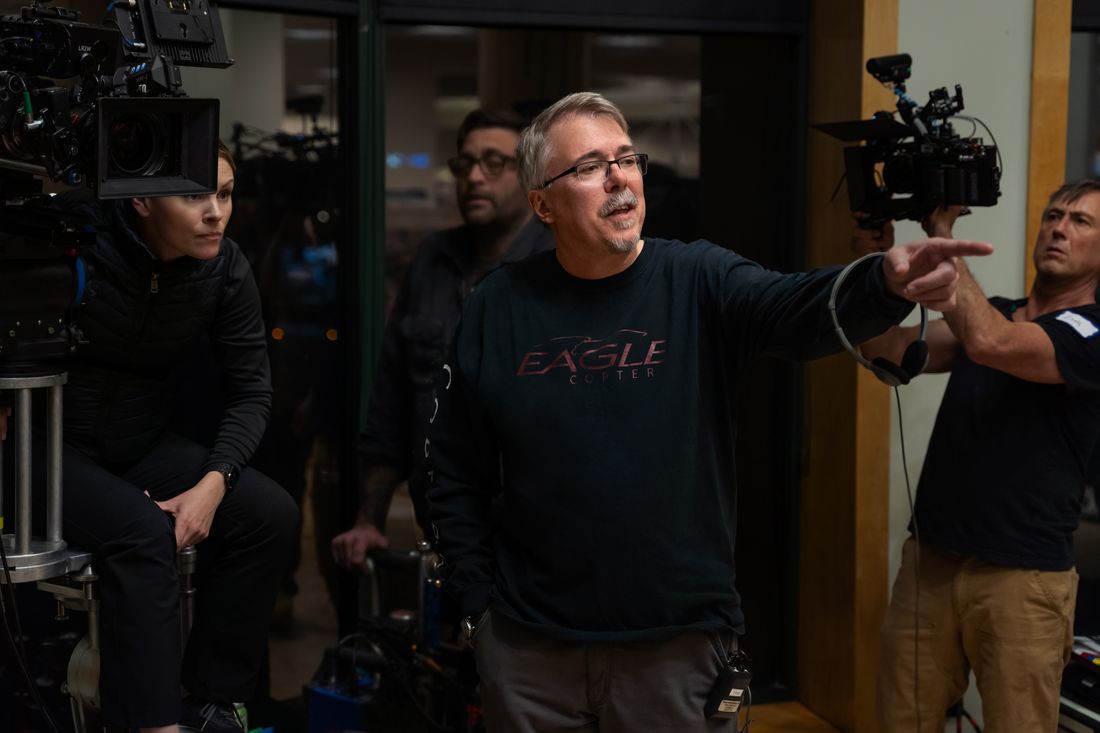
I’ve heard some writers prefer to work alone and avoid collaborative writers’ rooms, and that’s their choice. But for me, working with bright, skilled writers I connect with is key. Even the most talented writer can be difficult if you can’t collaborate well. However, when you bring together a group of people you enjoy and respect, amazing things can happen.
Do you think there are parts of ‘Pluribus’ that wouldn’t have happened without a writers’ room? Well, there are many, but I can’t think of a specific example right now. I often think about a scene from ‘Breaking Bad’ – the turtle’s head exploding. But that highlights the ideal way a writers’ room works: you lose track of who contributed what. People often ask who came up with a particular line or moment, and the best response is, ‘I don’t remember.’ It really proves the saying that amazing things happen when no one is focused on getting credit.
I’ve been on writing teams where the atmosphere was really tough, because that’s just how the lead writer preferred it. Ultimately, as long as everyone is treated with respect, it’s fine, but I personally prefer working with people who enjoy each other’s company. At the end of the day, we’re just making a TV show, not solving the world’s problems.
It struck me while watching that Carol, and her character Wycaro, really seem to undervalue their own work, especially at the start of the show. It’s interesting because she’s bringing so much joy to others with her writing, but she clearly has a low opinion of it herself. She almost puts herself down before anyone else can! It’s not that she thinks she’s worthless, but she feels like she should be a better writer, and I think she’s preemptively criticizing her own work to protect herself from potential criticism. It’s a really fascinating dynamic, and in that first scene with her fans, I honestly couldn’t tell if she was acting or genuinely having fun. I’m still on the fence and I kind of like that ambiguity!
With this show, I’m hoping viewers will form their own interpretations rather than me telling them what’s happening. I learned from my experience with Breaking Bad – I think I explained things too much in interviews. I want to avoid that with Pluribus. Basically, I’m suggesting that Carol might not always be honest about her own feelings. She could present herself as unhappy when she’s actually content, and vice versa.
I’m really fascinated by how this show handles questions and answers. I keep wondering if it wants us to get caught up in solving the plot, finding hidden clues, and unraveling mysteries, or if it’s more like a show where the journey itself is the point, and there aren’t really any definitive answers. It feels like a big gamble to create a show that’s so open to different interpretations! For me, a strong story and, even more importantly, characters I can connect with and care about are what make a show truly great. Plot is definitely important, and we always want the story to keep progressing.
I don’t believe Pluribus relies too heavily on unanswered questions, if I’m using that term correctly. I spent seven fantastic years working on The X-Files. That show had two types of episodes: self-contained stories and larger, ongoing mysteries we called “mythology” episodes. Shows with indefinite, ongoing mysteries are incredibly challenging. You see this pattern with The X-Files and Lost. When a show aims to run indefinitely with a central mystery, it can be tough to maintain audience interest. Even with Twin Peaks, I enjoyed it but eventually wondered if we’d ever get any real answers.
It’s a really tough challenge. What I realized isn’t how to improve a show built around mysteries, but that maybe you shouldn’t make one in the first place. You might already have enough mystery with a show like Pluribus, and I think that’s a fascinating place to be. I hope the audience feels the same. Those big, surprising twists you see in M. Night Shyamalan films? They work best in a self-contained movie, around 90 minutes long. Trying to sustain that kind of complexity over the course of an ongoing TV series… I honestly don’t see how it can work. The structure just isn’t strong enough; it would eventually fall apart.
The bomb at the end of the season felt a bit like the situations you created in Breaking Bad – did you intentionally put yourselves in a difficult spot with that plot point? We have some idea of the reasoning behind it, and it definitely seems like a desire to end the season with a huge moment, even if it created a challenge for what comes next. But we do understand her motivation. We’ll see where it leads, but she’s always been a character who enjoys making a dramatic statement, and that’s one of the things I find so compelling about her.
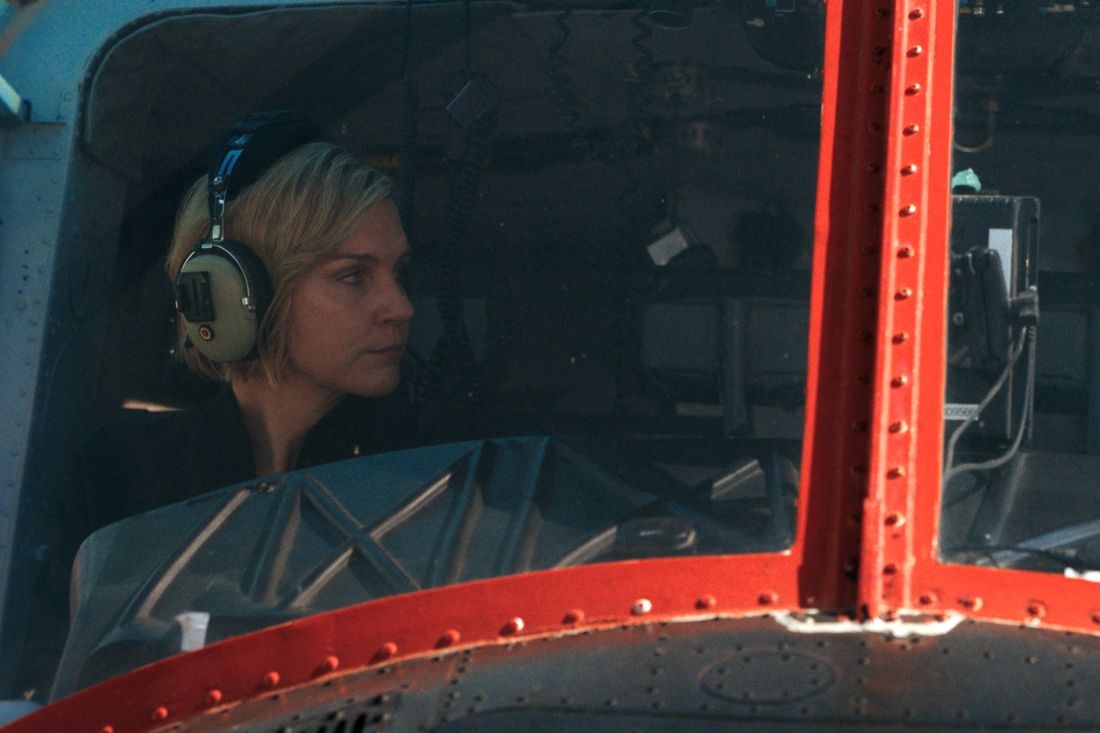
I really enjoyed the final scene with the baby goat. Could you discuss how that scene came about and what it adds to the episode as a whole?
We wanted to explore what would happen if some of the older characters started transforming into Others, and that was the main idea behind it. Alison Tatlock and Gordon Smith wrote the finale, and Alison specifically crafted that opening scene beautifully. Someone in the writers’ room initially suggested the idea. It felt like a powerful way to visually show the connection between the Others and the world around them. They embody love, kindness, and peace, but it seems that when you try to love everything equally – every animal, every plant, every living thing – you start to lose that personal connection. You lose the ability to feel affection for individuals. The scene where she walks away from the goat isn’t about her becoming cruel, but about her experiencing the world in a fundamentally different way.
I often find myself overexplaining, but ultimately I want people to interpret things in their own way. That said, those were some of the ideas going through my mind at the time.
That scene really got me thinking about art and what it means to be creative. The show features a vibrant village with beautiful crafts and music, but it raises the question: what happens to those things when everyone becomes the same? It’s like all cultures are collected and combined into one, possessing every language and piece of art imaginable. But what’s the point of all that if we lose what makes each of us unique? I definitely want viewers to consider these ideas, and I’m thrilled when people come up with interpretations I hadn’t even considered – it’s incredibly rewarding to hear their perspectives.
I understand you’re trying to keep things concise, but I have one more question about Manousos. He seems intentionally portrayed as a very religious character – he sleeps in a church, roams the wilderness, and has scars on his back.
Yes, he definitely has biblical qualities. While that wasn’t necessarily the intention, the Bible is full of compelling stories that have resonated with people for centuries, so it’s a great source of inspiration. Also, the name Manousos actually means “hand of God,” I believe. However, the name actually came from a potter my wife and I met on a trip to Greece. He was a really vibrant and interesting person, and we bought some of his pottery, which surprisingly arrived back in the US undamaged. I simply liked the name and the man himself, so I decided to name the character Manousos. I don’t think there’s a particularly profound reason beyond that.
I recall a funny story about Alfred Hitchcock and one of his films. Apparently, a car drove through a fence, and people immediately started analyzing it, claiming the way the wood splintered resembled a cross and must be deliberate symbolism. Hitchcock simply said it was just how the fence happened to break. I enjoy it when people find hidden meanings – it amuses me – but those meanings aren’t always put there on purpose.
Someone asked if our show could go on forever, like those shows that just keep running and running, and it got me thinking. Honestly, I don’t see it lasting much beyond three or four seasons. It’s not that we’re not enjoying making it – we really are! – but I just don’t know how we could keep the story going indefinitely. It reminds me of when people were asking me about Breaking Bad – back then, I was thinking maybe three seasons would be the right amount, too.
I’m still figuring things out. It’s challenging to envision the story continuing endlessly, especially because Carol has a clear mission: saving the world, and she’s facing a deadline. We haven’t fully mapped out how to sustain that indefinitely, and my writing team and I still have a lot to discover about season two. It’s daunting, but also thrilling. Starting with a blank slate is always a bit scary. What I do know is that I want the story to feel complete and rewarding. I’m okay with having fewer episodes if that’s what it takes, but I really don’t want to let the audience down – that’s what keeps me up at night.
Read More
- United Airlines can now kick passengers off flights and ban them for not using headphones
- Crimson Desert: Disconnected Truth Puzzle Guide
- All 9 Coalition Heroes In Invincible Season 4 & Their Powers
- Grey’s Anatomy Season 23 Confirmed for 2026-2027 Broadcast Season
- Mewgenics vinyl limited editions now available to pre-order
- Viral Letterboxd keychain lets cinephiles show off their favorite movies on the go
- Does Mark survive Invincible vs Conquest 2? Comics reveal fate after S4E5
- How to Get to the Undercoast in Esoteric Ebb
- Assassin’s Creed Shadows will get upgraded PSSR support on PS5 Pro with Title Update 1.1.9 launching April 7
- All Golden Ball Locations in Yakuza Kiwami 3 & Dark Ties
2025-12-24 08:58