Author: Denis Avetisyan
As artificial intelligence systems grow in complexity, pinpointing the source of errors becomes increasingly difficult, and this research introduces a new framework for statistically attributing failures to specific components.
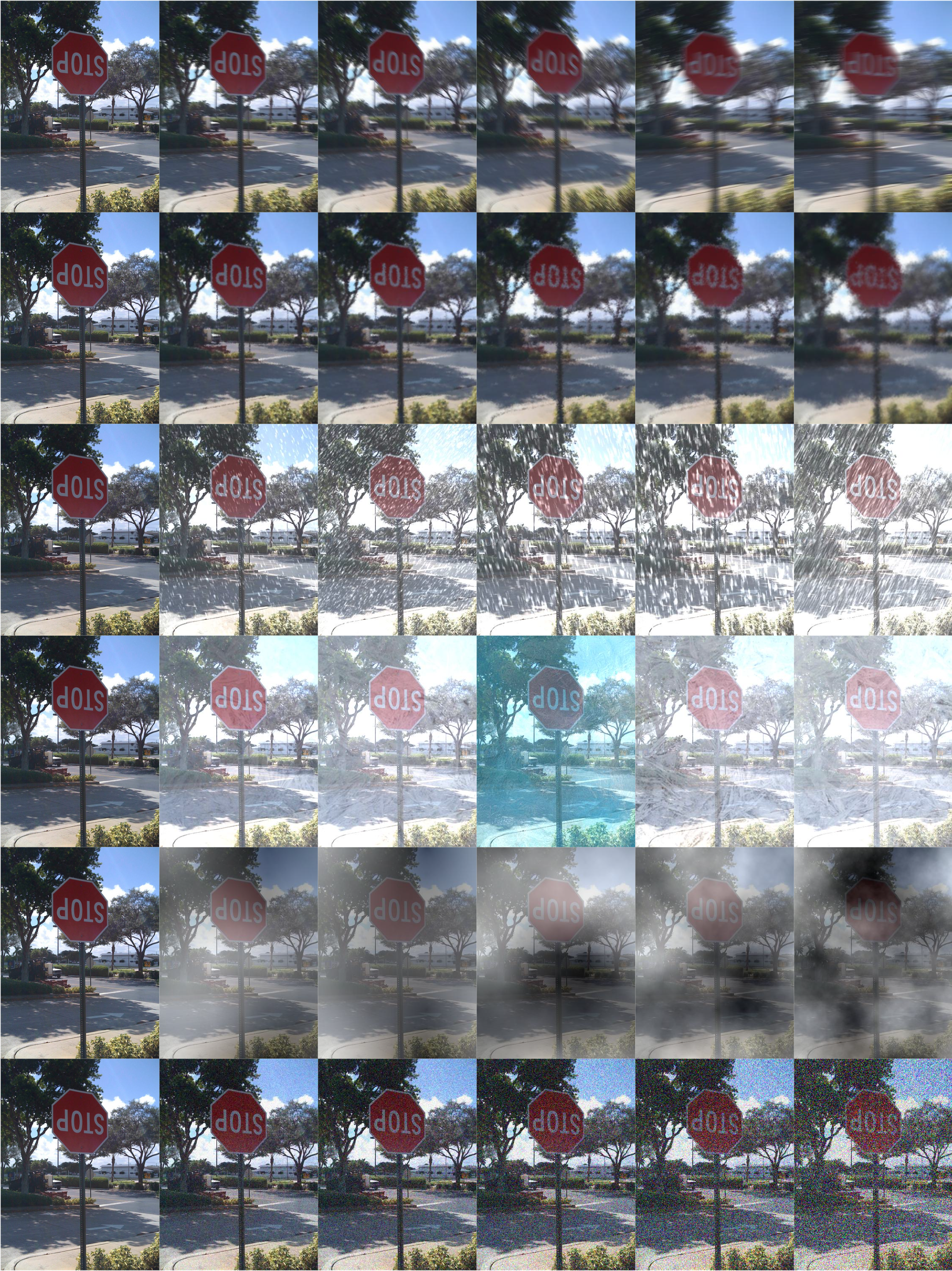
This paper presents SETA, a system combining execution trace analysis and metamorphic testing to improve the robustness and debuggability of compound AI systems.
Increasingly, the complexity of modern AI systems belies the difficulty of pinpointing failure origins within interconnected networks. This paper introduces ‘SETA: Statistical Fault Attribution for Compound AI Systems’, a novel framework leveraging execution trace analysis and metamorphic testing to statistically attribute failures to specific modules within complex AI pipelines. By enabling fine-grained analysis beyond end-to-end performance metrics, SETA facilitates targeted debugging and improved robustness in multi-network systems. Will this modular approach unlock more effective strategies for building and validating safety-critical AI applications across diverse domains?
The Inevitable Complexity of Modern AI
Contemporary artificial intelligence rarely manifests as a single, monolithic algorithm; instead, it commonly arises from the orchestration of numerous interconnected components. These systems, often built upon modular neural networks, distributed data processing frameworks, and complex software pipelines, achieve functionality through the collaborative interaction of these parts. This architectural trend, while enabling unprecedented capabilities in areas like image recognition and natural language processing, introduces a significant challenge: understanding how emergent behavior arises from the interplay of these diverse elements. Each component contributes to the overall outcome, yet the precise influence of any single part can be obscured by the intricate web of dependencies, demanding novel approaches to analysis and design to ensure robustness and predictability.
As artificial intelligence systems grow increasingly complex, comprised of millions – even billions – of interacting parameters, conventional testing methodologies are proving inadequate for identifying the root causes of failures. Traditional approaches, designed for simpler systems, often treat these intricate architectures as “black boxes,” providing limited insight into where and why errors occur. The interconnectedness means a failure in one component can propagate unexpectedly, masking the original source and creating cascading effects. This makes debugging exceptionally challenging, as isolating the problematic element within a vast network requires exhaustive and often impractical testing regimes. Consequently, developers face significant hurdles in ensuring the reliability and robustness of these advanced AI systems, potentially delaying deployment and hindering their widespread adoption.
The increasing complexity of modern artificial intelligence presents a significant diagnostic challenge. As systems grow, incorporating millions or even billions of parameters and interconnected modules, the potential for subtle, cascading failures expands exponentially. Pinpointing the root cause of an error becomes akin to tracing a single faulty wire within a vast, tangled network; conventional debugging techniques prove inadequate when faced with such intricate interactions. This diagnostic opacity doesn’t merely impede improvement; it actively hinders the reliable deployment of AI in critical applications, demanding novel approaches to system monitoring, interpretability, and fault isolation before these powerful technologies can be fully trusted and integrated into everyday life.
Mapping the System’s Inner States
A State Transition System (STS) models a system’s behavior as a set of states and transitions between those states, triggered by inputs or internal events. Analyzing the dynamic execution of a system as an STS involves observing the sequence of states the system traverses during operation. This provides a detailed view of internal operations by mapping inputs to resulting state changes and outputs. Each transition within the STS corresponds to a specific action or computation performed by the system, allowing for precise tracking of data flow and control flow. The resulting execution trace, a record of these state transitions, captures the system’s runtime behavior and forms the basis for detailed analysis and fault localization.
Execution Trace Analysis involves the systematic collection and examination of data values and their changes as they propagate through a system’s components during runtime. This process details not only the data’s path but also any modifications applied by each component, including function calls, variable assignments, and conditional branching. Captured trace data typically includes timestamps, component identifiers, input parameters, return values, and the state of relevant variables, enabling a granular view of the system’s internal operations and facilitating the reconstruction of the exact sequence of events leading to a specific outcome. The analysis allows developers to pinpoint where data deviates from its expected form or path, which is crucial for identifying the root cause of errors or unexpected behavior.
Execution trace analysis facilitates fault localization by pinpointing the root cause of a failure, rather than merely observing its manifestations. Traditional debugging often focuses on symptoms – the observable incorrect behavior – while trace analysis reconstructs the system’s operational path leading to the error. By stepping through the recorded sequence of events, developers can identify the exact instruction, data value, or component interaction that initiated the failure cascade. This allows for precise error isolation, reducing debugging time and enabling targeted corrective actions, as the originating point of the fault is directly revealed within the execution trace data.
Effective fault localization via execution trace analysis is predicated on a pre-existing comprehension of the system’s design and anticipated functionality. This necessitates detailed knowledge of component interactions, data dependencies, and the defined logic governing state transitions. Without a baseline understanding of the system’s intended behavior, deviations observed in the execution trace – even those coinciding with failure – are difficult to interpret as errors. Consequently, developers must possess or acquire documentation detailing the system’s architecture, algorithms, and expected input/output relationships to accurately correlate trace data with potential failure sources and distinguish between anomalous behavior and legitimate, albeit unexpected, operational states.
Attributing Failure: A Statistical Approach
SETA, or Statistical Fault Attribution, utilizes a combined methodology of Metamorphic Testing (MT) and Execution Trace Analysis (ETA) for fault isolation in Compound AI Systems. MT generates diverse test inputs based on predefined metamorphic relations – properties that should hold true for different, yet related, inputs. ETA then captures the execution behavior of the system for each input, recording data such as activated neurons, layer outputs, and control flow. By comparing execution traces for related inputs that should produce consistent results according to the metamorphic relations, SETA identifies discrepancies indicative of faults. This approach allows for the pinpointing of failing components without requiring pre-labeled failure data, as deviations from expected behavior directly correlate to potential fault sources within the compound system.
Statistical Fault Attribution, within the SETA framework, operates by quantifying the contribution of each component to system failures through the calculation of a Failure Contribution Score, denoted as α_i. This score represents the probability that component i was responsible for a given failure, derived from analyzing execution traces and comparing observed behavior against expected metamorphic relations. The calculation of α_i considers the frequency with which a component’s outputs deviate from expected values under multiple test cases, weighted by the severity of those deviations. A higher α_i value indicates a greater likelihood that the component contributed to the observed failure, providing a data-driven metric for prioritizing debugging and remediation efforts.
SETA’s assessment of component responsibility is achieved through the integration of dynamic execution data – specifically, execution traces captured during system operation – with metamorphic relations. These relations define expected program behavior under specific input perturbations; deviations from these expectations indicate potential faults. By analyzing execution traces in the context of these metamorphic properties, SETA identifies components whose behavior most significantly contributes to observed failures. This approach moves beyond simple fault localization by quantifying component impact, providing an objective measure independent of developer bias or pre-defined assumptions about system architecture. The combination of these data sources enhances robustness by mitigating the limitations inherent in relying solely on either dynamic analysis or static properties.
The Statistical Fault Attribution framework enables a data-driven approach to debugging and refinement of Compound AI Systems by quantifying the contribution of each component to system failures. Utilizing the Failure Contribution Score α_i, developers can objectively rank components based on their impact on observed errors. This prioritization facilitates targeted debugging efforts, reducing the time and resources spent on less impactful areas of the system. Furthermore, components with high α_i values may indicate a need for retraining or architectural redesign, allowing for a more efficient allocation of development resources and improved system robustness.
Testing in Isolation: A Foundation of Reliability
Isolated testing of individual components – including Image Classification, Object Detection, and Optical Character Recognition (OCR) models – is a fundamental practice for ensuring system robustness. This approach involves evaluating each module’s functionality independently of other system parts, allowing for precise identification and remediation of defects at the lowest level. By focusing on unit-level performance, developers can verify that each component meets specified requirements regarding accuracy, latency, and resource utilization before integration. This preemptive strategy minimizes the risk of complex, cascading failures during system-level testing and streamlines the debugging process, reducing overall development time and cost. Furthermore, isolated testing facilitates the creation of comprehensive test suites and allows for repeatable, automated validation of component behavior.
Isolated Component Testing involves evaluating individual modules, such as image classification or object detection models, in a controlled environment with predefined inputs and expected outputs, verifying functionality before system-level integration. Coverage-based Testing complements this by measuring the extent to which different parts of the component’s code have been executed during testing; metrics like statement coverage, branch coverage, and path coverage are utilized to quantify this. Achieving high coverage levels indicates a more thorough examination of the component’s logic, reducing the likelihood of undetected errors. Both methods aim to identify and rectify defects at the module level, minimizing the complexity and cost of debugging in later stages of development and deployment.
Optical Character Recognition (OCR) model robustness is enhanced by evaluating output consistency when subjected to input variations, utilizing metrics like Levenshtein Distance. This distance, representing the minimum number of edits (insertions, deletions, or substitutions) required to transform one string into another, provides a quantifiable measure of similarity between the expected output and the model’s response to degraded or transformed inputs. A predetermined Levenshtein Distance threshold is established; outputs falling within this threshold are considered acceptable, indicating resilience to noise such as image distortion, varying fonts, or partial occlusions. This approach allows for systematic evaluation of OCR performance under realistic conditions and facilitates the identification of failure points related to input quality.
Employing component-level testing, alongside techniques like Formal Verification, mitigates the risk of error propagation in complex systems. Formal Verification utilizes mathematical methods to prove the correctness of individual components against specified requirements, identifying potential flaws before deployment. When combined with rigorous isolated component testing, this proactive approach confines bugs to their origin, preventing their escalation during system integration. Early detection significantly reduces debugging complexity and associated costs, as issues are addressed within the scope of a single, well-defined module rather than requiring extensive tracing across multiple interconnected components. This strategy is crucial for maintaining system stability and reliability, particularly in applications where failures can have significant consequences.

Towards Holistic Validation of AI Systems
The reliability of complex, or “Compound,” Artificial Intelligence Systems benefits significantly from a combined validation strategy encompassing both System-level Evaluation Testing and Analysis (SETA) and meticulous component testing. While SETA assesses the integrated system’s performance against predefined criteria, component testing rigorously examines the functionality of individual modules. This dual approach isn’t simply redundant; it allows for pinpoint accuracy in identifying failure points – a system may pass SETA while harboring a flawed component, detectable only through isolated analysis. By proactively addressing these granular issues, developers can drastically reduce the likelihood of cascading failures and enhance the overall trustworthiness of the AI. This proactive stance is especially critical as Compound AI Systems become increasingly prevalent in domains where even minor malfunctions can have substantial consequences, fostering confidence in their dependable operation.
A truly robust artificial intelligence isn’t built on isolated component checks, but on a systemic approach to failure detection. By evaluating interactions between components, rather than just the components themselves, potential weaknesses are revealed that might otherwise remain hidden until deployment. This holistic validation process anticipates how errors propagate through a Compound AI System, significantly minimizing the risk of undetected failures and bolstering dependability. The result is an AI application less prone to unexpected behavior, and more capable of consistently delivering accurate and reliable performance – a critical characteristic for applications ranging from autonomous vehicles to medical diagnostics where even minor errors can have substantial consequences.
End-to-end testing serves as the ultimate checkpoint in AI system validation, moving beyond isolated component checks to evaluate the complete, integrated system’s performance. This process simulates real-world conditions, feeding the AI system comprehensive inputs and meticulously analyzing the resulting outputs against predefined expectations. Unlike component testing which verifies individual modules, end-to-end testing reveals emergent behaviors and unforeseen interactions that arise only when all parts function together. By assessing the system’s holistic response, researchers can identify critical flaws – such as cascading errors or unexpected biases – that might otherwise go undetected until deployment. This final layer of validation is particularly vital for complex AI systems operating in sensitive applications, where a single failure could have significant consequences, and ensures the system delivers reliable and predictable outcomes across its intended operational domain.
The deployment of artificial intelligence into safety-critical domains – encompassing areas like autonomous vehicles, medical diagnostics, and aviation – demands a validation process far exceeding standard software testing protocols. Unlike traditional systems where failure may result in inconvenience, flaws within AI operating in these environments can have life-altering or fatal consequences. Consequently, a comprehensive validation strategy-one that rigorously assesses not only individual components but also the integrated system’s behavior under diverse and challenging conditions-is paramount. This holistic approach minimizes the potential for unforeseen errors and ensures that AI systems function predictably and reliably when faced with real-world complexities, ultimately fostering public trust and enabling the responsible integration of this powerful technology into essential aspects of modern life.
The pursuit of isolating failure within compound AI systems, as detailed in this work regarding SETA, echoes a fundamental truth about complex creations. One anticipates stability, yet long stability is the sign of a hidden disaster. Ken Thompson observed, “Debugging is twice as hard as writing the code in the first place. Therefore, if you write the code as cleverly as possible, you are, by definition, not smart enough to debug it.” This sentiment rings true; SETA doesn’t prevent failure, it illuminates the inevitable evolution of these systems, providing a statistical attribution to guide adaptation when-not if-unexpected behaviors emerge. The framework acknowledges that pinpointing the source of an error isn’t about achieving perfection, but about understanding the propagation of failure through a complex ecosystem.
What Lies Ahead?
The pursuit of attributing failure in compound artificial intelligence systems, as exemplified by frameworks like SETA, reveals a fundamental truth: a system isn’t a machine to be perfected, but a garden to be tended. Each component, a plant reliant on the health of the whole. Statistical attribution, while offering a semblance of control, merely charts the spread of weeds – the inevitable decay of assumptions embedded within the architecture. The very act of pinpointing a failing module prophecies future failures in others, highlighting the interconnectedness that any composition introduces.
Current approaches largely treat robustness as a problem of isolation – of building walls between components. Yet resilience lies not in isolation, but in forgiveness between them. Future work shouldn’t focus solely on identifying the source of errors, but on designing systems capable of gracefully absorbing them. The challenge isn’t to eliminate failure, but to distribute its cost. Perhaps the next generation of tools will focus on tracing not just where a system fails, but how it recovers.
Ultimately, the quest for perfect attribution is a phantom. Every test, every trace analysis, is a snapshot in time, a fleeting glimpse of a system constantly evolving – and decaying. The real task isn’t to build infallible systems, but to cultivate a deeper understanding of their inevitable imperfections, and to design for adaptability, rather than absolute certainty.
Original article: https://arxiv.org/pdf/2601.19337.pdf
Contact the author: https://www.linkedin.com/in/avetisyan/
See also:
- United Airlines can now kick passengers off flights and ban them for not using headphones
- All Itzaland Animal Locations in Infinity Nikki
- Katanire’s Yae Miko Cosplay: Genshin Impact Masterpiece
- How to Complete Bloom of Tranquility Challenge in Infinity Nikki
- How to Get to the Undercoast in Esoteric Ebb
- All Golden Ball Locations in Yakuza Kiwami 3 & Dark Ties
- Crimson Desert: Disconnected Truth Puzzle Guide
- A Dark Scream Theory Rewrites the Only Movie to Break the 2-Killer Rule
- Superman/Spider-Man #1 Review: Bigger DC-Marvel Crossovers Teased
- Gold Rate Forecast
2026-01-28 14:02