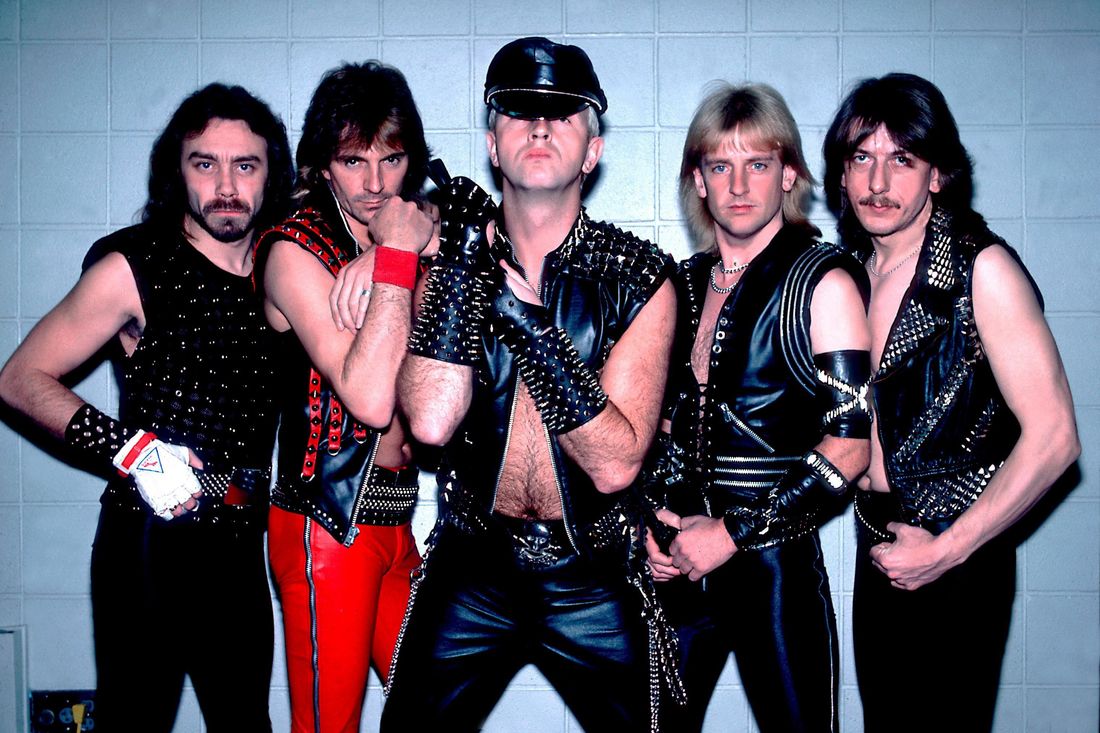
Let me start with a quick personal story. When I was in elementary school, I was completely into heavy metal, especially Judas Priest. I even went to see them in concert in 1984 – my dad came straight from work, still in his suit, to take me and my friends (we all had metal nicknames – I was ‘Ozzy Three’!) to the Metal Defender tour. I was also at their 1986 concert, famously captured in the short film Heavy Metal Parking Lot. I eventually grew out of that phase, but I always loved Priest. Their songs were powerful and fast, but also surprisingly melodic and dramatic, with Rob Halford’s incredible voice blending with the amazing guitar work of Glenn Tipton and K.K. Downing to create a truly epic sound.
I wasn’t going into the Berlin Film Festival screening of Tom Morello and Sam Dunn’s documentary, The Ballad of Judas Priest, as someone who didn’t care. I’ve been to many premieres, but even I was a little thrilled to see Rob Halford in person – at 74, he’s still a commanding presence and a true metal icon. The film is really made for fans; it’s a celebration of the band rather than a critical investigation. It starts with Jack Black dramatically reciting the lyrics to “You’ve Got Another Thing Comin’” as if it were Shakespeare, and that level of enthusiastic fandom carries throughout the movie.
The heart of this story is the band and, especially, Rob Halford. The film covers their origins – growing up in the industrial Black Country region of England, their beginnings as a progressive blues band, and how they developed their iconic metal image. Halford shares how a performance by Doris Day sparked his dream of becoming a singer, while Tipton discusses his Parkinson’s diagnosis and feeling prepared for it. Downing explains his reasons for leaving the band after it consumed his life. The most powerful moments come when Halford talks about his sexuality and the immense relief of coming out. He braced for criticism, but was instead met with overwhelming love and acceptance.
The film felt a little limited in exploring the full range of emotions. When Halford discusses the difficulty of hiding his sexuality early in his career – despite his band and management knowing and accepting him – it makes you wonder about the experiences of his partners at the time. The documentary also focuses on the controversial 1990 trial where the band was accused of including hidden messages in a song following a tragic double suicide. The prosecution argued that the phrase “do it” was secretly embedded in the music, but a thorough analysis of the audio proved this wasn’t true.
As a movie lover, I really appreciated this film, and it’s fascinating when musicians direct films about their peers. They have a unique ability to dissect how the music works and why it resonates. Tom Morello acts as our guide, sharing his own story of discovering metal as a Black kid growing up near Chicago. It’s not just his perspective though; the film features great conversations with musicians like Dave Grohl, Kirk Hammett, and Billy Corgan, and some really touching moments with the late Ozzy Osbourne. They don’t just talk about how much Judas Priest influenced them, they get into the details of why their music and image were so effective. For example, there’s a cool discussion about the way two guitars can create this perfect “guitarmony.” Grohl hilariously reminisces about the “Breakin’ the Law” music video, and Ozzy points out that Birmingham, much like Liverpool, was a breeding ground for rock musicians – and even wonders if the harsh industrial environment played a role in some of their health issues later on. Kirk Hammett shares how he immediately understood the gay S&M influences in Rob Halford’s iconic leather look. And get this – Morello and Darryl McDaniels from Run-D.M.C. revealed they were the deciding votes that got Judas Priest into the Rock & Roll Hall of Fame! It’s amazing to think about – two Black guys sending Judas Priest to Cleveland!
Thankfully, the film is packed with Priest’s music, which really encourages viewers to dig deeper into their work. It’s hard to say how someone unfamiliar with the band would react – would they even be interested in seeing this movie? – but as a fan, I was reminded of how intelligent and poetic the lyrics are, and how beautifully they combine with the songs’ complex arrangements to create unique and immersive experiences. Few rock lyrics are as prescient as the lines from “Electric Eye”: “I’m made of metal / My circuits gleam / I am perpetual / I keep the country clean.” Inspired by Orwell, the song eerily foreshadows a terrifying future dominated by conscious technology. Although The Ballad of Judas Priest isn’t perfect, its focus on the music sparks lasting curiosity and leaves you thinking long after the film ends.
Read More
- United Airlines can now kick passengers off flights and ban them for not using headphones
- All Itzaland Animal Locations in Infinity Nikki
- Katanire’s Yae Miko Cosplay: Genshin Impact Masterpiece
- How to Get to the Undercoast in Esoteric Ebb
- Crimson Desert: Disconnected Truth Puzzle Guide
- All Golden Ball Locations in Yakuza Kiwami 3 & Dark Ties
- BloxStrike codes (March 2026)
- 6 Ways Invincible Season 4’s Hell Episode Rewrites The Comics
- How to Complete Bloom of Tranquility Challenge in Infinity Nikki
- Zendaya’s 4 Big 2026 Movies Could Beat Brie Larson’s Box 2019 Office Record
2026-02-19 22:54