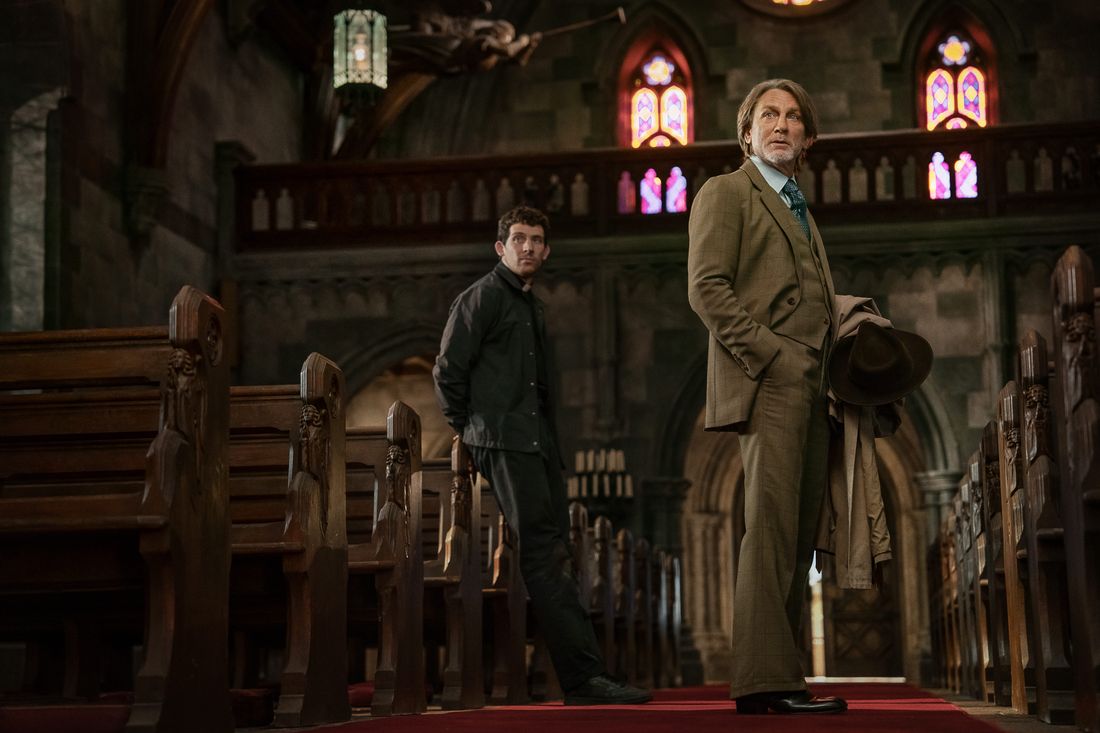
Though Daniel Craig doesn’t appear until halfway through Wake Up Dead Man: A Knives Out Mystery, this third film in the series is arguably the strongest yet. This isn’t a criticism of Craig’s performance – his ’90s hairstyle and unique accent make his detective, Benoit Blanc, a truly memorable character. It’s a testament to how this Knives Out installment moves beyond current events and focuses on a classic enemy: judgmental and hateful people who misuse religion to attack others. A compassionate religious leader would appreciate this movie, and many will likely wish it had a longer run in cinemas – I know I do.
The newest film in the Knives Out series, Wake Up Dead Man, now available on Netflix, is visually stunning and explores interesting ideas while still following a familiar pattern. Like the previous films, it centers on a close-knit group of people – in past installments, they were wealthy families or those beholden to powerful figures. Their comfortable world is disrupted by an outsider who doesn’t understand their values, similar to characters in earlier films. This disruption coincides with a murder, and the outsider immediately becomes the prime suspect. Luckily, detective Benoit Blanc arrives to help those who are overlooked and underestimated. Throughout the Knives Out series, Blanc has consistently championed working-class protagonists – nurses, teachers, and others with union protections – because these films are ultimately about the importance of community and how welcoming or isolating it can be.
The film Wake Up Dead Man quickly establishes its main characters. We meet Father Jud Duplenticy (Josh O’Connor), a former boxer who turned to the church after a violent act, and is still finding his footing as a priest. He’s a bit of a talker and somewhat innocent, reminiscent of a character from Freaks and Geeks mixed with the working-class men from The Wire – and that’s a good thing. Duplenticy ended up at a small church in New York after punching a disrespectful deacon. Now, he finds himself working for an even worse superior: Monsignor Jefferson Wicks (Josh Brolin), a power-hungry and condescending man. Wicks forces Duplenticy to hear his disturbingly detailed confessions, uses his sermons to criticize those with different political views, and inspires both reverence and fear in his small congregation.
When Wicks is murdered during a church service – seemingly stabbed in the back – the police chief (Mila Kunis) focuses her investigation on those closest to him. Suspects include Wicks’s equally unpleasant assistant, Martha (Glenn Close), and her partner, Samson (Thomas Haden Church), who maintains the church grounds. (The film features beautifully shot scenes of the lush woods surrounding the church.) Also under scrutiny are Wicks’s male followers: Dr. Nat Sharp (Jeremy Renner), embittered by his divorce; author Lee Ross (Andrew Scott), influenced by online misogynistic communities; and ambitious politician Cy Draven (Daryl McCormack). The investigation also considers two women who had begun to question Wicks: Vera Draven (Kerry Washington), Cy’s mother who sacrificed her legal career to raise him, and Simone Vivane (Cailee Spaeny), a former cellist hoping her generous donations to Wicks would bring relief from her chronic pain.
The main suspect is Duplenticy, who was seen threatening Wicks before he died. He clearly disliked his boss and had a quick temper, making him a likely culprit. This is where Blanc begins his investigation, and soon other potential motives emerge – hidden family connections and a missing inheritance. Blanc and Duplenticy work together to explore these possibilities. Craig and O’Connor are a great team; Craig accepts Blanc’s skepticism about religion, while O’Connor quietly supports Duplenticy’s Catholic faith. Craig often reacts with playful annoyance to Blanc’s methods, but also makes sure the detective fully considers Duplenticy’s struggles, offering sympathy or challenging him as needed. They share a running joke about a moment of realization being like a life-changing experience, and they playfully interact while searching for clues in Martha’s files. The director allows these moments to repeat, giving the audience time to gather information and try to solve the mystery themselves.
Rian Johnson’s mystery films aren’t really about how the crime is solved, but why it happened. The first film, Knives Out, offered a critique of shallow progressivism and warned about the appeal of Donald Trump’s message to those who felt they had nothing to lose. Glass Onion targeted the casually destructive behavior of tech billionaires like Elon Musk and Mark Zuckerberg – people willing to risk everything for power and profit. While these timely observations made the films initially engaging, they also meant the impact faded quickly. The films held a sense of optimism, which became difficult to watch as the real-life figures they criticized continued to gain influence and act with increasing audacity.
The latest installment, Wake Up Dead Man, tackles larger and more deeply rooted issues, creating a more pressing sense of urgency than the previous two parts. While the characters still express their usual divisive views – railing against progressive ideas and repeating familiar Republican talking points – this time the story suggests these arguments are part of a long, troubling history. It portrays them as exploiting a corrupted version of age-old tactics. Ultimately, the true conflict lies in overcoming prejudice and selfishness, a more subtle and somber battle that makes Wake Up Dead Man particularly memorable.
The film’s most powerful scene involves Duplenticy receiving a call from a construction equipment rental manager who was previously dismissive. The manager’s mother is ill, and she confides in Duplenticy about her fear and loneliness. O’Connor, as Duplenticy, responds with comforting reassurance, simply telling her, “You’re not alone. I’m right here.” This moment doesn’t advance the plot or solve any mysteries; it’s purely about human connection. Duplenticy even takes the call in private, effectively prioritizing helping a stranger over clearing his own name. It’s the most genuinely touching scene in the Knives Out series so far. While the series has always positioned Blanc as a champion for the overlooked, Wake Up Dead Man demonstrates a new depth by shifting away from comedic antics and giving space to characters like Father Jud to express the film’s themes.
Read More
- United Airlines can now kick passengers off flights and ban them for not using headphones
- The Boys Season 5 Spoilers: Every Major Character Death If the Show Follows the Comics
- Solo Leveling’s New Manhwa Chapter Revives a Forgotten LGBTQ Story After 2 Years
- Assassin’s Creed Shadows will get upgraded PSSR support on PS5 Pro with Title Update 1.1.9 launching April 7
- Invincible Season 4 Episode 6 Release Date, Time, Where to Watch
- Grok’s ‘Ask’ feature no longer free as X moves it behind paywall
- All 9 Coalition Heroes In Invincible Season 4 & Their Powers
- Mewgenics vinyl limited editions now available to pre-order
- TikToker’s viral search for soulmate “Mike” takes brutal turn after his wife responds
- How do you Fast Travel in Crimson Desert?
2025-12-13 02:55