
Longtime Call of Duty players will need to adjust to a new aiming system in Black Ops 7. The way aim assist works has been completely changed, so skills you developed in games like MW3 and BO6 might actually hinder your performance now. The biggest change is a significant reduction in rotational aim assist, meaning you’ll need to aim more actively and precisely. The game won’t automatically lock onto targets as much, so you’ll need to focus on accurate aiming yourself. This guide will help you learn the basics of aiming in BO7 and master this new system.
Key Takeaways
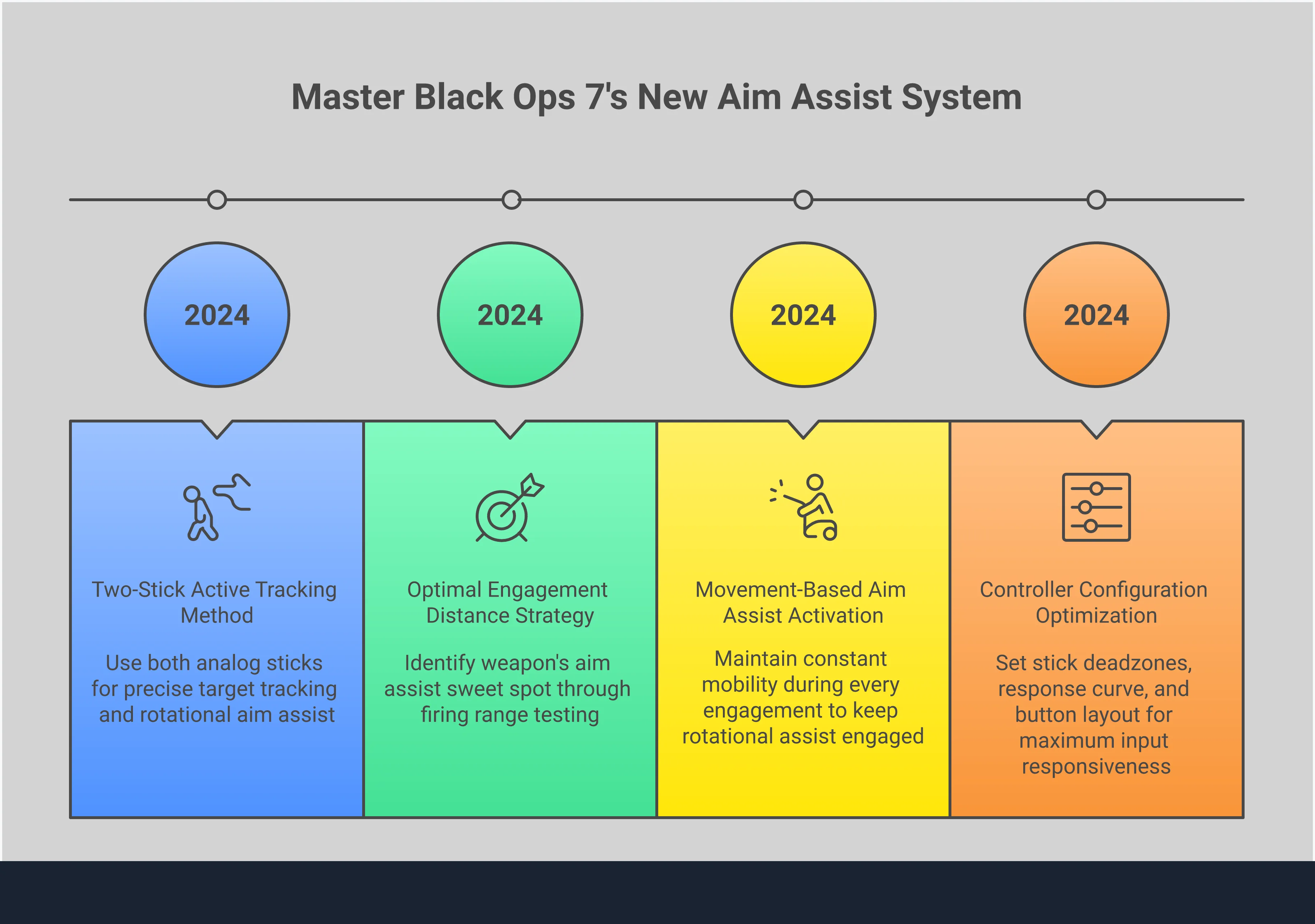
- Active Aiming is a Two-Stick Job: To get the strongest aim assist, you must actively track targets with your right stick while simultaneously moving with your left stick. Relying on just one will leave you at a disadvantage.
- Movement Unlocks Your Aim Assist: The “sticky” feeling you’re missing is now tied directly to your movement. Stop holding static angles and start incorporating constant strafing into your gunfights to keep your aim assist fully engaged.
- Find Your Ideal Engagement Range: The new system has a “sweet spot,” feeling stronger at mid-range than up close. Pay attention to where your aim feels most consistent and use smart positioning to force fights at that optimal distance.
Breaking Down the Black Ops 7 Aim Assist Changes
Many players have noticed their aiming feels off in Black Ops 7, and there’s a good reason why. The developers have made big changes to how aim assist works with controllers – some things are weaker, others are slightly stronger – leaving a lot of people confused and frustrated. It feels quite different compared to the game’s beta version, and definitely different from BO6 and MW3. Let’s break down these changes so you can understand what’s happening and improve your gameplay.
The Rotational Aim Assist Nerf
The most noticeable change, and likely the one you’re experiencing the most, is a reduction in the strength of rotational aim assist – that “sticky” feeling that helped you stay on target while moving. In past games, this feature was a key part of winning gunfights. As streamer Aydan explained, simply strafing back and forth no longer guarantees full aim assist. Now, you’ll need to be more actively aiming with the right stick to accurately track and hit opponents. This is a core change that favors skilled aiming over relying on movement to lock on.
Tracking Stationary vs. Moving Targets
The recent change to how the game helps you aim affects how you target moving enemies. While tracking a moving opponent still feels relatively smooth, it’s much harder to aim at someone who’s standing still. If you try to hold an angle or hit a stationary target, you’ll find the aim assist is significantly weaker. This encourages more movement and makes it more difficult to lock onto players who aren’t moving, and also discourages staying in one place.
What the “Minimal Buff” Actually Does
Following player complaints, the developers made a small adjustment to aim assist, but it doesn’t undo the previous changes. They’ve slightly increased the strength of aim assist at medium distances and broadened the range where it fully activates. This means you might notice a bit more ‘stickiness’ when aiming in certain mid-range fights. However, the main change that made the game feel different – the reduction in aim assist rotation – is still active. Players have reacted with confusion and frustration, highlighting how carefully developers must balance changes to keep the community happy.
How the New Aim Assist Works
Many players have noticed their aim feels off in Black Ops 7, and that’s because the developers have significantly changed how aim assist works with controllers. After a first attempt at adjusting it caused a lot of complaints, they made a small update, but it still feels quite different. Call of Duty aim assist has been very powerful for a long time, and this new system requires players to adapt. Simply adjusting your sensitivity won’t be enough; you now need to focus on how you move while aiming. Relying on the old habit of letting the game assist with aiming won’t work as well. To succeed, you’ll need to learn the new system thoroughly.
Why You Need to Use Both Sticks
Okay, so I’ve been messing around with the new update, and the biggest thing I’ve learned is you have to use both sticks for aim assist to really work! It’s not enough to just move the right stick to fine-tune your shots. The game actually rewards you for actively tracking targets with the right stick while moving and strafing with the left stick. Basically, keep both thumbs working! If you’re just holding a position or backing up, make sure you’re still moving that left stick – that’s what keeps the aim assist working consistently. I used to just use the right stick for little adjustments, but it felt like aim assist was off completely. It’s like a little dance with both thumbs now, and it makes a huge difference!
How Distance and Speed Affect Your Aim
Following criticism, the developers made a small adjustment to the game. They made aim assist slightly stronger at medium distances and increased the range where it works at full power. This should give you a little more help staying on target when enemies aren’t extremely close, but it’s not a huge change. The aim assist still isn’t as strong in close-quarters combat as it was in previous games. How quickly your opponent moves also matters – the aim assist struggles to keep up with fast, unpredictable players, so choosing the right weapons and attachments is key to tracking them.
Why Standing Still Kills Your Aim Assist
Forget about easily winning gunfights by just running side to side – that tactic won’t work in Black Ops 7. The game now requires you to actually keep your sights on the enemy using the right stick to activate aim assist. Simply standing still or moving in a straight line won’t give you much help. This change is meant to make the game more competitive by stopping players from relying on predictable movements to get easy hits. To succeed, you’ll need to stay moving and constantly make small adjustments to your aim during every fight.
BO7 Aim Assist vs. Previous Call of Duty Games
Many players have noticed their aim feels different in Black Ops 7, and that’s because the aim assist system has been completely redesigned. It’s a major change from recent Call of Duty games and is causing some confusion. The way aim assist works, particularly when following moving enemies, is fundamentally different. This means your established aiming habits from games like Modern Warfare 3 and Black Ops 6 might actually be making it harder to aim accurately now.
The main problem is how the game now handles aiming adjustments. While it still feels similar when your sights move over an enemy, the strong ‘aim assist’ that previously kept your crosshair locked onto moving targets has been significantly reduced. This means you now need to aim more actively and carefully. Unlike before, where the game helped you stay on target during fast-paced fights, you’ll now have to be much more accurate with your aiming stick. Let’s take a closer look at how these changes compare to previous versions and why they create a different feel.
BO7 vs. BO6 and MW3: How Strong Is It?
Compared to older Call of Duty games, the aim assist in BO7 is still helpful, but it’s definitely not as strong as it was in Black Ops 6 or Modern Warfare 3. You’ll still feel a slight ‘stick’ when you first aim at an enemy, but it doesn’t really help much if they start moving side to side. The biggest change is how much weaker the rotational aim assist is. In previous games, this feature would almost automatically keep your aim locked onto a moving enemy, making it easier to stay on target. In BO7, that automatic assistance is gone, so you have to do more of the aiming yourself. It feels like a completely different system.
Why “Stronger” Aim Assist Can Feel Weaker
It’s a strange situation: while some parts of the aim assist are powerful, the system as a whole feels less effective due to changes in how it handles movement. Players really miss the older system’s ability to ‘stick’ to targets throughout a gunfight. Now, you have to actively control your aim with both thumbsticks to stay on target. Simply holding your aim steady won’t be enough to track a moving opponent. Once you realize the aim assist is meant to help you aim, not aim for you, it becomes more reliable. It’s less about how strong it is on its own, and more about how well it works with your own aiming skills.
What Players Miss from Older Systems
Many Call of Duty players are noticing a big difference in aiming with the latest title. Previous games had a strong aim assist feature that automatically helped players stay on target, even when opponents moved unpredictably – some players felt it could even win fights on its own. The new system in Black Ops 7 feels very different, and it’s forcing players to relearn how to aim effectively. While adjusting to new maps and weapons is always part of a new game, this change feels more fundamental. The community’s main complaint is the loss of that powerful, automatic aim assist that they’ve become used to.
How the Community Reacted
The new aim assist feature in Black Ops 7 has sparked a lot of discussion since the game’s release. Online, players are passionately debating every aspect of it – how it performs in close-up fights and from a distance. Opinions are all over the place, with some wanting changes right away and others figuring out how to use the new system to their advantage.
The strong disagreement within the Call of Duty community isn’t just random chatter – it points to a core discussion about player skill, how easy the game is to pick up, and what constitutes a balanced match. The game’s creators are in a difficult position, trying to please a huge number of players, and the community is actively making their opinions known. Let’s take a closer look at the key points everyone is talking about.
Initial Player Feedback and Complaints
From the start, players noticed something wasn’t quite right with the game. Complaints quickly appeared on platforms like Reddit, with many disappointed by the new system. A common concern was that the game didn’t automatically aim enough for players, raising questions about how much help the game should provide versus relying on player skill. Many found the aim assist to be either too weak to make a difference or unreliable, leading to frustrating and unpredictable gunfights, a problem made worse by cheaters.
The Streamer Effect on Aim Assist
Streamers have a huge impact on how games evolve, especially when it comes to player feedback. When popular players and content creators share their thoughts, a large audience pays attention. We’ve seen this firsthand – when well-known streamers voice concerns, like those about aim assist settings, developers often take notice. This “streamer effect” isn’t always straightforward, though. While it can quickly bring important problems to light and lead to improvements, it can also give too much weight to a single opinion and potentially ignore the experiences of most players.
Casual vs. Pro: A Divided Community
The recent discussion about aim assist has highlighted the different perspectives of casual and competitive players. While many regular players are finding the new system helps them succeed – one player described easily eliminating opponents with simple movements – competitive players believe strong aim assist makes the game less challenging. The developers have already responded by making changes, and are now considering further adjustments to find a balance that works for everyone.
Debunking Common Aim Assist Myths
The recent changes to aim assist in Black Ops 7 have caused a lot of confusion and frustration among players. You’ve likely seen strong opinions online, with many claiming it’s been removed, doesn’t work, or is completely ineffective. Let’s clear up the confusion and explain what’s actually going on with the new system. It’s more nuanced than people think, and understanding the details is key to adjusting how you play.
Myth: “Aim Assist Is Gone”
Just to be clear, aim assist hasn’t been removed from the game. What players are noticing isn’t a complete removal, but a major reduction to what’s called ‘rotational’ aim assist. This feature used to help smoothly track moving enemies as you aimed. As one player put it, aim assist still exists, but it no longer automatically pulls your weapon towards an opponent who is moving. You’ll still get the aiming slowdown when your crosshair is on a target, but that strong, automatic pull is much weaker now.
Fact: What the “Minimal Buff” Really Means
Following player complaints, the developers did increase the strength of aim assist slightly, but it’s important to remember this isn’t a complete fix. It was a very small adjustment – barely noticeable, some say. The update makes aim assist a little stronger at medium distances and works over a slightly wider range. It’s a minor change, not a complete redesign, and while it might help in certain situations, it won’t restore the aim assist to how it felt in previous versions of the game.
Is It Broken or Working as Intended?
Many players are wondering about changes to aim assist, and it appears these were intentional choices by the game developers. One source confirmed that aim assist in the latest title is weaker than in the beta version, and noticeably less strong than in previous games like Black Ops 6 or Modern Warfare 3. It seems the developers are trying to make the game more challenging, requiring players to improve their aiming skills. This means you’ll need to carefully adjust your equipment and gameplay to succeed, rather than relying on the game’s assistance.
Why the Devs Changed Aim Assist
The recent changes to aim assist weren’t made on a whim; the developers intentionally adjusted it based on years of player feedback. Players have consistently discussed how aim assist works, and these updates are a direct result of those conversations. The developers are aiming for three main improvements: making the game fairer for players using different controllers, giving skilled players a bigger advantage, and ensuring a more competitive and fair experience overall.
It’s understandable to be frustrated when the game changes, but knowing the reasons behind those changes can help you adjust. The developers want to make gunfights more about player skill and strategy, and less about taking advantage of glitches or loopholes. This is a significant change designed to improve the game’s future and ensure fair competition. Here are the three key reasons why they’re making these updates.
Balancing Controller vs. Mouse and Keyboard
The discussion about whether controllers or mouse and keyboard (M&K) are better in games has been going on for a long time, especially with crossplay becoming more common. Many players, particularly those using M&K, believed that aim assist for controllers was too strong, giving controller users an unfair edge in close-range combat. This aim assist could feel overly “sticky,” making it easier than it should be to keep opponents in your sights. This recent change is a deliberate effort to create a fairer playing field. By reducing the strength of the aim assist, developers hope to make both control methods equally effective, so skill—not just the input device—determines the outcome of gunfights.
Raising the Skill Gap
The decision to reduce aim assist strength is largely about increasing the difference between skilled and less skilled players. When aim assist is too powerful, it can cover up a lack of natural aiming talent. By making it less effective than in games like Black Ops 6 or Modern Warfare 3, the developers want players to focus on improving their aiming skills. This change benefits players who are good at controlling their movement and tracking targets, as consistent accuracy now requires more practice and precision. Ultimately, this makes the game more satisfying for those who invest time in perfecting their Warzone setups and gameplay.
Tackling Cheats and Fairness
These changes are part of a larger plan to improve fairness and prevent cheating. Previously, very strong aim assist could make it difficult to distinguish between skillful play and subtle forms of cheating. By making aim assist less powerful, it will be easier to identify players using unfair advantages. The developers also heard feedback from the community and popular streamers who felt the old system was easily exploited. This adjustment aims to create a fairer game where players succeed based on their skill, not on an overly helpful system.
How to Adapt Your Gameplay
The aim assist in the latest update feels noticeably different, and many players are finding it harder to hit their shots. These changes have taken some getting used to, but instead of getting discouraged, let’s focus on how to improve with the new system. It’s not that aim assist is weaker, but rather that it functions differently and requires more skill from players. What worked in previous games like MW3 and BO6 won’t be enough now – you’ll need to be more deliberate with how you move and actively aim.
Consider this a new skill to master. Once you become comfortable with the changes, the game will feel familiar again – it just takes a different strategy. Perfecting your settings and weapon choices is important, but truly improving means changing how you play. Ultimately, you want these new features to feel automatic, allowing you to concentrate on winning battles instead of struggling with the controls.
Use Both Sticks to Maximize Aim Assist
To play effectively with the new system, actively use both analog sticks. Simply aiming with the right stick won’t be enough anymore. As streamer Aydan explains, using both sticks is key to getting the strongest aim assist in Black Ops 7. Think of the right stick as being for following your target, and the left stick’s movement as activating the rotational aim assist – especially when holding a position or moving backwards. Combining movement on both sticks clearly communicates your intentions to the game, and the aim assist will help you as a result.
Movement Patterns to Keep Your Aim Sticky
Simply running back and forth to lock onto enemies no longer works as well. The game developers have reduced how much aim assist helps when you’re just moving side to side. This significantly changes how players who relied on movement to aim will play. Now, you need to actively keep your crosshairs on your opponent using the right stick to maintain a steady aim. If you only move left and right without aiming, you’ll find the aim assist isn’t as strong. The trick is to coordinate your movement with your aiming stick – it’s a more challenging technique, but it rewards accurate aiming skills.
Positioning for Different Engagement Ranges
Aim assist isn’t as powerful as it used to be, so where you are on the map matters more now. You can’t depend on it to win every fight automatically. Instead, think carefully about how far away you are from your opponent when you engage. The aim assist system works differently up close and at a distance – learning how it affects your shots in each situation is crucial. Once you get the hang of it, the system will feel predictable, not random. Figure out what distances feel most comfortable for your playstyle and try to fight at those ranges. Good positioning will compensate for any difference in the aim assist’s strength.
The Best Controller Settings for New Aim Assist
Many players have noticed their aim feels different after the recent update. The changes to aim assist mean your previous settings might not be ideal anymore. Improving your aim isn’t about copying a popular setup, but understanding how the new system works and adjusting your settings to fit how you play. It’s time to dig into the settings and fine-tune your controller so it works with the new mechanics, rather than against them.
Instead of seeing this as a simple weakening, think of it as shifting gears – it takes a little practice, but ultimately gives you more precise control. We’ll cover all the key settings, from basic sensitivity adjustments to more complex options, so you can feel confident in every firefight. Just like creating the ideal weapon setup, getting these settings right is essential – let’s fine-tune everything together.
Fine-Tuning Your Sensitivity and Response Curve
Good aim relies heavily on how sensitive your controls are and how they respond to your movements. The latest system requires more precise control. Pro player Aydan suggests maximizing your aim assist in Black Ops 7 by fully utilizing both analog sticks. Use the right stick to follow your target, and the left stick for small adjustments while moving, which unlocks a special rotational aim assist.
Make sure your game settings are set up for using two sticks to aim. Begin with a sensitivity between 6 and 6.5, and an aim-down-sights (ADS) multiplier of 1.0, then fine-tune those values to your preference. We recommend using a “Dynamic” response curve, as it lets you turn quickly to snap onto targets, while still allowing for smooth, precise aiming for smaller adjustments.
Advanced Settings to Improve Tracking
Once you’re comfortable with the basic sensitivity, you can fine-tune the advanced settings. A good place to begin is with your stick deadzones. Reducing the minimum deadzone makes your analog sticks react to even small movements, which is important for precise aiming and control. Lower this setting as much as possible without your sticks moving on their own (stick drift).
Next, consider your Aim Assist Type. Most players use “Default” or “Black Ops”, but it’s worth testing both in the firing range to see which one feels more comfortable and precise for you. Knowing how the aim assist actually works can make it feel more reliable. Fine-tuning these settings will help you develop consistency and improve your aim, leading to more successful fights.
Does Your Controller Matter?
Okay, so do you need a super expensive pro controller to be competitive? Honestly, not really. But it can definitely give you an edge. With the recent changes to how aim assist works, being really precise with your movements is way more important now. A regular controller still works just fine, but controllers with bigger thumbsticks can let you make smaller, more accurate adjustments – which can be a big help when you’re trying to dial in your aim.
Features like trigger stops can help you shoot faster with semi-automatic weapons, and back buttons let you jump, slide, or crouch without lifting your thumbs from the controller sticks. While better equipment won’t instantly make you a better player, it can give you small boosts that can make a difference. Skill and practice are still the most important things, but a good controller can be a helpful addition to your gaming setup.
Winning Strategies for the New System
Let’s talk about how to succeed with the new changes in BO7. The updated aim assist isn’t a small adjustment—it completely changes how gunfights work. It favors players who are moving and attacking, and it makes staying still a disadvantage. You’ll need to forget some old habits and learn a new approach to really master it.
Once you get the hang of how things work, you can use them to your advantage. It’s simply a matter of developing new habits through deliberate practice and mindful movement. Here are some practical tips to help you excel and stay competitive.
Stay Moving, Stay Winning
The most important thing to remember from this guide is to keep moving. Relying on staying still and letting the game’s aim assist do all the work doesn’t work as well anymore. As streamer Aydan explained, you need to actively aim with the right stick. If you’re stationary or only using the left stick to move, the aim assist effect, known as “Amos,” is much weaker now.
To succeed in fights, you need to constantly move – strafe, slide-cancel, and change positions. Staying mobile keeps the aim assist working, making it easier to stay on target. Imagine your left stick as what activates the aim assist, and your right stick as what controls it. Both need to work together! Using mobile-focused weapon builds in Warzone can also give you a significant advantage.
Finding Your Ideal Engagement Range
The way gunfights work has been adjusted. After making some initial changes, the developers released a small update that subtly improves aim assist at medium distances and increases the range where it’s most effective. This creates a “sweet spot” where aiming feels more precise and locked-on.
Focus on finding the distance where you perform best and try to engage enemies there. Practice with your preferred weapons at the firing range to learn where your aim assist works most reliably. You’ll probably notice that weapons like assault rifles and LMGs are most accurate from 20 to 40 meters, while close-range fights with SMGs require more precise aiming. Position yourself to keep opponents within this ideal range, and back off if they get too close or too far away.
How to Adjust Your Team’s Strategy
These changes impact everyone on your team, not just you. Teams that quickly learn and adjust to the new system will be much more successful. Simply staying in your lane isn’t enough anymore. Your team needs to work together with a more flexible strategy. Encourage your teammates to move around the map to start fights and find opportunities.
Working together and moving as a team is now much more effective in the game, especially when it comes to aiming. As explained by MitchCactus, understanding how the game handles movement and aiming makes it predictable instead of random. Share this information with your teammates! Talk about the best distances to fight from and let each other know when an enemy isn’t moving, making them an easier target. By adjusting your strategies together, you can use these changes to your advantage and win more games.
What’s Next for Aim Assist?
As a player, I definitely don’t think aim assist is finished being tweaked! The discussion about it is still going strong, and it’s clear the developers are listening. They’ve already made changes – first a nerf, then a small buff – which shows they’re really trying to get it just right. It’s cool to see they aren’t treating it as something they’ll just set and leave alone, but are actively working on it based on how we, the players, feel.
The game developers are constantly monitoring how players are using the game, gathering a lot of data on everything from relaxed play to competitive matches. They’ve noticed the recent aim assist changes have had a big effect on many players, and that’s why they’re continuing to make improvements. To get an idea of where aim assist is going, it’s important to pay attention to what the developers are doing and remember that your feedback is a key part of making the game better.
Reading Between the Devs’ Lines
The developers’ actions speak louder than their statements. Their first adjustment to aim assist wasn’t a drastic overhaul, but a precise tweak. As one player explained, they reduced how much the game automatically pulled players’ guns towards moving opponents – aim assist still exists, but it’s less forgiving. This clearly indicates they want players to aim more intentionally, especially when opponents are dodging. A small subsequent improvement suggests they’re responding to player concerns that the change was too strong, but they’re not completely undoing it. This cautious, gradual approach shows they’re trying to find a balance that feels fair to everyone while still rewarding skilled players.
How Your Feedback Could Shape the Future
Don’t underestimate the power you have as a player! Game developers are always paying attention to what people are saying online – on Reddit, social media, and their official forums – to understand how new changes are being received. We’ve seen how strong fan feedback can be, and your thoughts on gameplay are just as important. Developers need to see a range of opinions – some players might find a new system too weak, while others might appreciate it, especially after previous adjustments. This variety of feedback helps them make smart decisions about future updates. When you share your experiences in a helpful way, it becomes valuable information that can directly impact the next patch.
Frequently Asked Questions
I’m noticing my aim feels off – has the aim assist been changed? It’s not that aim assist is weaker overall, but it behaves differently now. Previously, it strongly pulled your aim to follow a moving enemy, but that effect has been reduced. While it still slows down your aim when on target, it doesn’t do as much of the work for you. You now need to be more actively precise with your aiming to stay on target.
If you’re finding it hard to win gunfights when holding a stationary position against a moving enemy, it’s because the game now favors players who are actively moving. The updated system rewards movement and penalizes staying still. When you’re not moving the left stick, the game doesn’t fully activate its aim assist, making it harder to track a moving opponent. To improve your chances of winning, you need to move while shooting.
To improve your gameplay, focus on using both analog sticks at the same time during every gunfight. Use the right stick to aim and the left stick to move slightly from side to side. This movement activates the game’s aim assist, helping you stay on target. Practicing this coordinated movement will quickly become second nature and make you more comfortable in combat.
Players are wondering if the recent aim assist changes will stick, or if the developers will revert to the previous system. A full return to the old way of doing things is probably not going to happen, but the current aim assist isn’t the final version either. The developers intentionally made these changes to increase the difference in skill between players, and they’ve already shown they’re paying attention to player feedback with a recent small improvement. Expect more small adjustments in the future as they try to find a balance that feels fair to everyone, so it’s really important to provide constructive feedback.
With the recent changes, your controller settings are actually more important than ever. The game now offers less assistance, so your personal settings are key to accurate aiming. It’s crucial to spend time in the firing range adjusting your sensitivity, aim response curve, and stick deadzones. Getting these settings right will make your controls feel smoother and more predictable, helping you succeed in this more challenging system.
Read More
- United Airlines can now kick passengers off flights and ban them for not using headphones
- Crimson Desert: Disconnected Truth Puzzle Guide
- How to Get to the Undercoast in Esoteric Ebb
- Katanire’s Yae Miko Cosplay: Genshin Impact Masterpiece
- All Golden Ball Locations in Yakuza Kiwami 3 & Dark Ties
- All 9 Coalition Heroes In Invincible Season 4 & Their Powers
- All Itzaland Animal Locations in Infinity Nikki
- Zendaya’s 4 Big 2026 Movies Could Beat Brie Larson’s Box 2019 Office Record
- Gold Rate Forecast
- HBO’s Harry Potter Is Already Breaking My Heart
2025-12-15 18:37