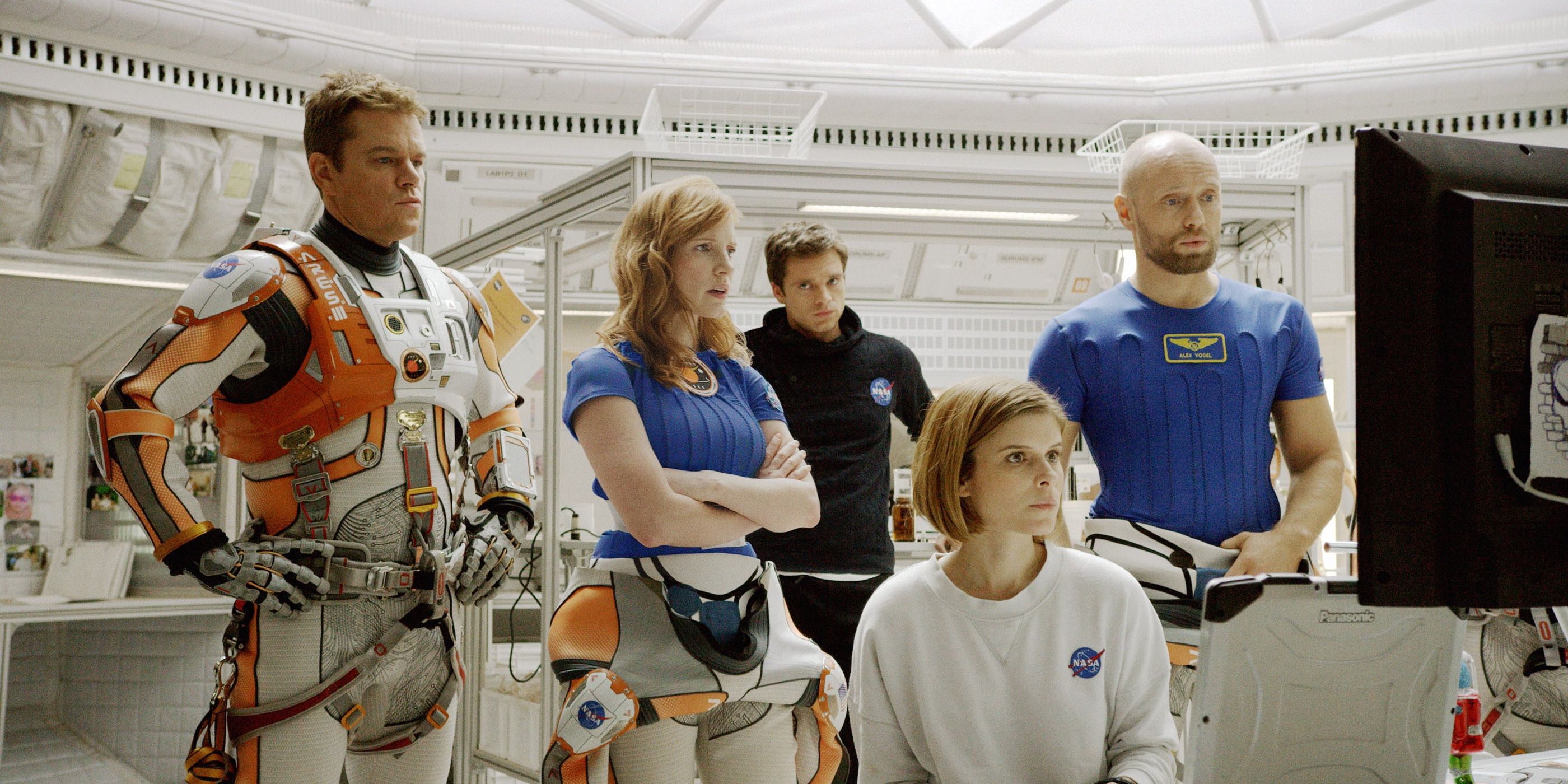
Ridley Scott is a well-known director of science fiction, and his 2015 film truly excelled within the genre. Starring Matt Damon, the movie is considered a prime example of ‘hard’ sci-fi – stories grounded in realistic, scientifically plausible scenarios. Based on Andy Weir’s first novel, the film presented a believable story, even though it was set in space.
What struck me most about The Martian was its commitment to actual science – that’s what made the original book so captivating, and thankfully, it totally worked on screen. Matt Damon delivers a fantastic performance as Mark Watney, one of a team of astronauts on a Mars mission, who gets accidentally left behind. It’s not a story about little green men or warp speed; it’s a gripping tale of human resilience and ingenuity, just happening to be set on another planet. Honestly, in the last ten years, I haven’t seen any other movie portray space travel with such believable realism – it felt less like science fiction and more like a plausible scenario that could actually unfold.
The Martian Was a Space Film Grounded In Realism
The incredibly realistic feel of The Martian wasn’t a coincidence. Before it became a successful film directed by Ridley Scott, it started as a passion project by Andy Weir, who spent countless hours on research. He used real NASA satellite images and even created his own software to figure out the character Mark’s movements, resulting in a story that felt more like a factual account than pure fiction.
I remember when the author, Andy Weir, was talking to the Wall Street Journal about his book, he said I actually did all the calculations whenever Mark was discussing science in the story. It was a really fun balance – the science had to be accurate, but it was also meant to be funny. The story centers around Watney and the third crewed mission to Mars, which unfortunately goes horribly wrong. His team mistakenly believes he’s dead and has to leave him behind, and honestly, for most people, that would have been a fatal mistake.
Stranded on Mars with limited food and no immediate rescue possible, Watney knew he had to find solutions to survive. He was determined not to give up, and luckily, his knowledge of plants proved invaluable. He managed to grow potatoes and even create water, despite being on a barren planet. He was making progress, though a major challenge still remained.
Mark Watney couldn’t survive on Mars indefinitely, so he had to find a way to let NASA know he was still alive. Realizing everyone believed him to be dead, he discovered an old Rover from a past mission and used it to send a message. The film felt believable because Watney faced many challenges, and it highlighted the power of science in rescuing him.
Science Was the MVP of The Martian
Even Mark’s determination had its limits. When a disaster destroyed his food supply, he was forced to make his remaining food last and rely on being rescued. Fortunately, his team was still in space and able to provide the help he desperately needed.
Rescuing Mark wouldn’t be simple, and NASA actually argued about whether it was worth the risk. They debated if it was right to potentially sacrifice four astronauts to save one man. However, Rich Purnell, a specialist in space travel, convinced the Ares team to act. As soon as they realized how critical Mark’s situation was, they immediately began planning a return mission to save him.
Rich outlined a daring plan: instead of landing on Earth, the Ares crew could use Earth’s gravity to swing around and head back towards Mars. This would be the fastest way to reach Mark and prevent him from dying on Mars. However, they still needed to figure out how Mark would launch from Mars and rendezvous with the Ares crew in orbit to maintain their momentum for the return trip.
All the challenges led to a nail-biting scene where Mark had to blast off from Mars so Commander Lewis could rescue him – a maneuver that could have easily sent him drifting into deep space. Unlike most science fiction movies that rely on action-packed spaceship fights and lasers, The Martian offered something different. It featured a thrilling use of rocket power, but ultimately, the film’s strength was its commitment to a realistic story.
The compelling personalities of the characters ultimately helped Mark survive. This approach felt realistic for a space movie, mirroring how things might actually unfold in a similar situation. After all, astronauts are selected for their sharp minds and problem-solving skills.
Mark’s incredible longevity might have stretched believability, but that was part of what made the film so enjoyable. While Hollywood often prioritizes entertainment over realism, audiences today seem to crave more authentic problem-solving in their movies and shows. His extended life, though improbable, felt fitting within the story.
Fans Still Clamor For Hard Sci-Fi in Film and Television
Science fiction featuring distant galaxies and dangerous aliens remains popular, but a realistic space movie offers a different kind of thrill. The Martian resonated with viewers – earning a 91% rating on Rotten Tomatoes – because it focused on believable science rather than far-fetched technology or overly dramatic situations.
Subscribe to the newsletter for hard sci‑fi insights
Subscribe to the newsletter for hard sci‑fi insights
The movie The Martian was a straightforward story about a man’s will to live. The director is known for handling both grand historical epics and more intimate stories, and The Martian benefited from that skill. The film didn’t require elaborate twists or a huge plot; it centered on the fundamental human drive to survive. This allowed it to deeply explore the physical and emotional challenges of being completely alone on Mars.
This show isn’t alone in finding success with audiences who enjoy character-focused science fiction. Like other popular adaptations, it’s based on a book and set in a future where humanity has colonized Mars and the Asteroid Belt thanks to a new, efficient engine. While the story eventually escalated into an interplanetary war, the series always prioritized the personal journeys of its characters.
Audiences are drawn to stories focused on compelling characters and realistic situations. For example, the show explored what it means to be human, even with technology that allowed people to live forever by transferring their minds into new bodies. It showed that even in a world with immortality, people can still suffer and be treated cruelly. This ability to tackle deep, meaningful themes is a key reason why science fiction remains so popular and enduring.
When it comes to realistic science fiction, The Martian truly stands out. While The Expanse is also well-regarded, it featured a significant alien plotline. The Martian, released in 2015, focused almost entirely on scientific accuracy, with any deviations from reality being intentional. Andy Weir meticulously crafted an authentic world, and the film’s success stemmed from its realism, humor, and compelling characters, making it far more than just another sci-fi movie.
Read More
- United Airlines can now kick passengers off flights and ban them for not using headphones
- Crimson Desert: Disconnected Truth Puzzle Guide
- All 9 Coalition Heroes In Invincible Season 4 & Their Powers
- Mewgenics vinyl limited editions now available to pre-order
- Grey’s Anatomy Season 23 Confirmed for 2026-2027 Broadcast Season
- Viral Letterboxd keychain lets cinephiles show off their favorite movies on the go
- Does Mark survive Invincible vs Conquest 2? Comics reveal fate after S4E5
- The Boys Season 5 Spoilers: Every Major Character Death If the Show Follows the Comics
- All Golden Ball Locations in Yakuza Kiwami 3 & Dark Ties
- How to Get to the Undercoast in Esoteric Ebb
2025-12-23 02:38