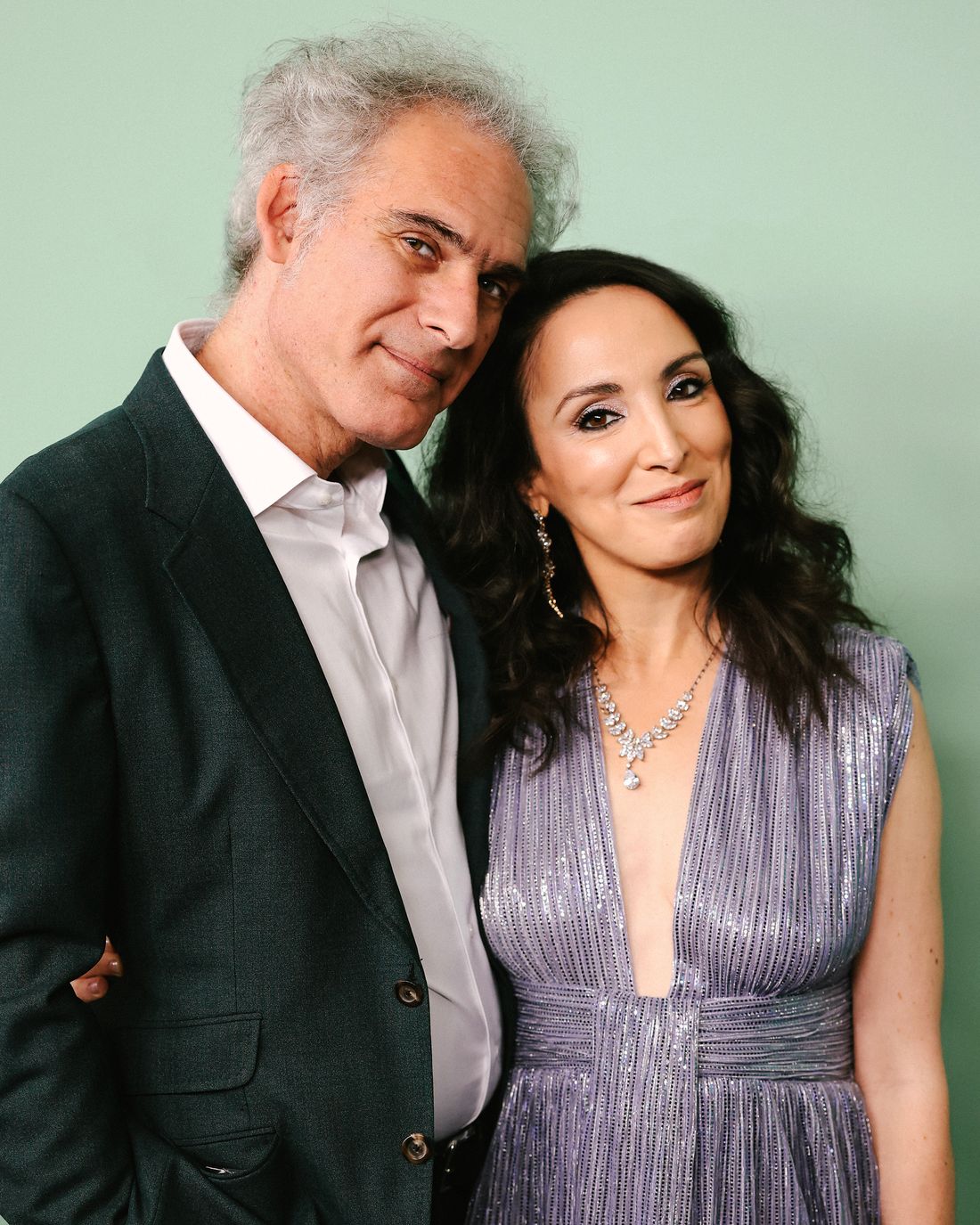
Mary and Ronald Bronstein met on the set of their film, Frownland, a striking independent movie from 2007. It was Ronald’s only time directing a feature-length film. Both grew up in the suburbs around New York City – Mary from a working-class family in Connecticut, and Ronald from a middle-class background on Long Island. Ronald left NYU film school disillusioned but determined to make a movie independently, gathering friends to help. The result was a story about a deeply unlikeable door-to-door salesman, his difficult roommate, and a girlfriend who was unhappy. However, when he needed a leading actress, Ronald admitted he didn’t know any women. Mary, who was finishing her studies at NYU, saw his casting call and perfectly fit the role, bringing a bold and creative energy to the part.
Frownland was made with very little money and wasn’t intended to be a mainstream hit – it was a passion project. But pursuing a demanding creative vision on your own can be as difficult as it is rewarding. Because of financial struggles, the film took six years to complete, with a year-long pause where Ronald pretended to be a copywriter in Sweden, essentially assembling a portfolio from online sources when money was tight. By the time Frownland was finished, Ronald and Mary had fallen in love, gotten married, and people had mostly stopped asking about the movie, treating it like a sensitive subject. Not knowing what to do with it, Ronald submitted the film to a small festival in Williamsburg, where it played to almost no one in a residential garage.
Mary recalls a time when she was watching a movie with only one other person. She explains with a smile that two teenage boys walked out just ten minutes into the film, complaining it was terrible. They made a loud noise with their skateboards as they left, leaving Mary and the remaining moviegoer alone.
According to Ronald, they were simply sitting when Mary jokingly remarked, “Isn’t this perfect? It feels so right, considering how things work in the universe.” He admits he then embarrassingly shouted at her, “This is my life!”
It’s a remarkable year for Mary and Ronald Bronstein. Both are Oscar nominees for different films – movies that, ironically, seem perfectly suited to their younger, more uncompromising selves. Mary is nominated for her film, If I Had Legs I’d Kick You, a darkly comedic and unflinching look at a mother struggling to care for a daughter with a feeding disorder. The film, which premiered at Sundance and drew comparisons to Uncut Gems, gained momentum through festivals and ultimately earned Rose Byrne a Best Actress nomination for her intense performance. Meanwhile, Ronald worked as a writer, producer, and editor on Marty Supreme, a bold and surprising film that quickly became an awards-season contender. Its premiere at the New York Film Festival immediately positioned Timothée Chalamet as a frontrunner for Best Actor. Despite some controversy, the film received nine nominations, including Best Picture, showcasing a truly unexpected and well-deserved success for both filmmakers.
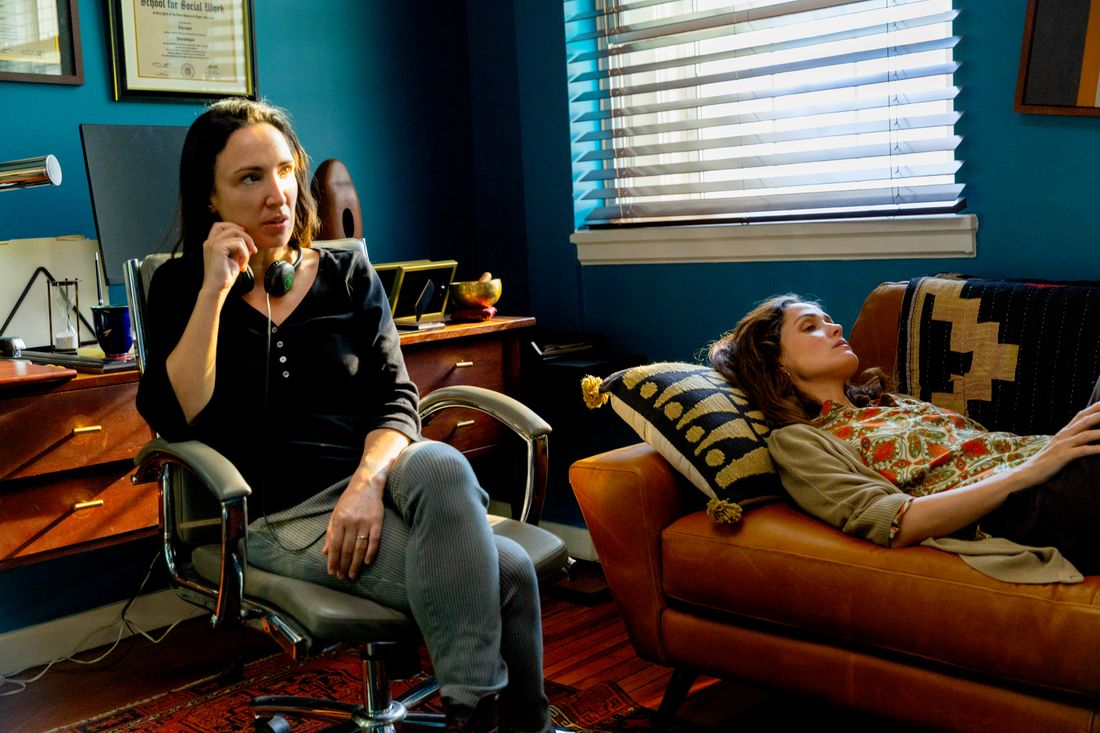
It’s rare to find married couples both working as distinct filmmakers. While exceptions exist – like Brady Corbet and Mona Fastvold, who collaborate on scripts and directing – filmmaking and family life often create a dynamic where one partner ends up supporting the other’s work. This is compounded by societal expectations. Mary and Ronald Bronstein, a couple who have been together for 25 years, are an exception. Sitting together at the Hotel Chelsea – a place Mary frequented as a teen and still visits to write – they speak in a way that feels like a shared, evolving narrative, often disagreeing but clearly deeply connected. Much like the Chelsea itself, which has moved past its wilder days, they’ve opted for coffee and tea on a cold morning, enjoying a quiet moment together.
This writing duo works more independently than side-by-side. Mary, known for her stylish, slightly edgy look, prefers to write alone and relies on Ronald as her initial reader and sounding board. She values his honest opinion: “I trust Ronnie to tell me what works.” Ronald, with his distinctive white hair and tendency to be verbose, mostly writes from home or his office. Since the late 2000s, he’s had a very close working relationship with director Josh Safdie, even providing script adjustments via earpiece during on-set filming of their fifth film, Marty. Despite this, Mary remains his first audience and someone whose perspective he deeply internalizes. He avoids sharing unfinished work with her, admitting, “If Mary thinks something is bad, I consider it bad.” He jokes that his confidence is fragile and he doesn’t want to be discouraged, comparing it to avoiding checking his bank balance.
Ronald and Mary Bronstein both have a strong sense of facing the world together against all odds, but they express it in different ways. Ronald struggles with intense self-doubt and overconfidence, while Mary has always been remarkably self-assured, though she can’t quite explain why – it’s driven by a desire to prove people wrong. According to Mary, they both experience a lot of anxiety, but about completely different things, which can be challenging, but ultimately allows them to connect. A year after their film Frownland premiered at SXSW in 2007, winning a Special Jury Award and generating both praise and criticism, Mary debuted her own directorial work, Yeast, at the same festival. She created the film as a response to the emerging mumblecore movement, which she saw as being focused on “men dwelling on their feelings and being upset about romantic rejection.”
She wasn’t just frustrated by the lack of women directing in the low-budget, improvisational film scene, but also by the way female characters were portrayed – as unrealistic and catering to male desires. Her film, Yeast, a deliberately provocative and low-budget comedy co-starring a young Greta Gerwig, felt like a direct response to this. However, it wasn’t well-received by some influential men in the scene, who she says secretly shared an advance copy and then openly criticized it. At the premiere party and screening, people pointedly ignored her to warn the male director about the negative reactions. She recalls the front row being filled with members of their usually supportive community, all visibly disapproving. Now, in her 40s, she’s determined to continue portraying complex women on screen, even if it upsets people, viewing that as their own issue to address. But she admits it was much harder to deal with that criticism when she was younger.
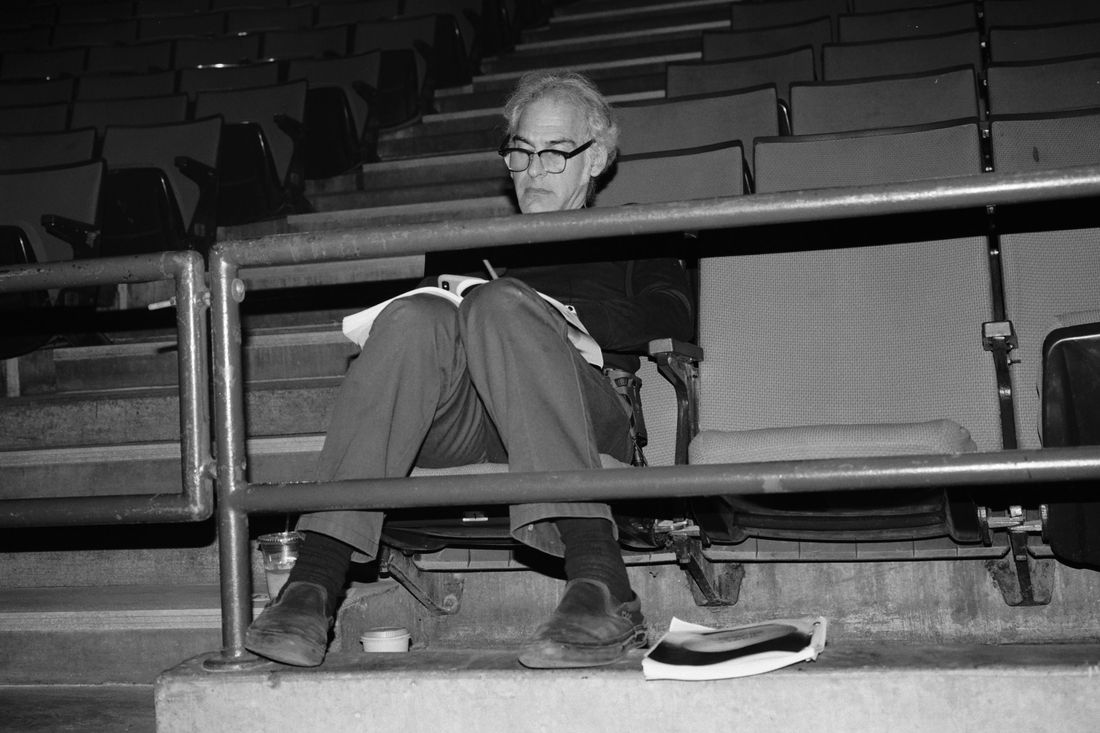
Talking to the Bronsteins feels like connecting with a rare group who still champion the spirit of independent filmmaking, a spirit that largely faded in the 2010s. Around that time, indie films started to feel less like creative rebellions and more like stepping stones to bigger projects – auditions for directing television shows or working on established franchises. Even though their films, Yeast and Frownland, weren’t always well-received at festivals, they did connect with other filmmakers who shared their vision. They found kindred spirits like Jennifer Venditti, the director of Billy the Kid, whose casting work has greatly influenced the style of A24 films, and Amy Seimetz, an actor and director who helped launch Barry Jenkins’s career with Medicine for Melancholy and went on to direct the thrillers Sun Don’t Shine and She Dies Tomorrow. Sean Price Williams, who filmed Frownland, also became a highly respected cinematographer.
Ronald first connected with Josh and Benny Safdie at the SXSW festival. In 2009, he co-wrote and starred in their debut film, Daddy Longlegs, playing a character based on their father. The sons in the film were played by the children of Sonic Youth guitarist Lee Ranaldo. The following year, Ronald received the Breakthrough Actor Award at the Gotham Independent Film Awards, and Daddy Longlegs itself won the John Cassavetes Award at the Indie Spirit Awards. The film’s reputation grew alongside the Safdie brothers’ success, eventually earning a Criterion Collection Blu-ray release in 2022. Ronald collaborated with the brothers on their next three films as a co-writer and editor, though he wasn’t involved with the 2017 film Good Time and has chosen not to comment on reports of alleged misconduct during that production. He later co-founded a production company with Josh and Eli Bush, while Benny established his own separate company.
Ronald and the Safdie brothers created films that slowly gained recognition, but it wasn’t until Uncut Gems in 2019 that they started earning substantial money. For years, Ronald supported himself working as a projectionist at Lincoln Center, a job that sometimes meant setting up equipment for filmmakers he’d competed against at the Cannes Film Festival. After a personal project fell apart when its star backed out, he decided he didn’t want to direct anymore. Instead, he and Josh would write together in the small projection booth, pausing only when Ronald’s timer went off to signal a reel change. They were so engrossed in their work that they often accidentally left the audience in darkness after the movie ended because they were in the middle of a disagreement.
Mary’s film, Yeast, was made on a tiny $2,000 budget during her vacation time and has since gained a dedicated fanbase. However, the negative reaction it received initially was so strong that Mary stepped away from filmmaking for 17 years. During that time, she pursued academic work in feminist theory, went to graduate school, became a play therapist, even started a popular, though unofficial, preschool, and wrote scripts for television that were never produced. Later, when their daughter became ill at age seven, Mary and Ronald made a difficult decision: Ronald remained in New York to maintain their health insurance while Mary took their daughter to San Diego for eight months of treatment.
Their long-distance relationship was incredibly difficult. Ronald spent his days revising the screenplay for Uncut Gems with Josh, then came home to a mouse-infested apartment where he’d numbly watch Shark Tank. (This routine actually led to Kevin O’Leary appearing in Marty Supreme). Mary, meanwhile, was emotionally overwhelmed, breaking down while on the phone with Seimetz, who encouraged her to start writing again if she wanted to pursue it as a career. That conversation sparked the idea for If I Had Legs I’d Kick You, a script that took four years to get produced. Despite consistently receiving praise – people told her it was the best script they’d ever read – it was repeatedly deemed unmakeable. Ultimately, it was the positive reputation Ronald and Josh built with A24 after the success of Gems that allowed the film to happen. They used their influence as producers to ensure Mary was the director.
The Bronsteins recognize a common thread running through their films, despite their different styles: they all explore ideas about parenthood, self-confidence, and what we look for in relationships. Marty Supreme focuses on a confident young man attempting to avoid responsibility for his affair with a married childhood friend, Rachel (Odessa A’zion), who is also pregnant with his child. Mary Bronstein was particularly struck by Rachel’s situation, expressing her dislike of the phrase “we are pregnant,” pointing out that only Rachel is carrying the baby. Meanwhile, If I Had Legs I’d Kick You centers on a woman feeling overwhelmed and unsupported, especially by her exasperated ship-captain husband, Christian Slater, who mostly communicates through frustrated phone calls while at sea.
The two films together offer a distorted, but revealing, look at their marriage. Mary emphasizes that while the films aren’t based on their life story – something she’s faced questions about throughout the filmmaking process – they are emotionally honest. She didn’t intend the husband character to represent her own spouse, so they were surprised when friends started defending Ronald, feeling as if he’d been betrayed on screen. “People thought I’d exposed him, but I’m completely fine with how it came across,” Ronald explains. Mary adds that Ronald wasn’t bothered by the portrayal when he first read the script.
Mary and Ronald Bronstein have come a long way from their humble beginnings playing to empty rooms in a Brooklyn garage. Now, they’re attending glamorous awards season events and mingling with stars like Leonardo DiCaprio and Michael B. Jordan. While neither of their films is guaranteed to win an Oscar – Timothée Chalamet, previously a strong contender, isn’t as much of a lock, and a win for Paul Dano would be unexpected given Jessie Buckley’s frontrunner status – the Bronsteins genuinely believe just being nominated is a huge achievement. That’s because both of them are there representing their own films, and that’s what truly brings them joy.
Mary shared that experiencing something new – in this case, being on television, specifically the same screen where they watched the Oscars – felt incredibly right with her partner. She described a shared creative philosophy: they both believe most people aren’t interested in their work initially, but they’re determined to share it anyway. She jokingly compared herself to a termite, suggesting she had worked tirelessly to break through and be noticed.
Read More
- United Airlines can now kick passengers off flights and ban them for not using headphones
- Gold Rate Forecast
- How to Solve the Glenbright Manor Puzzle in Crimson Desert
- All Golden Ball Locations in Yakuza Kiwami 3 & Dark Ties
- 8 Actors Who Could Play Blackbeard In One Piece Live-Action Season 3
- How to Get to the Undercoast in Esoteric Ebb
- How to Complete Bloom of Tranquility Challenge in Infinity Nikki
- Katanire’s Yae Miko Cosplay: Genshin Impact Masterpiece
- Netflix’s 4-Part Crime Thriller Is One Of Its Very Best
- CBS Officially Ends NCIS After 34 Years
2026-03-04 16:57