Spoilers follow for the fifth season of The Boys through the fifth episode, “One-Shots.”
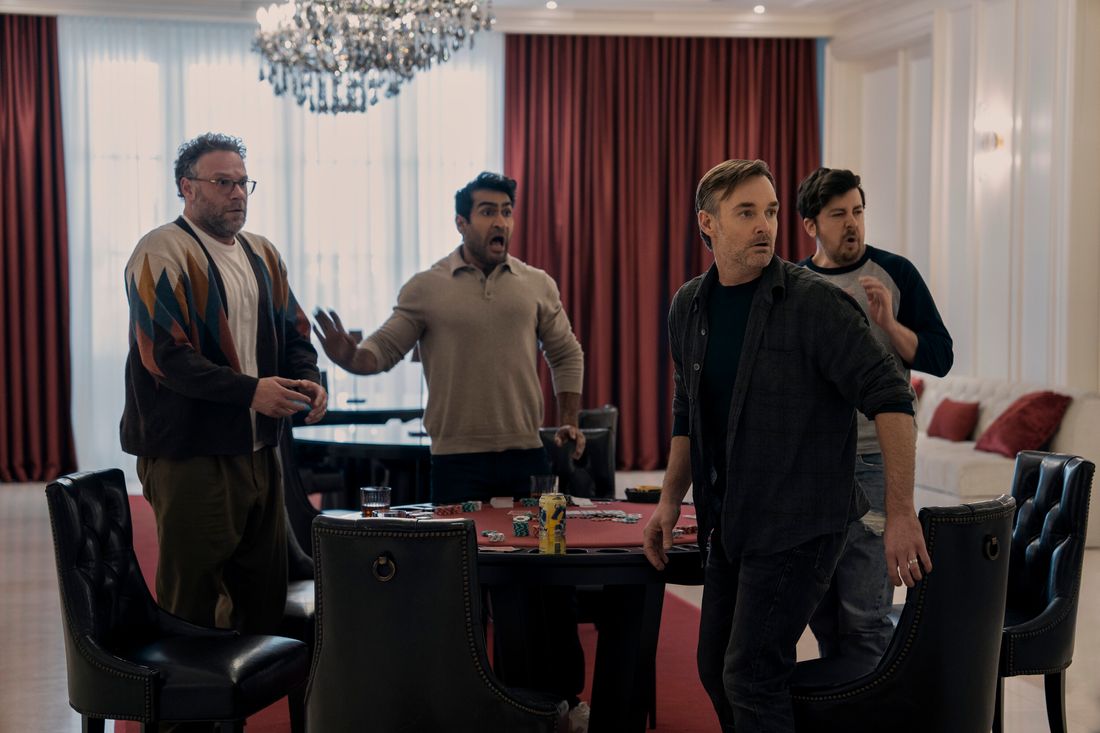
This week’s episode of The Boys brought back a recurring visual gag – a super-speedster accidentally exploding people as they run by. This initially served a crucial plot purpose, as A-Train’s actions kicked off the entire story. However, repeating this trope in the show’s final season feels less like a clever reference and more like a lazy reliance on an old trick. When Soldier Boy deliberately puts celebrities like Craig Robinson, Kumail Nanjiani, and Christopher Mintz-Plasse in the path of the super-fast Mister Marathon, the resulting violence doesn’t feel impactful. It actually weakens the show’s ability to offer sharp social commentary. By the time even a producer, Seth Rogen, is hilariously cut in half, the show is so focused on being self-aware that it loses sight of what it’s trying to say.
As The Boys heads into its final three episodes, the central question remains: can Homelander (Antony Starr) be defeated, and can Butcher (Karl Urban), Hughie, Annie (Erin Moriarty), and their team actually do it? This season has been frustratingly slow, introducing potential solutions – like a virus to eliminate all superpowered people – only to take them away. Then, Vought gave Homelander a formula for immortality, making him even more powerful and unstable. The season has largely retread familiar ground – Hughie and Butcher clash over the ethics of killing Homelander, the Boys attempt an attack, Homelander easily overpowers them but spares them for unclear reasons – and the latest episode, “One-Shots,” feels particularly drawn out and repetitive.
The episode “One-Shots” takes a unique approach, presenting events from the viewpoints of minor characters like Black Noir’s actor and Butcher’s dog, similar to the film Rashomon. However, it mostly serves as a chance for the show’s creator, Eric Kripke, to bring back actors from his previous show, Supernatural, for a reunion. The episode attempts to make jokes about how celebrities deal with difficult issues to stay relevant, but these jokes fall flat. Given current events – like celebrities openly supporting questionable figures or prioritizing their careers over principles – the episode’s commentary feels weak and doesn’t offer any fresh insights. The idea that celebrities are self-absorbed isn’t new, and the episode doesn’t add anything meaningful to that conversation. Several of the actors involved have already explored similar themes, leaving “One-Shots” feeling unoriginal.
Despite Kripke’s claim that The Boys has always been about Donald Trump’s presidency, the connection to Trump wasn’t the show’s main focus at the beginning. Initially, The Boys satirized the entertainment industry’s obsession with superheroes, particularly how Marvel and DC dominated pop culture and influenced everything from movies and TV to clothing, food, and even energy drinks. The show brilliantly highlighted how the fictional corporation Vought would endorse anything for profit, no matter how absurd. This was especially relevant at a time when big-budget movies relied heavily on marketing and celebrities seemed carefully crafted to avoid controversy. The Boys keenly understood corporate greed and how CEOs might justify anything – even aligning with extremist ideologies – to maximize profits.
As The Boys increasingly focused on drawing parallels between Homelander and Donald Trump, its satire became less broad. The show shifted to simply mirroring Trump’s statements and actions through Homelander—for example, both boasted about facing no consequences for violence, and both proposed harsh policies like detention camps. This narrowed focus caused the show to lose sight of its original target: the entertainment industry itself. The latest season feels superficial, relying on tired tropes about Hollywood—celebrities using drugs, influencers being self-serving, and fallen stars making comebacks. While creator Eric Kripke intended the show to be a critique of how celebrity culture and social media can enable authoritarianism, this season feels like it’s merely repeating someone else’s arguments. The show’s portrayal of the religious right, filled with spectacle and pageantry, feels derivative of shows like The Righteous Gemstones instead of offering a fresh perspective. More importantly, the series has abandoned its earlier, insightful commentary on how superhero entertainment supports the military-industrial complex. References to fictional movies and TV shows within the show—like Dawn of the Seven and G-Men: Days Past From the Future—feel pointless. They don’t illuminate Homelander’s use of entertainment to promote his ideology, and instead cater to viewers who simply recognize the pop culture references or disagree with a TV critic’s review.
The central issue with The Boys is whether a show satirizing the entertainment industry can maintain its critical edge when it becomes deeply embedded within that same system. As the show expanded with spin-offs, integrated those characters into the main storyline, and formed brand partnerships – becoming Prime Video’s “Vought Cinematic Universe” – it started to lose its credibility as an outsider. The recent episode, “One-Shots,” solidifies this. The episode portrays the show’s creators and actors as flawed individuals, poking fun at their personal endeavors. However, this feels hollow because the show hasn’t spent much time this season illustrating the dangers the comedians discuss – the rounding up of celebrities or investigations into figures like Post Malone. Had one of these comedians appeared alongside the Boys, created a Vought-approved advertisement, or been on Deep’s podcast, it would have better demonstrated the changed America under Homelander’s influence. The comedians’ conversation feels superficial because, beyond the season premiere, the show hasn’t convincingly shown us this frightening America and the risks faced by everyone, including celebrities. Ultimately, it’s gossip used as a shortcut for storytelling, and it doesn’t feel impactful.
The most striking thing about this scene in The Boys is what it doesn’t explore: the fact that several of the actors appearing in it have actually played superheroes before, which ties directly into the show’s themes about the blurred lines between superheroes and celebrities. Earlier seasons might have cleverly addressed how some of their past superhero projects, like Kumail Nanjiani’s Eternals, Seth Rogen’s The Green Hornet, and Christopher Mintz-Plasse’s Kick-Ass films, weren’t huge successes. Given the show’s world-building, where Vought replaces Marvel and DC, these actors could have been presented as stars in low-budget, Vought-produced knockoffs. Imagine them trying to connect with characters like Soldier Boy or Homelander based on their shared experiences with fame and superhero roles, arguing they understand the “supe” mindset and deserve leniency. This could have offered a deeper, more structural satire, something The Boys used to excel at. Instead, the cameos lead to a predictable joke about Homelander being overly sensitive – a clear parallel to Trump – and a repetitive, over-the-top gore scene. The show has done both of these things countless times before. While Homelander may need to learn to take a joke, The Boys itself seems to have run out of original ideas.
Read More
- Netflix’s Little House On The Prairie Reboot: Release Date, Cast & Everything We Know
- Off Campus Season 1 Soundtrack Guide
- Silver Rate Forecast
- Prime Video’s New R-Rated Spy Thriller Is Officially No.1 On Streaming Despite Poor Reviews
- Gold Rate Forecast
- Brent Oil Forecast
- EUR ZAR PREDICTION
- Amazon Primes new GenAI cartoon looks like K-Pop Demon Hunters with aliens
- Inkford Hermitage Chest Locations In HSR (Honkai: Star Rail)
- KPop Demon Hunters Meets Avatar: The Last Airbender In Netflix’s 3-Part Fantasy Series
2026-04-29 21:56