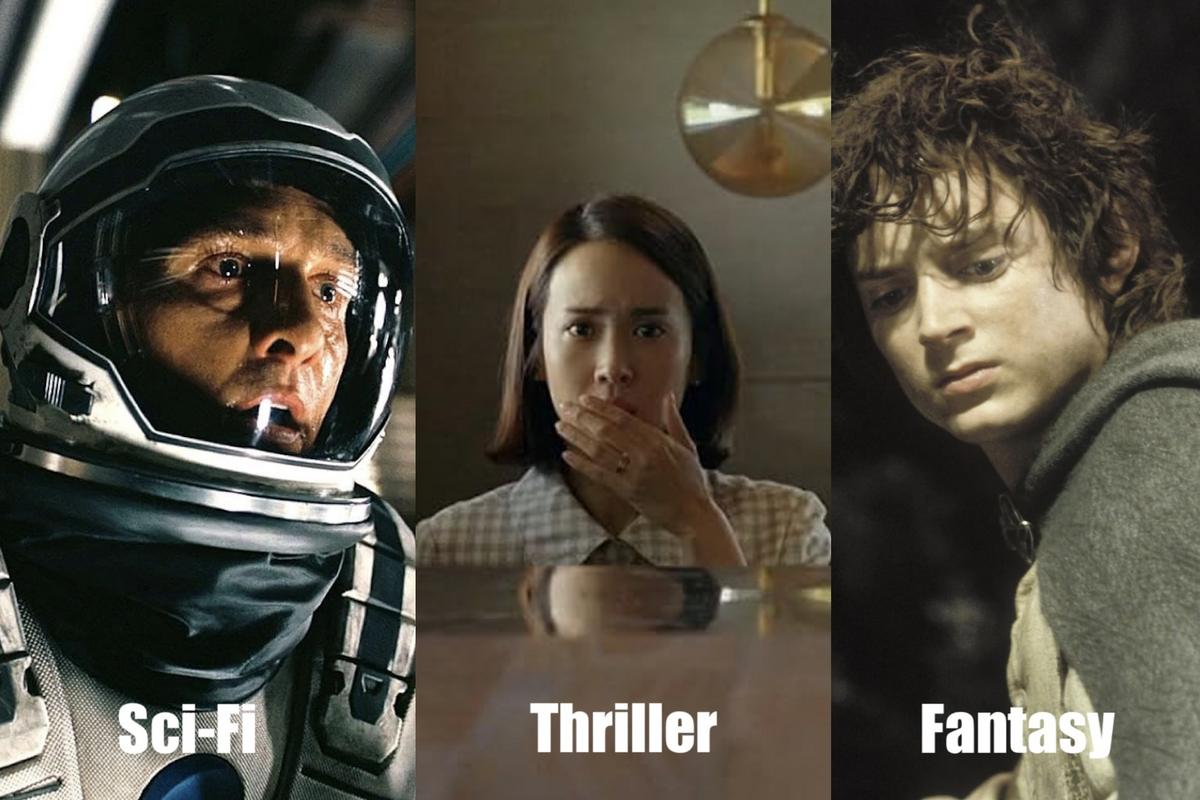
There are only 19 film genres.
(At least according to Letterboxd.)
As a total movie buff, I love exploring Letterboxd – it’s got over 1.13 million films! One of the coolest things is how easily you can find exactly what you’re in the mood for. They categorize movies into 19 different genres, like Action, Comedy, Horror, Sci-Fi, and everything in between – even things like TV movies and Westerns. It’s a really neat way to browse and discover new favorites.
You can organize movies within each genre by how you rate them, how popular they are, or by the average rating from all Letterboxd users. This lets you find the highest-rated film in any of the 19 different genres. You can even sort multiple genres at the same time – for instance, to see the top-rated action musical (which, by the way, is The Blues Brothers).
Let me backtrack a bit. Today, we’re simply identifying the top-rated movie within each of the 19 categories on Letterboxd. You’ll notice some films show up more than once—one even appears three times! This is because many movies fit into multiple genres, like The Blues Brothers, which is both an action film and a musical. I considered leaving out films we’ve already mentioned to include more titles, but I decided it was more important to be accurate. So, here’s a true reflection of the films Letterboxd users love most across all 19 genres. Let’s take a look…
The Most Popular Movie In Every Genre on Letterboxd

Action: Harakiri (1962)
With an average Letterboxd rating of 4.69, Masaki Kobayashi’s Harakiri is the highest-rated story-driven film on the platform. This means it also ranks as the top film within any genre it fits, including action. It’s a violent Japanese revenge story with plenty of sword fighting, and is available through the Criterion Collection. You’ll likely see it appear again on similar lists.

Adventure: The Lord of the Rings: The Return of the King (2003)
As a huge film fan, I always check Letterboxd ratings, and The Lord of the Rings trilogy currently sits at a fantastic 4.54! Thinking about it, Peter Jackson’s epic really is a series of adventure movies, isn’t it? Though, honestly, I’d probably categorize it as fantasy or even a war film first, it’s undeniable that Frodo and the Fellowship embark on a massive adventure.

Animation: Grave of the Fireflies (1988)
With an average Letterboxd rating of 4.48, this animated film directed by Isao Takahata is often called one of the most heartbreaking and difficult movies to watch, regardless of genre. It’s also a major accomplishment in animation. While whether animation is a genre is a debate for another time, Letterboxd users certainly treat it as one! Let’s move on to discussing the film itself.

Comedy: Parasite (2019)
As a huge movie fan, I’ve been checking out Letterboxd ratings, and Parasite consistently comes up. It’s got a 4.53 average, which is incredible! While it’s definitely not a typical comedy – it’s a really biting, dark look at class differences – I get why it’s considered one. It’s satirical, and that’s where the humor comes from, even if it’s not laugh-out-loud funny. Honestly, Letterboxd ratings aren’t always about pure enjoyment; they reflect how well a film works, and Parasite clearly does that.

Crime: High and Low (1963)
The average Letterboxd rating for this film is 4.60. Surprisingly, the Akira Kurosawa movie appearing on this list isn’t one of his most famous works like Seven Samurai, Rashomon, Ran, or Ikiru. It’s actually his crime thriller, High and Low, which centers on a businessman grappling with difficult ethical dilemmas following a kidnapping. The recent release of Spike Lee’s remake, Highest 2 Lowest, may have prompted many Letterboxd users to revisit the original, and they clearly loved it.

Documentary: Stop Making Sense (1984)
Let me tell you, Jonathan Demme’s Stop Making Sense isn’t just a great concert film – it’s the great concert film, at least according to Letterboxd users. Released in 1984, it immediately entered the discussion of the best concert films ever made, and if you consider concert films documentaries (a debate for another day!), it’s right at the top. As of today, it’s the highest-rated movie on Letterboxd, not just in the documentary category, but in music overall. Sorry, Maysles brothers, and even you, Martin Scorsese – Stop Making Sense reigns supreme!

Drama: Harakiri (1962)
With an average Letterboxd rating of 4.69, Masaki Kobayashi’s Harakiri appears on this list again, this time under the “Drama” category. I usually think of dramas as quiet films about older people sharing their feelings, but Letterboxd suggests it also fits films about revenge – like this one, which follows a wandering samurai seeking justice against a clan that has betrayed the samurai code. And honestly, Harakiri is so well-made that I’m happy to let others decide what genre it belongs to.

Family: Spirited Away (2001)
Hayao Miyazaki, a celebrated Japanese animator, is known for creating wonderful films for families. Letterboxd users rank his 2001 film, Spirited Away, a story about a girl who enters a magical world, as his best. Interestingly, Grave of the Fireflies actually receives a higher rating on Letterboxd, highlighting the fact that not all animated films are necessarily intended for family audiences.

Fantasy: The Lord of the Rings: The Return of the King (2003)
The average Letterboxd rating for this film is 4.54. I previously mentioned I was considering labeling The Return of the King as a fantasy film, but it truly fits both the fantasy and adventure genres. It’s similar to that classic Saturday Night Live sketch about a product that serves two completely different purposes. However, please don’t actually try putting a copy of The Return of the King on your pie – you definitely wouldn’t want to eat it and risk a bad stomachache!

History: Harakiri (1962)
With an average Letterboxd rating of 4.69, Masaki Kobayashi’s Harakiri returns to our list as a standout in the historical genre. Set in Japan’s Edo period, the film is rich with detail about the era’s history and culture. It’s a powerfully emotional and thrilling movie – if all historical films were like this one, they’d be huge hits!

Horror: Perfect Blue (1997)
The average rating for films on Letterboxd is 4.39. Surprisingly, the highest-rated horror movie on the site falls into a very uncommon category: animated horror. Satoshi Kon, a highly respected animation director, created the 1997 psychological horror film Perfect Blue. The film follows an actress who is stalked and begins to question her own reality, and it’s considered one of his best works.

Music: Stop Making Sense (1984)
With an average Letterboxd rating of 4.68, Jonathan Demme’s 1984 Talking Heads concert film, Stop Making Sense, is widely considered one of the best concert films ever made. On Letterboxd, it’s currently the highest-rated movie in both the documentary and music categories, surpassing even the work of acclaimed filmmakers like the Maysles brothers and Martin Scorsese.

Mystery: Incendies (2010)
Letterboxd users give this film an average rating of 4.44 out of 5. Before becoming known for large-scale science fiction films like Blade Runner 2049 and Dune, director Denis Villeneuve gained international recognition with the Canadian movie Incendies. The film centers around a significant family mystery involving a pair of twins, which I won’t reveal here.

Romance: A Brighter Summer Day (1991)
The average rating for these films on Letterboxd is 4.50 out of 5. I’m realizing how many of them are included in the Criterion Collection, including Edward Yang’s A Brighter Summer Day – which is the top-rated romance film on the site. It’s a long movie – over three and a half hours – and blends several genres, but it’s truly excellent. And just in case anyone was wondering, the Criterion Collection is fantastic!

Sci-Fi: Interstellar (2014)
With an average Letterboxd rating of 4.43, Christopher Nolan’s Interstellar has become even more beloved over the past decade. While it was initially well-received, a 2024 re-release proved incredibly popular with film fans, making it the highest-rated science-fiction film on the platform.

Thriller: Parasite (2019)
Letterboxd users give Parasite an average rating of 4.53 out of 5. While some calling it the greatest comedy ever feels off, it’s undeniably a fantastic thriller with moments of dark humor.

TV Movie: Dekalog (1989)
The average Letterboxd rating for items labeled as “TV Movies” is 4.40. However, this category is quite unclear. Letterboxd includes all sorts of things under this label – single episodes of TV shows (like a famous episode of Sherlock or Black Mirror), special episodes, concert films, and even series finales like MASH. The highest-rated item that might actually qualify as a TV movie is Dekalog*, a ten-part miniseries based on the Ten Commandments. Even then, it’s debatable whether a miniseries should be included. It makes you wonder if “TV Movie” is a meaningful category at all.

War: The Human Condition III: A Soldier’s Prayer (1961)
With an average Letterboxd rating of 4.64, Masaki Kobayashi’s three-part film The Human Condition—a harrowing depiction of a man’s fight for survival during World War II—is considered one of the greatest war movies ever made. The final installment, A Soldier’s Prayer, receives the highest ratings. Given the acclaim for both The Human Condition and his subsequent film, Harakiri, many Letterboxd users consider Kobayashi the most highly regarded director on the platform.

Western: The Good, the Bad, and the Ugly (1966)
The average Letterboxd rating for this film is 4.50. By the time Sergio Leone created The Good, the Bad and the Ugly, he’d become so influential that his style continues to define how people envision Westerns – particularly their look and sound – even today.
10 Famously Hated TV Series Finales That Are Better Than You Remember

ALF, “Consider Me Gone”
Nobody likes a show ending on a cliffhanger that never gets resolved, and that’s exactly what happened with the 1980s sitcom ALF. The show followed a typical suburban family who took in a goofy, friendly alien. The final episode of the fourth season seemed like a proper goodbye – ALF was about to rejoin his people when government agents suddenly kidnapped him. A “To Be Continued” message appeared, leading viewers (and the show’s creator) to believe a fifth season was coming. Instead, the show was canceled, leaving ALF in a never-ending state of government captivity. While frustrating, the ending is surprisingly thought-provoking, subtly criticizing secretive federal organizations that would rather snatch an alien from a loving home than let him return to his own species. The cliffhanger wasn’t resolved until six years later with a TV movie called Project ALF.

Dinosaurs, “Changing Nature”
The last episode of Dinosaurs, the beloved children’s show featuring realistic dinosaur puppets, was surprisingly dark. It shocked viewers with a strong message about environmentalism, portraying a ruthless company that destroys the dinosaurs’ world by poisoning plants and causing a harsh, volcanic winter – ultimately leading to their extinction. The episode is notably lacking in humor and ends with the TV weatherman delivering a final, uncertain forecast. While a stark contrast to the show’s typically lighthearted tone, the creators intended the finale to be both educational and a fitting conclusion to the story, mirroring the real dinosaurs’ fate.

Seinfeld, “The Finale”
The finale of Seinfeld is infamous for leaving viewers disappointed, wondering if that was all there was. The episode featured Jerry, George, Elaine, and Kramer on trial for a petty offense – making fun of someone who was carjacked instead of helping. The courtroom was filled with faces from the show’s past, as everyone they had ever offended showed up to testify. Ultimately, the group ended up in jail. While widely criticized, the ending felt fitting for a show about nothing and a group of characters who weren’t particularly likable – what better way to conclude their story than with them facing consequences for their actions?

The X-Files, “The Truth”
For those familiar with the show’s history, The X-Files actually returned for two more seasons after initially ending with Season 9, though it definitely felt like the end at the time. The two-part finale tried to tie up many long-running storylines, while also hinting at potential new movies (which ultimately didn’t happen). The show’s ratings had dropped significantly after David Duchovny left after Season 8, and even his return for the finale couldn’t restore its former popularity. However, the ambiguous ending – with both an alien invasion and the apocalypse looming – fittingly captured the show’s central theme of unanswered questions, letting the audience experience the same uncertainty Mulder and Scully felt throughout the series. The finale reinforces the idea that ‘the truth is still out there.’

The Sopranos, “Made in America”
The finale of The Sopranos initially received a lot of criticism, but over the years, it’s gained a dedicated following and is now considered one of the greatest TV endings by many. The episode shows Tony Soprano trying to make peace with a rival and secure his family’s future, but his past actions have serious consequences. Throughout the episode, there’s a growing feeling of unease – mirroring Tony’s own anxiety as the story nears its conclusion. The scene culminates with Tony, his wife, and son in a diner, Tony anxiously watching the other customers. Just as the diner door rings, signaling someone’s arrival, the screen suddenly goes black, leaving Tony’s fate uncertain. Is he safe, or will he forever live in fear? Like many stories about gangsters, the ending isn’t meant to provide neat closure.

Battlestar Galactica, “Daybreak”
The ending of Battlestar Galactica really split fans – some loved it, while others were deeply disappointed. The three-part finale, “Daybreak,” was bound to be controversial, and many viewers were left unsure how to feel about the conclusion. The reveal that Starbuck was an angel, the unexpected jump to our Earth via random coordinates, the timeline being set tens of thousands of years in the past, and the implication that humans are descended from Cylons – it all felt like a surprising twist. While some felt these reveals avoided answering the show’s mysteries, it actually tied everything together in a way most fans didn’t anticipate, despite spending countless hours trying to figure it all out. The phrase “All of this has happened before” hinted at the truth, if only viewers had known where to look.

Lost, “The End”
When it first aired, the ending of Lost was widely disliked, and the finale frequently appeared on lists of the worst series endings ever. However, as people began rewatching the show, opinions started to change. The real issue wasn’t that the ending was poorly made, but that it didn’t provide the concrete answers to the show’s many mysteries that fans had spent years anticipating. Despite a rushed final season, the finale – revealing a purgatory-like existence for the characters – actually felt like the natural culmination of the show’s themes, which had been present since the beginning. While the flash-sideways scenes and the magical stone were strange, they fit with Lost‘s unique blend of faith-based storytelling and classic adventure. Lost was ambitious enough to be both a mysterious puzzle and a story about belief.

House, “Everybody Dies”
The series finale of House was certainly dramatic – and divisive. It ended with House seemingly sacrificing himself in a fire after trying to help a heroin addict. However, the episode took a surprising turn when it was revealed he’d faked his death by switching identities. Meanwhile, his friend Wilson, who was dying of cancer, delivered a surprisingly harsh eulogy. The ending was a bit silly, but it fit the overall tone of House, which, despite being a medical drama, was ultimately a story about the deep bond between two friends.

Mad Men, “Person to Person”
The final episode of Mad Men is often hailed as one of the greatest series finales, though it still sparks debate. The last season had several episodes that felt like endings, making the actual finale a bit disruptive. Many viewers were also puzzled by Don Draper’s presence in a meditation retreat – was he truly at peace, or just adopting another persona? This ambiguity is central to what made the show so brilliant, balancing genuine emotion with a cynical outlook. The final scene, featuring the iconic “I’d Like to Buy the World a Coke” commercial, perfectly encapsulates the show’s core theme: the complicated relationship between love and consumerism. Ultimately, Mad Men showed us that everyone is always trying to sell something.

Game of Thrones, “The Iron Throne”
Let’s be honest: the final episode of Game of Thrones, “The Iron Throne,” wasn’t good. It was actually quite disappointing. However, looking back, it’s hard to imagine the show ending any other way. After defeating the White Walkers mid-season, something terrible was bound to happen, and it did – Daenerys fell into madness, ultimately requiring Jon Snow to kill her to save everyone. While most characters had unsatisfying conclusions, Arya at least managed to escape the chaos. Considering Game of Thrones always excelled at shocking viewers and delivering unhappy endings, this conclusion, while frustrating, felt inevitable.
Read More
- United Airlines can now kick passengers off flights and ban them for not using headphones
- Crimson Desert: Disconnected Truth Puzzle Guide
- All 9 Coalition Heroes In Invincible Season 4 & Their Powers
- How to Get to the Undercoast in Esoteric Ebb
- Warframe Voruna Prime access begins on April 8 for all platforms, new deluxe cosmetic Warframe skins revealed
- All Golden Ball Locations in Yakuza Kiwami 3 & Dark Ties
- Zendaya’s 4 Big 2026 Movies Could Beat Brie Larson’s Box 2019 Office Record
- Mewgenics vinyl limited editions now available to pre-order
- Dakota County’s plan to end hunger involves locking mayors in escape rooms
- Katanire’s Yae Miko Cosplay: Genshin Impact Masterpiece
2026-01-06 00:32