Before the internet and widespread home entertainment options like video games and streaming, going to the movies was a classic family outing. It was an affordable and convenient treat that could sometimes feel even more special than a big vacation or trip to an amusement park. Before families could easily watch movies at home, seeing a film on the big screen could truly spark a child’s imagination and create lasting memories. Looking back at the most popular family movies from the 1980s also shows how much that decade influenced the pop culture we enjoy today.
Let me be clear: this isn’t just speculation – I grew up with these movies. I was born in 1980, and I can directly connect my current work to the impact they had on me as a child. In fact, my mom took me to see every film on this list in theaters, even when I was a baby! She says I was always calmest in the dark, noisy movie theater, and she only had to pay a dollar to get in. My earliest memory is from the 1983 entry – I swear that’s when I really started to understand things! These films truly defined my childhood, and I know I’m not the only one who feels that way. For many people my age, seeing these classic, often genre-based, movies is a powerful and nostalgic experience. Plus, their influence is still clear in pop culture today.
In 1980, The Empire Strikes Back Solidified Star Wars as a Once-in-a-Generation Phenomenon
The original Star Wars film gained even more popularity when it was re-released in 1979 as Episode IV. A year later, excitement for the series was huge, with fans of all ages eager to see what happened next with Luke Skywalker and his friends. Many wondered if a sequel could live up to the first film’s amazing impact, but George Lucas delivered with The Empire Strikes Back. This film introduced iconic new characters like Boba Fett, the Emperor, Yoda, and Lando Calrissian, along with memorable details like the tauntauns. But the biggest shock came when Darth Vader revealed to Luke that he was his father – right after cutting off his hand!
Although everyone experiences art differently, it’s hard to deny the brilliance of The Empire Strikes Back. It captured everything fans loved about A New Hope and deepened the world of Star Wars. The film builds constant suspense by keeping the heroes separated for most of the story. The clashes with the Empire and Darth Vader feel both deeply personal and impressively large in scale. Famously, as Kevin Smith’s Clerks pointed out, the movie dared to end on a somewhat sad note. It reignited our family’s passion for Star Wars while leaving us eager for the next installment.
George Lucas Teamed Up With Steven Spielberg for 1981’s Raiders of the Lost Ark
George Lucas and Steven Spielberg, the duo behind many of today’s biggest films, teamed up again to create the unforgettable character of Indiana Jones. Just as Lucas drew on childhood adventure serials for Star Wars, he used that same inspiration to develop Indiana Jones and the Raiders of the Lost Ark. The film captures a time when archaeology often involved taking artifacts from other cultures, and fighting Nazis was a common theme. Looking back, it feels like a classic from the start. Indiana Jones was a more hesitant, less polished version of the heroic Han Solo. Combined with John Williams’ incredible music, seeing Raiders of the Lost Ark in 1981 felt like experiencing a beloved, timeless movie.
It’s true that these movies haven’t held up perfectly over time, especially compared to many films from the 1980s. Some aspects, like certain character portrayals, were typical of the era – or of the adventure serials that inspired them – and perhaps even intentional, as Indiana Jones isn’t meant to be a flawless hero. However, any problematic moments in Raiders of the Lost Ark are far less noticeable than in the original serials. In a way, these outdated elements actually strengthen the film’s tribute to those older adventures, even if that wasn’t the intention. Ultimately, the movies’ strengths far outweigh their flaws, and when Raiders of the Lost Ark came out in 1981, it was a huge family event that everyone enjoyed.
Spieling Struck Back In 1982 with E.T. the Extra-Terrestrial and Defined His Style Forever
While Raiders of the Lost Ark is often praised as a perfect film, E.T. the Extra-Terrestrial truly established what we now know as the “Amblin style” – the signature look and feel of Spielberg’s production company. The movie tells the story of an alien stranded on Earth and the desperate struggle to protect him from frightened government officials. However, unlike Star Wars or Raiders, this adventure is led by children. It’s an exciting story, but it also perfectly reflects the more relaxed and sometimes careless parenting of the 1980s – a time when it wasn’t uncommon for kids to roam freely, even prompting concerned public service announcements asking parents if they knew where their children were at night. Even before the famous scene where E.T. uses his powers, these kids would often take off on their bikes without telling anyone where they were going.
I’ll never forget seeing E.T. – it felt like a special, once-in-a-lifetime experience, and it really was a movie the whole family could enjoy together. What I loved most was how the story focused on the kids, letting them be the heroes. Beyond all the adventure and sci-fi stuff, the heart of the film is the incredible friendship between E.T. and Elliot. They become so connected, they literally need each other to survive, and that’s what makes the movie so powerful. The ending is heartbreaking, honestly – you really don’t want E.T. to leave! But he was right when he told Elliot he’d be “right here,” and it’s true – he lived on in all of our hearts. That little alien, with his big eyes, ended up staying with a whole generation of moviegoers, and I’m still thinking about him today.
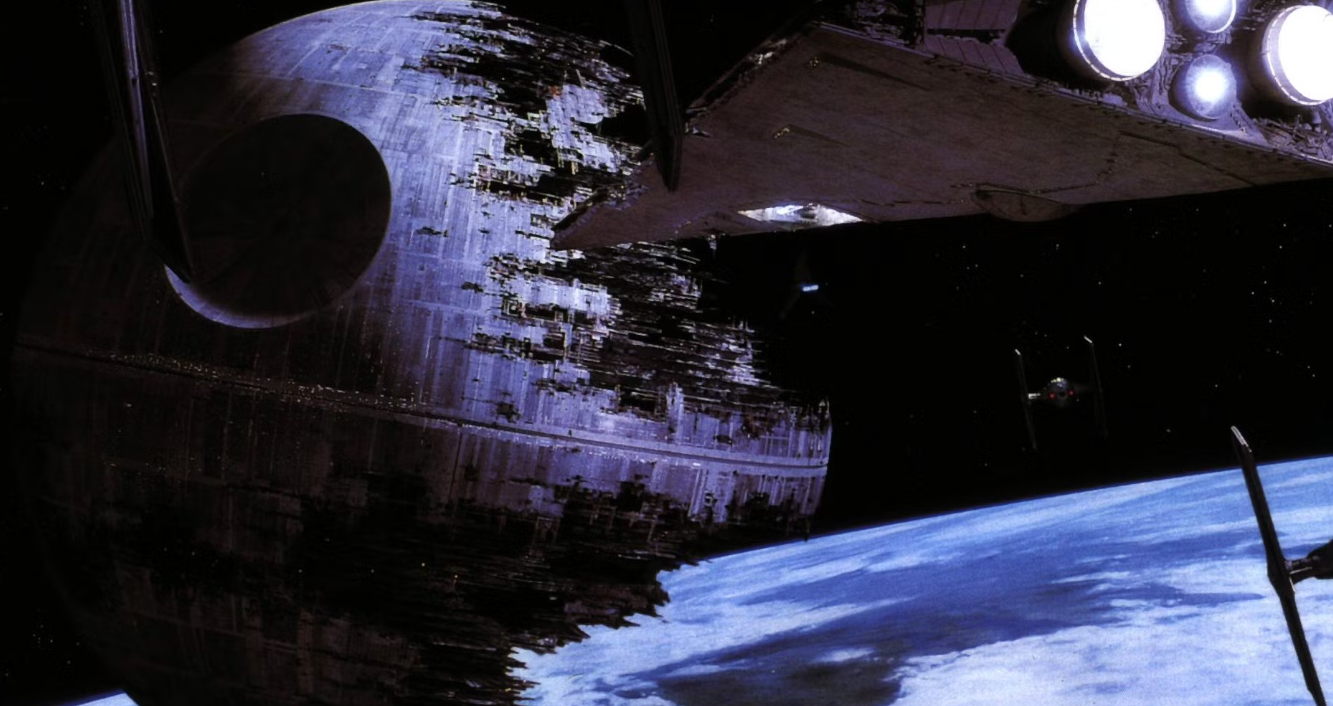
1983’s Return of the Jedi Brought Star Wars to an ‘End,’ but Was a Harbinger for Divisive Fandom
While the previous film was almost universally praised, this one is just as strong. Like The Empire Strikes Back, the story focuses on personal struggles, particularly for Luke Skywalker. It also delivers exciting new creatures, large-scale space battles, and interesting alien characters, all while showcasing Luke Skywalker at his most powerful. The core group of heroes team up for two risky adventures, with scenes that highlight their close connection. But what really sets the film apart is its bold climax – a revolutionary moment for an 80s action movie. Instead of defeating the villain, Darth Vader, through violence, Luke chooses to save them both, offering a powerful message about compassion, self-control, and the value of life.
The negative reactions to Return of the Jedi strongly echo the harsh criticism leveled at the prequel and sequel trilogies. Much of this negativity came from longtime fans who disliked elements like the Ewoks and Boba Fett’s unceremonious exit. Some felt it was unbelievable that a primitive tribe could overcome the powerful Empire – a parallel often drawn to the Vietnam War. Others failed to grasp the significance of Luke’s decision to spare his father. Thankfully, this critical viewpoint has largely disappeared over time, and those complaints weren’t really important even when the film was released in 1983. Return of the Jedi was a grand conclusion to the Star Wars saga and a special event for families who experienced the trilogy together. For many younger viewers, it remains their most vivid memory of the original Star Wars excitement.
In 1984, a Silly Supernatural Comedy Called Ghostbusters Spawned an Unlikely Franchise
Dan Aykroyd’s fascination with the paranormal led him to envision a genuinely frightening, futuristic ghost-hunting movie. However, financial constraints, studio hesitation, and the loss of John Belushi resulted in the 1984 supernatural comedy we all know and love – the one that gave us the iconic line, “Who you gonna call?” The film blends the adult humor of early Saturday Night Live and Second City with spooky sci-fi elements, featuring costumed heroes and futuristic weapons saving the day. It subtly critiques the corporate world and regulatory battles of the 1980s, all while remaining a fun, family-friendly comedy that captured the hearts of kids.
Despite a mixed track record with sequels and adaptations, the original Ghostbusters remains truly special. Its characters are a unique blend of nerdy and cool, and the film cleverly combines fantasy with science and technology. The Ghostbusters themselves were heroes, but delightfully flawed and often made mistakes. Everything from the music to the visuals of this 1984 classic is instantly recognizable and iconic. The film is so strong and beloved that even repeated failed attempts to recapture its magic haven’t stopped people from trying again and again.
Michael J. Fox Became a Bona Fide Movie Star in 1985 With Back to the Future
1985 was a fantastic year for movies, offering both critically acclaimed films and beloved cult classics. While movies like The Goonies and Pee-Wee’s Big Adventure were popular, one film truly captured everyone’s attention: a time-travel adventure directed by Bob Gale and Robert Zemeckis, and starring Michael J. Fox. It quickly became a phenomenon, with kids and adults alike wanting to be the cool, relatable hero, Marty McFly. The movie was a thrilling and funny ride that also made audiences think, and it wasn’t just the near-incestuous moment that grabbed attention. The imaginative sci-fi concept, combined with Christopher Lloyd’s energetic performance as Doc Brown, created a surprisingly heartwarming and inspiring story.
What truly makes Back to the Future special isn’t just the exciting time travel, but how the story unfolds. The problems in the movie stem from a flawed time machine, but the real antagonists are simply bullies. Marty McFly isn’t a typical 80s action hero; he wins people over with his charm and intelligence, not through fighting. He manages to change things by being kind and connecting with everyone around him, including his parents and Doc Brown’s acquaintances. Back to the Future resonated with audiences of all ages because many viewers could relate to Marty and admire his character.
An Animated Mouse Brought the Immigrant Experience to Life in 1986’s An American Tail
I always felt like the big family movie of 1986 should have been something else entirely. But surprisingly, it wasn’t until the film came out on video and started showing on TV that it really became popular with fans. Instead, Don Bluth, a really talented animator from Disney, made a sweet and touching film about what it was like for people coming to America, focusing on a really adorable little mouse named Fievel. An American Tail got some mixed reactions from critics at the time, but audiences loved it and it did really well in theaters.
James Horner’s beautiful music greatly enhanced the animated film, and it included surprisingly memorable songs that became a hit with children – they even playfully claimed there were no actors in the country! Linda Ronstadt and James Ingram’s popular rendition of “Somewhere Out There” had everyone singing along. An American Tail was also important in bringing back interest in feature-length animation, achieving the highest box office numbers for a debut animated film and even surpassing Disney’s The Great Mouse Detective in earnings.
Rob Reiner’s 1987 Family Classic The Princess Bride Was Repeated in School Lunchrooms for Years
For movie fans worldwide, the actor and director’s impact on film and popular culture is enormous, and many consider the 1987 film The Princess Bride to be their masterpiece. It’s a classic fairy tale that uniquely blends grand adventure with playful, modern humor. The story’s framing device – a grandfather reading to his grandson – allowed it to be both a sweeping fantasy and a witty, self-aware comedy. Characters like Inigo Montoya, Buttercup, Fezzik, and the Dread Pirate Roberts quickly became iconic. The film appealed to multiple generations, evoking nostalgic swashbuckler films for parents while captivating children with its straightforward storytelling.
What makes The Princess Bride so cherished isn’t just one thing, but a collection of small details and clever storytelling choices. However, a key moment perfectly illustrates how the film manages to be both a thrilling adventure and a hilarious comedy. The exciting climax of the final fight includes a surprisingly silly twist: Inigo and Westley suddenly switch to fighting with their left hands. Most viewers don’t even notice, and those who do often chalk it up to a minor mistake in an otherwise lighthearted movie. But the switch is intentional, and when it happens, audiences both laugh and root for the heroes – a testament to the film’s unique ability to blend genres.
Blending Animation and Live-Action, 1988’s Who Framed Roger Rabbit? Was Pure Movie Magic
Many films rely on complex special effects to create fantastical elements like spaceships and otherworldly creatures. However, Who Framed Roger Rabbit?, released in 1988, offered a unique kind of visual storytelling. While combining animation and live-action wasn’t new, this film did it better than ever before. The story cleverly presented animation as an integral part of Hollywood itself. The cartoon characters’ wild and unpredictable behavior wasn’t just funny—it became a defining characteristic for them and a source of power within the film’s world.
Though Who Framed Roger Rabbit? was a big hit with families, it also included some surprisingly mature content. The film skillfully balanced silly cartoon violence with genuinely frightening and suspenseful scenes. Jessica Rabbit’s glamorous and exaggerated appearance also sparked debate. Her sex appeal is integral to her character—and reflects similar figures in classic animation—and feels different when she interacts with the live-action Bob Hoskins. These elements, however, are likely what attracted adult viewers and gave Who Framed Roger Rabbit? a unique appeal that older kids picked up on, making it feel a bit more grown-up and exciting.
In 1989, The Little Mermaid Led to a Whole New World of Disney’s Family Movie Dominance
Attempting to recreate The Little Mermaid was always going to be a difficult task, regardless of expectations. The original 1989 animated film not only launched a golden age for Disney animation, but it was also a truly special movie in its own right. While seemingly a simple story about a princess searching for love, it captivated audiences young and old with its beautiful visuals, memorable songs, and charming characters. The Little Mermaid built upon the success of films like An American Tail, and it resonated with families because it felt like a genuine cinematic experience, not just a typical cartoon.
What often separates a popular movie from a timeless classic is its villain, and Ursula truly delivered. Even with some outdated story elements and typical fairytale plot points, audiences—both children and adults—were invested in what happened. People worried about Ariel and hoped she’d find love, while others argued that Prince Eric wasn’t good enough for her, or that Ariel herself was a bit spoiled and deserved her fate. Ultimately, The Little Mermaid succeeded because it was visually stunning, incredibly catchy, and simply a lot of fun to watch.
Found an error? Send it so it can be corrected.
Read More
- United Airlines can now kick passengers off flights and ban them for not using headphones
- Crimson Desert: Disconnected Truth Puzzle Guide
- All 9 Coalition Heroes In Invincible Season 4 & Their Powers
- Mewgenics vinyl limited editions now available to pre-order
- The Boys Season 5 Spoilers: Every Major Character Death If the Show Follows the Comics
- Invincible Season 4 Episode 6 Release Date, Time, Where to Watch
- Grok’s ‘Ask’ feature no longer free as X moves it behind paywall
- Assassin’s Creed Shadows will get upgraded PSSR support on PS5 Pro with Title Update 1.1.9 launching April 7
- Grey’s Anatomy Season 23 Confirmed for 2026-2027 Broadcast Season
- Crimson Desert Guide – How to Pay Fines, Bounties & Debt
2026-04-08 23:48