“Shine Brightly” is now available on AMC+ ahead of its 9 p.m. ET broadcast next Sunday.
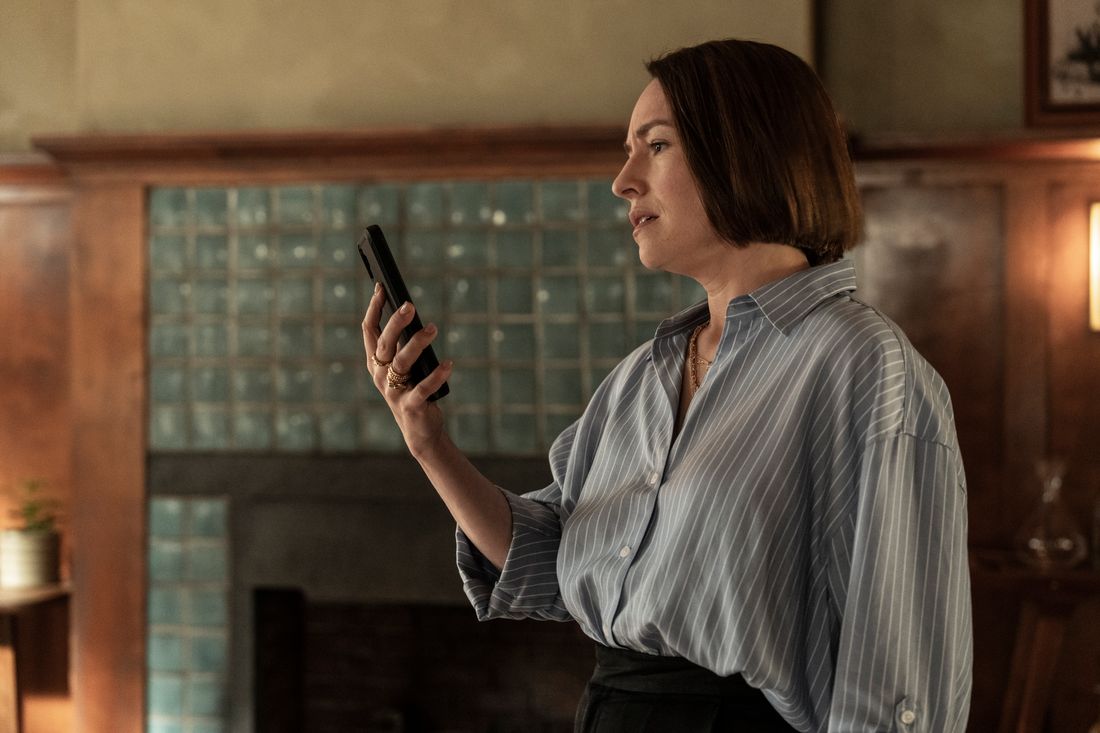
In the second episode of The Audacity, there’s a fleeting moment of connection between two characters. JoAnne, shaken by Duncan’s illegal suggestion and a staged break-in, asks her son, Orson, to change her passwords for security. When he requests her computer login, she reveals it’s his birthday, catching him off guard. He wonders if his often-distant mother actually cares and has remembered his birthday as a convenient, but easily guessed, password.
But there’s a catch: the date she’s using is actually for their old dog’s birthday – one day after his. That’s why she always seems to be late wishing him a happy birthday. Basically, in her mother’s eyes, he ranks lower than a dog who’s no longer with them.
After just two episodes, it’s clear that The Audacity really dislikes Silicon Valley and its culture. Any genuine human connection is quickly overshadowed by greed and self-interest – like a candle quickly extinguished. Even when JoAnne seems worried about her child’s safety, it’s less about protecting him and more about covering up her illegal financial dealings. While she appears to want to reconnect with her son, her obsession with money ultimately makes her no better than the other adults in Palo Alto, especially considering she can’t even afford to buy a home.
The parents in the show The Audacity are obsessed with getting their children into Stanford, but their focus is on prestige, not actually setting their kids up for success. As comedian Gary Gulman points out, constantly providing for your children can ironically signal a lack of faith in their abilities. A particularly hilarious scene shows Duncan’s wife, Lili, building a whole team to guide their daughter Jamie toward Stanford admission, but Jamie’s SAT score is below 1300 – not even competitive for schools like Duke or Carnegie Mellon. They brainstorm superficial ways to make her seem smarter in interviews, like suggesting she wear glasses. Ultimately, they consider more drastic options, such as falsely diagnosing her with a neurodevelopmental condition or simply donating millions of dollars to the university. Their motivation isn’t about their daughter’s future, but about maintaining a successful image and avoiding embarrassment in front of their social circle.
It’s clear the children are deeply affected by their parents’ manipulative behavior, leading to emotional distress. Jamie desperately tries to convince her father she can succeed without cheating, but he seems to view honesty as a sign of weakness. Tess acts out at school due to her parents’ lack of attention, starting with a prank involving a self-driving car and escalating to hiding a trophy on her person. Orson, meanwhile, continues to play the role of a secretive observer, hiding in shadowy places to eavesdrop and gather information. After overhearing his mother’s therapy session, and facing trouble with his school records, he finds a new hiding spot in the school dining hall. His growing connection with Tess suggests they may become allies, united by their shared feelings of being outsiders.
Okay, so the plot’s getting a little messy, relying too much on things happening just by chance or because people misunderstand each other. There’s this whole thing with Orson using a stolen metal cube to escape, and honestly, it leads to some really confusing police work. They find a cast recording of Pippin – from inside the cellar he escaped from – and somehow think it was used to break into the house? It doesn’t quite add up. Meanwhile, we’re seeing JoAnne become increasingly paranoid and obsessed with getting a gun, which feels like a classic foreshadowing moment. And Duncan? He’s not handling JoAnne ignoring him well. He has this tech whiz, Harper, use surveillance technology to track her, which leads him to a parking lot where she’s trying to clean up some dodgy investment money by betting on a long shot. Then he spots a gun shop right across the lot. It makes you wonder… is she planning to hurt him instead of just doing business? Is that why she’s been avoiding his calls? It’s getting pretty tense!
So, JoAnne finally gets Gary to give in and buy a gun – it’s pretty funny because he was so against it at first, saying he didn’t want ‘an instrument of death’ in his house! But his guilt over accidentally letting slip that he represents Duncan’s wife completely changed his mind. The really clever part is that neither Duncan nor JoAnne actually care about Gary’s little ethical slip-up; they just happily use it to their advantage. Duncan gets access to Gary’s phone with a fake neurological exam, and JoAnne? She walks away with a handgun in a lovely gift bag! It feels like the show is building towards a really dangerous showdown between these three, but I still think there’s a chance JoAnne could be convinced to work with Duncan. If they focus on the right wealthy client – like poor, sad Carl Bardolph – they could seriously boost their finances. Of course, that’s assuming they don’t end up killing each other first, which, honestly, feels pretty likely at this point!
Pixels
The small tungsten cube has had a busy time since Tess stole it from Duncan’s office. Orson unexpectedly discovered a hidden cellar by crashing through his bedroom wall, and later used the same method to escape after getting trapped inside. Duncan, meanwhile, is considering firing Thelma, the housemaid and nanny who has cared for Jamie since he was a baby, believing she stole the cube – though he seems to have forgotten her long service. The cube reappears when Duncan secretly places it in the case where Tess previously hid a trophy, a clear message to her that he’s been keeping an eye on her.
During Gary’s neurological exam at Duncan’s strangely decorated house, we find out Duncan used to have a partner who was the creative force behind the app that made them both rich. Sadly, the man died by suicide, likely because Duncan constantly bullied him – a dynamic reminiscent of a classic 1980s teen movie. Duncan casually points out the word “SORRY” carved above the doorframe, revealing where his partner left a final message.
Everyone jokes that JoAnne is surprisingly bad at the work she’s getting paid for by company leaders. During a therapy session with Carl, she was even shopping for guns on her phone! She proposed a memory aid called STOP, where ‘S’ simply meant ‘Stop’ – a frustratingly simple idea that made Carl furious. His response? He created his own mnemonic for her: START, meaning ‘Start Throwing things At Retarded Therapists’.
In Silicon Valley, having traits associated with autism is seen as a benefit, to the point where even Duncan wishes he had a diagnosis. People with these traits are often described as skilled at understanding social interactions and providing practical advice.
I initially thought Dr. Webb, the new principal at the exclusive private school, might face trouble for trying to make positive changes. However, her decision to assign Orson to the dining hall suggests she’s quickly adapting to the school’s existing, perhaps less progressive, ways.
Duncan is still frustrated with Anushka for directing their data requests to Tom Ruffage and the VA instead of Hypergnosis. While Anushka correctly points out the potential value of this private data, the VA stores it in an outdated format – on paper and floppy disks – and wants to physically deliver it to Duncan’s office.
Duncan offered some wise words about integrity: he said the only true dishonesty is deceiving yourself. He pointed out that people who cheat don’t actually lose, and those who lose never cheat in the first place.
Read More
- United Airlines can now kick passengers off flights and ban them for not using headphones
- Solo Leveling’s New Manhwa Chapter Revives a Forgotten LGBTQ Story After 2 Years
- The Boys Season 5 Spoilers: Every Major Character Death If the Show Follows the Comics
- Grok’s ‘Ask’ feature no longer free as X moves it behind paywall
- Assassin’s Creed Shadows will get upgraded PSSR support on PS5 Pro with Title Update 1.1.9 launching April 7
- Gold Rate Forecast
- How to Get to the Undercoast in Esoteric Ebb
- Mewgenics vinyl limited editions now available to pre-order
- Nintendo Officially Rewrites Princess Peach After 41 Years
- Invincible Season 4 Episode 6 Release Date, Time, Where to Watch
2026-04-12 19:55