
Ever admire fan art and wonder how it’s made? We’re taking you behind the scenes to explore the creative process, using an impressive Mind Flayer skull study from the Baldur’s Gate 3 community as an example. Surprisingly, this detailed artwork wasn’t created with costly programs – the artist used free tools like GIMP and MS Paint! We’ll show you how they gathered references, used smart techniques for accuracy, and transformed a simple game idea into a stunning piece of art. It’s a great example of how creativity can flourish, proving you don’t need a professional setup to create amazing things from the Forgotten Realms.
Key Takeaways
- Fan art makes you a co-creator: Sharing your art helps fill gaps in official lore, gives visual life to unique campaign moments, and inspires other players and DMs, making the entire D&D world richer.
- You don’t need expensive gear to start: Free and accessible tools like GIMP are powerful enough for incredible work; focus on mastering fundamentals like layering and using references instead of worrying about pricey software.
- Set boundaries to protect your creativity: Sharing art online means dealing with feedback and repetitive questions, so protect your mental health by setting clear rules for interaction, using the block button freely, and creating an FAQ for your process.
Why Baldur’s Gate 3 Feels Like a Real D&D Campaign
Playing Baldur’s Gate 3 is like rediscovering the joy of a classic tabletop role-playing game with friends. It’s more than just a video game with the Dungeons & Dragons label – it truly captures the spirit of the game. Larian Studios has created an experience that feels like a dynamic, unfolding adventure led by a skilled Dungeon Master, rather than a fixed set of rules. This is achieved through three key elements: a strong commitment to the D&D ruleset, the ability to create a unique and personalized character, and a world that feels alive and responds to your choices.
What makes this game special is how it brings the tabletop experience to life digitally. It stays true to the original game while using modern technology to handle the complicated math and record-keeping that can bog down in-person games. This lets you concentrate on the fun parts: acting as your character, discovering new places, and experiencing the story. The game perfectly captures the sense of endless possibilities that defines Dungeons & Dragons. You’ll find yourself constantly wondering if you can try something, and the game usually says ‘Yes – and here’s what happens!’ This dedication to letting players do what they want, combined with the official rules, makes each game feel genuine and unique.
Sticking to the 5e Rulebook
Baldur’s Gate 3 resonates with Dungeons & Dragons players because it so accurately brings the 5th Edition rules to life. It’s not simply a game inspired by D&D it genuinely recreates the core gameplay experience. Everything – from skill checks and saving throws to managing spells and fighting – functions exactly as you’d anticipate. For example, attempting to push an enemy off a cliff involves a Strength check, and persuading a guard relies on a Persuasion roll. This familiar system is comforting for experienced players, while also offering a solid and understandable framework for those new to the game.
Creating Your Perfect Character
Creating your character in Dungeons & Dragons is a special part of the experience, and Baldur’s Gate 3 does it exceptionally well. The game lets you design your perfect adventurer with tons of options for their backstory, how they look, and what skills they have. It’s clear the developers at Larian Studios want you to feel like you’re shaping the story, not just watching it happen. The detailed customization lets you create a character that truly feels like your own, whether it’s a charming Tiefling Warlock with a mysterious past or a tough Dwarven Fighter who cares deeply for their friends. The game gives you everything you need to bring your ideas to life.
Your Choices Actually Matter
As a huge D&D fan, what really blew me away about Baldur’s Gate 3 is how different every playthrough feels. It’s just like a real tabletop campaign – no two games are ever the same! The game really lets you drive the story. Your choices actually matter, and it’s not just about picking different things to say. Seriously, even killing off a character can completely change what happens, shutting down some paths but opening up brand new ones. Choosing who to support will actually reshape the world around you and how people treat you. It feels like having a Dungeon Master who’s reacting to everything we do, making each session feel totally unique and personal.
How Artists Bring D&D Creatures to Life
Okay, so Baldur’s Gate 3 has this amazing, detailed world, right? But as an artist in the community, the official designs are just a starting point for me. The game’s backstory and creatures – especially something like a Mind Flayer – really make you want to dig deeper. I find myself wondering what’s really going on under their skin, or how they’d look from a totally different perspective. That’s where fan art comes in – it’s a way for me to explore those ideas and share what I discover with other players. It’s all about taking that awesome foundation and building on it!
This artistic process combines careful study of established stories, attention to visual details, and a lot of creativity. Artists essentially break down existing ideas and rebuild them, acting as both scientists and storytellers. They don’t simply recreate what’s shown; they expand our understanding of these amazing creatures, particularly when their full forms are left to our imagination. This allows them to become innovative visual designers within the Forgotten Realms.
When Official Art Isn’t Enough
Larian Studios created Baldur’s Gate 3 so you truly feel like you’re shaping your own adventure. The game really comes alive based on the decisions you make, making you a key part of the story. This feeling of control also inspires creativity. While the official artwork is beautiful, it can’t show everything. For example, with a complicated creature like a Mind Flayer, the official art might depict it fighting, but leave questions about its inner workings unanswered. That’s where talented fans come in, using their art to imagine the details and explore different possibilities for how these creatures might look and function.
Creating Your Own Visual References
When artists create fan art of things that don’t have official references, they often have to find their own resources. Many artists gather images from the game itself, concept art, and descriptions from lore books to help them. One artist on Reddit shared that the process is often surprisingly simple, using programs like GIMP and MS Paint, and even tracing images to get the details right. This isn’t considered cheating; it’s about being resourceful and using all available tools to create accurate and convincing artwork. It really shows how clever and creative the fan art community is.
Breaking Down the Mind Flayer’s Anatomy
Artists striving for realism often refer directly to their source material. Baldur’s Gate 3 is praised for how accurately it captures the world of Dungeons & Dragons 5th Edition. This dedication to the source allows artists working on the game to rely on what they see in-game, while also researching the D&D Monster Manual for deeper details about creatures’ biology and history. For example, to understand a Mind Flayer, an artist needs to know its entire life cycle, from its transformation process to its psychic abilities. This thorough understanding of the game’s lore then guides artistic decisions – like how to shape the skull to fit its alien brain, or how to design the facial structure to support its tentacles. It transforms a basic illustration into a detailed and informed anatomical study.
How to Create D&D Fan Art on a Budget
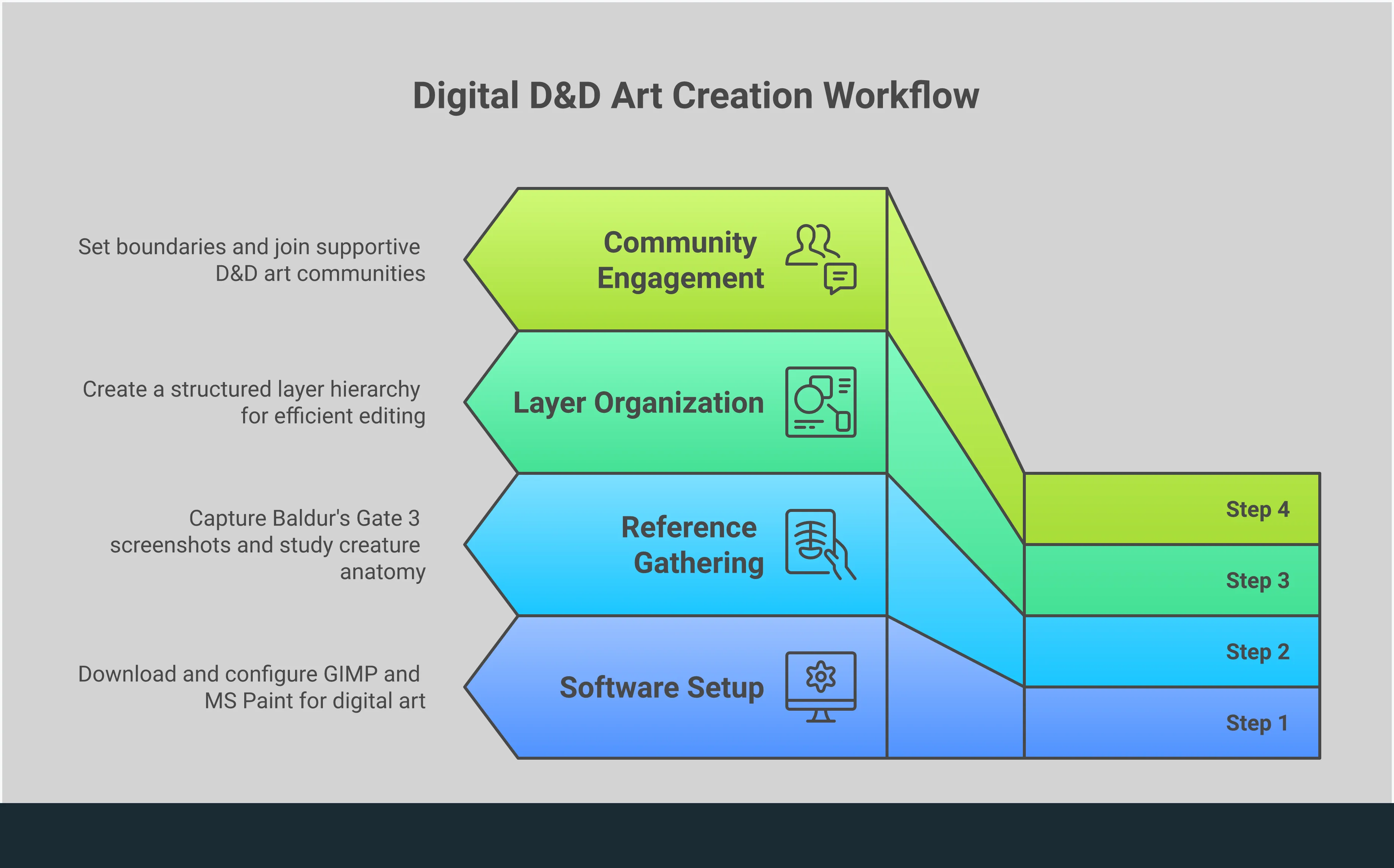
You don’t have to spend a lot of money to start making amazing Dungeons & Dragons artwork. Many incredible fan creations are made with free tools that anyone can access. If you have a D&D story you want to illustrate or a monster you’re excited to draw, all you need is a little creativity and the right free software to get started. Let’s explore how you can bring your favorite characters and creatures to life without spending any money!
Essential Tools for Digital Art Beginners
Starting with digital art can seem daunting, particularly because of the expense of professional software. But you don’t need to worry about that right away! There are great free options like GIMP and even MS Paint to get you started. GIMP is especially powerful – many artists use it for everything from quick sketches to complex details. It has so many features that it can compete with paid programs, showing you don’t have to spend money to make amazing art. The key is to learn how to use the tools you already have.
Making the Most of GIMP and MS Paint
GIMP has lots of advanced tools like custom brushes and layers, but don’t overlook how useful simple programs can be. MS Paint is great for quickly sketching ideas and blocking in shapes. In fact, many artists combine both programs – they might start a drawing in one and then add details in the other. GIMP’s paintbrush, for example, can create a professional, painted look if you adjust the opacity. Following a good tutorial can teach you how to use GIMP’s features and settings to get the effects you want and become more comfortable with the software.
Simple Layering and Brush Techniques
Okay, so I’m pretty new to digital art myself, and honestly, layers have been a lifesaver. It’s like having a stack of clear sheets – I do my line art on one, then color underneath, and shading on another layer above that. That way, if I mess up the shading, I don’t have to start the whole drawing over! Also, don’t be afraid to just play with the brushes. I kept wondering how to make textures look good in GIMP, and it turns out it’s all about tweaking the brush opacity, size, and the type of brush you’re using to get that depth and detail. Seriously, just experiment!
Using Tracing to Ensure Accuracy
Let’s be clear: using references – even tracing – isn’t cheating, it’s simply a helpful technique. When drawing something detailed, like a creature from Dungeons & Dragons, references are incredibly useful. Many artists start by loosely copying shapes and textures – a kind of foundational tracework – before adding their own personal style. This helps you understand how things are built and makes sure your drawing looks correct. It’s a smart way to improve your skills and feel more confident, particularly when working with complicated subjects.
Tips for Drawing D&D Creatures Digitally
Creating artwork of monsters and creatures from Dungeons & Dragons is a great way to enhance your game, but it can seem challenging. How do you accurately depict details like a displacer beast’s rough tentacles or a mind flayer’s alien shell? The key is to simplify the process. These tips, useful for both experienced and beginner artists, will help you improve your digital art by focusing on essential elements – from establishing basic shapes to adding narrative through your illustrations. You’ll be able to create creature art that looks like it came directly from the Monster Manual.
Nailing the Right Shapes and Textures
Okay, so I’ve been trying to level up my monster art for D&D, and here’s what I’ve learned. The biggest thing is starting with the basic shape and texture of the creature. Each monster needs to feel unique, right? Don’t be afraid to use references – seriously, it’s not cheating! I heard one artist even used tracework to get the shapes right for a mind flayer skull. It’s about understanding how the creature is built. I look at official artwork for inspiration, and even real animal anatomy to get a feel for muscles and stuff. I always start with simple shapes first, then build up the details. It makes a huge difference!
Working Around Technical Limits
You don’t need pricey software to make stunning digital art. Sometimes, working with simpler tools can actually boost your creativity. The team behind Baldur’s Gate 3 proved this, building a remarkably detailed world by making the most of what they had. If you’re using free programs like GIMP or even MS Paint, concentrate on what the tools can do, rather than what they lack. With basic brushes, smart layering techniques, and a solid grasp of color, you can achieve amazing results. Think of technical limitations not as roadblocks, but as challenges that can help you develop a unique and recognizable art style.
Turning Creature Lore into Art
The best D&D fan art doesn’t just look good – it tells a story. Before you start creating, learn about the creature you’re drawing. Consider its habitat, what drives it, and how it acts. Baldur’s Gate 3 by Larian Studios encourages players to shape the story, and your artwork can do the same for the D&D world. Knowing a creature’s history will help you make better artistic decisions about its pose, expression, and surroundings, creating something that really connects with other fans.
What to Expect When You Share Fan Art Online
Sharing your artwork with the world is a big accomplishment! It’s both thrilling and a bit nerve-wracking, but ultimately very fulfilling. The Dungeons & Dragons and Baldur’s Gate 3 communities are incredibly enthusiastic, and when you share your work, you’re inviting their opinions. Getting ready for all kinds of responses – both positive and negative – will help you learn and grow as an artist while staying true to your vision. Consider it all part of the process – every interaction is a valuable opportunity to understand your audience and yourself better.
Understanding How the Community Reacts
Sharing your art online will probably bring both positive and negative feedback. While some people will really appreciate your work, others might criticize your choices or how you made it. It can be challenging, and many artists end up having to defend their creations against negativity – one artist even described having to “fight off haters.” It’s important to remember that strong reactions online aren’t always meant to be personal, even if they feel that way. It’s just part of sharing your work publicly.
The Reality of Sharing Your Art Publicly
Putting your art out there can be tricky – you might encounter criticism, but you also get to connect with a huge community of fans. It’s a chance to add your own creativity to a world you enjoy, expanding on existing stories and making something fresh. The game developers themselves have said they want to see a community as lively and imaginative as the players are, and this is your opportunity to be a part of that. You can find people who love your work and even encourage others to create, too.
How to Handle Constructive vs. Negative Feedback
Knowing how to handle feedback is really important for any artist. Not all comments are helpful – some are just unhelpful noise, while others offer useful advice that can help you get better. Good criticism is usually specific, pointing out things like problems with drawing, lighting, or how something is made. Unhelpful feedback is often just general negativity. Getting feedback on your work is a fantastic way to learn, especially when you’re starting out. Focus on comments that give you concrete suggestions and don’t waste time on those that are just meant to be discouraging. Your time is valuable, so use it to focus on feedback that will actually help you improve.
How to Protect Your Mental Health as a Creator
It’s amazing to share your art and connect with others who appreciate it, and getting feedback can help you grow as an artist. However, it can also be really tough. Sharing your work means facing potential criticism, constant questions, and feeling like you always need to be available. One artist even pointed out how draining online arguments can be. That’s why protecting your mental health is crucial – it’s the key to avoiding burnout and continuing to create. You need to prioritize your well-being and build a safe, inspiring environment where you can thrive, not feel stressed and on the defensive.
Set Boundaries with Your Audience
Protecting your energy starts with setting boundaries. It’s not about being rude, but about clearly communicating how you want to interact with others to avoid feeling overwhelmed. You decide what you’re comfortable with – for example, you might choose not to answer direct messages about your work, or ask people to keep comments respectful. As one person pointed out, constantly repeating your rules and explaining your process is draining. Setting clear expectations from the beginning creates a better experience for everyone, and especially helps you avoid burnout. Share your guidelines in your profile, a pinned post, or a story highlight so you can easily point people to them instead of explaining things over and over.
Know When to Use the Block Button
The block button is a great tool for controlling your online experience. You don’t have to deal with negativity or people who are intentionally disruptive. Blocking someone isn’t about losing an argument; it’s about prioritizing your own well-being. If someone isn’t respecting your boundaries or is simply being unpleasant, feel free to block them – you don’t need to explain yourself. Protecting your online space is important, and removing negativity helps keep it positive and welcoming for genuine fans and helpful feedback.
Dealing with Repetitive Questions About Your Art
If you share your art online, you’ve probably gotten questions like, “What brush did you use?” or “What program is this?” and “How long did this take?” While these questions are often well-intentioned, answering them repeatedly can be exhausting. Instead of typing the same answers over and over, create a central place where people can find the information themselves. This could be a simple FAQ, a pinned comment on your posts, or a link in your profile. This will save you time, allow you to connect with your followers in more meaningful ways, and let them easily find the details about your tools and process without needing to ask.
Why Fan Art Is So Important to the D&D Community
Fan art is essential to the Dungeons & Dragons community. It’s much more than just pictures of dragons and elves; it’s how players connect with the game, their characters, and each other. From character portraits to scenes from your games, fan art brings these stories to life visually. It helps turn the imagined world in your head into something you can actually see, making the fantasy feel more real. It’s a collaborative process that strengthens the community, giving you a peek into another player’s world and adventure. Fan art transforms simple character descriptions into memorable personalities, inspiring others. Every piece, whether a quick sketch or a detailed painting, adds to the ever-growing world of D&D, built by both the game’s creators and its players. It’s how we celebrate great moments, remember fallen characters, and imagine what’s next on our adventures.
Filling the Gaps in Official Lore
While official Dungeons & Dragons books have amazing artwork, they can’t include everything a Dungeon Master might imagine. That’s where fans come in! For example, imagine a campaign like Icewind Dale: Rime of the Frostmaiden where a player finds a fossilized mind flayer skull with no existing picture. One player stepped up and created their own artwork, bringing the object to life visually. This isn’t just helpful for that one game group – when shared, fan art expands the entire world of D&D, providing visuals for things the official books don’t cover.
Inspiring Other Players and Dungeon Masters
Ever seen artwork for a game character that instantly made you want to create a new one? That’s the magic of fan art! When artists share their creations, they add to a huge, shared source of inspiration. A Dungeon Master might find a terrifying new monster design and use it in their next adventure. A player who’s having trouble imagining their character might find exactly the right visual reference in someone else’s art. Games like Baldur’s Gate 3 let players actively shape the story, and fan art does the same for tabletop roleplaying – it allows everyone to contribute to the game world beyond their own campaign.
Celebrating Creative Takes on the Source Material
What makes Dungeons & Dragons so special is that every group’s adventure is unique. Your journey through a world like the Underdark will be different from anyone else’s, and that’s something to enjoy! Fan art is a great way to capture your specific version of a character, including their unique equipment and the marks they’ve earned in battle. It’s like a photograph of your group’s story. That’s why you see so many different versions of popular characters online – each one shows someone’s personal experience and celebrates the fact that every D&D adventure is a fun and valid take on the game.
Frequently Asked Questions
You don’t need to have played Dungeons & Dragons before to enjoy Baldur’s Gate 3! It’s actually a great way to learn the basics. The game simplifies the complex rules so you can focus on creating your character, making choices that matter, and immersing yourself in a compelling story. No prior experience is necessary – just jump in and have fun!
So you want to get into digital art but don’t have a lot of equipment? That’s totally fine! You can start right away with what you already have. There are free programs like GIMP that are surprisingly powerful and can do almost anything the expensive ones can. Don’t worry about the tools – focus on learning the basics, like how to arrange things, use color, and layer images. You can create great art just by mastering a free program and these fundamental skills.
It’s perfectly okay to use references or even trace when drawing Dungeons & Dragons creatures. These techniques are actually helpful for learning, particularly when figuring out the anatomy of fantastical beings. Many professional artists use them to ensure their drawings are accurate and to establish basic shapes before adding their personal artistic flair. It’s a great way to improve your skills and build confidence.
It’s understandable to feel anxious when you share your artwork online. A good way to deal with potentially hurtful comments is to learn how to distinguish between helpful advice and simple negativity. Useful feedback will usually be specific and offer ways to improve, while negativity is often just vague and unkind. Don’t be afraid to ignore unhelpful comments, and remember you can always block people who are being negative to protect your own well-being.
You might wonder why fan art matters when there’s already plenty of official artwork for Dungeons & Dragons and Baldur’s Gate 3. While official art establishes the core look and feel, fan art truly brings the world to life and makes it feel personal. It allows players to express their own interpretations of characters and moments from their individual games. By sharing these unique visions, fans inspire each other, expand on the official material, and showcase the incredible creativity within the D&D community.
Read More
- Solo Leveling’s New Manhwa Chapter Revives a Forgotten LGBTQ Story After 2 Years
- The Boys Season 5 Spoilers: Every Major Character Death If the Show Follows the Comics
- Gold Rate Forecast
- All Itzaland Animal Locations in Infinity Nikki
- How to Get to the Undercoast in Esoteric Ebb
- Mewgenics vinyl limited editions now available to pre-order
- Smarter, Faster Networks: Optimizing Early-Exit Architectures for Edge AI
- Shiba Inu reappointed as “inspector” dog by Japanese police
- CBR’s Official Spring 2026 Anime Series Power Ranking (Week 1)
- TikToker’s viral search for soulmate “Mike” takes brutal turn after his wife responds
2026-03-23 18:04