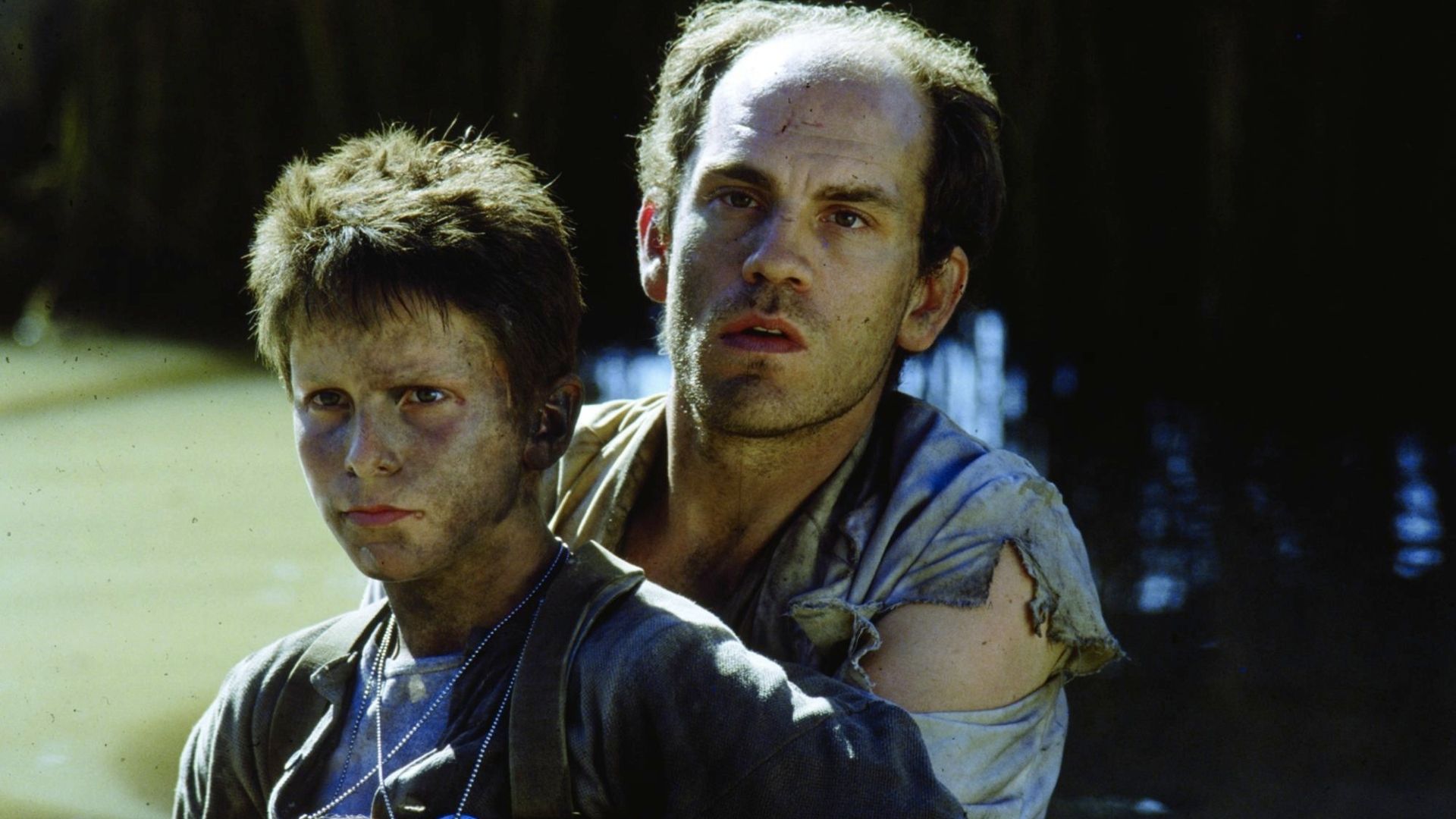
As a film buff, I’ve noticed a pattern with great directors: they’re willing to try anything, but they usually have a genre they really excel at. Scorsese practically owns the gangster movie – no offense to Coppola, of course! And Ridley Scott? Few can touch his historical dramas. But Steven Spielberg… war just seems to resonate with him deeply. He’s directed seven full-length war movies and three miniseries, and even after nearly forty years, his 1987 film, Empire of the Sun, still packs a powerful punch – it feels as immediate and impactful as a rifle shot.
It took Steven Spielberg a surprisingly long time to create a truly impactful war film. Though he’d made comedies like 1941 in the 1970s, and audiences had loved his movies for over ten years before Empire of the Sun, it always seemed inevitable he’d tackle the difficult subject of war. This fascination stems from his father, a WWII veteran, who frequently shared stories of his experiences fighting in Burma with young Spielberg. Surrounded by veterans through his father and his friends, Spielberg grew up immersed in war stories. But what sets his initial foray into the genre apart?
‘Empire of the Sun’ Wasn’t Originally Meant for Steven Spielberg
Warner Bros.
David Lean, the director famous for films like The Bridge on the River Kwai, was initially slated to direct Empire of the Sun, with Steven Spielberg producing. However, Lean decided to pass on the project because he wasn’t enthusiastic about it. According to Joseph McBride’s biography, Steven Spielberg: A Biography Book, Lean explained that…
I spent roughly a year working on the project, but ultimately I abandoned it because it felt too much like a personal diary.
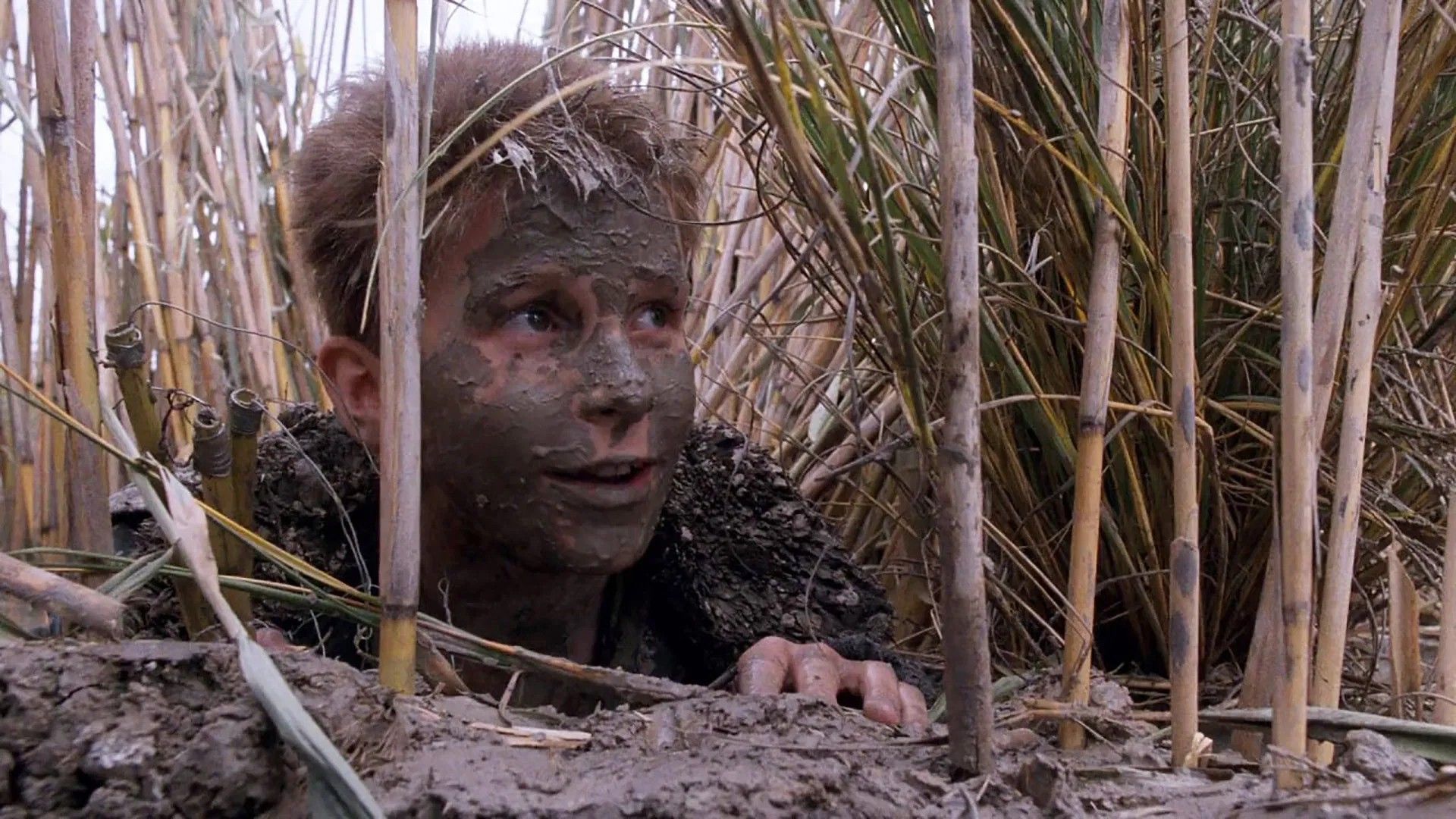
Spielberg was excited to direct the film, as he’d loved David Lean’s The Bridge on the River Kwai – another movie set in a Japanese prisoner of war camp – when he was growing up. Although prisoner of war stories became more common in the 1980s, many were fairly predictable, focusing on the Vietnam War and starring action heroes like Chuck Norris and Sylvester Stallone who always seemed to win without facing much consequence. Empire of the Sun offered something different, both in its setting and in its focus on a unique character.
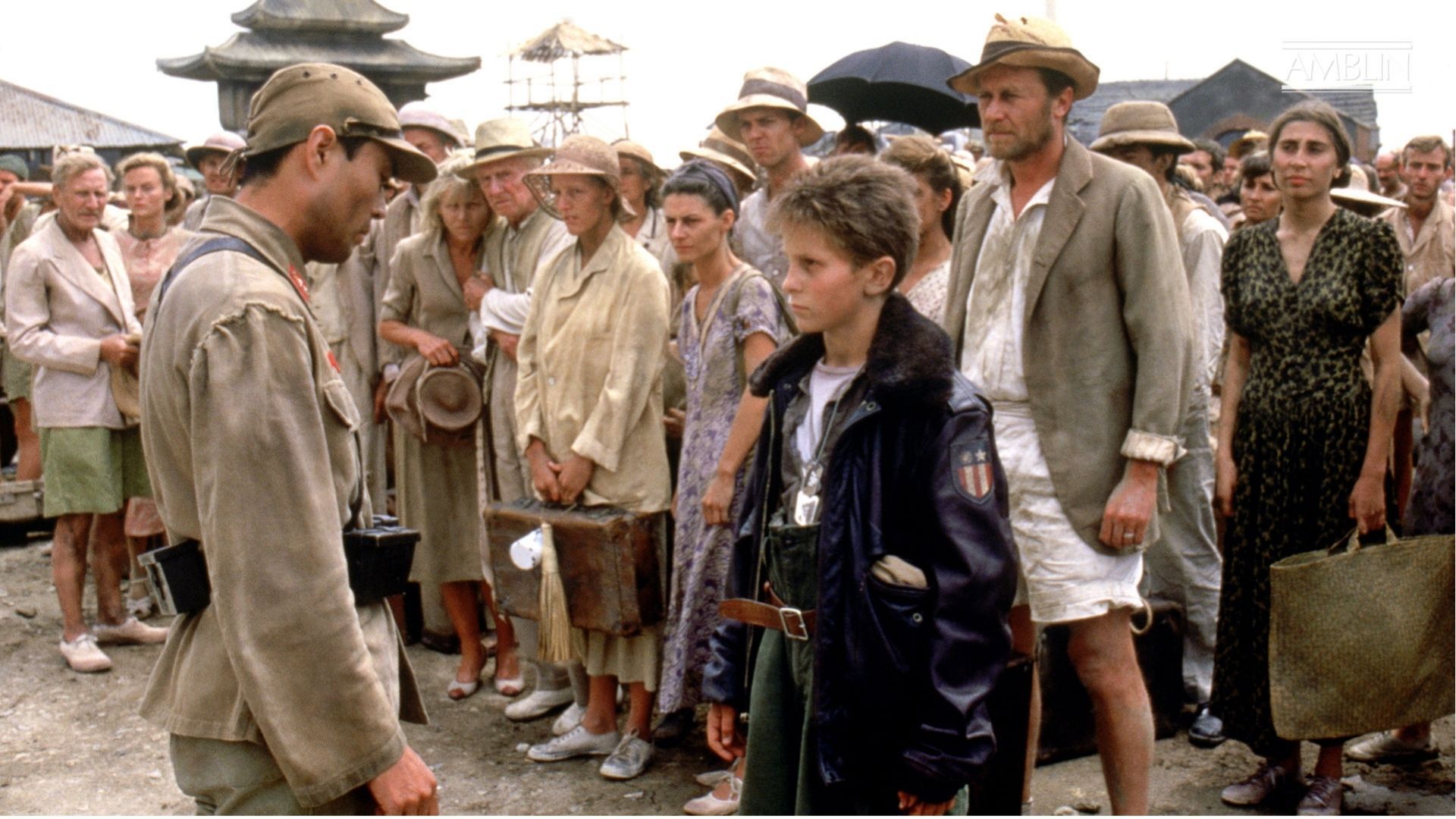
The film centers around Jim Graham, a privileged British schoolboy living with his family in Shanghai, China. Their comfortable life is shattered when Japan attacks Pearl Harbor and begins occupying China. During the chaotic evacuation, Jim gets separated from his parents. After getting lost, he falls in with a group of Americans who try to exploit him, and they are all captured and sent to a Japanese internment camp in Suzhou. The story then follows Jim’s struggle to survive within the camp.
‘Empire of the Sun’ Paints a Perfect Picture of Obliviousness, Alienation, Separation, and Growth
Warner Bros.
Steven Spielberg consistently avoids simple stories and flashy effects, creating a unique and engaging style of filmmaking. His movies delve into complex ideas about the human mind and spirit, offering a viewing experience that’s often challenging, but ultimately deeply satisfying. Watching a Spielberg film feels like a powerful journey into the depths of what it means to be human.
Although Empire of the Sun works well as a World War II film, it’s also a touching story about losing innocence and the strength to keep going. The main character, Jim, feels surprisingly familiar. He embodies the way children are often unaware of the serious problems around them, and how they eventually learn and grow. Even as a prisoner of war, Jim remains disconnected from the conflict itself. He admires the Japanese pilots, not realizing they’re the reason for his suffering. This reflects how many of us, as children, looked up to people who weren’t necessarily good influences – simply because they seemed exciting and courageous.
Spielberg consistently highlights the damaging effects of separating children from their parents, a theme he’s seen firsthand. He’s spoken about how his own parents’ divorce when he was a teenager deeply affected him, telling The New York Times that separation is a profoundly painful experience. This personal connection explains why he often explores this storyline in his films, including titles like The Sugarland Express, Close Encounters of the Third Kind, E.T. the Extra-Terrestrial, The Color Purple, Poltergeist, 1941, and Raiders of the Lost Ark.
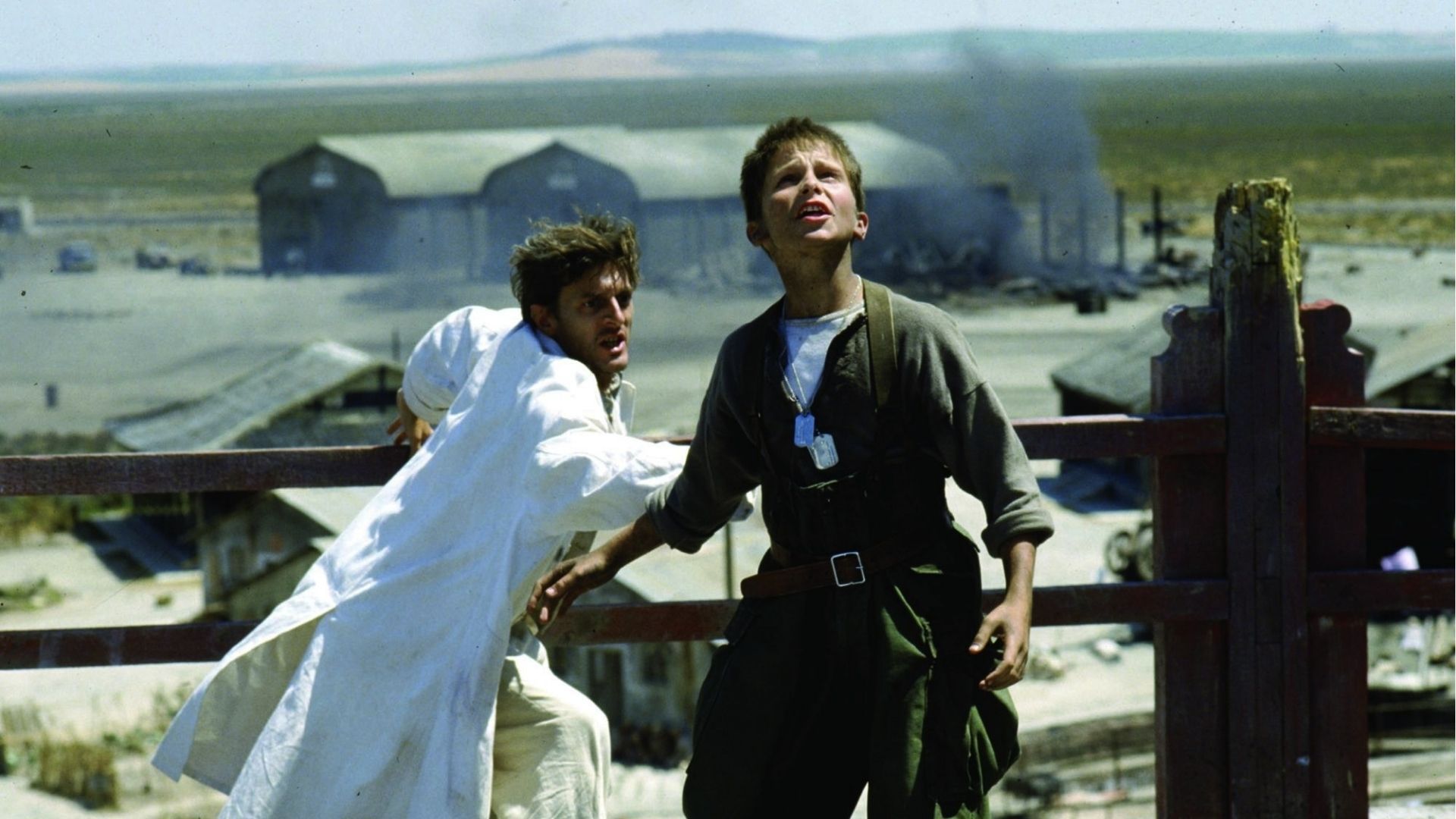
As Jim matures, his viewpoint shifts. He becomes fascinated by the American planes – Mustangs and B-29s – flying overhead. Witnessing the distant flash of the atomic bomb over Nagasaki is a turning point for him, symbolizing the loss of his innocence. He now understands the world’s harsh realities and breaks free from the limitations he’d previously placed on himself.
‘Empire of the Sun’ Is Even More Enjoyable Today Because of Christian Bale
Warner Bros.
It’s impossible to discuss how great Empire of the Sun is without acknowledging Christian Bale’s incredible performance. While some of the movie’s deeper meanings reveal themselves with multiple viewings, Bale is captivating from the very beginning. It’s particularly special to watch him in this role, as he’s one of the rare child actors who successfully avoided the pitfalls of fame.
Young actors are easily shaped by directors, much like clay. However, they often end up losing their individuality as their careers progress, and many child stars see their success disappear as they grow older. Christian Bale is a notable exception, consistently delivering impressive performances. In this film, he showcases his incredible range, stripping away any outward display of emotion to reveal the character’s true feelings. Bale’s powerful and moving performance allows the audience to deeply connect with his character, making the movie intensely emotional and impactful. For most of the film’s two and a half hours, we experience the same intense physical and emotional state as he does. When his character finally finds freedom, we share in a powerful and liberating sense of joy.
Subscribe for richer Spielberg and classic-film insight
Dive deeper into filmcraft—subscribe to the newsletter for thoughtful analysis of directors, wartime cinema, performances, and the technical decisions that make classics endure. Get film-focused essays that sharpen your appreciation.
J.G. Ballard, the author of the original book and a former resident of British-occupied China as a child, was very impressed with Christian Bale’s acting, noting the actor resembled him in his youth. Though over 4,000 actors auditioned for the role, Bale got a boost when Amy Irving, who was married to director Steven Spielberg at the time, suggested him. Bale and Irving had previously worked together on the television film Anastasia: The Mystery of Anna.
Beyond its story, Empire of the Sun is remarkable for its technical skill and historically accurate depiction of the Second Sino-Japanese War during World War II. Spielberg meticulously researched the period, even having four planes modified to convincingly resemble Japanese aircraft. He also insisted on using cutting-edge camera technology, wanting the film to look good for generations to come. This dedication to detail makes the movie visually stunning, even by today’s standards.
Steven Spielberg considers Empire of the Sun to be a particularly significant film in his career. It received multiple Academy Award nominations, including one for its stunning visuals, and continues to resonate with viewers. Each time you watch it, the film offers new layers of meaning, whether you see it as a gripping story about prisoners of war or a thoughtful exploration of the challenges humanity faces. It’s a truly masterful work.

Found an error? Send it info@movieweb.com so it can be corrected.
Read More
- United Airlines can now kick passengers off flights and ban them for not using headphones
- Crimson Desert: Disconnected Truth Puzzle Guide
- All 9 Coalition Heroes In Invincible Season 4 & Their Powers
- Mewgenics vinyl limited editions now available to pre-order
- Assassin’s Creed Shadows will get upgraded PSSR support on PS5 Pro with Title Update 1.1.9 launching April 7
- Grok’s ‘Ask’ feature no longer free as X moves it behind paywall
- Grey’s Anatomy Season 23 Confirmed for 2026-2027 Broadcast Season
- Viral Letterboxd keychain lets cinephiles show off their favorite movies on the go
- Crimson Desert Guide – How to Pay Fines, Bounties & Debt
- All Golden Ball Locations in Yakuza Kiwami 3 & Dark Ties
2026-02-25 15:36