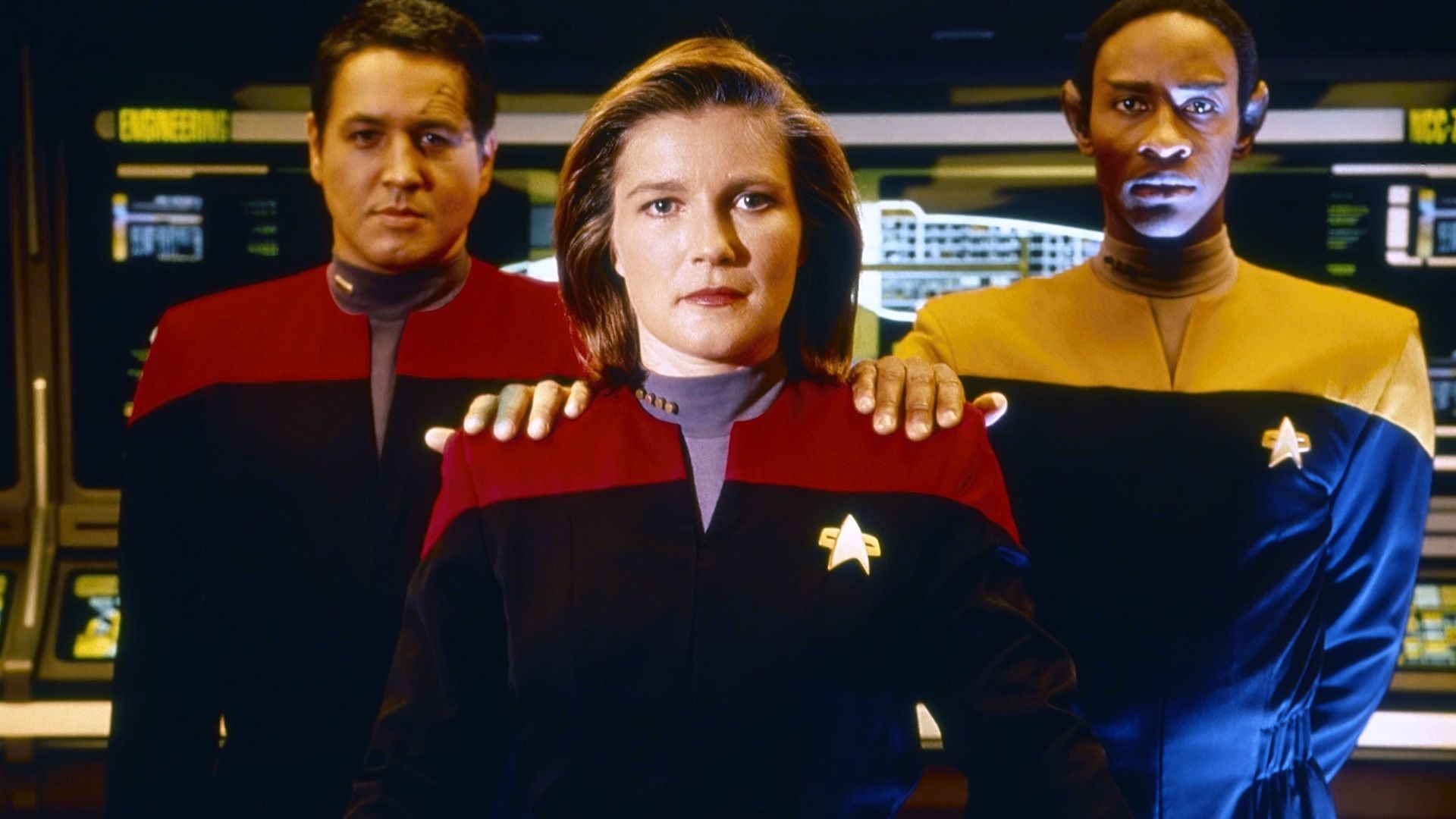
The series initially aimed to return to a format with self-contained episodes that focused on exploration. This willingness to avoid long, ongoing storylines is what allowed episodes like Season 2’s “The Thaw” to really stand out. The show’s writers had the flexibility to try out unusual and imaginative ideas in episodes that could be enjoyed on their own.
This episode was genuinely unsettling, exploring fear through a self-contained virtual world that didn’t require any prior knowledge of the series. Voyager often aimed to be accessible to new viewers, allowing them to start watching at any point, and “The Thaw” really leaned into that idea. Both the visuals and the overall mood of this episode were different from what you’d normally see on the show, creating a uniquely surreal and frightening experience, and the fact that it didn’t rely on past storylines added to that effect.
This Star Trek: Voyager Episode Swaps Sci-Fi Realism for Surreal Horror
Many fans believe Star Trek: Voyager is one of the most overlooked series in the franchise. While it received a lot of criticism when it first aired, it’s gained a new appreciation over time. Looking back, the show was more than just a typical space exploration series; episodes like “The Thaw” demonstrated its ability to be both innovative and genuinely creepy.
This episode follows a group of people who are stuck inside a virtual reality world they built themselves. What started as a way to escape has turned into a terrifying trap they can’t get out of, fueled by their shared thoughts and feelings. The simulation feels completely real to them, becoming a kind of mental prison. Even though it isn’t actually real, the things that happen inside the simulation deeply affect them emotionally and psychologically.
Even before the story really gets going, “The Thaw” immediately stands out from typical Star Trek: Voyager episodes with its strange and colorful visuals. Instead of the show’s usual clean, simulated look, it feels like a bizarre, unsettling dream. As the characters’ minds begin to unravel, the world they enter feels more like a disturbing circus than anything familiar. It’s a striking departure from the show’s standard visual style.
What makes “The Thaw” so effective isn’t just its horror, but the unsettling feeling created by its unique look and feel. The episode’s setting is intentionally confusing, bizarre, and dreamlike – a place where the normal rules of Star Trek don’t apply. It feels less like a futuristic spaceship and more like a strange, psychedelic play, pulling both the crew and viewers out of the familiar world.
The visual style of this Star Trek: Voyager episode is different from most, but it intentionally resembles the look of early Star Trek and shows like Lost in Space. This isn’t a departure from the series’ usual style, but rather a deliberate callback to classic science fiction storytelling. By referencing the past, the episode feels like a meaningful part of Star Trek’s overall history.
Director Marvin M. Rush deliberately used a dramatic filming style to create a sense of psychological immersion. When the characters lost the protection of their ship and its technology, they were forced to confront their deepest fears. The story uses fear to connect with viewers’ personal anxieties, and the setting feels like a disturbing nightmare.
Even before anything dramatic happens, the world of the episode feels unsettling and dangerous. The strange visuals and eerily quiet characters immediately create a surreal and ominous mood. The environment itself feels fragile and unpredictable, leaving a constant sense of unease. This unusual setting is key to how the episode examines the feeling of fear.
Fear takes the form of The Clown, a terrifying entity within the simulation. Unlike other threats, The Clown isn’t controlled by the survivor’s mind or actions – it operates independently. It’s essentially a digital god who feeds on the crew’s fears, preventing them from escaping and ensuring its own survival. The Clown needs people trapped inside the simulation to continue existing.
The Clown Shines in the Simulated Horror Circus in This Episode of Voyager
Michael McKean, a well-known character actor who many fans recognize, plays The Clown in the Star Trek: Voyager episode “The Thaw.” In the episode, Voyager finds a planet devastated by an environmental disaster and initially detects no life. However, they soon discover a small group of survivors hidden deep underground in a state of suspended animation.
The crew moved the stasis pods to the cargo bay and discovered that some people inside were still conscious. These pods were connected to a computer system that linked everyone’s minds. They had entered stasis to sleep through a dangerous planetary event, intending to wake up when it was safe again. However, they’ve been asleep far longer than expected – over five years past their scheduled awakening.
The crew discovered that the people inside the simulation built a system to signal when it’s time to wake up, but it hasn’t been activated yet. To find out why they’re choosing to stay asleep, the crew needs to enter the simulation themselves by using the empty pods and questioning the inhabitants.
The simulation was created to keep people’s minds stimulated while they were in stasis, but Kim and Torres soon realized something was terribly wrong. It wasn’t the peaceful escape it was meant to be; instead, they found a twisted, carnival-like world where the survivors were being held prisoner. The simulation had turned their shared fears into reality.
The Clown embodies the survivors’ deepest fears and controls their reality within the simulation. He preys on their minds, knowing that what happens inside feels genuinely real to them. We discover that two people who died in the pods actually suffered fatal heart attacks while experiencing the simulation.
Michael McKean truly brings this idea to life with his portrayal of the clown. He’s dramatic and exaggerated, but always feels believable and never silly. There’s a subtle sense of danger in everything he does and says. The concept of a fear-based clown is reminiscent of , and that’s a fitting comparison. Like , this clown embodies fear itself and needs people to believe in it to exist.
McKean is a character who thrives on being noticed. He represents how giving in to fear only makes it worse. He compels those he’s captured to focus entirely on him, essentially fueling his power and making him stronger. While he has many captives he can threaten, he understands he can’t kill them all – doing so would mean his own destruction.
During one attempt, she comes up with a plan to project a holographic version of herself into the simulation. This is meant to deceive The Clown and convince him to release the survivors and her crew. She understands that the best way to overcome fear is to face it head-on, so she avoids both fearing and flattering The Clown. Deprived of the emotional reaction he craves, he starts to disappear.
The episode “The Thaw” concludes with the simulation ending and the Clown disappearing, but it suggests that fear itself never truly vanishes. The Clown was just one form it took – the story emphasizes that fear is a fundamental, ancient part of being human. Though this particular threat is overcome, fear will always remain.
This story doesn’t offer a typical happy ending or sense of closure. The dangerous situation isn’t unique and could easily happen again, even without a complex setup like the simulation. “The Thaw” emphasizes that our own thoughts and fears can be our biggest obstacles. The villain, known as The Clown, is actually a creation of the original survivors’ own minds.
This Star Trek: Voyager episode is particularly disturbing because it doesn’t offer a traditional, hopeful resolution. It’s a pivotal moment for Captain Janeway, who deals with a difficult situation by suppressing her own feelings. She bravely faces her fears head-on, demonstrating the qualities of an exceptional Starfleet captain. Her strength in this episode lies in her ability to confront and overcome the very emotion she’s battling.
Read More
- United Airlines can now kick passengers off flights and ban them for not using headphones
- Katanire’s Yae Miko Cosplay: Genshin Impact Masterpiece
- All Itzaland Animal Locations in Infinity Nikki
- How to Complete Bloom of Tranquility Challenge in Infinity Nikki
- How to Get to the Undercoast in Esoteric Ebb
- Gold Rate Forecast
- A Dark Scream Theory Rewrites the Only Movie to Break the 2-Killer Rule
- All Golden Ball Locations in Yakuza Kiwami 3 & Dark Ties
- Fire Force Season 3 Part 2 Episode 24 Release Date, Time, Where to Watch
- BloxStrike codes (March 2026)
2026-01-04 02:08