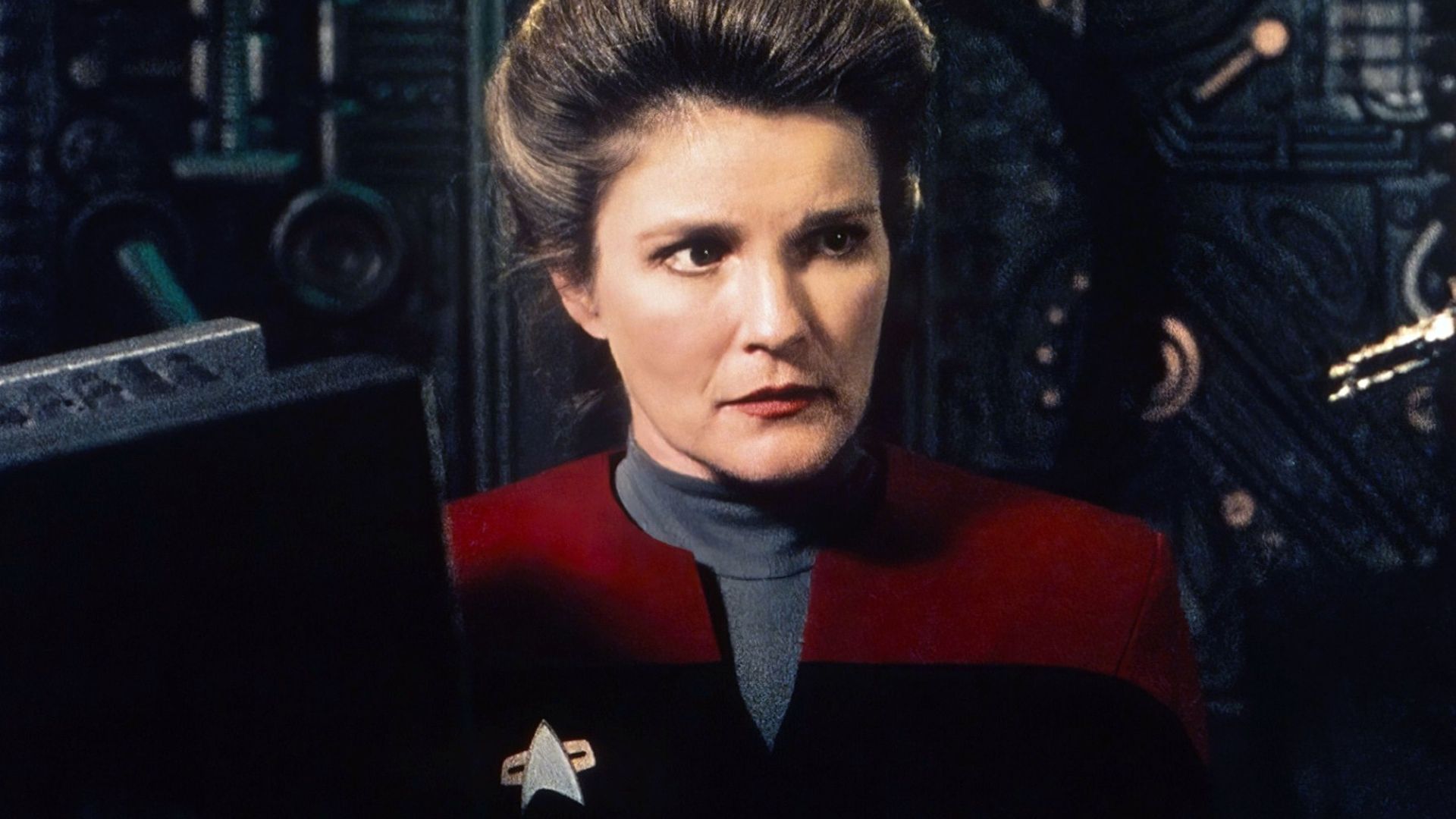
Despite being set in space, Star Trek often mirrored the social issues of its time. The original series tackled topics like the Cold War and racism, The Next Generation focused on environmentalism and economic concerns, and Deep Space Nine addressed homophobia and prejudice. In fact, most Star Trek episodes and movies can be seen as stories that represent real-world problems.
This year marks the 60th anniversary of Star Trek, and while some episodes haven’t held up over time, one remains strikingly relevant: Star Trek: Voyager‘s “Living Witness” (Season 4, Episode 23). The episode deals with the dangers of misinformation and manipulation, a theme that feels particularly important today with the increasing prevalence of AI, deepfakes, and fake news. It’s a surprisingly accurate reflection of our current world.
Living Witness Explores the Consequences of Misinformation
The “Living Witness” episode, which first aired in 1998, begins in a reality different from the one we know. The crew of the Voyager is approached by Daleth, an ambassador from the Vaskan people, for assistance in their conflict with the Kyrians. However, the Vaskans shockingly respond by committing genocide against the Kyrians using biological weapons, and they also execute Tedran, a hero of the Kyrian resistance.
Fans of the show will quickly understand this isn’t the actual Voyager. The new Starfleet motto – “When diplomacy fails, violence is the only option. Use force without hesitation” – is a clear giveaway. It’s soon explained that the scene is a holographic simulation created by Quarren, who runs a Kyrian museum.
Seven centuries after the initial events, Quarren reveals that Voyager inadvertently started the current war between the Kyrians and another faction. He acknowledges his explanation relies on limited information and some guesswork, but the Kyrians believe the holographic record he’s referencing is trustworthy and correct.
The Kyrians and Vaskans discover the truth about what happened only after Quarren brings back the sole surviving witness. It turns out Voyager wasn’t responsible for the deaths of either species; they simply provided medical aid to the Vaskans in return for dilithium crystals.
“Living Witness” captures the spirit of the late 1990s, a time when cable news and the early internet were changing how people got their news. For the first time, people were exposed to many different and often conflicting accounts of the same events. Simultaneously, the end of the Cold War led to the release of new information about the actions of both Eastern and Western countries, prompting historians to re-examine and revise their understanding of the war.
This episode examines these themes by showing how the Kyrians misunderstand Voyager and rely on inaccurate historical accounts. Crucially, even though the Voyager crew isn’t directly seen, the story highlights how altered history impacts people’s lives.
Beyond portraying the Voyager crew as aggressors, this false information impacts the two species at war. The Doctor makes it clear that the conflict has persisted for so long because both sides are fighting over a fabricated story they believe to be true.
“Living Witness” illustrates how easily historical accounts can be mistaken for actual facts. When a single error gets repeated and widely believed, it can become accepted as the truth. This can lead to damaging consequences, both for the people directly affected and for those who come to believe the false information.
Living Witness is More Relevant Today Than Ever Before
The ‘Living Witness’ episode captured the spirit of its time, especially with the rise of cable and online news. Surprisingly, its message still resonates today, 28 years later. This may explain why, despite consistently strong ratings and reviews, many fans now consider it to be one of the very best.
Misleading information isn’t a recent problem – people have been trying to influence others with false claims for a long time. What’s different now is how quickly and widely this kind of information spreads, leading many to question the accuracy of almost everything they see online.
Honestly, it’s getting a little scary how real these AI-generated images and videos look now! I’ve seen people posting pictures that look like they’re with their favorite stars, and it’s hard to tell what’s real. Plus, people are building whole stories around characters that don’t even exist, and they can even copy voices so perfectly it’s unbelievable.
The themes explored in the “Living Witness” episode feel even more relevant now than when it first aired. Similar to what happens in the show, public figures today are often targeted by damaging videos and images. False claims and stories are spread to harm their reputations, often for entertainment or to stir up controversy.
I’ve been really disturbed by how easily deepfakes are spreading. Back in 2022, during the war in Ukraine, a fake video circulated claiming President Zelenskyy was telling his troops to give up – it was incredibly damaging. And just recently, I read that over 100 fake ads on Facebook used Rishi Sunak’s face to promote investment scams. It’s scary how convincing these videos can be, and I even saw one circulating that falsely showed someone discussing antisemitism. It really makes you question what you see online now.
Beyond these issues, several celebrities like Taylor Swift and Selena Gomez have been targeted by deepfake pornography. These fake images and videos, often showing stars in sexually explicit or compromising positions, have spread online, harming their reputations and leading to harassment.
You know, as a movie fan, it really struck me how “Living Witness” showed a split in the audience, and honestly, it feels so relevant today. It’s like we’re seeing the same thing happen in real life – people jump to conclusions based on stuff they read online, immediately getting angry at whoever’s being targeted. Then you’ve got others trying to calmly explain it’s all fake, but it’s like talking to a wall. It’s just a really frustrating divide, and the movie captured that perfectly.
Though perhaps not as shocking today as when it first aired, “Living Witness” still serves as a crucial reminder in a world filled with false information, altered media, and disputes over what’s real. The episode is disturbingly relevant, clearly showing how misinformation affects both those targeted by it and those who consume it, and it compels viewers to face the unsettling truth: truth itself is fragile when exploited by malicious actors.
Read More
- United Airlines can now kick passengers off flights and ban them for not using headphones
- Gold Rate Forecast
- How to Solve the Glenbright Manor Puzzle in Crimson Desert
- 8 Actors Who Could Play Blackbeard In One Piece Live-Action Season 3
- All Golden Ball Locations in Yakuza Kiwami 3 & Dark Ties
- How to Get to the Undercoast in Esoteric Ebb
- How to Complete Bloom of Tranquility Challenge in Infinity Nikki
- Binance’s Bold Bitcoin Bet: $1B SAFU Fund Dives Into Crypto’s Deep End
- All MLB The Show 26 Quirks & What They Do
- Blind Tekken 8 player reaches one of the game’s highest ranks after two years of grinding
2026-02-12 04:09