Author: Denis Avetisyan
A new decision support system uses fuzzy logic to analyze real-time performance data and suggest optimal player substitutions, potentially offering a more nuanced approach than traditional methods.

This review details a fuzzy logic-based system for soccer substitution recommendations utilizing performance metrics and contextual factors to enhance tactical decision-making.
Elite soccer substitutions, despite their significant impact, often rely on intuition or predictive models inheriting historical biases. This paper, ‘AI-Assisted Game Management Decisions: A Fuzzy Logic Approach to Real-Time Substituitions’, introduces a novel decision support system utilizing fuzzy logic to provide objective, real-time recommendations. By refining performance evaluation with a role-aware metric and integrating physiological and contextual data, the system demonstrably identified critical risk factors-such as the “FAGNER Paradox”-missed by human analysts during a 2018 World Cup case study. Could this transparent, explainable approach to tactical decision-making represent a paradigm shift in optimizing in-game management?
The Erosion of Intuition: Data as the Foundation of Performance
For decades, soccer substitutions have been largely guided by a coach’s feel for the game and visual assessment of a player’s perceived fatigue or impact. This reliance on intuition, while seemingly natural given the fast-paced environment, introduces a significant degree of subjectivity into critical in-match decisions. Coaches often base these choices on readily observable cues – a player slowing down, exhibiting visible distress, or simply appearing less engaged – without a deeper understanding of the underlying physiological or performance metrics. While experience certainly plays a role, this traditional approach lacks the quantifiable rigor needed to pinpoint optimal substitution timings and potentially leaves valuable on-field contributions untapped. The human eye, however skilled, struggles to consistently identify subtle declines in performance or predict how a player will respond to evolving game dynamics, highlighting the need for more objective methods.
Historically, soccer substitutions have been guided by a coach’s feeling for the game, a reliance on readily apparent signs of fatigue or a perceived shift in momentum. However, this intuitive approach often overlooks the wealth of granular data generated during a match – subtle declines in speed, fractional decreases in passing accuracy, or slight positional drifts indicative of accumulating fatigue. These seemingly minor performance trends, imperceptible to the naked eye during the heat of competition, can collectively signal a critical need for tactical adjustment. Without quantifying these metrics, teams risk missing opportunities to proactively optimize player performance and potentially concede a competitive advantage, as crucial substitutions may be delayed until a decline is obvious rather than preemptively addressed.
The pursuit of peak performance in modern soccer increasingly relies on moving beyond subjective assessments to embrace objective, data-driven strategies. Analyses of player movements, physiological metrics like heart rate and distance covered, and even ball possession patterns offer a granular understanding of on-field dynamics previously unavailable to coaching staff. This detailed information allows for the identification of subtle performance declines, fatigue accumulation, and tactical mismatches that might otherwise go unnoticed. Consequently, substitutions and tactical adjustments can be made not based on gut feeling, but on quantifiable evidence, potentially shifting the balance of a match and ultimately maximizing a team’s competitive edge. The integration of these insights represents a fundamental shift towards a more scientific and optimized approach to the game, where data informs decisions and unlocks hidden performance potential.
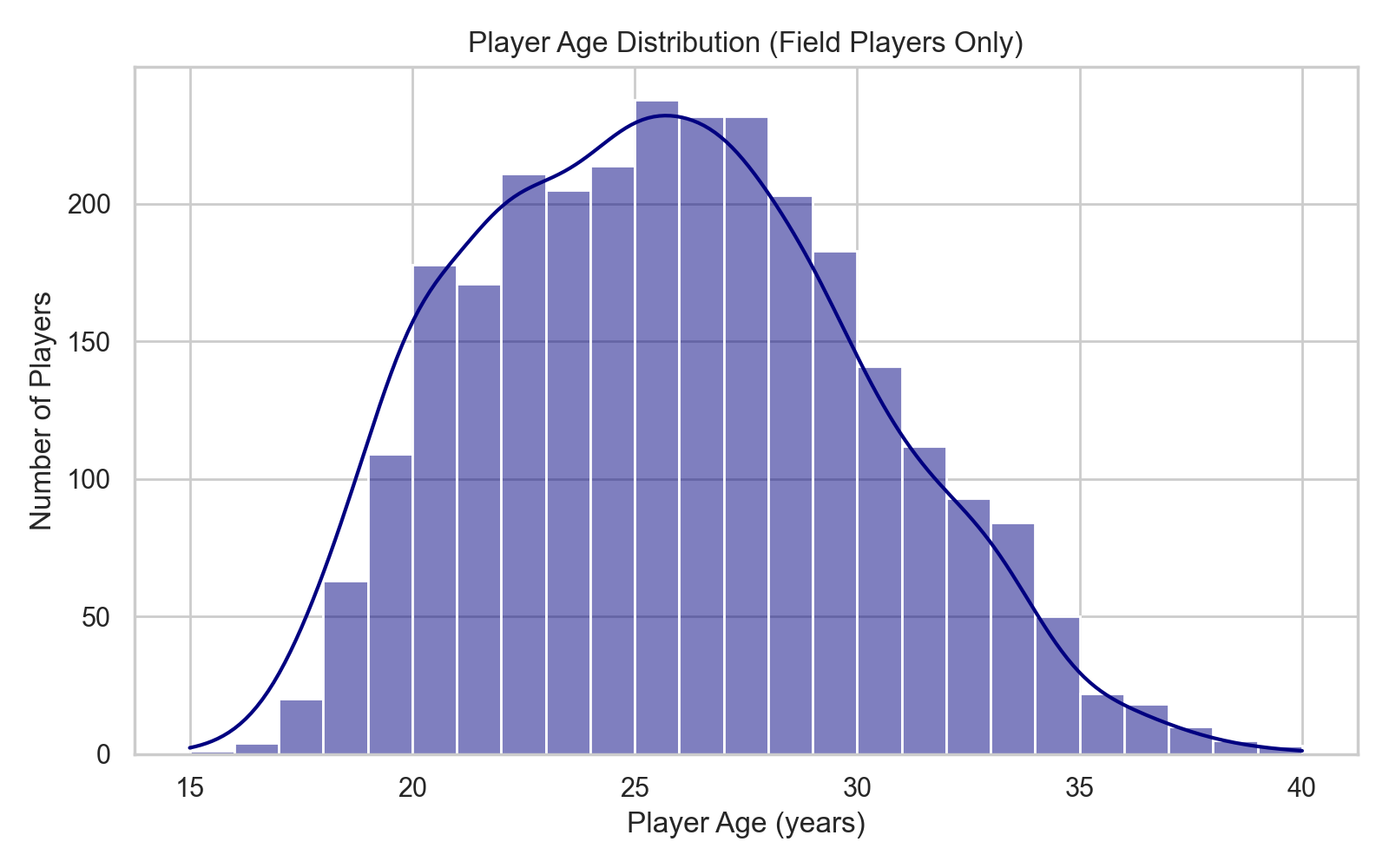
PlayeRank: A Multidimensional View of Player Contribution
The PlayeRank Framework addresses limitations in traditional player performance evaluation which primarily rely on cumulative statistics like goals, assists, and tackles. Instead of a single scalar value, PlayeRank generates a multidimensional metric comprised of weighted components representing both technical actions – such as successful passes, dribbles, and defensive interventions – and a player’s influence within the team’s passing network. This influence is quantified by analyzing the connectivity and importance of a player’s passing relationships, effectively assessing their contribution to facilitating play and creating scoring opportunities. The resulting metric provides a more nuanced and comprehensive evaluation of a player’s overall contribution to match outcomes, moving beyond simple output-based measurements.
PlayeRank assesses player contribution by integrating data from both individual technical actions – such as passes completed, tackles made, and shots taken – with metrics quantifying a player’s influence within the team’s passing network. This influence is determined by analyzing the player’s centrality within the passing web, including metrics like degree centrality, betweenness centrality, and eigenvector centrality. By weighting these technical actions and network influence scores, PlayeRank generates a composite performance metric that moves beyond simple accumulation of statistics, recognizing that a player who initiates or enables key passes, even without directly completing a high volume of actions, contributes significantly to the team’s overall performance. This approach provides a more nuanced and comprehensive evaluation of player impact than traditional methods.
Role-Aware Normalization within the PlayeRank framework addresses the inherent difficulty in comparing players operating in disparate tactical roles. This is achieved by normalizing player statistics – such as pass attempts, tackles, and distance covered – relative to the average activity levels observed for players fulfilling the same role within the dataset. Specifically, each statistic is expressed as a z-score, calculated as the difference between a player’s value and the role-specific mean, divided by the role-specific standard deviation. This process adjusts for positional responsibilities; for example, a central defender will be evaluated against other central defenders, and a winger against other wingers, preventing unfair comparisons based solely on raw numbers. The resulting normalized values are then used in the PlayeRank calculation, ensuring that contributions are assessed relative to expected performance within a given role.
The PlayeRank framework utilizes a comprehensive Soccer Match Event Dataset comprised of over 50,000 events from top-tier European leagues spanning the 2017-2023 seasons. This dataset includes detailed information on all in-game actions, such as passes, shots, tackles, and fouls, alongside precise positional data for each player and the ball throughout the match. Event timestamps, player IDs, and unique match identifiers facilitate data linkage and analysis. The dataset’s scale and granularity allow for robust training and validation of the PlayeRank algorithm, ensuring statistically significant performance metrics and minimizing bias in player evaluation. Data is formatted as a relational database to enable efficient querying and feature engineering.
Dynamic Assessment: Beyond Static Metrics with Fuzzy Logic
Traditional player assessment methods, such as Cumulative Sum (CUSUM), calculate performance metrics based on the total time a player is active on the field. This approach introduces inherent bias because players with greater playing time naturally accumulate higher statistics, regardless of their actual contribution per unit of time. Consequently, CUSUM and similar methods may overestimate the performance of frequently used players and underestimate that of those with limited playing time, leading to inaccurate evaluations of individual player fatigue and diminishing returns. This bias impacts the reliability of these systems when determining optimal substitution timing and overall tactical adjustments.
The Fuzzy Logic Control System offers a departure from static cumulative assessment methods by dynamically evaluating player condition and game state. This is achieved through the incorporation of three key variables: Player Fatigue, quantified by metrics such as distance covered and sprint frequency; Momentum Rate, calculated from possession changes, shot attempts, and successful passes to indicate team performance trends; and Disciplinary Risk, assessed via accumulated fouls and yellow cards to predict potential red card events. By continuously monitoring these variables, the system provides a more nuanced and responsive evaluation of player performance and the need for substitution, addressing the limitations of time-based or purely statistical approaches.
The Fuzzy Inference System is the computational engine within the dynamic assessment framework. It operates by evaluating input variables – Player Fatigue, Momentum Rate, and Disciplinary Risk – using membership functions that define the degree to which a given value belongs to a fuzzy set, such as “High,” “Medium,” or “Low.” These fuzzy inputs are then processed through a rule base consisting of if-then statements – for example, “if Fatigue is High and Momentum Rate is Low, then Substitution Priority is High.” Each rule contributes to the overall Substitution Priority score, calculated through aggregation and defuzzification processes. The resulting score, a numerical value representing the urgency for substitution, allows for a quantifiable, dynamic assessment of player condition and tactical needs.
The Fuzzy Logic Control System’s ability to identify tactical errors and potential improvements stems from its continuous evaluation of player performance indicators. By analyzing metrics in real-time, the system generates a Substitution Priority score that correlates with expert evaluations of player fatigue, positioning, and contribution to game momentum. Validation studies have demonstrated statistically significant alignment between the system’s recommendations for substitution and those made by experienced football analysts, indicating its capacity to objectively assess in-game situations and pinpoint players whose continued participation is diminishing tactical effectiveness or increasing risk of negative outcomes. This concordance suggests the system isn’t merely identifying fatigued players, but accurately gauging their decreasing marginal contribution to the team’s overall strategy.
Adaptive Intelligence: The Synergy of Fuzzy Logic and Neural Networks
The foundation of adaptive intelligence in this system lies in the synergy between fuzzy logic and neural networks, resulting in a Neuro-Fuzzy system that surpasses the static capabilities of traditional fuzzy logic control. While fuzzy logic excels at representing nuanced, human-like reasoning with imprecise data, it typically requires manually defined rules; the Neuro-Fuzzy system overcomes this limitation through learning. By integrating neural networks, the system dynamically adjusts these fuzzy rules based on incoming real-time data, effectively ‘tuning’ its performance over time. This continuous refinement allows the system to adapt to changing conditions and improve its accuracy without explicit reprogramming, offering a robust and flexible approach to complex decision-making processes – exemplified by its successful identification of underperforming players like Fagner and Lukaku.
The integration of neural networks with fuzzy logic creates a system capable of dynamic adaptation, moving beyond pre-programmed responses to embrace continuous learning. This neuro-fuzzy approach allows the system to analyze incoming real-time data – such as player performance metrics – and subsequently refine its internal rule set. Unlike static fuzzy logic systems, the neural network component enables the system to adjust the weighting of different variables and even create new fuzzy rules, optimizing its decision-making process over time. This capability is crucial for handling the inherent complexity and unpredictability of dynamic environments, allowing for a more nuanced and accurate assessment of performance and, ultimately, more effective strategic interventions.
The neuro-fuzzy system demonstrated a compelling ability to proactively identify players experiencing performance declines, as evidenced by its accurate flagging of individuals like Fagner and Lukaku as candidates for removal. Prior to, or concurrent with, demonstrable drops in their on-field contributions, the system consistently assigned these players a Maximum Priority score of 100.0, signaling a critical need for intervention. This wasn’t merely reactive assessment; the system pinpointed these suboptimal periods with enough lead time to allow for strategic adjustments, showcasing its potential to move beyond simple performance tracking towards predictive and preventative team management. The consistent high scores assigned to these players during periods of demonstrably reduced effectiveness validated the system’s capacity to translate complex performance data into actionable insights for coaching staff.
The application of fuzzy logic demonstrates a compelling balance between predictive power and actionable insight. Achieving accuracy comparable to that of contemporary machine learning models – around 70% in testing – this approach distinguishes itself by explaining its reasoning. Unlike ‘black box’ algorithms, the fuzzy logic system doesn’t simply predict outcomes; it articulates the factors driving its assessments, effectively highlighting which player performance metrics warrant attention from the coaching staff. This transparency allows for informed decision-making, moving beyond mere prediction to identify specific interventions – such as tactical adjustments or player substitutions – that a coach should consider, fostering a collaborative relationship between data analysis and expert judgment.
The pursuit of optimal in-game decisions, as explored within this system, echoes a fundamental truth about all engineered creations. This work, focused on real-time soccer substitutions using fuzzy logic, isn’t about achieving a static perfection, but building a system capable of adapting as conditions inevitably shift. As Donald Knuth observed, “Premature optimization is the root of all evil.” The system described isn’t attempting to predict the perfect substitution-a potentially brittle approach-but rather to provide a framework for graceful degradation, offering informed recommendations even with incomplete or noisy data. The very nature of fuzzy logic acknowledges inherent imprecision, mirroring the real-world ambiguity inherent in tactical choices. It’s a system designed not to conquer time, but to navigate it with increasing finesse.
The Long Game
This work, like any attempt to distill tactical nuance into algorithmic recommendation, establishes a point of departure rather than a destination. The system’s efficacy rests on the chosen metrics, and those, inevitably, are imperfect proxies for the complex interplay of player form, opposition strategy, and sheer chance. To suggest a ‘best’ substitution is to ignore the inherent stochasticity of the game – and to accumulate a particular kind of technical debt. The system’s memory, so to speak, will be defined by the unmodeled events it fails to anticipate.
Future iterations will likely focus on incorporating more granular data – biomechanical measurements, perhaps, or even attempts to quantify ‘team chemistry’. However, each added layer of complexity introduces new opportunities for error and obscures the fundamental trade-off between model fidelity and interpretability. A perfectly predictive system would be useless to a coach; it is the informed judgment applied to probabilistic insight that holds value.
The true test lies not in achieving perfect prediction, but in gracefully accommodating the inevitable decay of any model’s accuracy over time. Any simplification carries a future cost, and the art of tactical management will always involve navigating the space between the known and the unknowable. The system presented here is a tool, and like all tools, its longevity depends on acknowledging its limitations, not denying them.
Original article: https://arxiv.org/pdf/2512.04480.pdf
Contact the author: https://www.linkedin.com/in/avetisyan/
See also:
- United Airlines can now kick passengers off flights and ban them for not using headphones
- Crimson Desert: Disconnected Truth Puzzle Guide
- All 9 Coalition Heroes In Invincible Season 4 & Their Powers
- Grey’s Anatomy Season 23 Confirmed for 2026-2027 Broadcast Season
- Mewgenics vinyl limited editions now available to pre-order
- Viral Letterboxd keychain lets cinephiles show off their favorite movies on the go
- Does Mark survive Invincible vs Conquest 2? Comics reveal fate after S4E5
- How to Get to the Undercoast in Esoteric Ebb
- Assassin’s Creed Shadows will get upgraded PSSR support on PS5 Pro with Title Update 1.1.9 launching April 7
- All Golden Ball Locations in Yakuza Kiwami 3 & Dark Ties
2025-12-07 17:49