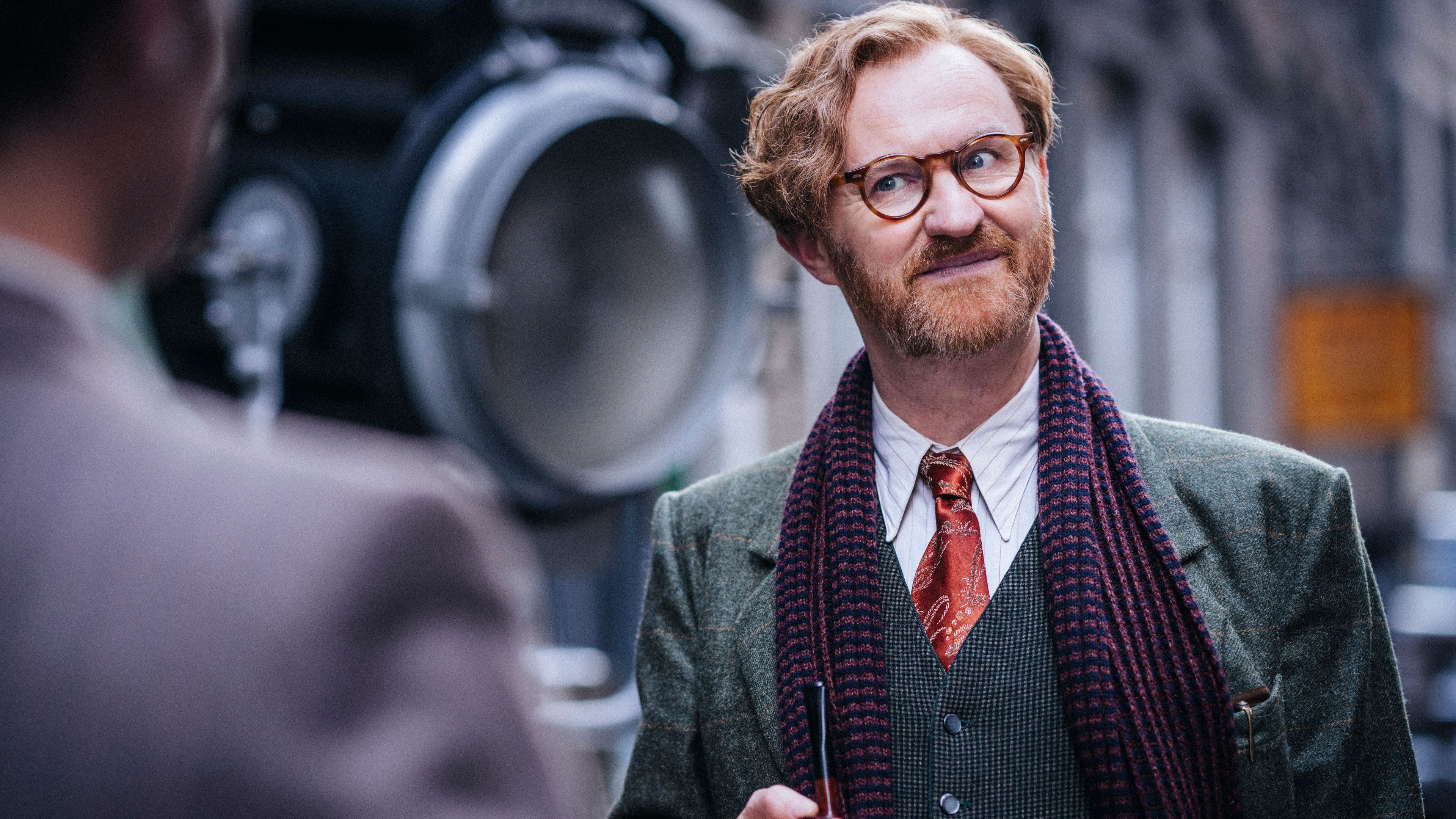
Mark Gatiss, one of the creators of Sherlock, introduces a unique new detective in the British mystery series Bookish. The first season of six episodes will premiere in the US on PBS January 11th. Gatiss stars as Gabriel Book, a bookshop owner who secretly helps the London police solve crimes after World War II, with the blessing of Winston Churchill himself.
When the show launched in the UK in the summer of 2025, it was an instant success, even earning a second season renewal months before the first season aired on U&Alibi. While created and written by Gatiss, Bookish isn’t as fast-paced as his previous hit, Sherlock, it’s clear throughout every episode how much Gatiss loves the work of Arthur Conan Doyle and the mystery genre.
In a recent interview with ScreenRant while discussing his book, Bookish, Mark Gatiss shared that his new detective character was influenced by Sherlock Holmes – whom he called his “first great love” – as well as the works of bestselling mystery writer Agatha Christie and other prominent authors and creators in the detective genre.
ScreenRant asked about the inspiration behind the new series, noting its connection to Sherlock Holmes. They wanted to know if any other fictional detectives or mystery authors influenced the book, its characters – including Inspector Bliss – or the story overall.
I’m a huge fan of detective novels, both classic and modern, but Agatha Christie really stands out – and for good reason. There’s a story about Billy Wilder, the director of the film Witness for the Prosecution. A journalist questioned why he was adapting an Agatha Christie novel, and Wilder apparently became very animated, explaining that while he could easily write Christie’s characters and dialogue, her plots were incredibly complex and ingenious – like perfectly crafted mechanisms. That really hits the nail on the head. Christie just had an endless stream of brilliant ideas. While authors like Dorothy L. Sayers wrote beautifully and created more literary works, their mysteries don’t hold up as well because their plots aren’t quite as strong.
Ideally, a good story has both characters you remember and a smart mystery that keeps you hooked. Agatha Christie is still my top choice, and I think she’s everyone’s. I read a lot of mysteries, especially locked-room puzzles, but John Dickson Carr’s books can be a bit complicated for me – I appreciate the idea more than the actual reading experience. And of course, Sherlock Holmes is a classic – he was the first detective I really loved.
Detectives like Sherlock Holmes, Hercule Poirot, and Benoit Blanc are often considered the best in the world. However, Mark Gatiss’ character, Book, is different. He doesn’t fit the typical mold of a brilliant detective; he’s something else entirely. (The mystery novel Wake Up Dead Man, by John Dickson Carr, heavily influenced the latest Benoit Blanc case.)
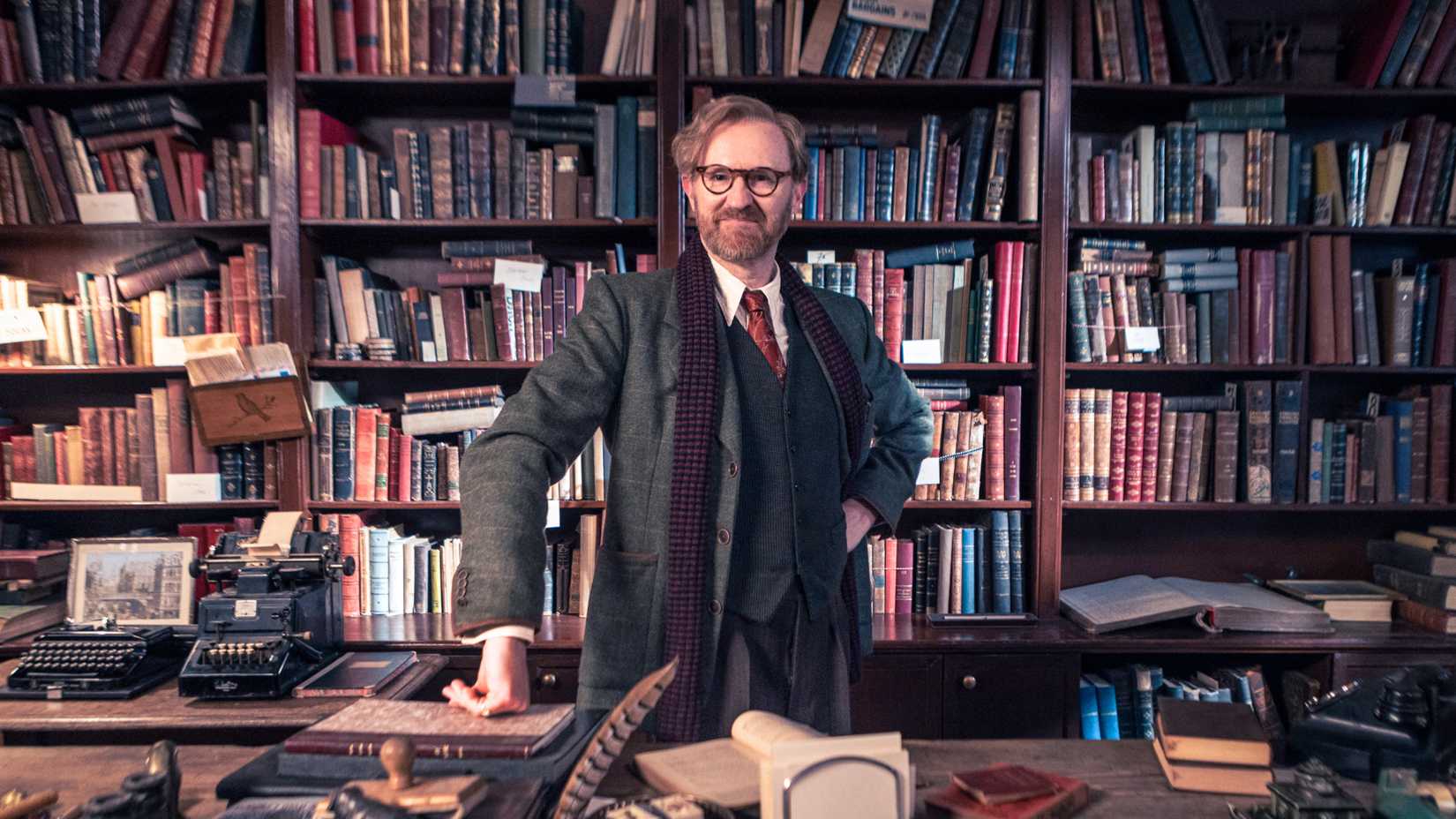
He’s best described as an “amateur” detective – similar to Miss Marple or Father Brown, who solve crimes as a hobby rather than a job. The show, Bookish, jumps right into the action, finding Book already working alongside a police inspector and with his wife, Trottie (Polly Walker), helping him with his investigations.
Mark Gatiss prefers to start stories in the middle of the action. He told ScreenRant that jumping in late to any scene or conversation is more engaging. This approach, he believes, allows for more interesting dynamics and playful exploration of established relationships.
Mark Gatiss explained there are two key benefits to establishing Book’s backstory this way. First, it allows for future episodes that can fill in the details once the audience is already invested. Second, and importantly, he dislikes scripts being bogged down with unnecessary procedural details. Since Book isn’t a police officer, he wouldn’t normally be allowed at crime scenes. To solve this, they created a backstory where he has a close friend who is a policeman, and a special letter of authorization from Winston Churchill granting him access.
A unique letter from Winston Churchill, dating back to World War II, gives Book the freedom to investigate crime scenes whenever he chooses. This clever storytelling element isn’t drawn from classic mystery writers like Conan Doyle, Christie, or Carr, but surprisingly, from the popular British science fiction show Doctor Who.
The device works just like the psychic paper from Doctor Who – it instantly tells people what they need to know. I actually discussed it with Russell T Davies, the showrunner, and he gave me the go-ahead, as that’s the intended purpose of the idea. He even used something similar in Doctor Who! It’s a really clever solution because it avoids lengthy explanations about why a character is present. No one wants to watch a show for that – they want to get straight to the action. So, if someone joins the story late, the essential information is already there, allowing us to focus on the murder mystery and then explore how the character arrived there.
 Credit: UKTV/PBS
Gatiss made a deliberate choice to introduce his new detective during Book’s existing story, and he also set the show in 1946, immediately following World War II. The atmosphere of postwar London – a city recovering from rationing, bomb damage, and widespread anxiety – heavily influenced how Gatiss developed both Book’s complex history and the stories of the supporting characters.
ScreenRant asked how the post-war setting influenced the characters in the story, building on the idea that this period is well-suited for murder mysteries and crime fiction.
That’s a great question. I’ve spent a lot of time studying this historical period – the films, books, and writing from that time – and I had a clear idea of how the characters would speak and behave. I imagined the bookshop as a safe haven amidst difficult times, attracting fascinating people. For example, Nora is a surprisingly knowledgeable and intense character, even though she’s young, and Book, while seemingly disapproving, secretly enjoys her energy. Then there’s Jack, an innocent newcomer to this unusual world, and the intriguing, complex relationship between Book and Trottie, which unfolds as the story progresses. The war heavily influenced all of this, and I’m really fascinated by exploring what happens next.
The war keeps coming up in conversation, understandably, given how deeply it affected everyone. It’s fascinating to see how much it continues to influence things, and it really casts a long shadow over everything that happens now.
This period in history feels incredibly complex because of its far-reaching consequences and hidden truths. The country was flooded with weapons and filled with veterans struggling to readjust to civilian life, often forced back into routines they’d left behind. I recall reading a memoir about a man who returned from the war in Japan or Southeast Asia and simply went back to a mundane office job. He described a moment – sitting at his desk with a sandwich – where he was struck by the stark contrast between strangling a man just six months prior and now being in such a normal setting. He felt lost and unsure of what he was supposed to do with himself, and there was very little support available to help him. It’s remarkable that so many people managed to cope with these experiences as they did.
I was recently reading about James Stewart and how making “It’s a Wonderful Life” impacted him after his service in the war – he was a Colonel, which is remarkable. He seemed deeply changed by his experiences, and you can really see that vulnerability and pain in the film. I think that’s a big reason why we hold that generation in such high esteem – they faced horrific things but largely carried on with their lives. I’m not sure if that fully addresses your question, but that’s the core of my thinking on the matter.
If you enjoy classic detective stories and murder mysteries, you won’t want to miss Bookish. This six-episode series, featuring three full-length mysteries, follows Gabriel Book as he investigates crimes against the backdrop of post-war London, the early days of British cinema, and the city’s luxurious hotels. Created by Mark Gatiss, Book has the potential to become the next iconic detective in popular culture.
As a total book lover, I’m so excited to share that a new show called Bookish is starting on PBS! It premieres this Sunday, January 11th, at 10 PM Eastern, and they’ll be releasing new episodes every week until February 15th. I’m already marking my calendar!
Read More
- United Airlines can now kick passengers off flights and ban them for not using headphones
- Crimson Desert: Disconnected Truth Puzzle Guide
- How to Get to the Undercoast in Esoteric Ebb
- All 9 Coalition Heroes In Invincible Season 4 & Their Powers
- Warframe Voruna Prime access begins on April 8 for all platforms, new deluxe cosmetic Warframe skins revealed
- All Golden Ball Locations in Yakuza Kiwami 3 & Dark Ties
- Katanire’s Yae Miko Cosplay: Genshin Impact Masterpiece
- Grey’s Anatomy Season 23 Confirmed for 2026-2027 Broadcast Season
- All Itzaland Animal Locations in Infinity Nikki
- Zendaya’s 4 Big 2026 Movies Could Beat Brie Larson’s Box 2019 Office Record
2026-01-10 21:33