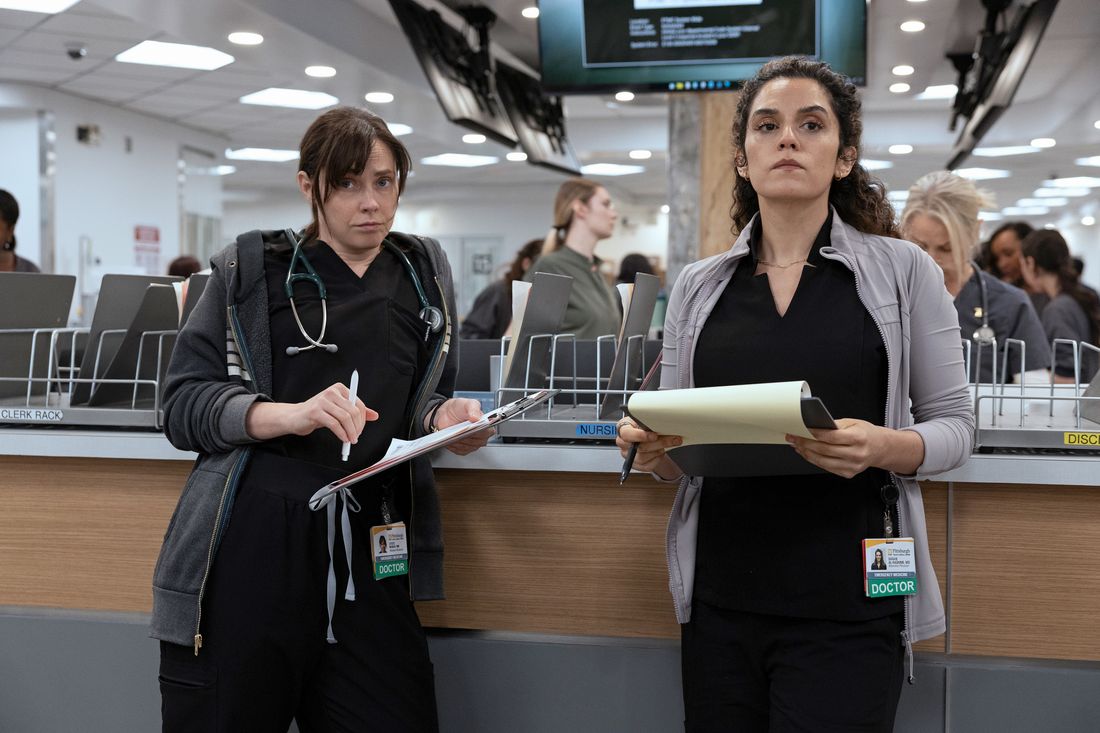
Spoilers follow for the second season of The Pitt through 12th episode “6:00 P.M.”
The strange episodes Dr. Baran Al-Hashimi (Sepideh Moafi) experiences – where she seems to momentarily freeze while treating patients – remain unexplained. However, the way Dr. Michael “Robby” Rabinovitch (Noah Wyle) is behaving towards her is clear. Throughout their shift, Robby has been rude and dismissive to Al-Hashimi, who is set to replace him during his three-month leave. In the episode “6:00 P.M.,” his behavior escalates to cursing at her and suggesting she’s not competent. When Baran calmly proposes adding another daytime attending to ease the department’s workload, Robby angrily tells her, “It’s going to be yours to mess up, so don’t!” and abruptly ends the conversation, showing he doesn’t value her input. This is a terrible way to treat a colleague, and it’s another instance of Al-Hashimi having to tolerate Robby’s childish outburst. Baby Jane Doe would never act like this.
Iranian-American actress Moafi has been a familiar face in TV procedurals for over a decade, appearing in shows like The Good Wife, Nurse Jackie, The Blacklist, and Black Bird. This season, she joins The Pitt as Dr. Al-Hashimi, a significant new character. Like last season’s Dr. Santos, Al-Hashimi has proven to be a somewhat controversial figure, both among the PTMC staff and with viewers. Some colleagues dislike her strict adherence to rules, while some fans initially disapproved of her support for an AI-powered data collection app. However, as the season unfolded, Moafi has portrayed Baran as consistently calm, focused, and dedicated, whether she’s fighting for a malnourished prisoner’s admission, performing a difficult emergency procedure, or navigating conflict with Robby. Moafi explains that her character is driven by a desire to fully immerse herself in every situation and connect with those around her, often pushing herself to an almost unhealthy degree.
I had a chemistry read with Noah for season two. They don’t always use the actual scenes, but give you similar material to get a sense of the show’s vibe. I did one scene that was mostly explaining the plot – but my acting coach always says exposition reveals a character’s perspective. It was all about the AI and the new technology my character was working on. Then there was a really emotional scene where my character lost a patient and was deeply upset, which was a big contrast to the first scene where I was calm and collected. In that scene, I barely spoke and really showed my character’s self-criticism. The last scene was lighter – a playful, flirty interaction with Noah where I teased him. You could really see the dynamic between our characters.
Okay, so the scene kicks off with me challenging Robby – it’s a power dynamic we’ve seen before, like when I ask him why he’s treating me like a patient. But things quickly get…weird. She starts playfully calling him “Dr. Daddy,” and then just relentlessly teases him about his charm and ‘rizz,’ clearly trying to fluster him. Honestly, it’s a lot of playful provocation designed to make him visibly uncomfortable, and it’s pretty funny to watch.
I love it. “Dr. Daddy” is a phrase that will haunt me for the rest of my days. Me too. Me too.
The show often leads us to believe one thing about a character before revealing a different side of them, like it did with Santos and Langdon in the first season. I think Dr. Al-Hashmi was initially presented unfairly. She was criticized for being assertive and labeled as overly strict, which felt unwarranted. I wondered if you felt the show set her up to be disliked from the start, and if that influenced your portrayal of her.
It definitely impacted how I approached the role, because she’s constantly misunderstood. As someone who has personally felt misunderstood, especially now with the divisions within the Iranian community, it’s difficult to convey the full complexity of a person through mediums like social media. With Dr. Al-Hashmi, I didn’t necessarily feel emotional playing her, but rather understood that she’s aware of the misinterpretations and has learned to separate her feelings from her actions. She trusts her own good intentions and focuses on that.
I developed a personal backstory for Dr. Al-Hashimi, imagining her as half-Iranian, half-Iraqi, and a veteran deployed in Iraq. This allowed me to explore her reconnection with a heritage she’d distanced herself from, due to a complicated relationship with her father – details not in the script, but crucial for my understanding of the character. Essentially, her life hasn’t been easy, and it’s resulted in her sometimes appearing a little awkward or out of step with social norms – like standing too close to people. This isn’t about dominance, but rather a deep focus on improving things, collaborating, and connecting with others. Some might initially misinterpret her intensity as a desire to control, but she doesn’t seek to dominate; her presence simply focuses the energy in the room. It’s common for highly skilled and successful women to face criticism and resistance when navigating systems not designed to support them, and Dr. Al-Hashimi is no exception.
It was easy to connect with her because she felt so human. We often show the world one side of ourselves while hiding our true thoughts and feelings, fearing judgment or rejection. She struggles with this a lot. She’s aware people don’t understand her, but she’s driven to fix a flawed system and won’t let her personal pain slow her down.
We see this dynamic in the scene where Robby gets upset with Baran for suggesting the hospital have two daytime doctors instead of one, and she struggles to respond. How did you and Noah work through that moment? It’s always enjoyable to perform emotionally intense scenes, even if they’re a bit difficult. Dr. Al-Hashimi is a very reserved person, so when she finally expresses her feelings or opinions, it feels impactful because she usually keeps everything bottled up. She has strong thoughts about Robby, but she doesn’t share them until she feels patient care is being compromised – that’s when she becomes fiercely protective.
I haven’t watched episode 12, so I’m not sure what made the final cut. But the script shows her frustrated, essentially asking why their disagreements always become personal attacks instead of thoughtful debates. She wonders why, even if they disagree, they can’t maintain respect. Initially, she was used to his dismissive behavior, but as she’s gotten to know and admire Dr. Robby, it bothers her more and more. She feels she consistently demonstrates dedication and care in her work, so she doesn’t understand why their conflicts have to become so unpleasant.
Dr. Al-Hashimi was even offended by the suggestion of having two attending physicians, which highlights his extreme sensitivity, both personally and professionally, and suggests he struggles with sharing responsibility. His final words – telling me it was ‘mine’ and to not mess it up – really bothered me. I don’t want individual ownership; I believe in a collaborative approach. Hospitals function best through teamwork, and that’s what makes The Pitt so special. It’s not about a single hero, even though Dr. Robby, played by Noah Wyle, is the central character. The hospital thrives because of the entire team, the supportive community, and everyone’s dedication to patient care.
I have a theory about Dr. Al-Hashimi. We know she was at the hospital in Afghanistan when the bombing happened, and many mothers and babies died. We also know she has a son she wants to be with more, and she’s seeing a neuroscientist. She seems to connect with the mother who feels responsible for her son being trapped in a car. I think she may have lost a child herself and is struggling with that guilt. What do you think? I’m really fascinated by this question, though I can’t reveal anything. I’m glad it’s sparked so much discussion and speculation – that’s the power of art. I’ve known what’s been happening with my character since the beginning, but no one else on the show did. After the first episode, when Dr. Al-Hashimi looks at the baby, people were constantly asking me what was going on, and everyone had a different idea. It’s amazing that, at a time when we’re so disconnected, something on a screen can actually create conversation. But I still can’t tell you what it all means.
We’re both Iranian Americans, and this conversation is happening after the U.S. and Israel began bombing Iran. You brought up the Iranian diaspora earlier, and I’ve been seeing a lot of extreme and concerning opinions online from people within that community. I’m wondering if you’d like to share your thoughts on all of this and how it’s impacting you personally.
The online environment is filled with really upsetting comments, and there’s been a lot of cyberbullying and attacks. It’s been a difficult time, and I feel powerless. We still haven’t been able to get in touch with some family members in Iran. It’s also tough because many people seem to be hoping for things that aren’t realistic, given the political situation and how things usually unfold.
The world faces countless conflicts, from Sudan and the DRC to Gaza, and many more. Right now, attention is focused on Iran, both because of the long-term struggles of its people and because U.S. funds are, once again, being used in military actions there. The situation is incredibly complex; Iran isn’t a single entity, but a country with a wide range of political views, and every voice deserves to be heard. It’s hard to articulate a clear position, because I deeply respect those inside Iran who feel so desperate that they see even destructive acts as a potential catalyst for change or a glimmer of hope after decades of oppression. However, history shows that bombing hasn’t ever brought democracy to this region. I’m focusing on prayer, amplifying the voices of those working for change, and supporting groups leading the effort. My main goal is to ensure the Iranian people feel seen, heard, and supported.
The show, The Pitt, has consistently addressed current social issues throughout its first two seasons, bringing them into focus. Dr. Al-Hashimi’s introduction is particularly meaningful because her diverse medical experience reflects the many global crises we’re facing – from climate disasters and war to failing healthcare and growing authoritarianism – across South America, Africa, the Middle East, and other regions. We’re living through an unprecedented time of humanitarian need, and her background – practicing medicine in countries essentially functioning as emergency rooms with limited resources – adds a powerful new dimension to the hospital setting. It encourages viewers to step back and recognize how interconnected we all are.
It meant a lot to bring a sense of global perspective to The Pitt. As an ambassador for the International Rescue Committee, I know doctors working in challenging situations are fans of the show. Friends in places like Jordan and Beirut have told me how impactful it is to see a doctor on such a large platform – especially in the US – who represents their experiences. It’s encouraging to think we’re helping people feel recognized and valued for their dedication – not just the healthcare workers we see locally, but also those who bravely work abroad and carry the weight of that experience with them long after they return.
Read More
- United Airlines can now kick passengers off flights and ban them for not using headphones
- How to Complete Bloom of Tranquility Challenge in Infinity Nikki
- Gold Rate Forecast
- How to Solve the Glenbright Manor Puzzle in Crimson Desert
- All Golden Ball Locations in Yakuza Kiwami 3 & Dark Ties
- Katanire’s Yae Miko Cosplay: Genshin Impact Masterpiece
- All Itzaland Animal Locations in Infinity Nikki
- A Dark Scream Theory Rewrites the Only Movie to Break the 2-Killer Rule
- 8 Actors Who Could Play Blackbeard In One Piece Live-Action Season 3
- All 10 Potential New Avengers Leaders in Doomsday, Ranked by Their Power
2026-03-27 15:56