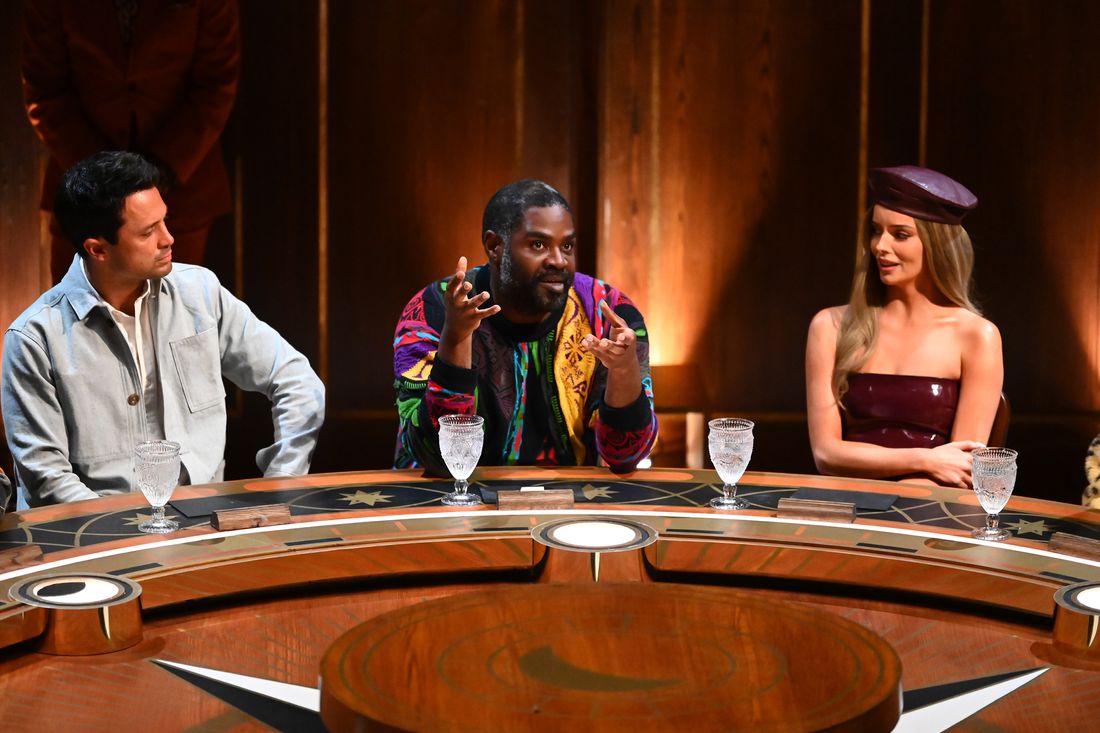
Be warned: the following contains spoilers for the fourth season of The Traitors, specifically up to and including the seventh episode, “The Black Banquet,” which aired on Peacock on January 29th.
Ron Funches quickly became a target on the show The Traitors. He was one of the first players to accuse someone – Porsha Williams – of being a Traitor, pointing out her slip-ups in wording. However, when Porsha was revealed to be on the good team, the other players turned on Funches. Some, like Dorinda Medley, felt he was being a sore loser for not trying to get to know her, while Candiace Dillard Bassett used him as a distraction. Funches couldn’t win back the group’s trust and was eliminated in the sixth episode, leaving the remaining players worried that they had wrongly accused another Faithful player.
Since being eliminated from Traitors, Ron Funches has openly discussed his experience – including a panic attack during an episode, what he felt was Kate Chastain’s unfair treatment of him, and his surprising friendship with Rob Rausch, who was the only one to publicly support him. Funches has gained new fans for his honest portrayal of the show’s emotional toll, which even led to him receiving an autism diagnosis. He’s also been praised for trying to play the game fairly, focusing on actions rather than pre-existing relationships between the contestants. While Funches is keeping some details about Kate Chastain’s behavior secret at the request of production, he’s happy to share his game strategy and talk about his continued bond with Rausch, even knowing Rausch was a Traitor. He jokingly says he plans to write a movie about the whole experience with Nicholas Sparks, calling it a truly great story.
There was a lot of discussion in the castle about what counts as “evidence.” You mentioned Porsha often misspoke, her use of “we,” and the quiet footsteps during eliminations, leading some to suspect Maura Higgins. I’m wondering if you had a pre-game idea of what you’d consider evidence, and if that changed as you played.
I went into the game wanting to be like a detective, focusing on facts. Once I got there, I realized I didn’t know many people, which was awkward socially, but actually helped me stay unbiased. Because I didn’t have strong feelings about anyone, I looked for inconsistencies in their behavior. My first vote against Porsha was based on things she said that didn’t quite add up, and a possible lie between her, Candiace, and Michael. I didn’t initially consider that Candiace might be the one being dishonest, rather than Porsha.
I initially considered directly accusing others, but quickly found myself on the defensive. Instead of making accusations, people demanded I prove I wasn’t the traitor and asked me to name who I suspected. I’d offer a small observation, like noticing light footsteps and suggesting the smallest player might be the culprit – though I wouldn’t normally consider that strong evidence. When pressed, I’d offer something, but I’m proud of how I played the game. Fans have told me my approach was the most fair and focused on actual evidence seen on the show, even though, ultimately, I was wrong.
The show is captivating, but also frustrating at times, because people seem to have very different ideas about what actually counts as proof. It was one of the most compelling storylines I witnessed while working on the show. It felt like a small-scale courtroom drama, where one person insists they’re telling the truth, but everyone else turns against them, either by lying about what happened or denying they saw or heard anything. It’s a lot like a dramatic movie, but unfolding in a real-life setting.
Watching this made me seriously question the jury system. I’m not sure I trust it anymore, to be honest. It feels like it’s time for some big changes in how things are done, and that’s a pretty strong reaction!
Looking back at the final Round Table, I was wondering if I felt like anyone had my back going into it, and what my own headspace was like. Honestly, throughout my time there, it felt like a cycle: I’d make a mistake, genuinely apologize, and then people would just keep dwelling on it until I reached a point where I just didn’t care anymore. The last Round Table was me finally realizing that I wasn’t going to change their minds. I had to decide whether to get angry and confront everyone, or stay true to my principles. I ended up pointing out what I saw as inconsistencies in their strategies, explaining that I hadn’t changed my approach and that it felt like they were holding a grudge because I’d sent a friend home. That didn’t feel like fair play. Despite all that, I still enjoyed myself, especially being around the beautiful grounds and Alan, who was a fantastic host and always found small ways to be kind to me. Besides me and Rob, Alan was the best part of the show for me.
Going through tough times and having to stand up for yourself can really strengthen your relationships with the people who truly support you, and Rob was definitely one of those people for me. We connected quickly – we were friends, talked a lot, and played chess daily. Over time, we became close, and I started to share things with him that I usually keep private. I don’t often talk about being a single dad to a child with autism, or the fact that I’m also on the autism spectrum. I’ve had bad experiences in the past where people have used those things against me, so I’m careful about who I share them with. But Rob understood, because he had family members with special needs too, and that created a really strong bond between us. That’s what I value most about our friendship – knowing that when I was struggling or felt misunderstood, Rob was always there for me.
One thing this show highlights is that reality TV stars are accustomed to playing up a version of themselves for the cameras. People new to this type of show might not naturally do that. I agree – that’s what makes it so interesting. Most of the contestants are used to performing and bringing energy, while others are just regular people trying to be funny when prompted. They’ll perform if there’s a stage or lines to read, but otherwise, they’re just being themselves. It’s a reality show, so that’s what they’re going to do – be authentic.
I wanted to present my true self because, unlike playing a character, I wanted people to connect with me – the person they see performing tonight. This was the largest audience I’d ever had, and I believe I have a unique and special personality that I wanted to share. I didn’t want to be perceived as someone different than who I am.
During the final wrap-up, as I was saying goodbye to everyone – and people like Tara Lipinski were starting to understand I wasn’t the villain they thought – I made a conscious decision about how to handle things. Twenty years of doing stand-up comedy has taught me a lot. In the past, when a performance was going badly, I’d just stubbornly keep going. But you learn to face facts. I knew things weren’t going to improve, so I decided to do the right thing and say goodbye to people properly. Some had the impression I disliked them, and I wanted to acknowledge the good things I did see in them. That’s how I was raised. My sons don’t often see what I do, and I wanted them to witness me handling this situation with integrity. I wanted to show them that even when things are difficult, and even when others are against you or spreading false information, you should always act with kindness, show gratitude, and do what’s right. That was my motivation – I wanted my boys to see that.
Did you ever worry that people might see your actions as just a tactic to gain votes? I think some did, and that’s why they still supported me. But as soon as I realized I was a ‘Faithful’ – and I take that term very seriously – I knew I had to be completely honest and loyal. A ‘Faithful’ person is truthful, even when it’s unpopular, and accepts others for who they are. You can’t worry about what others think; people will always criticize you. You just have to be yourself. I expected some people would see it as a clever move, and it worked on a few, which actually revealed their own vanity – they only believed me when I flattered them. Honestly, that made me want them to reject me and send me packing.
I’d like to revisit the disagreement you had with Dorinda during a previous discussion. You’ve mentioned some things she did that weren’t shown on the show. Could you tell us what happened between the two of you then? Unfortunately, I can’t share any details. I’ve been advised not to and asked to refrain from discussing it.
Let me put it another way: if you could go back to that argument, would you handle things differently? The only thing I regret is using curse words. I’ve learned through videos and therapy that the best approach with someone like that is to remain unresponsive – to ‘gray-rock’ them. I should have done that instead of getting drawn into the conflict. Otherwise, I wouldn’t change a thing. I value genuine relationships with friends I can trust completely – people I could borrow money from without hesitation. Those are the people I share personal family information with. I avoid sharing with those who have a history of using information to hurt others. That’s just not how I operate. I didn’t think her statement was sincere, and I only wish I hadn’t sworn on television, as I wouldn’t want my sons to see that.
Let’s talk about how you and Rob started playing chess. What made you decide to play your first game? Well, it was the first night. After the Round Table discussion – which can be quite intense – there was some free time before everyone went to bed. I’ve always used chess as a way to unwind and get to know someone. It’s actually one of my favorite things to do on a date – it’s fun to challenge someone intellectually. Out of everyone at the castle, only two people knew how to play, and Rob was the one who was really enthusiastic about it.
Looking back, it’s clear this person was always intellectually challenging others, constantly correcting their language while simultaneously pretending to be naive. It felt like a betrayal. I wasted so much energy defending myself that I didn’t fully enjoy the experience. The most absurd part of the whole thing is that a middle-aged Black man from Chicago traveled all the way to Scotland only to find his sole ally was a young, muscular man from Alabama. It’s a completely unbelievable situation.
So, yeah, we’ve stayed in touch. I genuinely value the relationships I have, both on and off the field, and I make an effort to connect with people who’ve supported me. I haven’t really spoken to those who haven’t. Rob’s a really good friend. We’re having a reunion soon, and he’s arriving a bit early. We’re planning to play mini-golf and grab lunch, and he might even come to one of my shows. I also promised to visit him in Alabama to go look at snakes, and we’re definitely doing that. I always follow through on my commitments.
Someone mentioned you had positive things to say about Stephen Colletti online. Was there anything going on between you two that viewers didn’t see, or was it just his personality? I really like that about him. Even though Stephen voted you out of the competition, he always made you feel welcome and never made you feel bad about playing the game. He treated it like a game the entire time, which was great.
I’d been watching the show for several seasons, but I was shocked when someone came to breakfast and didn’t receive any applause. We were filming around Father’s Day, and I was missing my kids, so there’s a moment where you can probably see I was on the verge of tears. Stephen eventually told me he wanted me on the show and appreciated my contributions. However, some others questioned my performance in the challenges and made it feel personal, which frustrated me because I always give it my all and try to help the team. Ultimately, I was the reason a fan favorite was eliminated, and after that, people started distancing themselves from me.
I’m totally hooked on the show, and I have to say, I’m really impressed with Rob’s recent play! Getting Lisa Rinna out was a brilliant move, and it just proves he’s not just a good Traitor, he’s a master of the game. What I admire most is how strategically he’s playing – it’s all calculation, not emotion. It reminds me a lot of what happened with me – someone targeted Candiace’s friend, and then I became the target. Now Rob’s doing the same thing to another of Candiace’s friends, and she’s about to explode! But that’s not how you win this game. Lisa was already on shaky ground, and honestly, throwing Rob under the bus at that point just didn’t make sense strategically. It felt purely like a protective, emotional reaction to losing a friend, and that’s not a smart move in this game.
Something funny happened at the banquet – Johnny Weir ended up giving Kristen Kish the help she needed, even though Tara Lipinski, who’s close to Johnny, was actually asking for it. That’s just how the game goes – it creates awkward and interesting moments that you have to talk about later. I’ve known Kristen Kish for over ten years – she even made me fried-chicken sandwiches on the show Fast Foodies. So, when she said she trusted me the most, I was really surprised! I had to call her and ask her what she meant.
Honestly, all of this has made me really look at my relationships and how I connect with people. I shared something on Instagram recently – I said, “The internet told me I was autistic and was right. You win this round. Thanks to The Traitors for helping me find out more about me.” It’s been a journey. I’m glad I didn’t fall back on my old “still not gay” joke – it’s funny, but I didn’t want to upset anyone. I actually went to Japan because I’m sensitive and all the comments were getting to me. I knew I’d sent Porsha home, so I braced myself for some backlash. When I came back, there were a lot of negative comments like, “Who is this weird, Black, autistic guy?” But then, something amazing happened. I started getting messages from people saying it was so good to see someone like me represented on TV. During the time between filming and the show airing, I had a lot of time to think. It reminded me of past friendships – in comedy, high school, even middle school – where I felt misunderstood. I’d been considering getting assessed for autism anyway, because of that. My son, who’s almost 23, was diagnosed when he was two, and it’s always been something in the back of my mind. Going through all of this with The Traitors pushed me to finally get the assessment for myself. I haven’t gotten the official results yet, but I’m pretty confident I am autistic, and we’re working to figure out where I fall on the spectrum.
It’s incredibly empowering to discover things about myself, and I don’t want anyone to see that as a bad thing. While the situation leading to this discovery was challenging, the outcome has been really positive. I’ve learned so much about myself and my son. I always worried about how my autistic son felt – if he thought people judged him or saw him as different. Now, realizing I’m also autistic and have just always thought others were different is actually a wonderful feeling. It’s turned into a really positive experience for me.
It always seems like there’s not enough smoked salmon around. It’s almost like a competition – whoever gets it becomes the target of playful accusations, like, “You took more than your share!” That person is jokingly labeled the ‘Traitor’ because smoked salmon is a really popular food on set – practically the main source of protein!
Read More
- United Airlines can now kick passengers off flights and ban them for not using headphones
- Crimson Desert: Disconnected Truth Puzzle Guide
- All 9 Coalition Heroes In Invincible Season 4 & Their Powers
- Mewgenics vinyl limited editions now available to pre-order
- The Boys Season 5 Spoilers: Every Major Character Death If the Show Follows the Comics
- Invincible Season 4 Episode 6 Release Date, Time, Where to Watch
- Does Mark survive Invincible vs Conquest 2? Comics reveal fate after S4E5
- Grok’s ‘Ask’ feature no longer free as X moves it behind paywall
- Assassin’s Creed Shadows will get upgraded PSSR support on PS5 Pro with Title Update 1.1.9 launching April 7
- Grey’s Anatomy Season 23 Confirmed for 2026-2027 Broadcast Season
2026-02-04 20:57