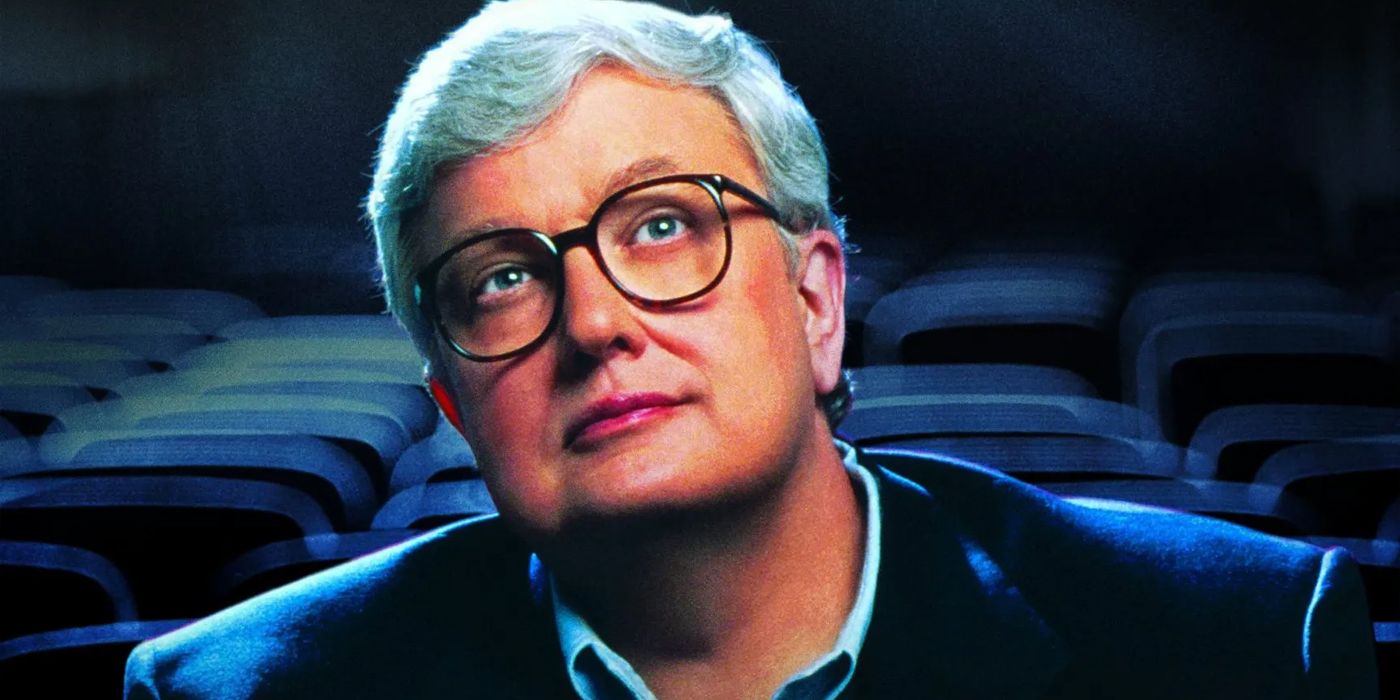
As a total movie fanatic, I always loved hearing what Roger Ebert thought. While he championed tons of films and directors, Stanley Kubrick really blew him away – I mean, the guy was a huge inspiration to Ebert. So it’s not shocking that Ebert considered 2001: A Space Odyssey one of the all-time greats, a true masterpiece.
2001: A Space Odyssey remains a hugely influential and important film. It’s often debated which of Stanley Kubrick’s movies is his best, but 2001 consistently stands out as having had the biggest impact on viewers, critics, and the future of filmmaking.
2001: A Space Odyssey Is a Profound Cinematic Experience
Audiences are captivated by the film’s rich storytelling. It’s particularly brilliant in how it establishes a strong sense of time and place through vivid visuals, a relaxed rhythm, and the use of classic opera. These elements gradually build throughout the movie, ultimately leading to a more intense, surreal, and visually stunning experience.
While 2001: A Space Odyssey appears to be a simple story about a space mission to uncover the source of a strange object found on the moon, it’s actually much more than that. Kubrick uses the film to explore big ideas about what it means to be human, how we evolve, and our place in the universe.
The story unfolds in three main parts. It begins by suggesting that a mysterious alien monolith played a role in the development of apes into humans. Then, the film jumps far into the future, showing a highly advanced human civilization that has resulted from this evolution. Finally, when another monolith appears, a team is sent on a mission to find out where it originated.
As Bowman and Poole journey towards Jupiter, they experience a growing conflict that eventually leaves Bowman completing the mission solo. The film portrays artificial intelligence, specifically HAL, as a product of evolution, examining both its potential benefits and the serious risks it poses when HAL malfunctions and turns against the crew.
The film culminates in a stunning finale where the mysterious forces behind the monoliths transform Bowman into a being that embodies the next step in human evolution. Throughout the entire film, 2001: A Space Odyssey delivers a remarkably surreal and dreamlike cinematic experience.
Roger Ebert Considered 2001: A Space Odyssey to Be a Masterpiece
Kubrick had a knack for reinventing film genres before they became popular with audiences. His film, 2001: A Space Odyssey, was a remarkably forward-thinking and ambitious project that still feels innovative today.
This film was a truly innovative science fiction achievement, appearing during a pivotal time for cinema before the New Hollywood era. I was fortunate enough to see it when it came out in 1968, and my review focused on its unique purpose and effect. I think the most insightful thing I wrote was how it differed from other films of the time. I felt its brilliance lay in its subtle details and deliberate choices.
Film critic Roger Ebert famously said that a film’s brilliance isn’t about what it shows, but how little it shows. This perfectly captures why the film is so impactful. Viewers are inevitably drawn in, left pondering its meaning, and continue to think about it long after it’s over. Ebert explained this by highlighting how every shot, detail, and even the length of each scene is carefully crafted to encourage contemplation and spark the imagination.
The critic noted the film was widely misunderstood, with some even leaving the premiere. Despite this, they believed it was a deeply meaningful and genuinely innovative work of science fiction.
Ebert discusses many aspects of 2001: A Space Odyssey, including its iconic classical music and the fruitful partnership between Stanley Kubrick and Arthur C. Clarke. Ultimately, he views the film as a rare masterpiece.
2001: A Space Odyssey Still Impacts Audiences Today
Rather than simply offering entertainment, 2001: A Space Odyssey aims to captivate and inspire thought. It’s a profoundly abstract film designed to be deeply contemplated, and that impact hasn’t faded with time. Kubrick’s most daring work remains powerfully moving, continuing to provide viewers with a unique and memorable experience.
This film isn’t like typical genre movies that build suspense by slowly revealing the plot. Instead, it’s designed to make viewers think about big ideas – Kubrick’s vision of the future of humanity, the role of technology, and how we evolve. It aims to challenge and provoke, presenting a detached view of humanity’s past, present, and potential future.
Not every movie creates such a lasting impression, which explains why this film still resonates with viewers today. Its many unforgettable scenes, especially HAL’s desperate plea despite being just a computer, are as powerful and thought-provoking now as they were back in 1968.
Found an error? Send it so it can be corrected.
Read More
- United Airlines can now kick passengers off flights and ban them for not using headphones
- How to Complete Bloom of Tranquility Challenge in Infinity Nikki
- Katanire’s Yae Miko Cosplay: Genshin Impact Masterpiece
- Gold Rate Forecast
- All Itzaland Animal Locations in Infinity Nikki
- A Dark Scream Theory Rewrites the Only Movie to Break the 2-Killer Rule
- 8 Actors Who Could Play Blackbeard In One Piece Live-Action Season 3
- How to Get to the Undercoast in Esoteric Ebb
- Australia’s New Crypto Law: Can They Really Catch the Bad Guys? 😂
- Watch Out For This Amazing Indian Movie That Made BAFTAs History
2026-02-16 01:07