Author: Denis Avetisyan
Researchers have developed an automated pipeline to forecast the magnetic field structure of coronal mass ejections, offering a crucial step towards improved space weather prediction.
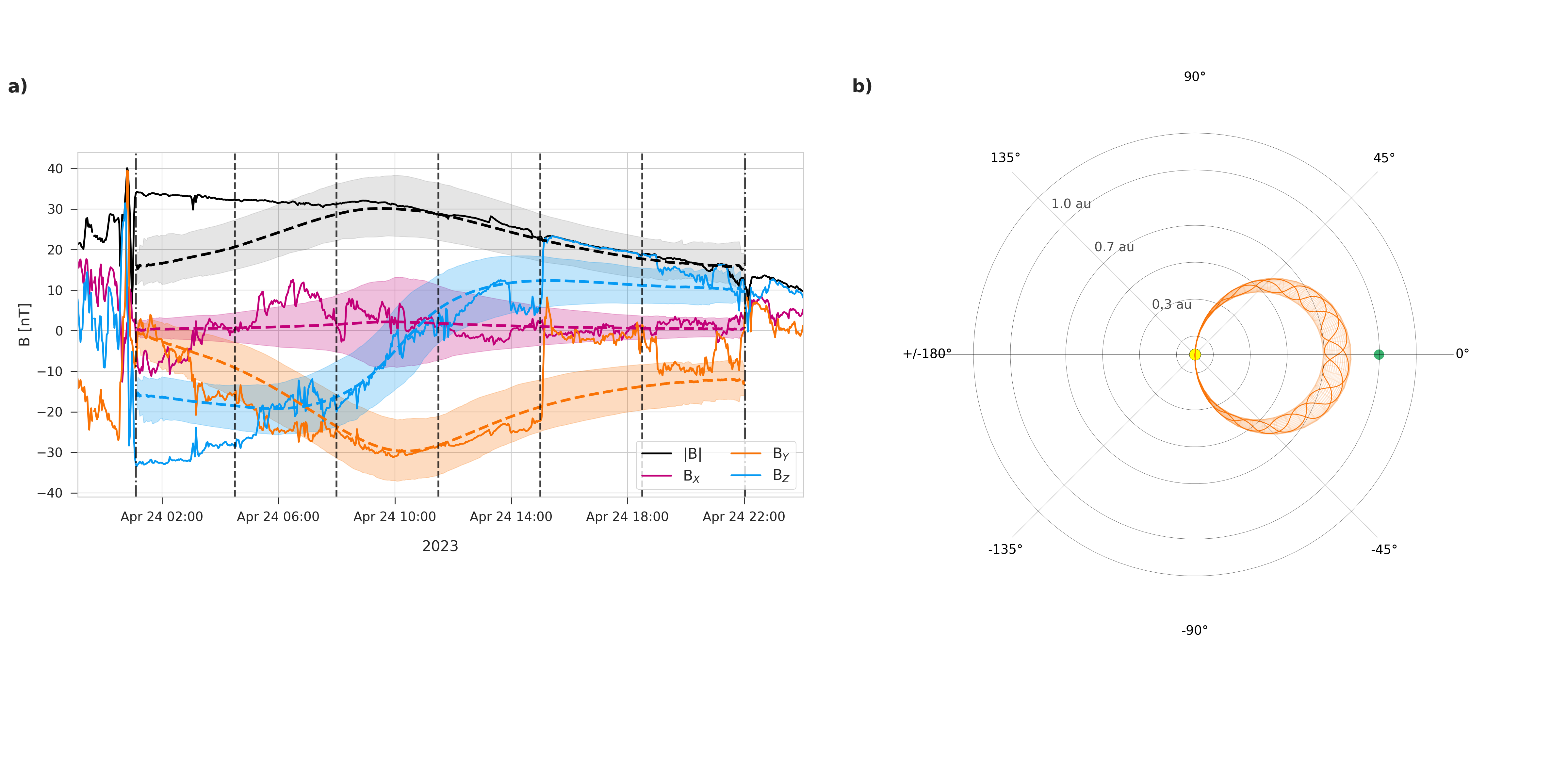
This review details an automated pipeline for short-term forecasting of in situ coronal mass ejection magnetic field structure using flux rope data.
Accurate and timely forecasting of space weather remains challenging despite advances in solar observation and modeling. This is addressed in ‘Towards a Fully Automated Pipeline for Short-Term Forecasting of In Situ Coronal Mass Ejection Magnetic Field Structure’, which presents a fully automated system integrating arrival time prediction, in-situ detection, and iterative flux rope reconstruction to forecast coronal mass ejection (CME) magnetic field structure. Evaluation using archived data demonstrates the feasibility of short-term forecasts – achieving errors of ~5 hours in timing and ~10 nT in field strength – though performance is limited by event complexity and deviations from idealized flux rope assumptions. Can further refinement of these automated pipelines, coupled with improved physical models, ultimately deliver reliable, real-time space weather alerts?
The Expanding Shadow of Solar Storms
Modern civilization is inextricably linked to the functionality of space-based assets – from communication networks and GPS navigation to weather forecasting and financial transactions. This increasing dependence, however, creates a significant vulnerability to space weather events. Disruptions caused by solar flares and coronal mass ejections can induce geomagnetic storms, which in turn disrupt satellite operations, degrade communication signals, and even cause widespread power grid failures. The potential economic and societal impacts are substantial, with some estimates placing the cost of a severe geomagnetic storm in the trillions of dollars. As reliance on these technologies continues to grow, so too does the risk posed by unpredictable space weather, highlighting the critical need for improved forecasting capabilities and mitigation strategies to protect essential infrastructure.
Coronal Mass Ejections (CMEs) represent a significant and escalating threat to modern technological infrastructure. These massive eruptions of plasma and magnetic field from the Sun can travel at millions of miles per hour, and when directed towards Earth, induce substantial geomagnetic storms. The resulting fluctuations in Earth’s magnetic field can overload power grids, causing widespread blackouts, and disrupt satellite operations – impacting crucial services like GPS, telecommunications, and weather forecasting. Furthermore, CMEs pose risks to high-frequency radio communications, used by aviation and emergency services, and can even increase radiation exposure for astronauts and airline passengers at high altitudes. The increasing dependence on these space-based assets, coupled with the unpredictable nature of solar activity, underscores the critical need for improved space weather monitoring and forecasting capabilities to mitigate the potential for widespread disruption.
Current space weather forecasting relies heavily on observations of sunspots and historical data, but predicting the arrival and intensity of coronal mass ejections (CMEs) at Earth remains a significant challenge. These traditional methods often struggle with the complex physics governing CME propagation, leading to imprecise estimations of geomagnetic storm arrival times and magnitudes. The inherent variability of solar events, coupled with the limitations of current modeling capabilities, results in forecasts that frequently lack the necessary lead time for effective mitigation strategies. Consequently, researchers are actively pursuing innovative approaches, including advanced data assimilation techniques, machine learning algorithms trained on extensive solar observations, and more sophisticated three-dimensional models of the heliosphere, to improve the accuracy and timeliness of space weather predictions and better protect critical infrastructure.
Automated Eyes on the Solar Wind
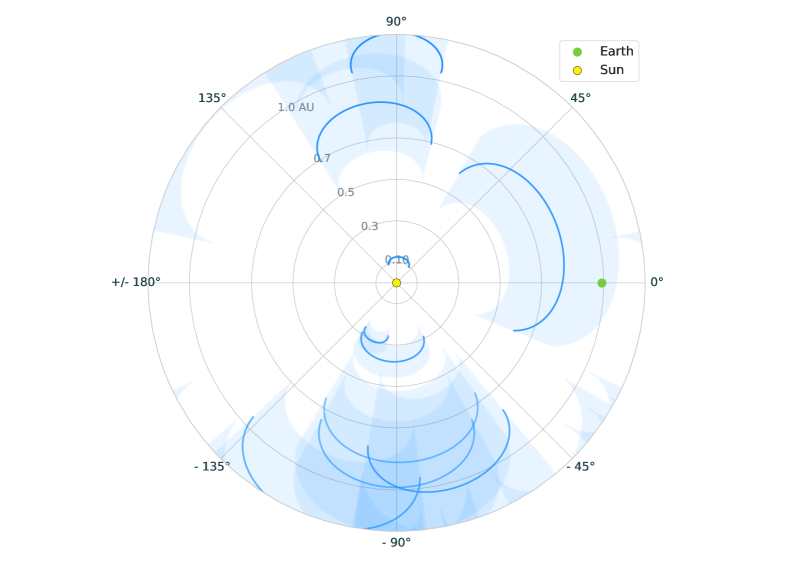
Automated detection of coronal mass ejection (CME) substructures is initiated using ARCANE, a deep-learning model trained on observational data. This model performs image analysis to identify and delineate key features within CME structures, reducing the need for manual identification which is both time-consuming and subject to inter-observer variability. ARCANE’s architecture is designed to recognize patterns indicative of CME substructures, such as flux ropes and current sheets, with a focus on speed and accuracy to facilitate near real-time CME analysis. The model outputs include the location and characteristics of detected substructures, providing critical input for subsequent stages of CME analysis and reconstruction.
ARCANE, the automated CME detection component, relies on real-time solar wind (RTSW) data streams to discern critical features within coronal mass ejection (CME) structures. Specifically, ARCANE analyzes parameters derived from RTSW data – including proton density, velocity components, temperature, and magnetic field measurements – to identify boundaries and interfaces indicative of flux ropes, shocks, and other substructures common to CMEs. This data-driven approach allows for the rapid and objective identification of these features, even within complex and evolving CME configurations, enabling timely input for subsequent 3D reconstruction processes.
Following automated detection of coronal mass ejection (CME) substructures, the data is input into 3DCORE, a flux rope modeling tool. 3DCORE utilizes the detected features to reconstruct the three-dimensional magnetic field configuration of the CME. This reconstruction process relies on fitting a force-free flux rope model to the observed data, providing quantitative estimates of parameters such as the flux rope’s orientation, twist, and magnetic field strength. The resulting model allows for characterization of the CME’s internal magnetic structure and its potential impact on space weather.
Tracing the Paths of Magnetic Storms
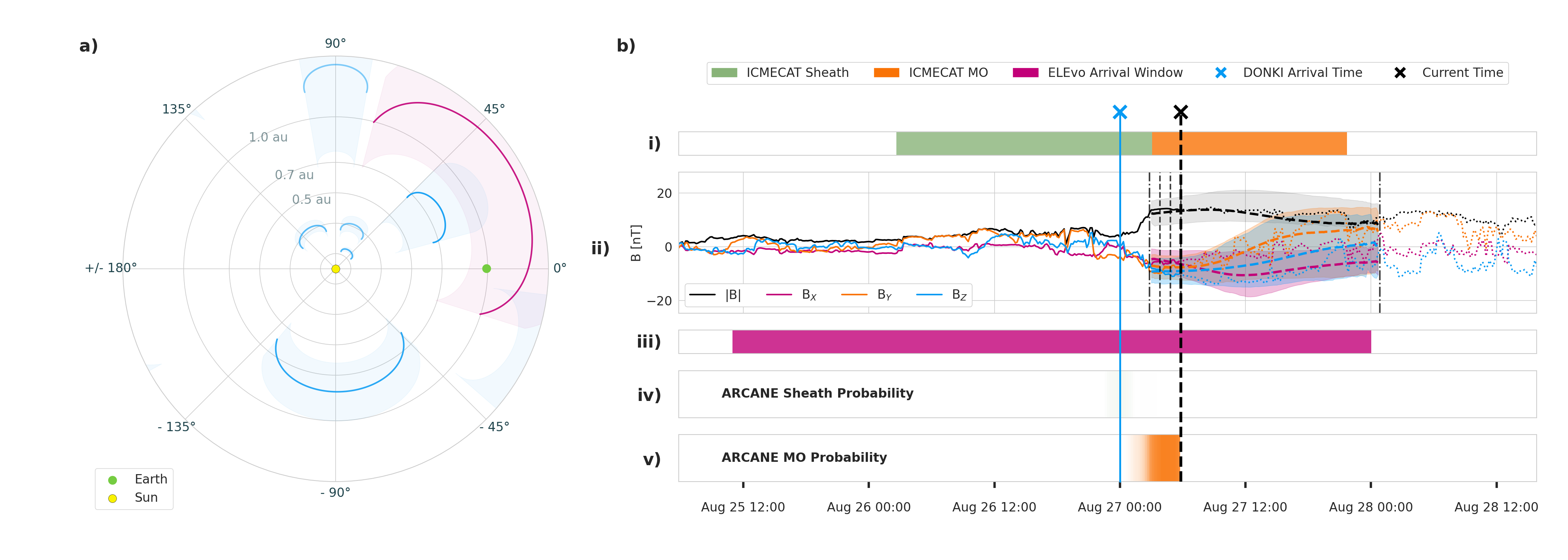
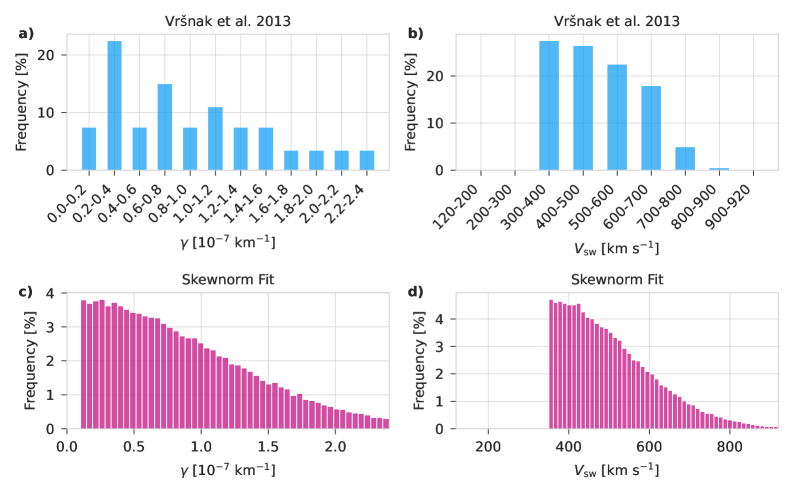
ELEvo is a physics-based model that forecasts the propagation of Coronal Mass Ejections (CMEs) through the interplanetary medium. Utilizing a drag-based approach, the model simulates CME evolution by incorporating the effects of interactions with the ambient solar wind. This includes calculating drag forces acting on the CME’s flux rope structure as it travels from the Sun to near-Earth space. The drag coefficient is determined by the density and velocity of the solar wind encountered, influencing the CME’s speed and trajectory. By numerically solving the equations of motion with these drag forces, ELEvo predicts the CME’s arrival time and intensity at various locations, including Earth.
ELEvo utilizes an ensemble forecasting approach to predict CME arrival and intensity, generating multiple simulations with slight variations in input parameters. This method doesn’t produce a single prediction, but rather a distribution of possible outcomes, quantifying the uncertainty inherent in CME propagation modeling. The ensemble allows for the estimation of probabilities associated with different arrival times and intensities, providing a range of likely scenarios rather than a deterministic forecast. By analyzing the spread of results within the ensemble, users can assess the confidence level of the prediction and understand the potential variability in the CME’s impact at its destination.
The accuracy of the 3DCORE model in predicting coronal mass ejection (CME) characteristics is improved through the implementation of the ABC-SMC (Approximate Bayesian Computation – Sequential Monte Carlo) algorithm. This algorithm functions by refining the estimation of key flux rope parameters, including its magnetic field strength, orientation, and expansion rate. ABC-SMC achieves this refinement through a probabilistic approach, generating and evaluating a population of possible flux rope configurations and iteratively updating these estimates based on observational data. This process minimizes discrepancies between model predictions and observed characteristics, leading to more accurate reconstructions and forecasts of CME propagation and intensity.
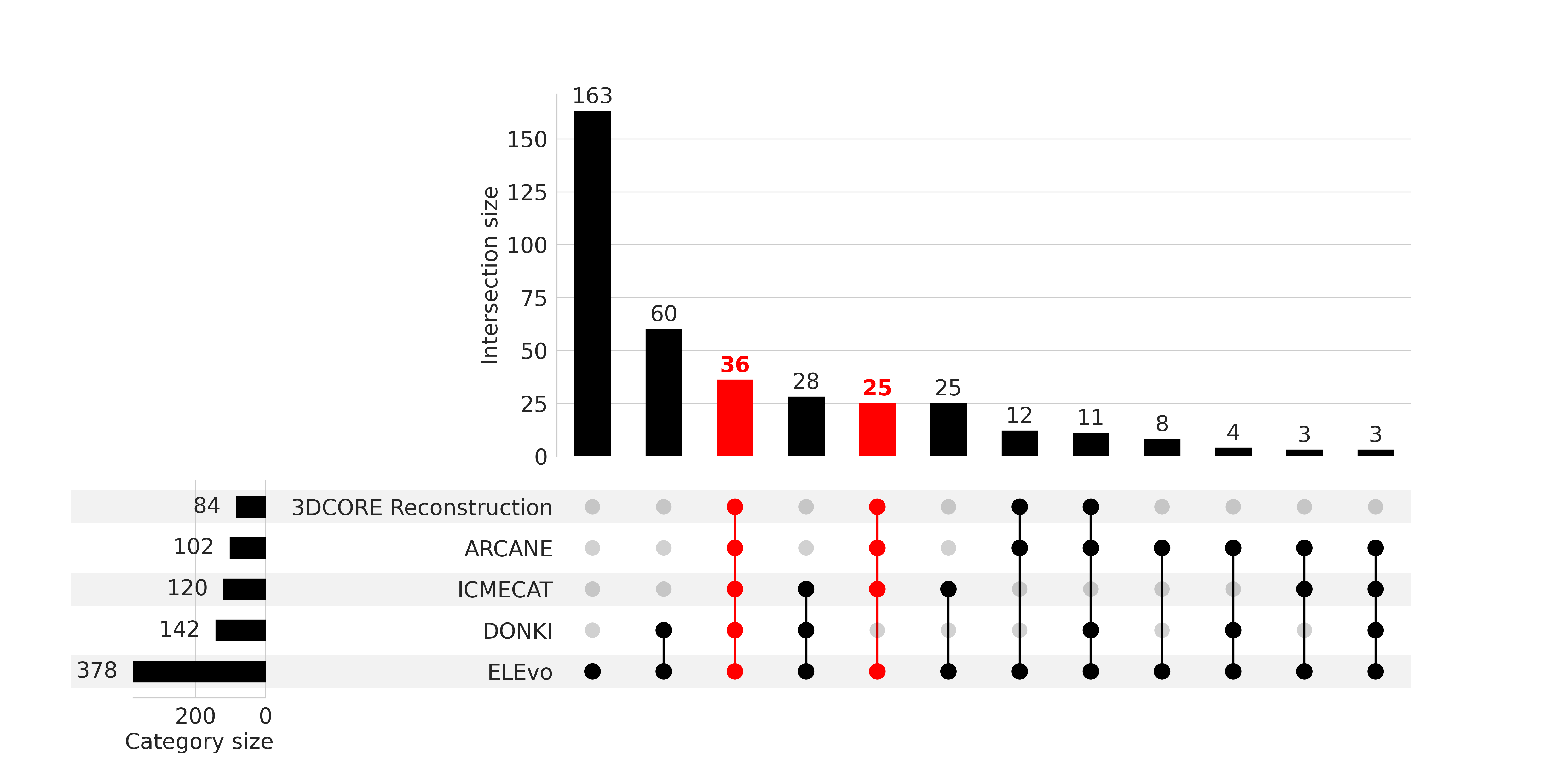
A fully automated pipeline for CME arrival and intensity prediction was evaluated against full-event reconstructions for a subset of 61 coronal mass ejections exhibiting well-defined flux rope structures. Performance metrics indicate the automated pipeline achieves comparable accuracy, with errors of approximately 10 nT in both total magnetic field strength and the Bz component. Timing errors were determined to be approximately 5 hours. These results demonstrate the viability of automated methods for space weather forecasting without substantial degradation in accuracy compared to more labor-intensive, full reconstruction techniques.
A Sharper View of Our Solar Shield
The efficacy of the complete space weather analysis pipeline hinges on a stringent validation process, achieved through comparison with the ICMECAT catalog – a comprehensive, curated repository of coronal mass ejection (CME) and solar energetic particle (SEP) events. This catalog serves as the ‘ground truth’ against which automated detections and model predictions are meticulously assessed, allowing for quantifiable metrics of performance like precision, recall, and false alarm rates. By systematically comparing pipeline outputs to the well-established ICMECAT data, researchers can confidently determine the system’s ability to accurately identify and characterize space weather phenomena, ultimately refining its algorithms and bolstering its reliability for operational forecasting. This rigorous evaluation is crucial not only for demonstrating the pipeline’s current capabilities, but also for tracking improvements and guiding future development efforts.
The system relies heavily on the dynamic data provided by DONKI, a resource that delivers near real-time analyses of crucial space weather observations. This continuous stream of information-including coronal mass ejection (CME) detections and solar flare classifications-acts as a vital input, allowing for rapid assessment of potential geomagnetic disturbances. By processing observations as they become available, DONKI effectively shrinks the window between event onset and risk evaluation, enabling proactive responses to space weather events and minimizing potential impacts on critical infrastructure. The speed and accuracy of DONKI’s analyses are therefore fundamental to the overall pipeline’s ability to provide timely and actionable intelligence.
This integrated pipeline represents a substantial advancement in space weather preparedness. By coupling automated detection of initial solar events with sophisticated physics-based modeling of their propagation and geomagnetic impacts, the system forecasts space weather conditions with increased accuracy and lead time. Crucially, this predictive capability is underpinned by robust validation techniques, utilizing comprehensive datasets like the ICMECAT catalog to ensure reliability and minimize false alarms. The result is a significantly enhanced ability to proactively mitigate risks to critical infrastructure – including power grids, satellite operations, and communication systems – safeguarding them from the potentially disruptive effects of solar activity and geomagnetic disturbances.
The pursuit of forecasting coronal mass ejections, as detailed in this work, reveals a humbling truth about the limits of even the most sophisticated models. The automated pipeline, while demonstrating feasible short-term predictions for events with clear flux rope signatures, implicitly acknowledges the inherent uncertainty in predicting complex space weather phenomena. This echoes Pierre Curie’s sentiment: “One never notices what has been done; one can only see what remains to be done.” The pipeline isn’t a culmination, but a step, revealing how little is truly understood about heliospheric propagation and magnetic field reconstruction. Every successful forecast merely illuminates the vastness of what remains unknown, a perpetual horizon beyond which any law can dissolve.
What Lies Ahead?
This automated pipeline, while a step toward anticipating the magnetic temper of coronal mass ejections, merely illuminates the vastness of what remains unknown. The capacity to forecast, even in the short term and for a limited set of events, is less a triumph of prediction and more a carefully constructed illusion. It’s a beautiful arrangement of data, a pleasing curve on a graph – until it isn’t. The reliance on well-defined flux rope signatures is, of course, the central conceit; the universe is rarely so obliging.
Future work will undoubtedly focus on expanding the applicability of such pipelines-chasing the phantom of comprehensive forecasting. But perhaps a more fruitful avenue lies in acknowledging the inherent unpredictability. To build systems not to control space weather, but to gracefully accommodate it. Black holes are the best teachers of humility; they show that not everything is controllable.
The true challenge isn’t creating ever-more-complex algorithms, but accepting that theory is a convenient tool for beautifully getting lost. The universe will continue to throw magnetic complexity at the solar wind, and the pipeline will continue to run-a testament not to mastery, but to persistent, hopeful, and ultimately limited, inquiry.
Original article: https://arxiv.org/pdf/2602.06926.pdf
Contact the author: https://www.linkedin.com/in/avetisyan/
See also:
- United Airlines can now kick passengers off flights and ban them for not using headphones
- Solo Leveling’s New Manhwa Chapter Revives a Forgotten LGBTQ Story After 2 Years
- The Boys Season 5 Spoilers: Every Major Character Death If the Show Follows the Comics
- Grok’s ‘Ask’ feature no longer free as X moves it behind paywall
- ‘Timur’ Trailer Sees Martial Arts Action Collide With a Real-Life War Rescue
- How to Get to the Undercoast in Esoteric Ebb
- TikToker’s viral search for soulmate “Mike” takes brutal turn after his wife responds
- Invincible Season 4 Episode 6 Release Date, Time, Where to Watch
- All Itzaland Animal Locations in Infinity Nikki
- Nintendo Officially Rewrites Princess Peach After 41 Years
2026-02-10 05:14