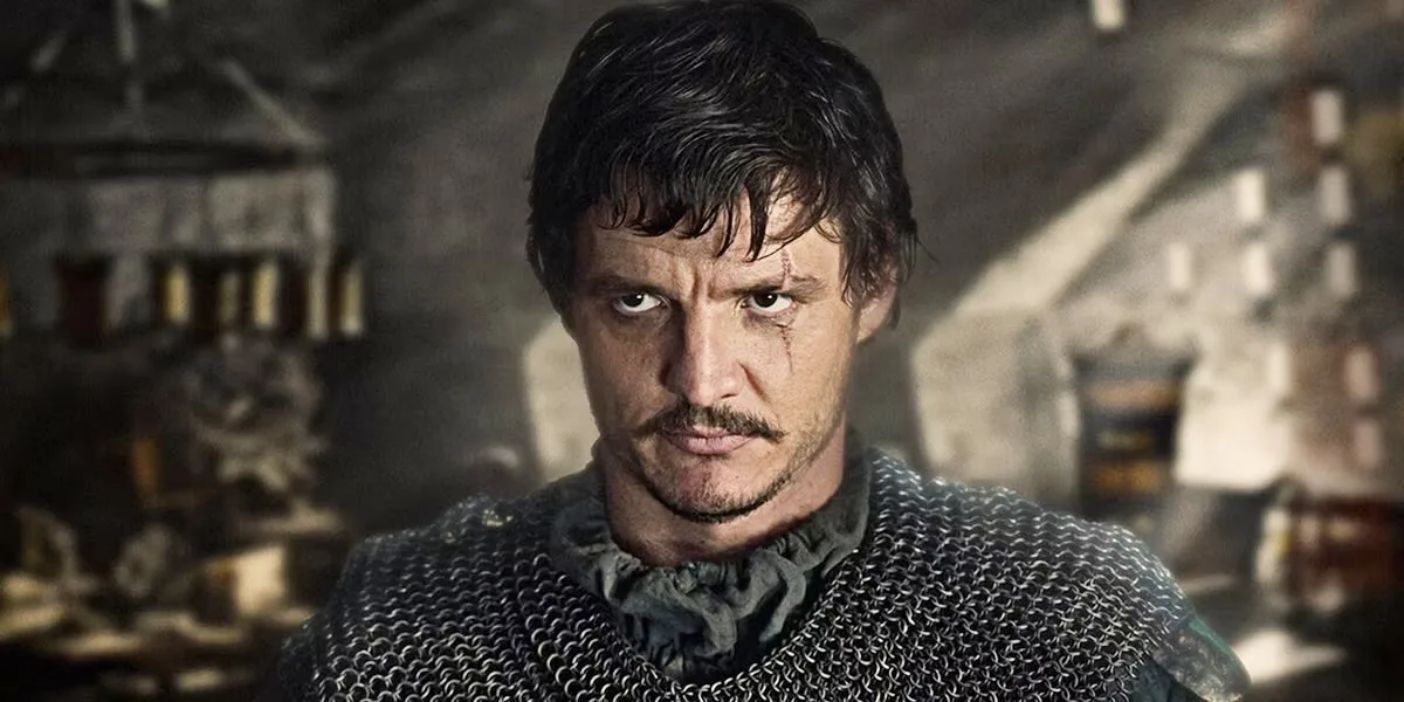
Released in 2016, this film blends creature feature elements with a historical setting during Emperor Renzong’s rule. It showcases world-class warriors fighting against a strange and powerful enemy – the Tao Tei – who unexpectedly return to China. The movie delivers thrilling action, exciting battles, and shifting alliances, creating a blockbuster experience. The story follows two Westerners who come to China searching for gunpowder, but quickly become involved in defending the country against the invasion. It’s a familiar premise, similar to many other action-packed, high-energy films.
When The Great Wall first came out, it didn’t do well with audiences or critics. However, people are now revisiting the film and appreciating its ambition. While it wasn’t a blockbuster hit, viewed today, it has a lot to offer. The movie is visually stunning and features strong acting, which makes its fantastical premise believable. It might not have been an awards contender, but it deserves a second look and more appreciation.
Critics & Audiences Initially Panned The Great Wall
Considering the hype surrounding The Great Wall, it’s worth examining why the film underperformed. Despite a $150 million budget and a worldwide gross of $334.9 million, it didn’t meet expectations, particularly in China where it earned $170.9 million – much less than studio executives had hoped. The film also experienced a sharp decline in viewership after its opening weekend. While it likely turned a profit based on production costs, when marketing and other expenses are factored in, the movie wasn’t as successful as anticipated, and negative word of mouth played a role.
Let’s be honest, The Great Wall just didn’t connect with audiences. While it was a unique concept when it came out, there wasn’t enough initial buzz to get people into theaters. And those who did go were let down – the script felt predictable and relied too heavily on tired clichés. Critics weren’t much kinder; it currently sits at a dismal 35% on Rotten Tomatoes, with audiences only slightly more generous at 42%. It’s a shame, really, considering the talent involved. It all just felt… formulaic. That was the general feeling at the time, and looking back, I’d have to agree.
It’s unusual for China to allow films made with Western involvement, with only a small number of American movies available to watch each year. Because of these restrictions, any successful foreign film often earns a large share of the profits, as seen with franchises like Marvel. However, The Great Wall didn’t capitalize on this potential. To make matters worse, the film received negative reviews from Chinese critics, and some feared it could harm the reputation of China’s film industry.
The film faced further criticism regarding its casting choices. Some people argued that The Great Wall prioritized American actors over Chinese performers. Director Zhang Yimou strongly refuted these claims, explaining to Entertainment Weekly that the casting was intentional. He envisioned a collaboration between Western and Chinese filmmaking styles, reflected in the diverse cast. While critics suggested the film relied on the ‘White Savior’ trope, Yimou maintained his artistic vision focused on a partnership and a unique perspective through the lead character.
The Great Wall Has a Stacked Roster of Talent
The film The Great Wall received its share of criticism, some of which was directed at director Zhang Yimou. Yimou is a highly respected filmmaker with a history of creating excellent movies, including Hero (2002), House of Flying Daggers, Curse of the Golden Flower, and Sniper. He collaborated with screenwriters Doug Miro and Carlo Bernard, known for Narcos. Given their combined experience, the story seemed destined for success. However, the narrative was originally developed by comic book writer Max Brooks, along with Edward Zwick and Marshall Herskovitz, who also worked on The Last Samurai.
The film brought together a highly experienced team, including Thomas Tull (known for The Great Wall), Charles Roven (Oppenheimer), Jon Jashni (Straight Outta Compton), and Peter Loehr (Kong: Skull Island), who was instrumental in establishing relationships with Chinese production companies. Legendary Pictures, Legendary East, and Atlas Entertainment joined forces with China Film Group, Le Vision Pictures, Dentsu Inc., and Fuji Television Network, Inc. This collaboration created a powerful global production network. China Film Group handled distribution in China, Universal Pictures covered Western territories, and Toho-Towa distributed the film in Japan. The film successfully achieved its goal of uniting several major film markets through this impressive team and distribution network.
The film’s visuals were shaped by a collaboration between Western cinematographer Stuart Dryburgh, known for films like Bridget Jones’s Diary and Alice Through the Looking Glass, and Beijing-born Zhao Xiaoding, whose credits include Curse of the Golden Flower and Shadow. The two cinematographers worked closely with the director. Editing was handled by Mary Jo Markey and Craig Wood, who previously worked on Pirates of the Caribbean: The Curse of the Black Pearl. The powerful score was composed by Ramin Djawadi, famous for his work on Game of Thrones and Westworld.
It’s surprising that a movie with such a talented and experienced cast didn’t turn out better. The list of actors is truly impressive – Matt Damon from The Martian, Tian Jing from Kong: Skull Island, Will Dafoe from Spider-Man, Andy Lau from Internal Affairs, Han Lu from See You Tomorrow, and many more. Each of these performers has been consistently excellent for years and brought their skills to The Great Wall. Given the incredible cast, strong production team, and substantial funding, it’s hard to understand why the film wasn’t successful.
The Great Wall Continually Shocks Viewers With Its Visuals
Let’s begin with the film’s visuals. Director Zhang Yimou consistently demonstrates a strong and creative approach to filming, and this movie is no exception. While the computer-generated monsters could be improved, the grand scale of many scenes is impressive. Yimou frequently creates a sense of epic storytelling, sometimes using unconventional techniques to bring the legend to life for viewers.
This movie is anything but boring, and it feels refreshingly straightforward in a time when many films are overly complex. The Great Wall cleverly combines traditional weapons and warfare with futuristic monster designs. This unusual mix works surprisingly well, keeping the film grounded even with its fantastical premise.
Consider the scene during the climactic battle, where the crew is surrounded by stained-glass windows. The colorful light they cast onto the fighting adds a touch of reality and another layer of visual interest, blending with the film’s overall design. It’s a striking image that feels both vivid and fantastical. This isn’t the only example of impressive color use in The Great Wall; the film consistently showcases the vibrant hues of its architecture, costumes, and natural landscapes.
The film’s music effectively matches its epic scope and enhances the acting. The performers deserve credit for bringing depth and subtlety to the material, even when it could have been handled superficially. While The Great Wall initially seems like a familiar and uninspired idea with a weak story, the director’s vision and skillful execution are undeniable. The film succeeds because all of its elements work together harmoniously. Despite negative reviews, a closer look reveals impressive work in every aspect of the production, resulting in a surprisingly strong final product.
All These Years On, Viewers Are Finding The Great Wall Again
While The Great Wall might not reach the heights of films like Metropolis, it’s unfair to say it lacked purpose. Compared to modern blockbusters, it actually offered a surprisingly thoughtful take on the genre, and did so with impressive visuals. Ultimately, The Great Wall is simply a fun and enjoyable movie. Some viewers might have expected a film more similar to Zhang Yimou’s other, more artistic work, but that misses the point of what this film was trying to achieve.
The film aims to combine the styles of movies like Hero and Crouching Tiger, Hidden Dragon with classic Hollywood filmmaking techniques, resulting in something unique. With that understanding, viewers might appreciate the effort and sincerity behind The Great Wall, which doesn’t try to be something it’s not. In fact, its straightforward approach might be what makes it special. It seems audiences are starting to reconsider The Great Wall, as it’s recently become popular again.
It’s hard to say exactly why, but The Great Wall is unexpectedly gaining popularity on American streaming services. It could be because it offers something different from typical Hollywood blockbusters. Maybe viewers are drawn to its unique style, which prioritizes stunning visuals over the often-drab settings found in similar monster movies. Or perhaps it’s the presence of well-known and respected actors at the peak of their careers that’s attracting attention.
Ultimately, The Great Wall deserves another look, appreciated for what it is rather than what people expected it to be. At its core, the film demonstrates a genuine reverence for filmmaking as an art form.
Found an error? Send it so it can be corrected.
Read More
- United Airlines can now kick passengers off flights and ban them for not using headphones
- Crimson Desert: Disconnected Truth Puzzle Guide
- All 9 Coalition Heroes In Invincible Season 4 & Their Powers
- Mewgenics vinyl limited editions now available to pre-order
- Grey’s Anatomy Season 23 Confirmed for 2026-2027 Broadcast Season
- Viral Letterboxd keychain lets cinephiles show off their favorite movies on the go
- Does Mark survive Invincible vs Conquest 2? Comics reveal fate after S4E5
- The Boys Season 5 Spoilers: Every Major Character Death If the Show Follows the Comics
- All Golden Ball Locations in Yakuza Kiwami 3 & Dark Ties
- How to Get to the Undercoast in Esoteric Ebb
2026-03-16 18:13