This year marks the 60th anniversary of a truly groundbreaking franchise. It’s historic as the first storytelling world to successfully move from television to the big screen. Gene Roddenberry’s creation became so popular that after the original cast finished their film appearances, the lead roles were passed on to the cast of The Next Generation. However, despite 14 films being made, only three of them are considered better than their original TV series counterparts.
A common joke among Star Trek fans is that only about 30 out of the 78 episodes of the original series are truly great. But that’s part of what makes Star Trek so beloved – everyone has different opinions on what makes an episode or movie good. While fans all have their favorites, only three of the Star Trek films manage to reach the same level of storytelling, excitement, and dramatic impact as the very best episodes of the original series or The Next Generation.
Star Trek II: The Wrath of Khan Proved It Belonged on the Big Screen by Sticking to Its TV Roots
The first Star Trek film went way over budget and didn’t impress reviewers or many fans, so Paramount removed Gene Roddenberry from the sequel. Veteran producer Harve Bennett took over, aiming for a more cinematic sci-fi experience but using techniques learned from television. Working with writer and director Nicholas Meyer, they brought back a villain from the original series – Khan Noonien Singh, played by Ricardo Montalban, who first appeared in the episode “Space Seed.”
As a huge Star Trek fan, the backstory of Khan is just fascinating and tragic. Basically, he wasn’t just a villain, but a product of genetic engineering, and he ended up stranded with his crew first in space, then on this beautiful, lush planet called Ceti Alpha V. But things went horribly wrong – a disaster turned paradise into a wasteland. And that’s where the real heartbreak comes in: all of Khan’s rage, right down to his dying moments, was directed at the one man who’d left him there: Captain Kirk. It’s a really powerful, personal conflict that drives the whole movie, The Wrath of Khan.
Bennett and Meyer weren’t initially fans of Star Trek, but they understood the movie needed to capture the grand scale of the original series while also being something more. However, they were working with very limited funds. This meant focusing the story on the established characters, particularly an older Kirk, but the overall danger had to be larger than a simple personal conflict.
The Wrath of Khan delivered everything fans wanted, including a thrilling ship-to-ship battle, despite the fact that Ricardo Montalban and William Shatner never filmed scenes together. The movie continued the story of the USS Enterprise crew, expanding on established details – from the 23rd-century setting and beyond.
It’s funny, but the famous “no-win scenario” test was created because Gene Roddenberry, upset about something, let slip that Spock died in the movie. Despite this accidental beginning, the test became a central idea of the film. Captain Kirk, however, wouldn’t accept that any situation was impossible, believing he could always find a way to succeed.
Unlike most conflicts in Star Trek, there’s no chance for peace or negotiation with Khan. This showdown is a fight to the finish, using starships and weapons like phasers and photon torpedoes. It comes at a high price – even though Spock returns in a later movie, his death is still deeply moving, especially because he sees his sacrifice as the only way to resolve an impossible situation.
Star Trek VI: The Undiscovered Country Is a Perfect Ending and a Timeless Allegory
Although the Klingons are known as the main villains of the original Star Trek series, they actually only appeared in seven episodes over its first three seasons. Created by Gene L. Coon – who developed many important parts of Star Trek’s history – they were meant to represent the Cold War rivalry between the United States and the Soviet Union.
After the Cold War ended, Nicholas Meyer cleverly used the show’s history to create a fitting story for the last movie featuring the original cast. Despite years of fighting – including Klingons killing Kirk’s son, as seen in The Wrath of Khan – Kirk’s final mission as captain of the USS Enterprise was to achieve peace with their long-time enemies. However, a conspiracy involving both Klingons and Starfleet officers threatened to sabotage the peace talks and reignite the conflict.
The original opening scene for The Undiscovered Country didn’t work well and would have weakened the story. Luckily, budget limitations led to a change that actually improved the film. By keeping production costs down and using a limited number of sets, Star Trek VI managed to tell a large-scale story, taking the crew from Earth to a Klingon prison and including a space battle. However, this time, the conflict was resolved through diplomacy, staying true to the optimistic spirit of Roddenberry’s vision.
The crew’s deep-seated hatred for the Klingons brought out the worst in them. That’s what made their courageous attempt to rescue the Klingon leader and promote peace so incredibly inspiring. Even after decades of adventures, Kirk and his crew continued to grow and improve as individuals.
This story resonates beyond simply marking the end of an era for the characters and the Cold War. The crew senses they’re being left behind as the universe changes, symbolized by the upcoming retirement of the USS Enterprise. Ultimately, it’s a tale about the fear of the future, particularly the feeling of becoming irrelevant in a new and unfamiliar world.
What I really love about Star Trek is how it shows that even the original crew, knowing their time was ending, could still teach us something. Gene Roddenberry always dreamed of a future free from the silly biases of the 60s, and The Undiscovered Country took that even further. It wasn’t about reaching a point of tolerance, but about tolerance itself being the never-ending goal – the true mission of the Enterprise.
Star Trek: First Contact Went to the Past to Bring The Next Generation Cast Into the Future
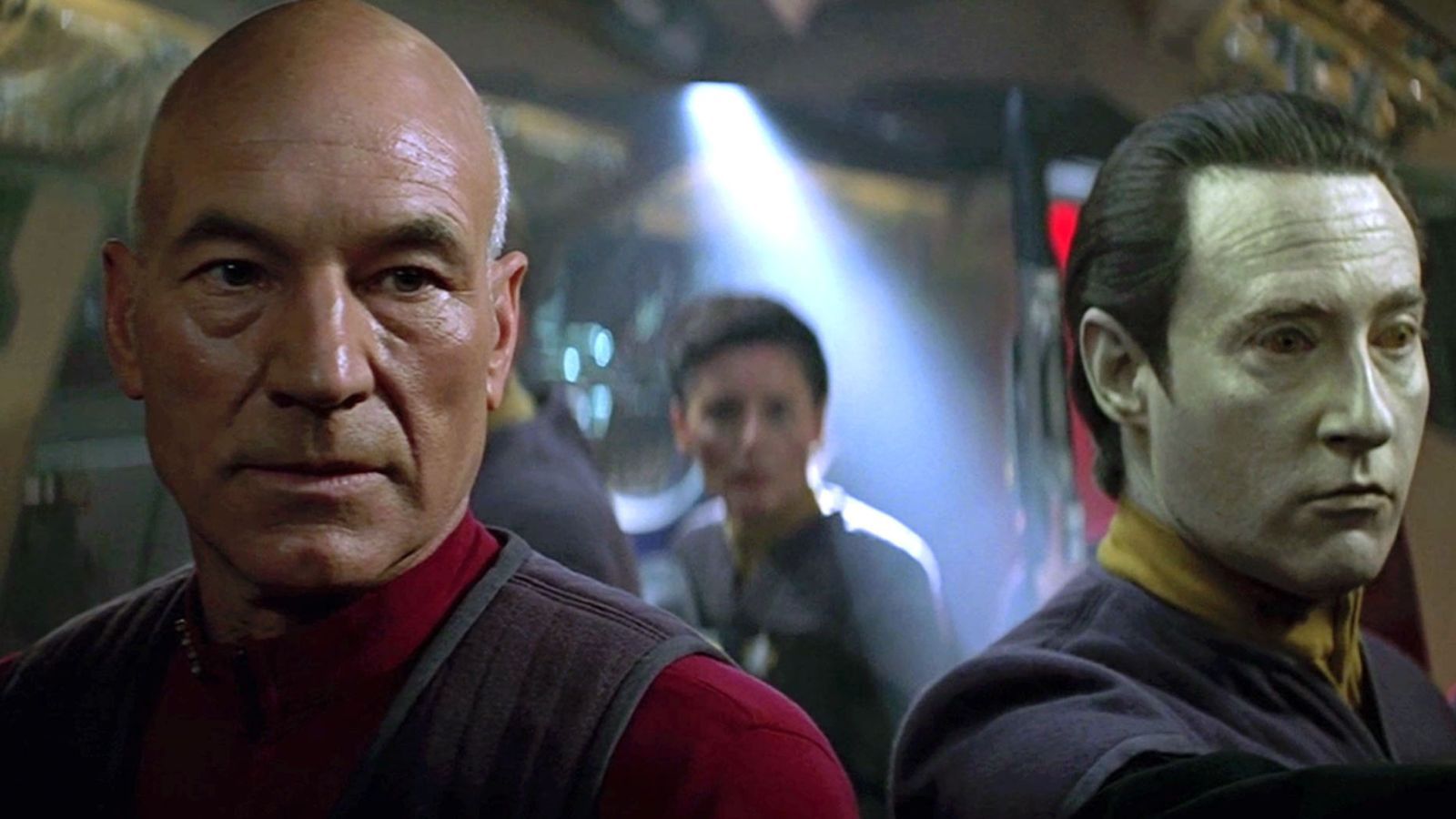
Both The Wrath of Khan and The Undiscovered Country took inspiration from earlier Star Trek episodes, with the former drawing from a single installment and the latter wrapping up a long-running storyline. First Contact uniquely combined these approaches. The Borg were introduced as a relentless enemy for the crew of the USS Enterprise-D. Though appearing in only a few episodes, like the Klingons before them, they quickly became hugely influential.
The two-part episode “The Best of Both Worlds” featured a traumatic event: Captain Jean-Luc Picard was assimilated by the Borg. In First Contact, the Borg launched a massive attack on the Federation, almost succeeding. Captain Picard, now commanding the new USS Enterprise-E, and his crew managed to defeat the Borg ship. However, the Borg weren’t truly defeated – they used time travel to go back in time and attempt to wipe out Starfleet before it even began.
Similar to how the original Enterprise crew faced conflict with the Borg, the characters of The Next Generation were also challenged by them. The Borg invaded their ship, capturing and assimilating crew members. Even though Captain Picard had been portrayed for seven seasons and in a previous movie as a calm, reasonable, and caring leader,
He’s motivated by more than just saving the ship or even the galaxy’s history. When talking about the Borg’s actions, he vows to make them pay, revealing that his quest isn’t about justice at all, but about a harsh and unforgiving desire for revenge.
The film included a character from the original Star Trek series—the inventor of warp drive. However, the movie reimagined Zefram Cochrane, not as a simple hero, but as a complex and flawed individual. Instead of lessening his impact, this realistic portrayal actually highlighted the depth of his vision and the significance of his accomplishment.
In First Contact, the crew of the Enterprise races to prevent the Borg from conquering Earth while, back on the planet, another team ensures the success of Zefram Cochrane’s historic first warp flight. This flight leads to humanity’s groundbreaking encounter with the Vulcans, and the hopeful future that Star Trek creator Gene Roddenberry envisioned. The film cleverly contrasts these two storylines, highlighting humanity at its most desperate and its most promising. Ultimately, Star Trek reminds us that even in our darkest moments, the potential for a better future exists.
Found an error? Send it so it can be corrected.
Read More
- United Airlines can now kick passengers off flights and ban them for not using headphones
- How to Complete Bloom of Tranquility Challenge in Infinity Nikki
- Gold Rate Forecast
- How to Solve the Glenbright Manor Puzzle in Crimson Desert
- Katanire’s Yae Miko Cosplay: Genshin Impact Masterpiece
- All Golden Ball Locations in Yakuza Kiwami 3 & Dark Ties
- All Itzaland Animal Locations in Infinity Nikki
- 8 Actors Who Could Play Blackbeard In One Piece Live-Action Season 3
- All 10 Potential New Avengers Leaders in Doomsday, Ranked by Their Power
- A Dark Scream Theory Rewrites the Only Movie to Break the 2-Killer Rule
2026-03-27 22:13