
As a huge fan of Baldur’s Gate 3, I have to say Astarion’s questline really messed with my head! Playing an Oath of the Ancients Paladin, I was genuinely torn. I’m all about preserving life, but the game throws this impossible choice at you: help a friend gain power through something really dark, or try to stop him and risk unleashing a ton of vampires on the world? There’s no easy answer, and it really forced me to think about what I truly believed in. Honestly, it pushed a lot of players – myself included – to seriously consider breaking our oaths, even when we were trying to do the right thing. We’re going to break down this tough decision and look at other moments in the game that can challenge your beliefs and potentially lead you down a different path.
Key Takeaways
- Keep your oath by choosing compassion first: Your words are as mighty as your sword. To stay true to the Oath of the Ancients, always select diplomatic dialogue options, show mercy, and avoid attacking any creature that isn’t already hostile.
- Good intentions can still lead to a broken oath: Be careful in morally complex situations, like Astarion’s companion quest. The game sometimes penalizes you for outcomes, not just intentions, so an action you think is heroic might still break your vow if it leads to greater chaos.
- Falling from grace is a choice, not just a punishment: If you break your oath, you can either pay gold to the Oathbreaker Knight to restore it or embrace a new identity. This allows you to pivot to the powerful Oathbreaker subclass, which offers a completely different set of dark abilities.
What is the Oath of the Ancients?
If you want to play a paladin dedicated to hope, beauty, and the wonders of nature, the Oath of the Ancients is a great choice. Often called the “nature paladin,” this subclass suits players who prioritize protecting the good in the world through kindness and understanding. It focuses less on strict rules and more on fostering life and happiness. Imagine yourself as a protector of everything lovely and pure, fighting against darkness with optimism and powerful divine energy.
This oath is ideal for paladins who want to be a powerful force for good in the world. They’re motivated by a deep love for all living things and dedicated to healing, protecting, and inspiring others. The path is built on four core beliefs that influence everything they do, from everyday interactions to world-changing decisions. Staying true to these beliefs is essential for maintaining their power, though even the most virtuous paladin can sometimes falter. Ultimately, this oath is about being a true beacon of hope, not by simply following rules, but by genuinely valuing and connecting with life itself.
The Four Tenets: Kindle, Shelter, Preserve, and Be the Light
The Oath of the Ancients has four core principles that guide your actions. It’s important to know what these are to maintain your commitment to the oath.
- Kindle the Light: This is all about spreading hope. Through acts of kindness, mercy, and forgiveness, you bring light to dark places. This means helping those in need, offering second chances, and choosing compassionate dialogue options.
- Shelter the Light: Your duty is to protect the innocent and stand against those who would harm them. This tenet calls you to be a shield for the weak, defending life and beauty wherever it is threatened.
- Preserve the Light: This tenet focuses on your connection to nature. You are a steward of the natural world, expected to protect its beauty and order. Actions that defile nature or show cruelty to animals can break this part of your oath.
- Be the Light: You must embody the principles you fight for. This means acting with honesty, courage, and joy. You are a beacon of hope, and your actions should inspire others to embrace the light as well.
These sacred tenets are your moral compass, guiding you to uphold goodness in its purest form.
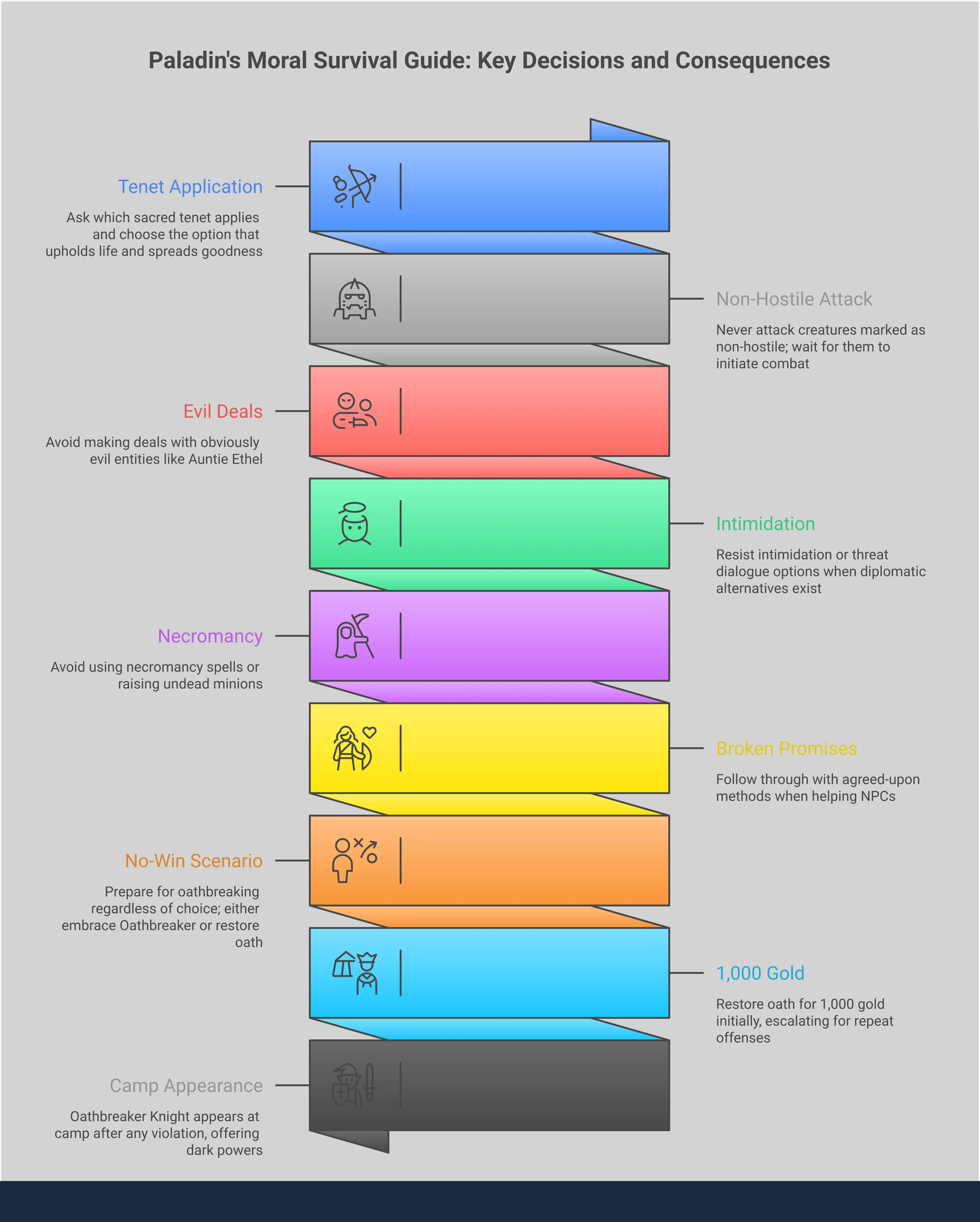
Why Nature-Lovers Choose This Oath
This paladin oath appeals to players who want their character’s power to come from a connection to nature. Unlike other paladins who gain strength from gods or strict laws, the Ancients paladin draws power directly from the life force of the natural world. They find the divine in things like forests, flowers, and the loyalty of wild creatures. This oath is perfect for characters with backgrounds as outlanders or folk heroes, or for anyone who wants to play a character with a nature-focused worldview similar to a druid.
What really draws me to the Ancients paladin is that they’re all about good, not just following the law. It’s awesome because you don’t play a character bogged down in rules and regulations. Instead, you’re driven by a strong sense of protecting people and bringing happiness wherever you go. That means you can make decisions based on what feels right, even if it means breaking a few rules along the way! If you’re like me and want to play a powerful protector who’s also kind, compassionate, and connected to the natural world, this oath is absolutely perfect.
How to Break Your Oath of the Ancients
Interested in becoming an Oathbreaker, or worried about accidentally losing your connection to the Ancients? It’s surprisingly easy to stray from your vows. The Oath of the Ancients focuses on protecting life and goodness, but the world is full of difficult choices. Here’s a look at how quickly you can fall from grace – or how to avoid it – and attract the attention of a very imposing knight.
Attacking Innocents
It might seem clear, but being “innocent” in this context means more than just protecting people. Your commitment also includes safeguarding creatures and the environment. For instance, attacking a peaceful animal will break your promise. Similarly, choosing to attack someone in a conversation when you could have resolved things peacefully will also fail your commitment. The game notices if you needlessly make situations worse. Choosing violence when words would have sufficed doesn’t build positivity – it destroys it.
Siding with Evil
Often, a decision isn’t simply about what you do, but who you support. Agreeing to help someone clearly evil is a serious break from your promises. For instance, making a deal with someone like Auntie Ethel means you’re supporting everything your beliefs oppose. There’s no room for compromise here – it’s a direct betrayal of your values. Similarly, assisting destructive forces, like the goblins at the Emerald Grove, means you can’t expect to maintain powers rooted in goodness and protection of nature.
Ignoring Peaceful Solutions
Many players struggle with this aspect of the game. Your oath demands you be a symbol of hope, so try to find peaceful solutions whenever possible. If you promise to help someone but immediately use violence, you’ll break your oath. For example, if you agree to free the Deep Gnomes in Grymforge but attack the Duergar without first trying to negotiate, you risk an oathbreak. The game will often recognize aggressive actions, even if directed at those who aren’t directly hostile. Remember to always prioritize diplomacy and try to talk things out before resorting to fighting, to stay true to your oath.
Raising the Dead
The Oath of the Ancients centers on protecting life and the natural world. Necromancy completely violates these principles. Casting spells like Animate Dead to raise undead creatures is a clear breach of your oath, as it corrupts the natural cycle of life and death for personal benefit. This is considered a desecration of nature and directly opposes everything you promised to defend. If you desire to command the undead, consider becoming an Oathbreaker instead.
The Astarion Quest: An Oathbreaker’s Dilemma
Astarion’s personal questline is a standout in Baldur’s Gate 3, but it presents a huge challenge for players, especially Paladins. You’ll face incredibly difficult moral choices when Astarion learns about a ritual to become a powerful Vampire Ascendant. This ritual demands the sacrifice of 7,000 vampires – his own ‘siblings’ who suffer under the control of his old master, Cazador. The quest makes you balance Astarion’s desires for freedom and power against the lives of thousands of creatures, and consider the wider impact on the world.
Playing an Ancients Paladin really challenges your dedication to goodness and light. Every conversation and decision you make feels incredibly important. You’ll face tough choices, like whether to help a friend even if it means risking darkness, or to refuse and potentially cause different problems for Baldur’s Gate. The game doesn’t shy away from difficult situations, and your choices will significantly affect your character, your companion, and your Paladin oath. It’s a perfect illustration of how the game makes you grapple with the complex side of being a Paladin.
The Morality of the Vampire Lord Ritual
The Vampire Ascendant ritual is deeply tied to dark magic, immediately raising concerns for any Paladin, especially those following the Ancients. For an Ancients Paladin, the conflict is straightforward: their oath centers around protecting life and upholding the light. Letting Astarion sacrifice 7,000 souls – even if they are vampires – is a seriously dark deed. The game strictly enforces the rules of the Oath of the Ancients, and a mass sacrifice is a blatant breach. Essentially, you’re choosing to end thousands of lives to empower a single individual, a decision that directly opposes the Paladin’s commitment to protecting life and preserving goodness.
Why Stopping the Ascension Breaks Your Oath
This is where playing a Paladin gets complicated, and many players unexpectedly become Oathbreakers. If you prevent Astarion from finishing the ritual, you technically break your sacred oath. It seems strange, doesn’t it? You’ve just stopped a terrible ritual and saved 7,000 people from being sacrificed. However, stopping the ritual has unforeseen consequences. By doing so, you either leave 7,000 vampire spawn trapped under Cazador’s control, or, if he’s defeated, you release them into the world. The game sees this as unleashing a dangerous plague of vampires, which goes against the core principles of the Devotion and Ancients oaths – both of which are about protecting others and upholding the greater good.
The 7,000 Spawn Dilemma
You’re faced with a difficult choice: allow one incredibly powerful vampire to exist, or risk unleashing a swarm of 7,000 weaker vampires onto the Sword Coast. The game argues that letting so many vampires loose would be a far worse outcome. Remember, your commitment isn’t just about staying ‘good’ yourself – it’s about protecting everyone. As the game explains, even if you have good intentions, actions that harm innocent people have consequences. If you stop the ritual, you’ll be failing to protect people from a dangerous threat, and the game will recognize this, ultimately leading you to break your oath.
What Happens When You Break Your Oath?
You’ve made a choice that goes against your principles of goodness and light – perhaps you gave in to negative thoughts, or were persuaded by someone with questionable motives. Whatever happened, breaking your Oath of the Ancients is a significant moment in your Baldur’s Gate 3 adventure. It’s not something your companions will easily overlook, and it will fundamentally change who your character is, what they can do, and how others see them.
The game doesn’t let you ignore the impact of your choices. The consequences come quickly and are significant, unlocking a completely new, more challenging path for your Paladin. It’s much more than a minor penalty – you’ll soon meet someone who offers you a different kind of strength. This is a standout moment for Paladin players, as it forces you to examine your character’s values and decide what kind of hero – or even anti-hero – you ultimately want to be.
Losing Your Paladin Powers
Okay, so the very first thing that hits you when you break your Paladin oath is just… silence. It’s like a switch flipped, and suddenly all that divine energy you were used to feeling is just gone. Your connection to the gods is severed, and that means all your Paladin abilities vanish with it. No more Channel Divinity, no more holy smites – it genuinely feels empty. It’s not just a story thing, either; the game mechanics actually reflect how far you’ve fallen. You can’t call on that light anymore because you broke your sacred promise, plain and simple. Losing your powers right away is a really powerful reminder of what you’ve done, and it makes you realize you’re at a turning point.
Becoming an Oathbreaker
Soon after you break your oath, a powerful and intimidating figure will arrive at your camp – the Oathbreaker Knight. He’s not there to punish you, but because he recognizes a shared path. He’ll offer you the chance to fully embrace your broken vow and become an Oathbreaker, a unique Paladin class. This transforms your holy abilities into powers over the undead and the ability to instill fear, turning you from a symbol of hope into a force of darkness. It’s a compelling choice, particularly since your original powers are now lost.
How Your Companions React
As a fan, I’m really excited about how your choices actually matter in this game. It’s not just about ticking boxes; your party members are paying attention! If I suddenly start acting evil, characters like Wyll and Karlach – who are all about doing the right thing – will definitely call me out on it, especially if I’m being cruel. It’s awesome because it adds so much depth – I’ll have to explain myself or face their disapproval. If I’m playing a character who follows the Oath of the Ancients, breaking those vows of kindness and light will seriously affect my relationships, making every decision feel way more impactful.
Can You Get Your Oath Back?
You’ve fallen from grace and broken your oath, but don’t feel too bad – it happens, especially when provoked! This isn’t a dead end, though; it’s the start of a new adventure. Now you have a decision to make: you can pay to regain your former status, or embrace your freedom and explore a more shadowy route.
Meet the Oathbreaker Knight
When you return to camp to rest, you’ll encounter a powerful new figure: the Oathbreaker Knight. This undead warrior appears specifically for Paladins who have broken their sacred vows. He doesn’t come to judge you, but to offer a unique chance to harness the power of your fall. He can initiate you into the Oathbreaker subclass, unlocking dark new abilities like commanding the undead and instilling fear – potent powers if you’re willing to embrace them.
The Price of Redemption
If you regret breaking your oath and want to return to your former allegiance, the Oathbreaker Knight can help, but it won’t be free. You’ll need to pay a fee to restore your original oath. The first time, it costs 1,000 gold, but the price increases with each subsequent broken oath, eventually reaching a hefty 10,000 gold. This makes redeeming yourself a significant decision – you’ll have to weigh whether your character’s values are worth the cost, or if it’s better to embrace your darker path.
How to Keep Your Oath of the Ancients
Choosing to play an Oath of the Ancients Paladin means dedicating yourself to being a source of hope, which is a wonderful idea. However, it can be tricky – one mistake and you might find yourself facing criticism from others who don’t share your values. Luckily, staying true to your oath isn’t too difficult if you remember what’s most important: protecting life and goodness in the world. This makes you the moral center of your group, even if your companions don’t always appreciate it.
The Oath of the Ancients is put to the test by your words, your actions, and who witnesses them. This oath demands consistent goodness – always choosing mercy, peace, and protecting those who can’t protect themselves, even when it’s difficult. Imagine you’re a protector of the natural world, like a park ranger, but with a sword! If you consistently act to safeguard nature and its creatures, you’ll maintain your powers and reputation, and avoid facing the consequences of breaking your oath.
Choose Your Words Carefully
Playing an Ancients Paladin means your conversations are just as crucial as your fighting ability. You’ve dedicated yourself to “Kindle the Light,” and that begins with how you treat others. When talking to someone, always choose the most compassionate, optimistic, or peaceful response. Steer clear of threats, bullying, or anything that might start a fight. Focus on calming tense situations and showing mercy when you can. If someone seems afraid or angry, try to reassure them before resorting to force. Remember, your words are your most powerful weapon for doing what’s right.
Think Before You Act
It might seem simple, but many Paladins struggle with this: your oath requires you to protect all life, not just fight evil. That means you can’t attack creatures unless they’re actively threatening you. A peaceful goblin or an owlbear protecting its young should be left alone. The Oath of the Ancients specifically emphasizes preserving life and goodness, and that includes avoiding unnecessary cruelty or the manipulation of life and death, like using necromantic spells. Using spells like Animate Dead directly violates your oath by disturbing the natural cycle. Always try to find a peaceful solution before resorting to violence.
Manage Your Party and Witnesses
What you do isn’t the only thing that matters – how you do it and where you are also count. Even if you’re doing something good, like rescuing people from slavers, you can still fail if your actions are seen as breaking a promise or being dishonorable. For instance, if you agreed to handle a situation in a specific way, just rushing into a fight could be considered a betrayal of your word. This is particularly important in places like Grymforge, where even helping gnomes by attacking Duergar might be viewed as starting a fight. Always consider your surroundings and any commitments you’ve made, as your reputation is at stake and others are always observing.
Breaking Your Oath in Honor Mode
Playing an Ancients Paladin in Honor Mode is incredibly challenging because you only have one save file. Every choice you make has lasting consequences, so sticking to your Paladin oath is crucial. A single mistake or lapse in judgment can lead to a permanent fall to the darker side, and there’s no way to undo it. If you’re determined to stay true to your oath, you’ll need to be very careful. Conversely, if you want to become an Oathbreaker, Honor Mode ensures that transition is quick and final.
The Stakes are Higher
Normally, if you break a promise in the game, you can simply restart from a saved point. But Honor Mode changes that – every decision is permanent. Your commitment is always being tested, and even small errors can lead to significant problems. Things you might do in the moment, like harming a harmless creature or choosing to be confrontational when you could be peaceful, will immediately break your oath. The game doesn’t offer second chances, and the moment you falter, a special character, the Oathbreaker Knight, will show up at your camp to confront you about your actions.
No Second Chances
Honor Mode doesn’t offer second chances. Every decision matters, so you need to carefully consider what might happen next. For instance, if you’re in Grymforge and promise to help the deep gnomes, attacking the Duergar slavers before rescuing them could be seen as breaking your promise. This immediately voids your oath. It’s a harsh consequence, but once an oath is broken, it’s permanent. The Oathbreaker Knight will appear, and you’ll have to choose between paying a large sum to restore your oath or accepting darker abilities as an oathbreaker.
Is the Oathbreaker Path Worth It?
You’ve reached a turning point. Perhaps you defeated an enemy who was about to attack, or you made a difficult decision that went against your principles. Now you’re questioning if it was worth compromising your values. Choosing to become an Oathbreaker in Baldur’s Gate 3 is a powerful roleplaying opportunity, drastically altering your character’s powers and storyline. It’s a choice between staying true to your original ideals and embracing a darker, more practical route. There’s no easy answer, but it’s important to understand the benefits and drawbacks before you decide.
Breaking Your Oath for the Greater Good
The game’s sense of right and wrong can sometimes feel overly simplistic. You might end up in situations where doing something technically ‘wrong’ actually feels like the most heroic course of action. For instance, you could agree to help some slave traders only to betray them and free their captives. While you know you did the right thing, the game might see it as breaking a promise and acting immorally. These moments create really compelling roleplaying opportunities, forcing you to decide if you’re a Paladin who strictly follows the rules, or one who focuses on doing what’s truly right, even if it requires compromise. The game makes these difficult choices feel important and meaningful.
Gameplay Perks vs. Roleplay Purity
The biggest appeal of becoming an Oathbreaker is the incredible power you gain. Once you break your oath, you’ll be contacted by the enigmatic Oathbreaker Knight, who will grant you new abilities. This subclass allows you to command the undead, instill fear in your enemies, and deal damaging necrotic energy – all of which is really powerful. But it does come with a cost to your character’s story. The Oath of the Ancients is about goodness – protecting life and light. Trading that for control over skeletons is a significant change. Ultimately, you need to decide if staying true to your character’s original beliefs is more important than embracing the dark power that comes with breaking your oath.
Frequently Asked Questions
Yes, the Oath of the Ancients is a great option for players new to Paladins. It’s easy to understand – you’re meant to be kind, protect those who can’t protect themselves, and appreciate the natural world. This leads to a classic heroic experience in a game like Baldur’s Gate 3, where you’ll often try to find peaceful solutions and defend the helpless, creating a rewarding story. Just remember that this oath means showing kindness to all creatures, even animals and those who aren’t attacking you, which can sometimes be overlooked by new players.
Players most often break this oath by rushing into action. They frequently attack creatures or characters before a conflict is truly underway, even when there was a chance to handle things peacefully. For instance, attacking the goblins at the Druid Grove before they become aggressive, or choosing a confrontational dialogue option that leads to a fight, can cause you to break your vow. Keep in mind, your oath prioritizes peace – you’re meant to be a negotiator first, and a fighter only when necessary.
Even if your Paladin breaks their sacred oath, it doesn’t necessarily mean you’re playing an evil character. Sometimes, breaking an oath happens when you believe it’s the right thing to do, even if it goes against your vows. You can create a Paladin who’s willing to make tough choices and use questionable methods to achieve a positive outcome – a complex character who operates in the gray areas of right and wrong.
It’s understandable to wonder why stopping Astarion’s ritual counts as breaking your oath, especially since it feels like the right thing to do. However, the game sees things differently. While you saved 7,000 people from being sacrificed, preventing Astarion’s ascension actually releases thousands of newly created, dangerous vampires into Baldur’s Gate. Your oath is to protect the world, and the game considers unleashing such a large threat a failure to do so, resulting in an oathbreak.
Whether or not you should pay to restore your oath really comes down to your character’s story and how you like to play. If you accidentally broke your oath and want to return to being a force for good, spending the gold to fix it makes sense, as it will match your character’s actions. But if you’re enjoying the unique powers and the darker storyline that comes with being an Oathbreaker, sticking with that path can be really rewarding. It’s a powerful subclass with abilities that let you control the battlefield, so it’s a good choice if you want to try something different.
Read More
- United Airlines can now kick passengers off flights and ban them for not using headphones
- Crimson Desert: Disconnected Truth Puzzle Guide
- All 9 Coalition Heroes In Invincible Season 4 & Their Powers
- Mewgenics vinyl limited editions now available to pre-order
- Assassin’s Creed Shadows will get upgraded PSSR support on PS5 Pro with Title Update 1.1.9 launching April 7
- Grey’s Anatomy Season 23 Confirmed for 2026-2027 Broadcast Season
- Viral Letterboxd keychain lets cinephiles show off their favorite movies on the go
- Does Mark survive Invincible vs Conquest 2? Comics reveal fate after S4E5
- Crimson Desert Guide – How to Pay Fines, Bounties & Debt
- How to Get to the Undercoast in Esoteric Ebb
2026-03-17 14:19