Finance
What to know:
- The U.S. Treasury, ever the vigilant guardian of financial order, has sanctioned six individuals and two companies for aiding North Korea in converting a tidy sum of $800 million into cryptocurrency in 2024. A most unseemly business, if ever there was one.
- Officials revealed that IT workers, seemingly as dashing as they are deceitful, used fake documents and stolen identities to secure jobs, funneling their earnings back to Pyongyang. One might say they were as loyal as a well-trained penguin.
- The sanctioned network, a veritable smorgasbord of crypto tools, allegedly utilized exchanges, wallets, DeFi services, and cross-chain bridges. It was linked to 21 wallet addresses, each more elusive than the last, across Ethereum, Tron, and Bitcoin.
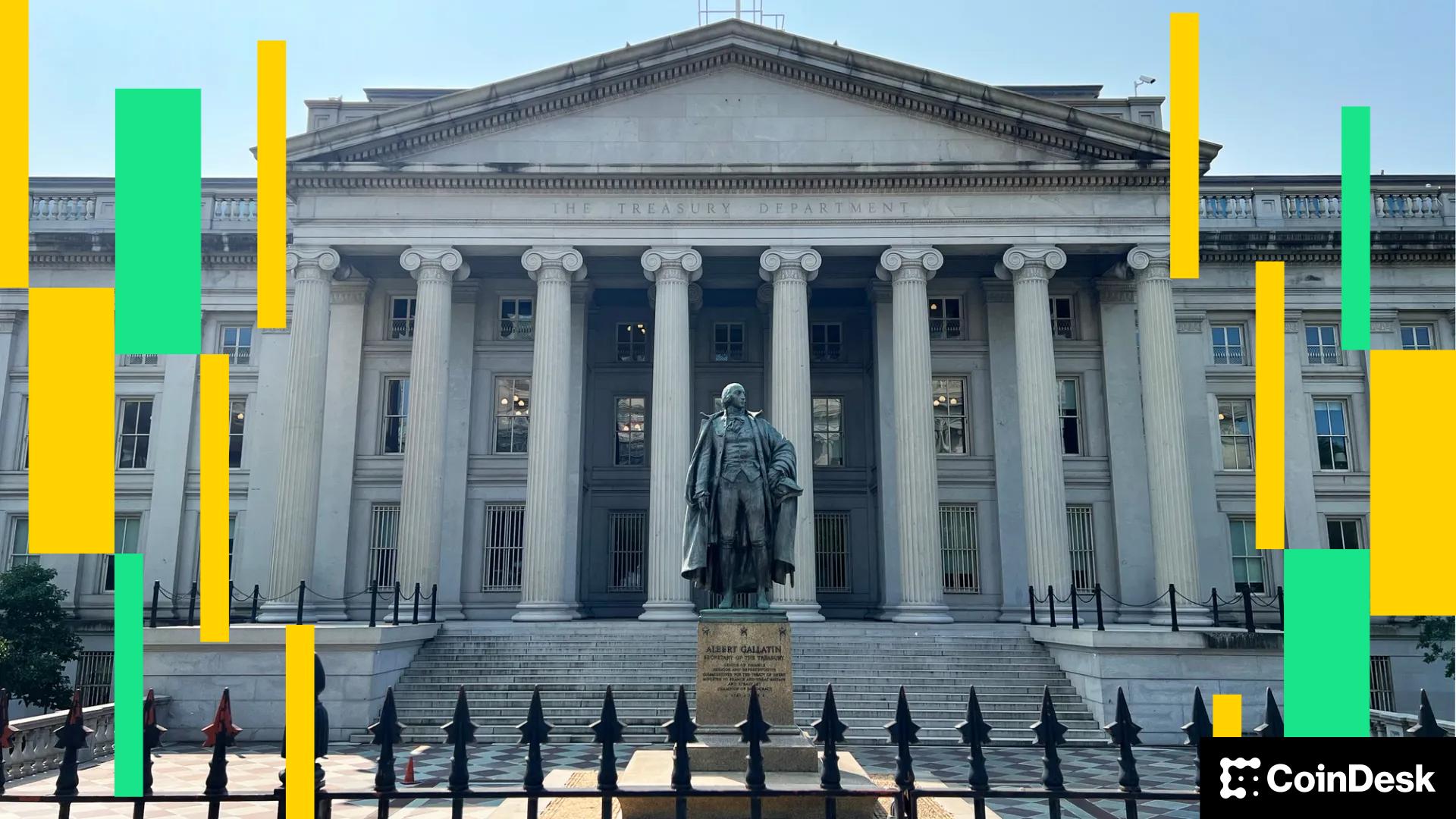
The U.S. Treasury Department, in a move as dramatic as a Shakespearean tragedy, imposed sanctions on six individuals and two companies it claims helped North Korea convert $800 million in 2024 into crypto. A noble effort, though one wonders if it will deter the DPRK’s penchant for mischief.
The Treasury’s Office of Foreign Assets Control (OFAC) declared that the operation involved IT workers placed into foreign companies, their earnings siphoned back to Pyongyang. The network, it seems, operated with the efficiency of a well-oiled tea kettle, spanning Vietnam, Laos, and Spain.
The Democratic People’s Republic of Korea, ever the master of subterfuge, has long targeted cryptocurrency protocols. Last year, hackers linked to the country stole a record $2 billion, a feat that would make even the most seasoned thief blush.
The sanctioned network relied on a mix of crypto infrastructure, including centralized exchanges, hosted wallets, and DeFi services, to move funds. Chainalysis, ever the watchful eye, noted this as the DPRK’s increasingly multichain approach-akin to a squirrel hoarding nuts, but with far more digital flair.
OFAC’s designation included 21 crypto wallet addresses across several blockchains, a testament to the DPRK’s growing sophistication. One might say they’ve upgraded from pickpocketing to full-blown cyberthievery.
“The North Korean regime targets American companies through deceptive schemes,” declared Secretary of the Treasury Scott Bessent, “a most ungentlemanly tactic, if ever there was one.”
According to Treasury, DPRK-backed teams used fraudulent documentation, stolen identities, and fabricated personas to secure employment. One imagines a scene straight out of a farce, with identities swapped like so many playing cards.
The North Korean government then reportedly appropriated most of the wages earned by these overseas IT workers, generating hundreds of millions for its WMD programs. Some workers, it seems, were as adept at inserting malware as they were at crafting fake resumes.
Among those sanctioned is Nguyen Quang Viet, CEO of Vietnam-based Quangvietdnbg International Services Co., who converted roughly $2.5 million into crypto for North Korean actors. A man of dubious integrity, to say the least.
Read More
- United Airlines can now kick passengers off flights and ban them for not using headphones
- Crimson Desert: Disconnected Truth Puzzle Guide
- How to Get to the Undercoast in Esoteric Ebb
- All 9 Coalition Heroes In Invincible Season 4 & Their Powers
- Katanire’s Yae Miko Cosplay: Genshin Impact Masterpiece
- All Golden Ball Locations in Yakuza Kiwami 3 & Dark Ties
- All Itzaland Animal Locations in Infinity Nikki
- HBO’s Harry Potter Is Already Breaking My Heart
- Zendaya’s 4 Big 2026 Movies Could Beat Brie Larson’s Box 2019 Office Record
- Netflix’s New 6-Part Crime Thriller Is the Perfect Weekend Binge
2026-03-13 17:04