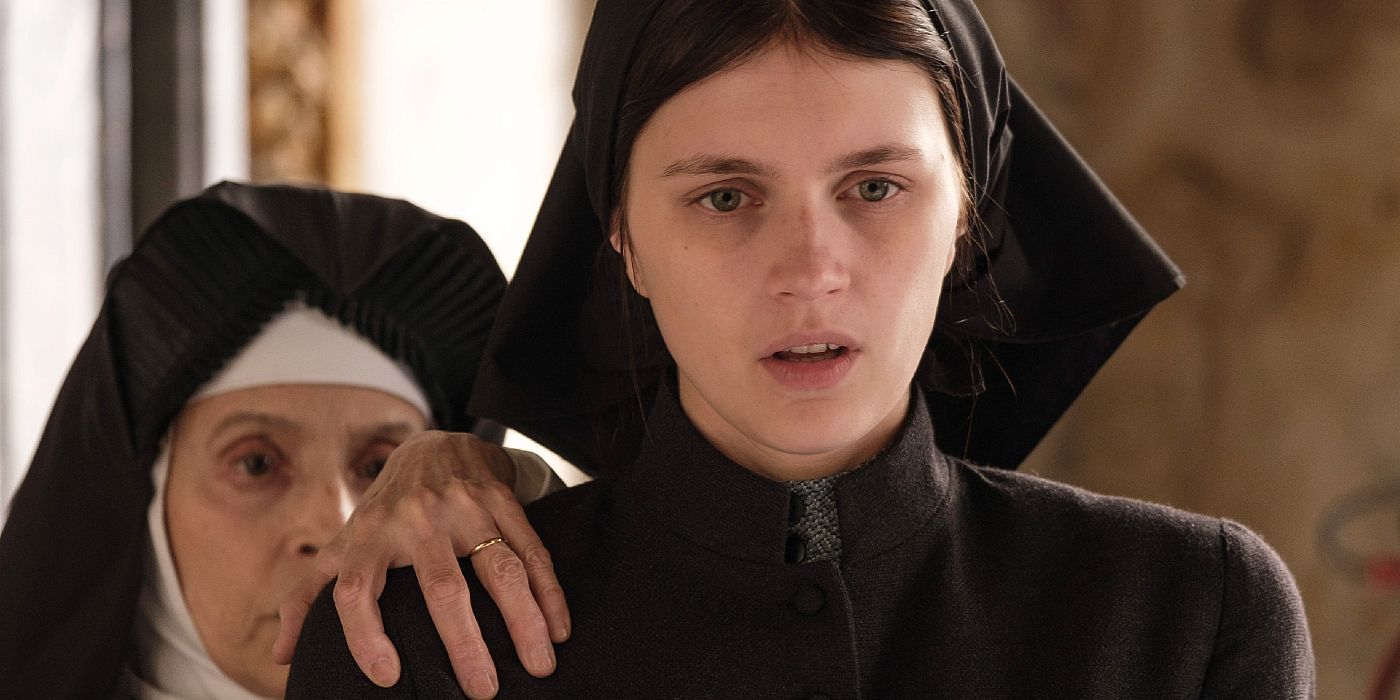
William Friedkin’s The Exorcist defined horror in the 1970s and launched a wave of spiritually-focused scary movies. However, the sequels and other films that followed haven’t fared well. By 2024, the Exorcist franchise had been struggling for years, weighed down by disappointing continuations, a largely-forgotten television series, and an uninspired remake. It felt like a relic of the Satanic Panic, with nothing new to offer audiences. So, when The First Omen came out in 2024, many people anticipated another uninspired attempt to profit from the familiar imagery of the number 666.
He describes the new prequel as harsh, stylish, and delightfully evil, and praises it for successfully reviving a previously inactive series. Flanagan’s enthusiastic support suggested that The First Omen was more innovative and daring than people expected.
Mike Flanagan Praised The First Omen, and It Matters
Richard Donner’s ‘The Omen’ really got under my skin. It wasn’t just jump scares; it was a deeply unsettling story about a man, Robert Thorn, who unknowingly adopts the Antichrist after a personal tragedy. What made it so effective wasn’t just the shocking moments, but the slow burn of dread as Thorn slowly pieces together the horrifying truth – that he’s ultimately going to have to kill his own child. It felt very much of its time, tapping into the anxieties of the 70s, but honestly, the premise is timelessly terrifying.
It’s no surprise Mike Flanagan was drawn to The First Omen – the film shares a lot of the same themes as his other work. Both it and his projects delve into the frightening clash between faith and logic, and question what happens when religion is used to excuse terrible acts.
Flanagan’s work often explores how people with strong religious beliefs can commit terrible acts, believing they’re doing God’s work. His new film, The First Omen, taps into that same unsettling idea. Instead of a simple supernatural threat, the horror stems from failures within the Church itself.
To truly understand how the film challenges expectations, it’s important to know the context. It’s set in Rome in 1971, a time of intense political turmoil known as the “Years of Lead,” and this historical backdrop adds a layer of realism to the horror.
The story centers on a young American woman traveling to Rome to become a nun at the Vizzardeli Orphanage. There, she finds a mentor in Cardinal Lawrence (Bill Nighy), a kind but distant figure. Instead of jump scares, the film builds horror through a growing sense of unease, much like the classic movie The Omen.
Margaret arrives at a convent and quickly becomes concerned about Carlita, a young girl who is being neglected and abused by the nuns. As unsettling and violent incidents start happening, Margaret begins to investigate. She initially believes she’s there to rescue Carlita, but soon discovers the orphanage is not a place of safety – it’s a horrifying operation where children are essentially raised as commodities.
As a fan, I was really excited to see how this movie connected to the original from 1976, and it didn’t disappoint! It finally revealed the truth about the main character’s mother and explained why the villains were so well-prepared. What I loved most was that it didn’t just rehash old stories or tick boxes – it felt like a real, suspenseful conspiracy thriller, which made everything much more engaging and kept me on the edge of my seat.
The core idea behind The Omen is incredibly rich and offers a lot of storytelling possibilities, but those possibilities haven’t been fully explored since the original film. Thankfully, director Arkasha Stevenson is taking the story in a more meaningful direction, tackling important themes beyond just the concept of a child of the devil. With careful development, this could eventually become a truly exceptional and expansive franchise.
When Mike Flanagan described the film as “vicious,” he highlighted how its true horror isn’t the demon itself, but the priest who believes summoning it is justified—even sacred—in an attempt to revitalize the church. The film brilliantly explores this idea, building upon the existing lore of The Omen and seamlessly connecting all the pieces.
The Creative Risks That Revived the Omen Franchise
A horror movie can severely limit its audience if it doesn’t follow a familiar formula. Traditionally, horror films rely on a simple conflict between good and evil, with the Church often presented as the strongest force against darkness. However, few films are willing to consider the unsettling idea that those in positions of religious authority might actually be the ones manipulating evil forces.
The First Omen works so well because it dares to be different, building upon the existing story instead of simply repeating it. The film delivers a surprising twist by showing the conspiracy actually comes from inside the Church. A group of extremists, worried about the growing secularism and political instability of the 1970s, decides to intentionally bring about the birth of the Antichrist, hoping to frighten people back to religion.
It’s chilling to realize how they operated – controlling people not through faith, but through fear. That seems to be the driving force behind everything they did, and honestly, it feels incredibly relevant today. What’s really disturbing is how this shifts the horror away from supernatural things and focuses it on corruption within the church itself. While chronologically it’s an early point in The Omen storyline, it feels like we’re seeing the absolute height of that corruption on display.
The film’s birthing scene remains particularly impactful. Director Arkasha Stevenson had to fight to include it, as it directly shows the brutal physical reality of the Church’s breeding practices. This use of body horror visually represents the corruption at the heart of the story. It’s a deliberately unflinching scene, lingering on the trauma of forced childbirth in a way that feels unusually bold for a major studio prequel.
The film successfully stood out in a year filled with horror movies about nuns. Released shortly after The First Omen, it could have easily been overlooked. However, its focus on genuinely frightening and thought-provoking religious horror helped it differentiate itself. While other films played for laughs, this movie took the franchise in a new, serious direction, exploring themes previously untouched. This bold approach worked, making the horror feel raw and impactful, and proving the series can still be genuinely scary even after five decades.
The First Omen Thrives on a Possession-Inspired Lead Performance
Much of the success of The First Omen rests on Nell Tiger Free’s strong performance. One reviewer particularly praised her, expressing hope for a sequel after seeing her work. Both director Mike Flanagan and fans of horror appreciate the way Free uses her physicality, reminiscent of classic, intense performances in the genre.
Many viewers drew comparisons between Free’s intense performance and Isabelle Adjani’s famous, unhinged scene in the 1981 film Possession. In a particularly striking moment, Free becomes almost animalistic, twisting her body and making primal, inhuman noises that felt more like a visceral release than traditional acting. Director Arkasha Stevenson revealed this was a deliberate nod to Possession, meant to portray the character’s inner struggle as a complete breakdown of physical control.
This new take on the story is effective because it’s a major departure for the franchise. Creator Stevenson explained that the original The Omen focused on a male diplomat and felt very masculine. This version, by centering on a young woman and her experience of having her body used for evil without her knowledge, offers a fresh and necessary direction for the story.
The actress had to portray a naive young woman entering religious life at the beginning of the story, then dramatically transform into a traumatized person fighting to regain control of her own body by the end. Because this character was entirely new, the actress felt she had plenty of freedom to explore and experiment with the role. This allowed her to develop a unique and powerful physical portrayal of trauma that felt both realistic and intense.
The movie didn’t perform strongly in theaters, and some reviewers felt it wasn’t needed. However, it found success on streaming platforms, proving that even older stories can become popular again with a fresh take. If more films are made, it will be because this one reminded audiences that The Omen still has potential.
Read More
- United Airlines can now kick passengers off flights and ban them for not using headphones
- Crimson Desert: Disconnected Truth Puzzle Guide
- All 9 Coalition Heroes In Invincible Season 4 & Their Powers
- Mewgenics vinyl limited editions now available to pre-order
- Assassin’s Creed Shadows will get upgraded PSSR support on PS5 Pro with Title Update 1.1.9 launching April 7
- Grok’s ‘Ask’ feature no longer free as X moves it behind paywall
- Grey’s Anatomy Season 23 Confirmed for 2026-2027 Broadcast Season
- Viral Letterboxd keychain lets cinephiles show off their favorite movies on the go
- Crimson Desert Guide – How to Pay Fines, Bounties & Debt
- All Golden Ball Locations in Yakuza Kiwami 3 & Dark Ties
2025-12-02 17:10