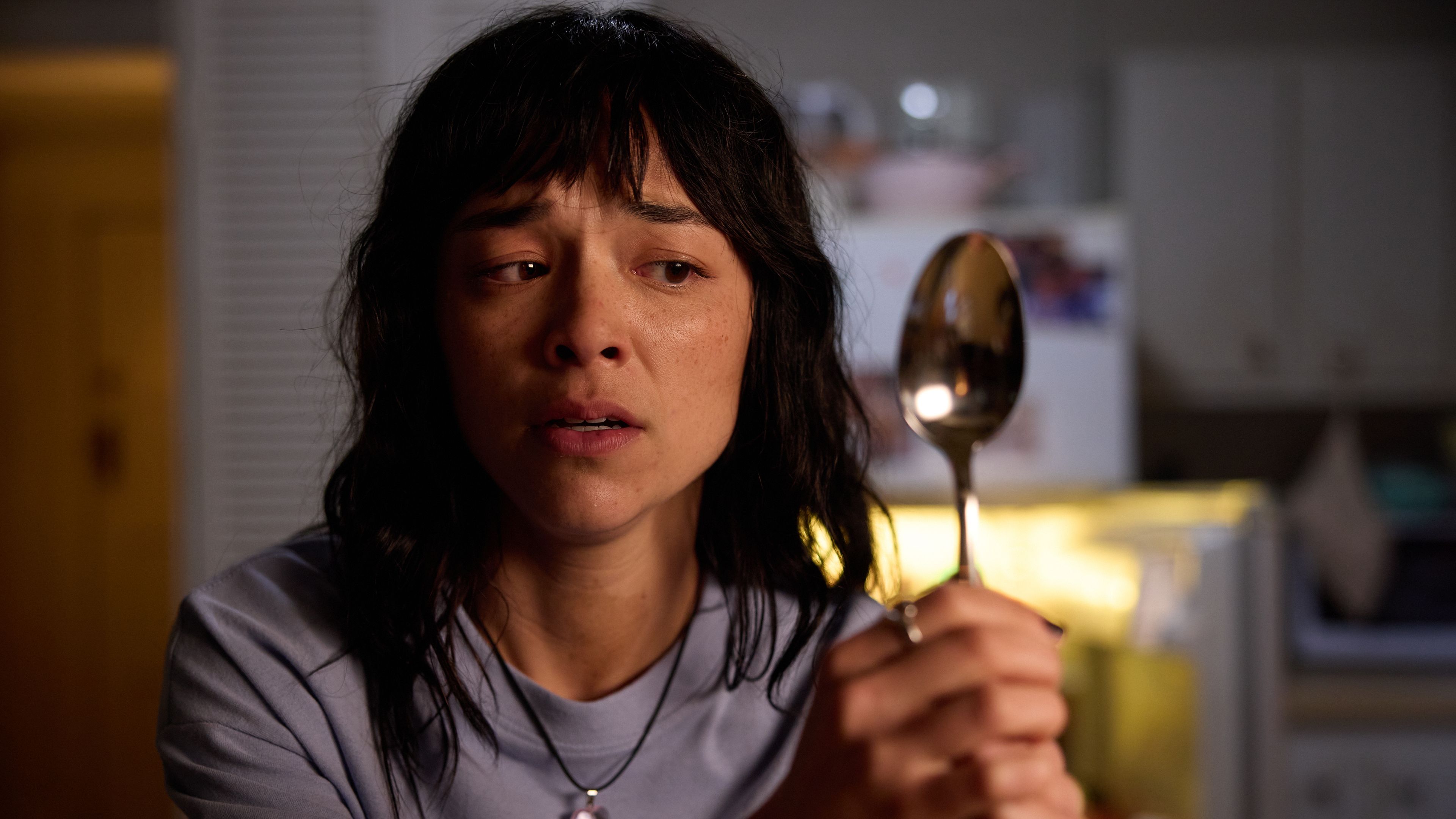
Midori Francis returns to horror in the new film Saccharine, which those involved describe as a complex and intriguing story.
Natalie Erika James returns to original storytelling with her new film, following her work on the Rosemary’s Baby prequel, Apartment 7A. The movie stars Francis as Hana, a young medical student who’s dealing with body image issues and hoping to start dating Alanya, a gym instructor.
Hana reconnects with a friend who once struggled with weight, and her friend introduces Hana to a diet pill that helped her lose a significant amount of weight. However, Hana’s investigation into the pill’s ingredients leads her to suspect they’re made from human remains. Driven to desperation, she starts consuming ashes from the cadavers she’s studying in school, and soon finds herself haunted by the spirit of the person whose remains she consumed, even as she begins to lose weight.
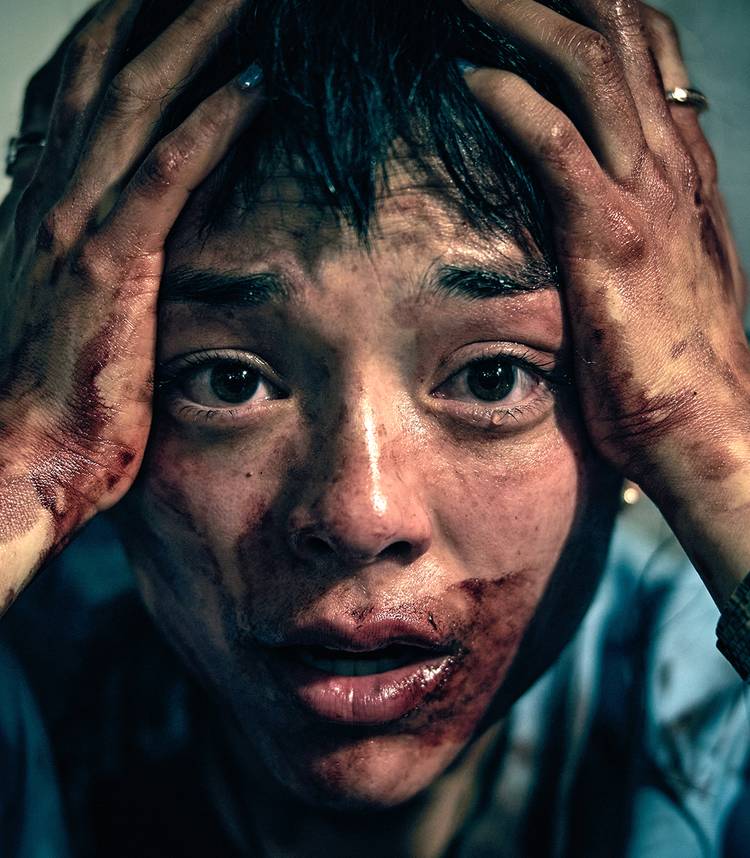
Joining Francis in Saccharine are Danielle Macdonald (from The Tourist) as Josie, Hana’s close friend, Madeleine Madden (The Wheel of Time) as Alanya, and Robert Taylor (Longmire) alongside Showko Showfukutei. The film premiered at the 2026 Sundance Film Festival and has received mostly positive reviews, with critics particularly praising James’s directing, its use of body horror, and its thoughtful exploration of body image and eating disorders.
To celebrate the release of the movie Saccharine, Grant Hermanns from ScreenRant spoke with the director Natalie Erika James and stars Midori Francis, Danielle Macdonald, and Madeleine Madden. James explained that the story had been developing in her mind for a long time – decades, in fact – though she didn’t begin writing it until after she finished her first feature film, Relic. She also discussed the challenge of blending the horror genre with the film’s sensitive and relevant themes.
The creator of the film explained that Saccharine draws heavily from personal experience, specifically reflecting their own parents and how they approached their bodies. Growing up witnessing such different perspectives, particularly around food, prompted them to use the script as a way to process confusing messages from their childhood. They ultimately found that a horror story, with moments of dark humor, was the most honest way to explore these themes.
When balancing the more fantastical parts of the story with the emotional core, I really focused on keeping the scenes truthful and relatable for the actors. For example, the scene with the candy bars – where a presence is pushing them towards the character – is meant to represent the overwhelming internal noise around food. We embraced the absurdity of that concept, but Midori’s performance was key to keeping the scene emotionally resonant and grounded, even with such a strange occurrence.
Thinking about how Francis worked to make Hana feel real, it reminded me how incredibly immersive making the film was for me. I was traveling to a new country for the first time, and I’d just wrapped another job, so I honestly felt completely untethered from my life back home. The people involved with Saccharine were wonderful, and they really inspired me to fully commit to Hana’s journey—both physically and emotionally—in a way I hadn’t experienced before.
While filming, Francis began to wonder if her character’s experiences were happening only in her mind. She ultimately praised the script, written by Nat, and the world of Saccharine, saying it felt like a reflection of herself. She described feeling challenged and deeply connected to the story, even at its most chaotic moments.
The Group Were All Keen To Let Saccharine’s Queerness Be Organic & Normalized
ScreenRant asked Danielle and Midori about their characters’ friendship, specifically how they portrayed the supportive yet evolving dynamic between them. The interviewer noted Josie’s positive attitude and desire to uplift her friend, but also the growing distance between them, and wanted to know what it was like to develop that relationship on set during filming.
I think it worked out really well. We actually started filming with the final scene, which meant we’d already established how things would end. That gave us more freedom to play around with the characters. We filmed a lot of fun, introductory scenes early on, which helped Midori and me get to know each other and develop our chemistry. We barely knew each other, but after just one day, we went on a spontaneous trip to 7-Eleven and took some silly photos in a photo booth.
Midori Francis described going to a Korean photo booth – you go inside, rent some props, and it’s a whole experience. She laughed, saying it was pretty wild.
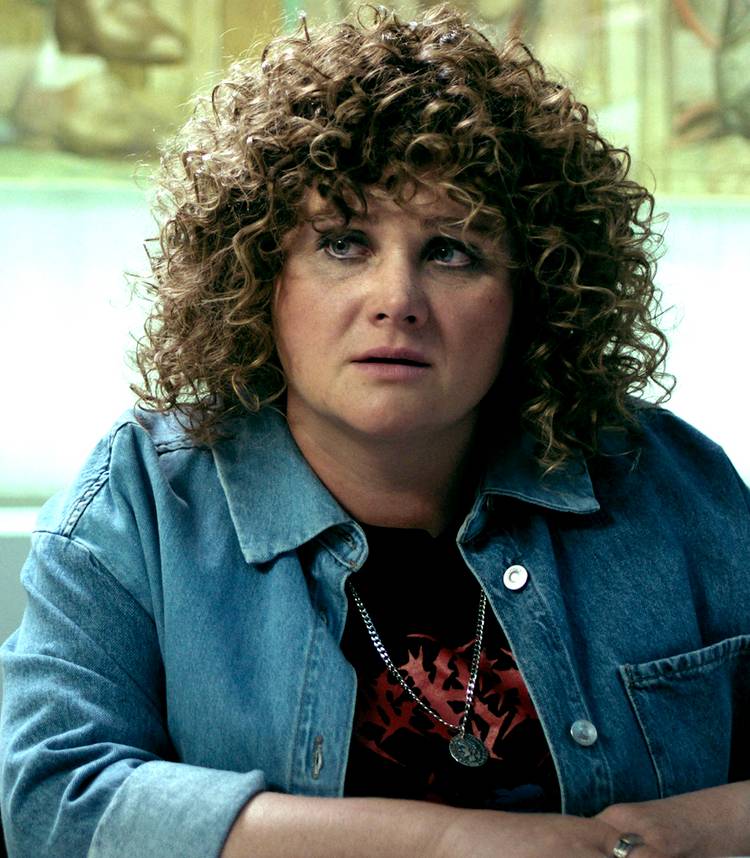
We had a great time getting to know each other, which I think really helped create the chemistry you see on screen. Josie genuinely cares about Hana and wants her to be happy, but she also realizes Hana needs to find her own way through her struggles. Josie is there to support her, and she is at the end, but you can’t force someone to feel or accept things. Everyone has their own path, and this is Hana’s journey. Josie has already navigated her own challenges and is now simply offering support.
I’d like to turn to Madeleine now. I really appreciated how Alanya started as simply the object of Hannah’s affection, but gradually revealed herself to be a much more caring and complex character, breaking away from the typical gym trainer stereotype. I’m curious to hear about your experience working with Natalie to uncover those hidden layers and bring out that sense of care as the movie progressed.
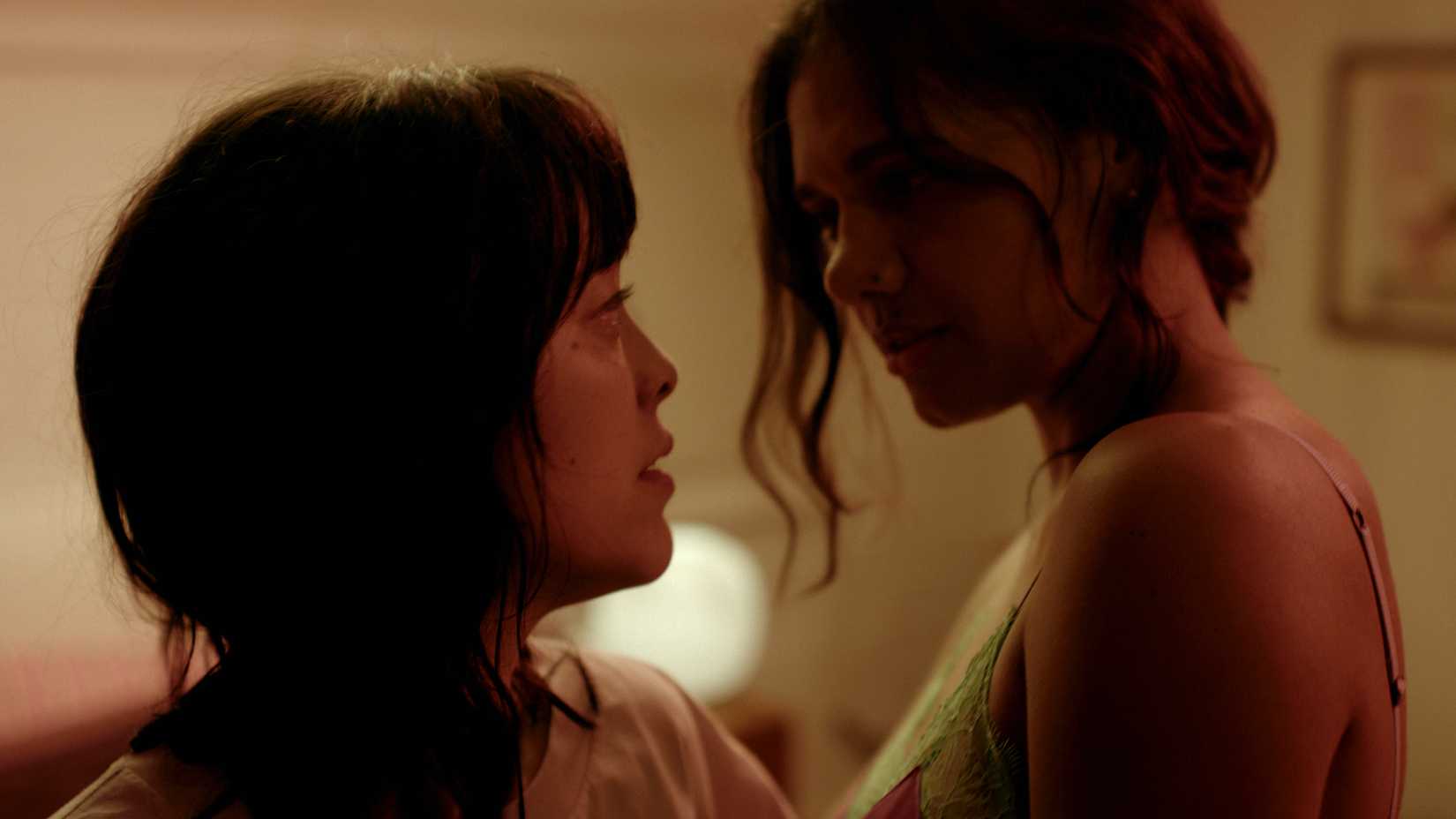
Madeleine Madden believes each character in the show deals with their own insecurities and personal history, representing different groups within society. Her character, Alanya, is a popular fitness and wellness influencer, and the show explores the often-hidden pressures and effects of that industry, particularly through social media. When Hana becomes fixated on Alanya, it signals that her desire for weight loss is rooted in deeper issues. As Hana pursues this goal, she begins to see herself in Alanya. Interestingly, this happens as Alanya grows increasingly concerned for Hana. There’s a parallel: the more Hana feels worthy of love and attention, the more she isolates herself, and the more alarmed those around her become about her eating disorder and distorted body image, which she keeps hidden.
I’m curious, Natalie, and then Midori, what was it like portraying queer relationships and friendships in this film? As someone who identifies as bi, I especially appreciated how authentically the movie showed those connections, and I’d love to hear about your experiences – and Danielle and Madeleine’s – bringing those relationships to life.
When getting ready for interviews, I started thinking about movies that really affected me as a teenager. One that stood out was ‘My Summer of Love,’ and I’ve noticed a lot of similarities. I saw it around age 14, and it really stuck with me, especially the central relationship. It’s about how we project our hopes and desires onto others – particularly someone we’re attracted to – and how they can feel like a reflection of ourselves. There’s a moment in the film where a character questions whether she wants to be with someone or be them, which highlights this blurry line. For me, that questioning of identity and desire was always a key part of the story. I think it’s very similar to what Hana goes through – she’s trying to figure out who she wants to be and who she sees in the other person.
We’d talked about this before, and all the actors felt similarly. The queerness in the film was essential – it wouldn’t be the same without it – but what I really loved was the strong bond and support between the three female characters. It was a difficult story, and working with such kind, intelligent women made the whole experience much easier. Josie, Alanya, and Hana were all unique and served different roles, and their queerness felt like a natural part of who they were, not a central conflict. I especially appreciated that Hana’s story didn’t focus on her parents rejecting her identity – it was a relief to see that normalcy. It felt refreshing to be in a world where queerness wasn’t a big issue, especially given everything else happening in the story. As a queer actor myself, that felt very real and natural, mirroring my own life more closely.
ScreenRant asked Natalie about the creation of the unsettling character, Big Bertha. They were curious about what it was like working with the actor who played her and the special effects team to bring such a memorable and haunting character to life.
The role of Bertha was actually played by two actors. As Bertha’s character changes and becomes more prominent while Hana’s fades – similar to the story of Dorian Gray – the prosthetics team needed to create four distinct stages of transformation. Using two actors seemed like the best way to achieve this. Throughout the film, Bertha doesn’t become monstrous because of a physical change in size, but because of Hana’s own perceptions and projections onto her. The initial design focused on portraying Bertha, who is actually Grace, as a fully human character. Towards the end, we wanted to show Bertha as someone who is loved and valued. Hana ultimately recognizes this, but through her own haunted perspective, Bertha appears increasingly degraded and loses her humanity. The design process was incredible, and we really tried to reflect that emotional arc visually.
Read More
- Netflix’s Little House On The Prairie Reboot: Release Date, Cast & Everything We Know
- Off Campus Season 1 Soundtrack Guide
- YouTuber arrested after viral AI bodycam videos spark real police complaints
- Silver Rate Forecast
- Prime Video’s New R-Rated Spy Thriller Is Officially No.1 On Streaming Despite Poor Reviews
- EUR ZAR PREDICTION
- Gold Rate Forecast
- Peaky Blinders: The Immortal Man’s Tommy Shelby Is a Better Father Than Michael Corleone
- Brent Oil Forecast
- Bulgakov’s Take: Koreans Bet the Farm on Chips, Crypto, and Chaos
2026-05-23 00:35