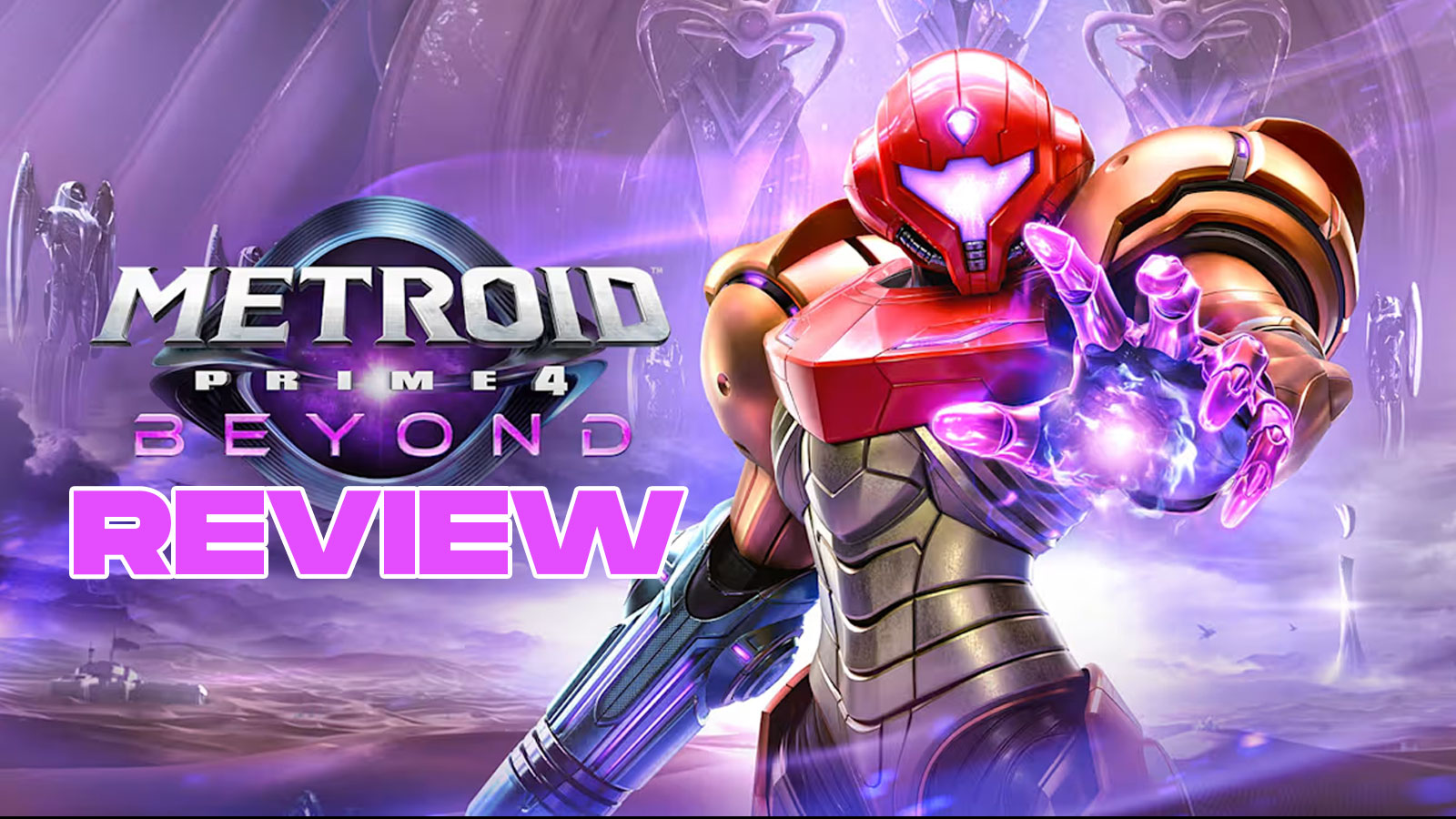
Our Metroid Prime 4 review explores Retro Studios’ long-awaited return to the beloved first-person shooter series, which hasn’t had a new main game in over 15 years. After a lengthy wait for Samus Aran’s next mission, we’ll find out if it lives up to the hype!
Metroid Prime 4 Beyond Review – What is Metroid Prime 4?
I’m so excited for Metroid Prime 4! It’s the latest game in the series, made by the amazing team at Retro Studios and published by Nintendo. The best part is, you can play it on either my Nintendo Switch or the newer model, which is awesome!
The game plays like the classic Prime titles, letting you experience the action entirely from Samus Aran’s perspective – you see the world through her eyes.
This game is the fourth installment in the Prime series, which began in 2002 with the original game for GameCube. The first sequel, Prime 2: Echoes, came out in 2004, followed by Prime 3: Corruption in 2007 for the Nintendo Wii. Corruption introduced motion controls to the series.
Gameplay – Metroid Prime 4 Beyond Review
The gameplay in Metroid Prime 4 Beyond is a standout feature. Fans of the Metroid Prime series will find it immediately familiar and enjoyable.
One of the best parts of this game is how it handles controls. I really liked using the dual-stick setup, which allows aiming with the right stick, just like in the Prime Remastered version. You can also switch to the classic free aim or lock-on systems from the original GameCube games. For even more accuracy, the game surprisingly lets you use your Joy-Cons as a mouse for aiming.
One of the best things about this game is how customizable the controls are. Seriously, you can remap any button on the controller, which is awesome. I didn’t really need to change much from the default setup myself, but it’s great knowing the option is there if you want to tailor everything to your playstyle.
The controls are a real highlight – they feel snappy, smooth, and intuitive. Even with all of Samus’s abilities, the developers made smart choices about how each button works. Once you learn the ropes, you can pull off complex moves quickly and seamlessly because the controls are so well-designed.
Metroid Prime 4 plays much like the older games: you’ll explore different environments, battle enemies, and scan your surroundings. It’s a bit more complex this time, often requiring specific upgrades to move forward. The game also encourages you to revisit areas you’ve already been to, letting you become even stronger and unlock new abilities.
The game also features puzzles that challenge you to use the abilities you’ve earned. You’ll need everything from Samus’s Morph Ball and Missiles to her new Psychic Powers to make your way through the story.
Samus’s latest psychic abilities are a fantastic new feature in the game. They allow her to do several things, and we’re going to discuss them now.
- Fire a slow-motion control beam from her arm-cannon (controllable/slows down time)
- Control Motes with your Psychic Glove to complete puzzles
- Interact with Lamorn technology
- Emit Psychic Motes from your Morph Ball for puzzles
There’s a lot more to discover, but this new gameplay addition was definitely my favorite. It fits perfectly with the existing game and makes it even better. I especially enjoyed using the new psychic powers to solve puzzles and defeat bosses – it was a lot of fun!
Naturally, many familiar features return in this game. Samus still uses her standard arm cannon, and she’ll gain access to different types of shots as she progresses, like Ice, Fire, and Electric beams. These three shots will be helpful throughout her adventure. While they aren’t quite as unique as some of her beams in older games, they’re still enjoyable to use.
Prime 4 has a lot of enjoyable features, but some of the new ideas weren’t implemented as effectively as they could have been.
Samus gets a cool motorbike called Vi-O-la on the planet Viewros. While the bike looks and handles well, it wasn’t used very effectively in the game. You can get it relatively early on by visiting the Volt Forge.
The vehicle handles well – Samus can accelerate, shoot, and turn sharply. However, I didn’t enjoy how this was implemented in the games themselves.
This vehicle is primarily found in Sol Valley, which is generally considered the least interesting part of the game. The valley is a large, empty desert that mainly serves to connect other areas. While there, you’ll need to gather Green Energy Crystals and search for Shrines.
I enjoy discovering the Shrines – they’re small areas where you can test out your new abilities and find cool rewards, so I didn’t mind finding them. However, hunting down Green Energy Crystals wasn’t enjoyable at all.
So, as I was playing, I started collecting these Crystals, and they unlocked stuff like upgrades for Samus, and even a radar to help me find more Crystals. Honestly, I already felt like I was doing a lot of running back and forth to get items, and this just felt like they were adding more stuff to do just to stretch out the game’s length. It wasn’t really adding to the fun, you know?
The most frustrating part is collecting the Crystals with Vi-O-la. Sometimes it’s easy to gather them all in one go, but other times you have to constantly turn around and collect the ones you missed.
Be cautious, as even tiny crystal fragments can be left behind. Always carefully inspect each crystal after breaking it. Remember that the Radar only detects crystals close by, and the map doesn’t reveal their exact locations.
Vi-O-la needs to reach a specific speed to destroy these targets. If you’re too slow, you’ll have to accelerate before you can take them out. Even using Vi-O-la’s speed boost, finding and destroying them feels like a chore.
I enjoyed exploring most of the game’s five areas, but Sol Valley wasn’t my favorite. I generally don’t care for desert levels in Nintendo games, and this one didn’t change my mind. Luckily, the area isn’t very large, so it was quick to get through.
Even with issues like the bike controls and the Sol Valley area, the game is genuinely enjoyable to play in each region. It captures the feel of the original Metroid Prime, which is what most fans were hoping for. When the game focuses on that classic style, it’s really fun – until some of the new characters show up.
Story – Metroid Prime 4 Beyond Review
The story of Metroid Prime 4 starts at a Federation research facility on the planet Tanamaar. The Federation recently discovered a mysterious artifact and is studying it there. Suddenly, Sylux – a pirate hunter from the previous game, Metroid Prime: Hunters – attacks the facility with a group of space pirates. Samus arrives to help, but during the attack, Sylux damages the artifact, and both he and Samus are transported to a new planet called Viewros.
While exploring Viewros, Samus discovers a holographic message from the long-gone Lamorn people. They ask for her help to save their history by finding five keys that will unlock the top of the Chronos Tower. That’s the core goal of the game, without revealing too much of the story.
As I’ve been playing, I’ve noticed something cool – the Galactic Federation troopers aren’t just nameless faces anymore! They actually have names and seem like real people with their own personalities. But, honestly, I’ve also seen a lot of talk online about the game’s dialogue, and some people haven’t been thrilled with how certain Federation characters – especially Myles MacKenzie – have been written.
While the Federation characters get a lot of criticism online, they weren’t actually terrible. However, I only really enjoyed Samus, Sylux, the Lamorn, and VUE-995. I appreciate that the series usually relies on atmosphere instead of lots of dialogue, but I think it could successfully include both.
The characters in Prime 3 felt much more believable, and their conversations sounded more natural than in Beyond. Fleet Admiral Castor Dane and the crew of the G.F.S. Olympus spoke in a way that felt more realistic. I also really enjoyed the distinctive personalities of the bounty hunters, like Rundas, Ghor, and Gandrayda.
The characters felt uneven. Myles MacKenzie’s lines sounded awkward, Reger Tokabi seemed to be forcing a cool image, and Nora was over the top. Ezra Duke was decent, and I liked that he cared about people. Ultimately, though, I connect more with characters like Dane and Adam from Dread.
The Prime series could work well with characters who talk to each other. However, like with Vi-O-la, it wasn’t done very well. If the supporting characters were better written and the conversations felt less like they were from the Marvel Cinematic Universe, there wouldn’t have been so much online criticism of MacKenzie and the other troopers.
The game featured too many characters who constantly accompanied Samus, reducing her moments of solitude. Ezra and Nora were with her for most of the Flare Pool area, Tokabi during the Ice Belt, and MacKenzie offered commentary throughout the whole game. Plus, everyone joined up when exploring the Great Mines.
There isn’t a single region where Samus travels alone, and that’s a shame.
However, VUE-995 was a genuinely good companion. This Galactic Federation Android appears later in the game, and its conversations reminded me of the style found in Metroid Prime 3. It was the only character that truly fit the franchise’s dark and immersive setting.
Even though the characters talk a lot, there’s still plenty to enjoy about the story. I especially liked learning about the Lamorn and their history through the game’s scanning feature, and I found the information about the lifeforms on Viewros fascinating.
The interactions between Samus and the Lamorn were well-placed and encouraged continued gameplay. The backstory of their world is quite sad, but it creates a compelling narrative for a Nintendo game.
I appreciated Sylux’s role in the story too. I don’t want to spoil anything, as his motivations are revealed later on, but I thought it was well done that the game explained why he has issues with both Samus and the Federation.
Okay, so Prime 4’s story? It’s good, but honestly, it’s probably my least favorite in the whole Metroid series. The side characters and how they fit into the game just didn’t feel as strong as in other Metroid games. That said, I actually really enjoyed the main storyline and thought the big bad was pretty awesome.
I also liked how the game ended. We won’t give away any details, but it felt really rewarding, particularly if you completed everything the game had to offer.
Graphics – Metroid Prime 4 Beyond Review
I played Metroid Prime 4 on the original Switch, so I know the graphics weren’t at their maximum potential. Keeping that in mind, I’ll be fairly lenient in my assessment, but I was still impressed with what I experienced.
The Switch 2 version definitely looks nicer, but Metroid Prime 4 still looks good on the original Switch. While it’s not as crisp, the game runs smoothly and maintains a consistent frame rate – it feels like around 60 frames per second, even if I don’t know the exact number.
Even though the game is older, Retro Studios did a fantastic job making its various worlds visually appealing. Locations like Volt Forge, with its electric storms, and Flare Pool, filled with lava, still look impressive on the original hardware. They also included neat touches, such as details appearing on Samus’ visor and arm cannon when she enters the Ice Belt.
While the Prime 4 areas are all visually appealing, they don’t feel particularly original. Flare Pool is reminiscent of Magmoor Cavern, Fury Green feels like a larger version of the Tallon Overworld, and Ice Belt has a lot in common with Phendrana Drifts.
It’s not that the game looks bad, but I think Retro Studios didn’t take enough risks. Previous games, like Prime 2, had a clever Light/Dark World mechanic that really changed how you played. Prime 3 offered a lot of different planets to visit, and even optional ships to explore. While Prime 4 had some variety, it didn’t feel particularly original or memorable.
Beyond those issues, Prime 4 really shines in several areas. I particularly loved Volt Forge. Its design was visually impressive and cleverly tied into the game’s backstory. It was a neat detail to discover the Lamorn were using 3D printing technology there.
The enemy characters look good, but there are a lot of similar Griever types and a few robots. I’d like to see more Snow Wolves, and Space Pirates are also pretty rare. Overall, while the designs are nice, you end up fighting the same handful of enemies repeatedly throughout the game, including in Sol Valley.
Samus gets a new suit that’s mostly red, with purple highlights to show her developing psychic powers. I think the new design looks great, and you’ll be using it for the majority of the game. You unlock it relatively early on, shortly after the initial tutorial.
Samus looks particularly great when played on the Vi-O-la system. Plus, the developers included the ‘Akira slide’ for some added visual excitement.
Metroid Prime 4 appears to be one of the most visually impressive games on the Nintendo Switch. The game boasts a pleasing art style, and its enemy, character, and boss designs are well done. However, the environments feel a bit familiar; the game relies heavily on the typical desert, ice, and fire-based worlds we’ve seen in many Nintendo games before. It feels like the developers didn’t take many risks with the level design.
Audio – Metroid Prime 4 Beyond Review
The music in Metroid Prime 4 is very reminiscent of earlier games, particularly the original Metroid Prime. It keeps the same blend of electronic and orchestral sci-fi sounds that fans already love. If you’ve played the remastered version of Prime 1, you’ll immediately notice the similarities when you start playing Prime 4.
While the music wasn’t bad, I didn’t find it particularly memorable this time. It just didn’t have the same lasting impact as some of the classic tracks, like the themes from Torvus Bog or the Chozo Ruins.
The soundtrack has a grand, orchestral feel, which some players will enjoy. However, I also think it could benefit from some more energetic, upbeat tracks to really get you pumped up while you discover different areas of the game.
Prime 4 really delivers when it comes to sound design – it sounds fantastic. I especially appreciate that the developers kept classic sounds for Samus’s Arm Cannon and scanner, bringing a familiar feel. The ambient sounds for things like Psychic Vision and the Save Room are also really well done.
Naturally, the iconic sounds and music of Metroid are back! It’s always a treat to discover a new item or ability and hear updated versions of those familiar unlock melodies.
Metroid Prime 4 features a good soundtrack that complements the gameplay, although it could have been even more impressive. Fortunately, the game excels with its immersive atmosphere and fantastic sound effects, more than compensating for any shortcomings in the music.
Verdict: Is Metroid Prime 4 Beyond Worth Your Time & Money?
If you’re a big fan of the Metroid Prime series, Metroid Prime 4 is worth checking out. It plays much like the original games, now with the updated controls from Metroid Prime Remastered. However, I think it’s the least strong game in the series due to a few problems.
While the gameplay itself is enjoyable, the game falls short in its overall presentation. Riding Vi-O-la is a fun mechanic, but it feels underutilized, simply serving as a way to collect green shards. The game features characters who don’t speak much, which is fine, but the writing quality isn’t as strong as in previous Metroid titles.
Although Metroid Prime 4 is the most visually impressive game in the series, it doesn’t quite feel like its own thing. Many of the areas in the game are too similar to locations we’ve seen before, which feels uninspired given that it’s set in a brand new world. While exploring and revisiting these areas is enjoyable, the developers could have been more original with their designs.
Even with its imperfections, it was really fun to play a Metroid Prime game again. Samus is still a joy to control, and the controls themselves are excellent, with plenty of customization options. The game features a good number of boss fights, the combat is satisfying, and exploring the world of Viewros by scanning is genuinely enjoyable.
I’d definitely suggest this game to anyone new to the Metroid series. It’s not quite as strong as previous installments, but it includes a helpful “Casual” mode that makes it much more accessible. This allows newcomers to easily jump in and have fun. Ultimately, it’s a good game, though not a groundbreaking one.
While it’s not flawless, getting a new Prime game was definitely worth the wait. I really hope Nintendo and Retro Studios continue making these games, and maybe even create an even more expansive and improved experience in the future.
Check out what other reviewers thought of the game!
Score: 7.5/10
Read More
- United Airlines can now kick passengers off flights and ban them for not using headphones
- Crimson Desert: Disconnected Truth Puzzle Guide
- How to Get to the Undercoast in Esoteric Ebb
- Katanire’s Yae Miko Cosplay: Genshin Impact Masterpiece
- All Golden Ball Locations in Yakuza Kiwami 3 & Dark Ties
- All Itzaland Animal Locations in Infinity Nikki
- Gold Rate Forecast
- Zendaya’s 4 Big 2026 Movies Could Beat Brie Larson’s Box 2019 Office Record
- Man breaks world record by eating at 28 Michelin-star restaurants in 24 hours
- I Was Horrified By Primate, But I Also Really Liked How Troy Kotsur’s Role As A Deaf Parent Factored In
2026-01-01 00:43