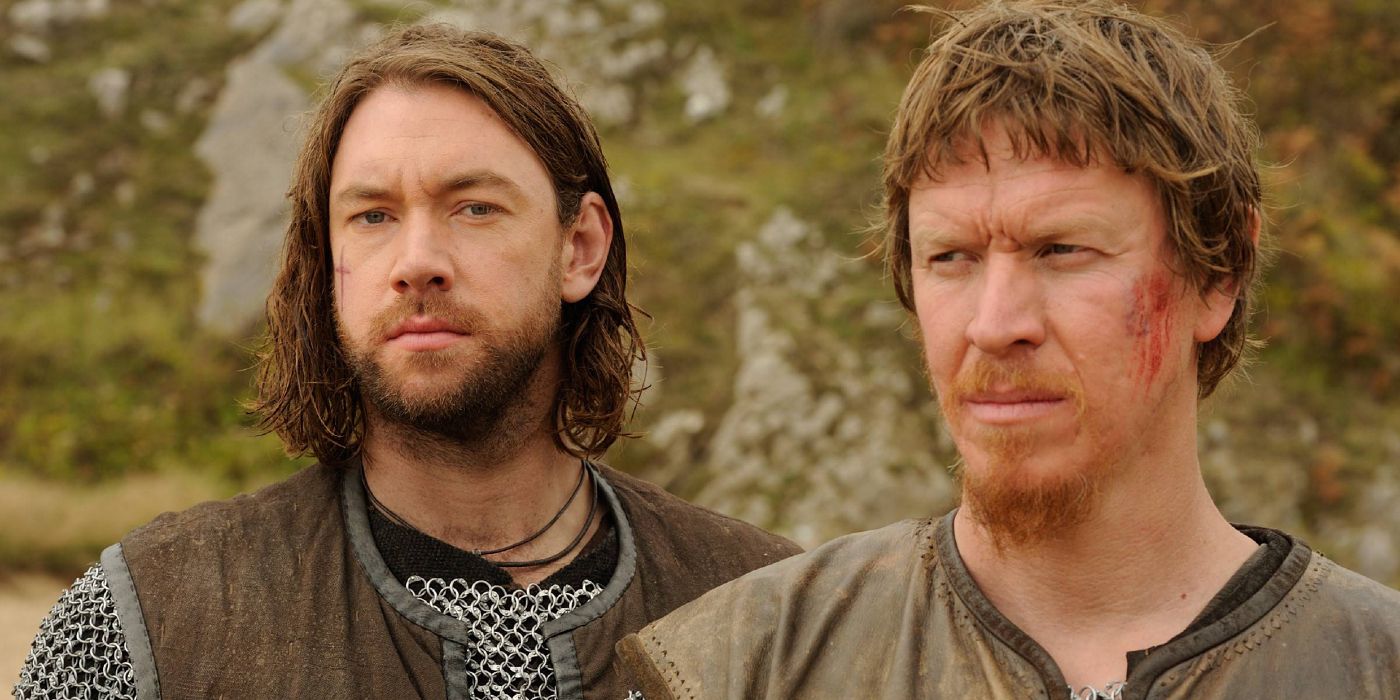
Kurt Sutter is one of the most distinctive television creators of the 21st century. He started his career writing for the acclaimed FX series, The Shield, a gritty drama about corrupt police officers. He then went on to create his most famous work, . This crime drama, set within the fascinating world of outlaw motorcycle clubs, saw Sutter personally write a remarkable 61 out of 92 episodes. He even appeared in the show as a recurring character named “Big” Otto Delaney. Following its success – becoming FX’s biggest hit – he went on to co-create the spin-off series, Mayans M.C.
Kurt Sutter’s projects haven’t fared well when he’s moved away from gritty biker dramas, and his new Western, The Abandons, now streaming on Netflix, is a big gamble for the platform. They’re hoping it will launch a franchise similar to Yellowstone. However, Sutter’s reputation for being challenging to collaborate with has resurfaced during the production of The Abandons, and it risks failing like his previous historical drama, The Bastard Executioner. It’s unfortunate, because The Bastard Executioner, a violent medieval series, had the potential to be a worthy successor to Sons of Anarchy if it had been allowed to develop.
Sutter Launched Into The Bastard Executioner While Still Working on Sons of Anarchy
It’s ironic that Kurt Sutter, who had always dreamed of creating a Western, ended up making The Bastard Executioner. He was still wrapping up the last season of Sons of Anarchy when Brian Grazer, a powerful producer, suggested a medieval drama focused on an executioner struggling with his conscience.
He hadn’t done any writing before, but Grazer’s suggestion sparked an idea. Soon, he’d developed a whole world and a compelling character, and he was determined to turn it into a show.
It’s no surprise that FX quickly approved another show idea from Sutter. They soon assembled a writing team to develop the story of Wilkin Brattle, a Welsh knight fighting for King Edward I of England in the 1300s. Betrayed and left for dead by the English baron Erik Ventris, Wilkin unexpectedly survives and vows to give up fighting, choosing instead to live a peaceful life as a farmer.
This peace doesn’t last. Ventris imposes harsh taxes on Brattle’s village, forcing Brattle to take up arms again and lead a raid on the tax collector. In retaliation, Ventris commits a horrific act, murdering the women and children of the village – including Brattle’s wife and their unborn child – and then burning everything to the ground.
After his village is burned, Brattle is overcome with grief and launches a fierce attack on Ventris, killing the Baron inside his castle. He then begins a relentless hunt for those responsible, intending to execute them himself. This quest unexpectedly leads him to take on the identity of Gawain Maddox, a royal executioner, forcing him to live a dangerous double life.
The show then explores a difficult question: was Brattle meant to become a professional killer, or was he simply a victim of bad luck and the situations he found himself in?
Newcomer Lee Jones Was Plucked From Obscurity to Play Brattle
After finishing Sons of Anarchy, Sutter immediately began working on The Bastard Executioner, filming the entire series in Wales. He gathered a talented cast, including well-known actors like Stephen Moyer and Matthew Rhys, who was also starring in FX’s The Americans at the time.
Katey Sagal, Sutter’s wife, returned for another role, and several well-known British personalities made brief appearances, including singer Ed Sheeran and podcaster Scroobius Pip. The most surprising casting choice was Lee Jones, an Australian stage actor who, at the time, had only appeared in one Australian animated TV show.
Sutter was extremely impressed by Jones’ audition and decided to entrust him with the entire show, even though he later confessed to feeling a little daunted by the scale of the production.
Ultimately, FX’s The Bastard Executioner only lasted a single season, but it wasn’t due to Lee Jones’ performance. Despite not consistently appearing in American films and TV shows since the series aired, Jones did a great job playing the troubled and conflicted character of Brattle. He fit the role physically, had a strong presence, and fully committed himself to the part with intensity and passion.
The show’s biggest issue was its pilot episode. At 80 minutes – or two hours with commercials – it was overly dark, violent, and confusing for viewers who were just looking for some light entertainment.
Interestingly, people often criticized Sutter’s motorcycle drama for being confusing and overly violent, much like the original Hamlet. However, Sutter didn’t add these elements until later seasons. By then, the show had gained a loyal following who were already invested in the characters and the show’s world, making them more accepting of the complex storylines he introduced.
The first episode of The Bastard Executioner was overly complicated and introduced too many ideas at once, which turned many viewers away from continuing the series.
If Audiences Had Stuck With The Bastard Executioner, They’d Have Been Rewarded
It’s a shame that The Bastard Executioner was canceled, because the show really found its footing. While the first episode was confusing, it eventually became a fascinating and complex story about how lies can destroy a person, and it had the potential to continue for many seasons. It certainly wasn’t afraid to show violence and adult content along the way.
Sutter was most fascinated by the internal conflict of his main character, torn between two identities. He wanted to explore what happens when someone constantly hides who they are and how far they’d go with a lie, even for what they believe is a good cause. This focus on identity and deception is what truly distinguished The Bastard Executioner and set it apart from the initial, and unfair, criticisms it received after the first episode.
Sutter, the creator of The Bastard Executioner, decided to end the show himself when he learned FX was planning to cancel it. He famously announced the cancellation with a full-page ad in The Hollywood Reporter, jokingly saying viewers weren’t enthusiastic enough – calling the response ‘meh’ – and declaring a dramatic end to the series.
It’s clear that Kurt Sutter is deeply affected by the negative response to his show, a project he and his team poured their hearts into. He’s always been an open and emotional person – sometimes to his detriment – which ultimately led to his firing from Mayans M.C. due to complaints about his harsh behavior. He was also removed from a Netflix project with just weeks of filming remaining, reportedly due to disagreements about the creative direction. When Sutter is unhappy, it’s usually very obvious.
Despite its flaws, it’s hard not to feel bad for Sutter regarding The Bastard Executioner. The show really could have been something great. It had a talented cast, excellent production quality, and each episode got better, even though the audience kept shrinking.
Sometimes, the show aimed a little too high, and it occasionally struggled to balance its romantic storyline with its more violent and revenge-driven plot. However, it’s better to be ambitious and fall short than to not try at all. The show had potential to develop these different aspects further in later seasons as it became more established and found its footing.
Ultimately, did The Bastard Executioner have the potential to be a really great show? Some viewers might disagree, but it’s not entirely impossible that it could have succeeded. With more time, it might have actually become something special.
The most disappointing part is that he previously had the chance to demonstrate his ability to create compelling, ongoing stories beyond the characters of Gemma, Jax, Clay, and the SAMCRO crew – the same thing he’s attempting to do again a decade later with The Abandons.
Read More
- United Airlines can now kick passengers off flights and ban them for not using headphones
- Crimson Desert: Disconnected Truth Puzzle Guide
- All 9 Coalition Heroes In Invincible Season 4 & Their Powers
- The Boys Season 5 Spoilers: Every Major Character Death If the Show Follows the Comics
- Mewgenics vinyl limited editions now available to pre-order
- Invincible Season 4 Episode 6 Release Date, Time, Where to Watch
- Grok’s ‘Ask’ feature no longer free as X moves it behind paywall
- Assassin’s Creed Shadows will get upgraded PSSR support on PS5 Pro with Title Update 1.1.9 launching April 7
- Grey’s Anatomy Season 23 Confirmed for 2026-2027 Broadcast Season
- Nintendo Officially Rewrites Princess Peach After 41 Years
2025-12-07 00:10