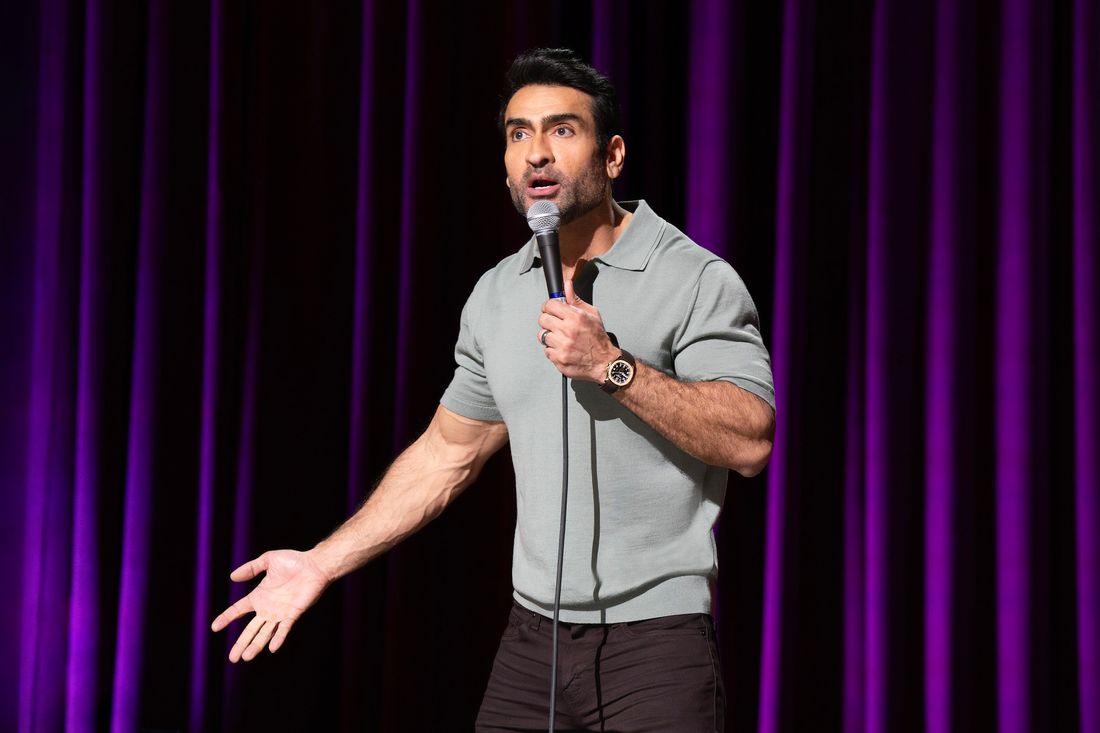
Most comedians can’t simply return to stand-up after a ten-year break, especially after the career Kumail Nanjiani has had. He went from being a working comedian to starring in a successful independent film, then built an acting career alongside his comedy. He even became known for his physical transformation for a Marvel movie, and then unexpectedly went viral for expressing disappointment when that movie wasn’t well-received. Now, he’s returning to stand-up to make sense of it all – a unique journey that likely only he could take. Given his story, there was good reason to believe his new Hulu special, Night Thoughts, would be interesting. However, being interesting doesn’t automatically mean it would be good.
It’s tricky when comedians talk about being famous. They have to avoid sounding like they’re just complaining about minor inconveniences, and they need to make sure people can still connect with them. Plus, lately it feels like being truly honest can be risky and even cost you opportunities. There’s also this fear that if you’ve been away from the stage for a while, people will think you’ve lost your edge or that your jokes are outdated. But that’s what makes Nanjiani’s new special, Night Thoughts, so exciting! He really leans into where he is in his career right now, and his show isn’t just about his own experiences – it’s about what’s been happening in the world and how we’ve all been affected.
Kumail Nanjiani’s new stand-up special, Night Thoughts, immediately faces the challenge of reminding audiences who he is as a comedian. He’s become well-known for roles outside of stand-up over the past few years, so he starts by re-establishing his comedic roots. Acknowledging his appearance – specifically, his noticeably larger muscles – is a common tactic for comedians, but for Nanjiani, it’s a way to address his transformation and signal the direction of the show. He playfully tells the audience not to be alarmed by his biceps, joking that they are purely for show.
The first half-hour of the special is filled with clever, relatable stories that subtly set up the themes Nanjiani explores later on, without revealing where he’s going with them. He starts with a funny story about getting high and going out to eat, which shows him as a charming and down-to-earth guy who asks silly questions, like where the sun sets. He then jokes about how annoying concert encores are (“Why do you need extra applause just to finish the show we already paid for?”) and shares a funny story about giving medicine to his elderly cat, Bagel. Finally, he hits his stride with the highlight of the special: a detailed and hilarious story about he and his wife, Emily Gordon, discovering people having a picnic by their pool.
Each part of this collection feels like a complete and enjoyable experience on its own. One story follows the ups and downs of owning an aging cat named Bagel, eventually leading to a funny debate about the name of his cat’s medicine, Easypill Giver Cat. (Nanjiani jokingly points out the cat receives the pills, she doesn’t give them!) He skillfully weaves together his anxious late-night thoughts, jumping between passionate outbursts and quick observations – like wondering if Big Bird is actually a chicken. Importantly, he subtly introduces ideas in one section, then revisits them later, building connections throughout. The cat story establishes him as both sensitive and a little bit irrational – how can the vet say Bagel is old? She’s obviously still a baby! His “night thoughts” reveal his habit of overthinking and second-guessing. A particularly clever moment comes before a story about a pool intruder, where he admits he has a pool, but tries to downplay it to appear relatable. He jokes, “Life is hard, unfair, and I have a pool. It’s small, but also huge, and honestly, it’s insecure about its size.”
This isn’t showy or self-congratulatory like a typical callback joke. When Nanjiani revisits moments like his Bagel persona or his physical transformation, it feels genuine, not like he’s trying to get a reaction. The show doesn’t reward the audience for picking up on subtle details; instead, these small moments are used to paint a picture of who Nanjiani is today – what his life looks like, both the good and the difficult. He shares his vulnerabilities: his anxieties, his sensitive side, his struggles with fame, his everyday life with his wife and aging cat, and even moments of embarrassment. It’s a personal self-portrait, honestly presented.
After carefully setting the stage, Nanjiani finally spends the last 20 minutes of his time addressing something that’s been on his mind throughout the conversation. He’s frustrated and genuinely hurt by how some recent experiences in his career have made him feel. He explains that while others are praised for transforming their bodies for superhero roles, his own physique became the target of jokes. He was also deeply disappointed by the negative reception to his Marvel film, Eternals. Most troubling of all, he’s struggling with the overwhelming amount of online commentary and how it’s changed his own view of things. He recalls someone asking if people were supposed to feel sorry for him after a viral story about him going to therapy following the release of Eternals. He clarifies, “No, but I get to feel sorry for me! This is my life, and these are my feelings!”
Kumail Nanjiani is leaning into the role of a flawed character. He’s acknowledging the harsh criticism he’s received online and, instead of appearing above it all, he’s choosing to respond and even have some fun with it. He sees this willingness to engage with negativity as a kind of honesty. He admits the criticism bothered him and that he had to process it, and he’s not pretending otherwise. He even playfully suggests his physical transformation was partly motivated by wanting to prove the critics wrong. He’s comfortable admitting he’s not perfect – he’s grateful for his success, but still faces everyday struggles, like a sick cat or, jokingly, his abs being a little too snug in his belt.
Even if his set ended earlier, Kumail Nanjiani’s Night Thoughts would be a strong and honest comeback – a declaration of self-acceptance despite personal struggles. It feels genuine, not boastful. But Nanjiani doesn’t stop there; he broadens his focus to acknowledge that many people have found the last decade challenging. He admits he could use therapy too, and recognizes his audience is likely still dealing with unresolved issues from the pandemic, like unexplained anger. He leads the audience in repeating, “Shit is fucked up, and you’re going to be okay,” which is a bit cheesy but surprisingly effective. The twist is that he’s actually asking them to reassure him that he’ll be alright. By that point, though, the show has earned its sincerity, and Nanjiani successfully reminds everyone of his core talent: he’s a comedian, first and foremost.
Read More
- United Airlines can now kick passengers off flights and ban them for not using headphones
- Crimson Desert: Disconnected Truth Puzzle Guide
- All 9 Coalition Heroes In Invincible Season 4 & Their Powers
- Grey’s Anatomy Season 23 Confirmed for 2026-2027 Broadcast Season
- Mewgenics vinyl limited editions now available to pre-order
- Viral Letterboxd keychain lets cinephiles show off their favorite movies on the go
- All Golden Ball Locations in Yakuza Kiwami 3 & Dark Ties
- Does Mark survive Invincible vs Conquest 2? Comics reveal fate after S4E5
- The Boys Season 5 Spoilers: Every Major Character Death If the Show Follows the Comics
- How to Get to the Undercoast in Esoteric Ebb
2025-12-19 19:56