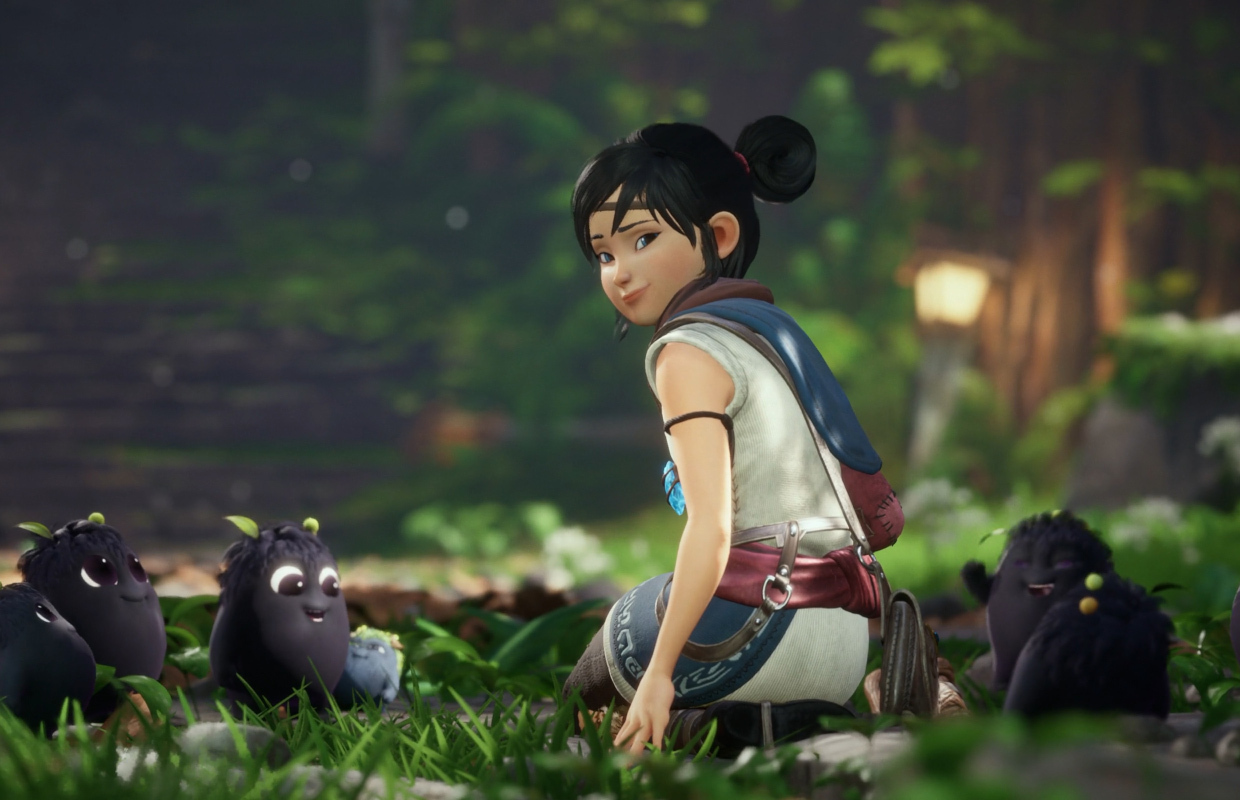
I got a hands-on look at the Nintendo Switch version of Kena: Bridge of Spirits at GDC earlier this month, and I didn’t expect to be writing a full review so soon. It turns out the version I played was actually the final release! This puts me in a tricky spot, because the most important part of this version is how well it performs, and that hasn’t changed since my first impressions two weeks ago.
Now that I’ve finished the game, I can share more detailed thoughts on its performance. For the most part, it consistently hits its target of 30 frames per second, though I did notice some slowdown in one specific area while playing in handheld mode. Unfortunately, there’s no option to switch to a smoother 60 FPS, so there’s still some noticeable delay when you press buttons. I got used to this delay, so it’s not a major problem, but it is there. I also haven’t had a chance to compare it to the PlayStation 5 or PC versions, so I don’t know if this issue is unique to this version of the game.
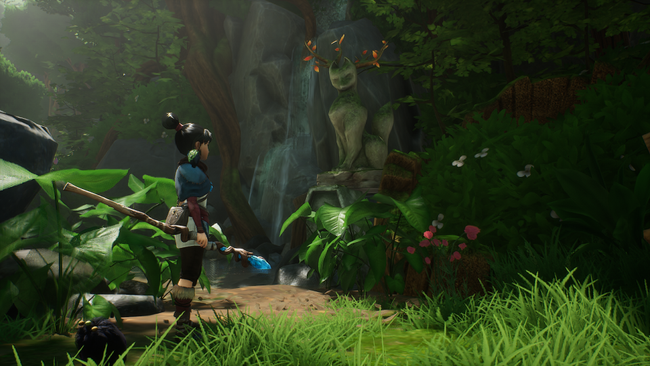
I initially tested the game in handheld mode and was pleased with the image quality. However, for the full experience, I mostly played it docked and connected to my 42-inch LG C5 TV. While the Switch 2 isn’t my preferred way to play this particular game, presentation is incredibly important to it. I wanted to see if the Switch 2 could deliver a good visual experience on a larger, home theater-style setup. Although I didn’t get to test the docked mode at the preview event, I was able to play it at a similar distance from a comparable 4K screen.
Kena: Bridge of Spirits looks fantastic on the Switch 2. While the game uses upscaling technology – likely a streamlined version of DLSS – the visual quality is impressive. Although fast movement can cause some slight blurring around edges, it doesn’t detract from the overall experience. It’s a beautiful game, and it doesn’t feel like a watered-down version compared to playing on more powerful consoles.
Now that we’ve covered everything else, let’s talk about how Kena actually plays. It feels like a classic 3D action-adventure game, similar to those from the PlayStation 2 era, but with a bit more detail and scope thanks to modern hardware. You play as Kena, a Spirit Guide, helping lost spirits find peace. The story is straightforward, but learning about the history of the village near the Mountain Shrine and how it connects to Kena’s journey is engaging and unfolds nicely over the game’s 10-12 hour length.
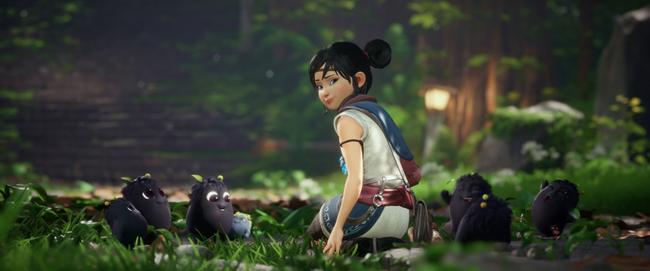
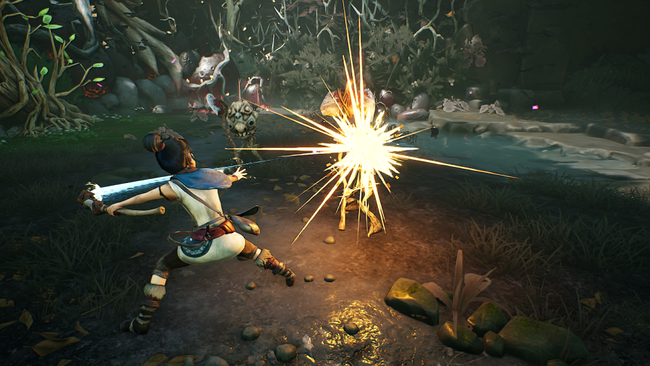
Kena’s gameplay follows a predictable pattern. You’ll find a new mask representing a troubled spirit, unlock a new ability tied to it, and then use that ability to solve puzzles and uncover memories from that spirit’s life. This leads to a battle where you free the spirit. The combat begins easily, and while it doesn’t get significantly more complex, it works well for the game’s overall length. You can choose between fast, quick attacks or slower, powerful swings that can be charged up for extra damage. Kena can block attacks with her shield, and perfectly timed blocks will deflect them completely. This deflection mechanic isn’t crucial at first, but it becomes increasingly important – and almost expected – as you progress.
Alongside Kena, you’ll control the Rot, small spirit creatures whose origins are a mystery. They’re essential for both fighting and solving puzzles. As you damage enemies, you’ll fill up a meter that lets you use the Rot’s special abilities. You can direct them to distract enemies, holding them still for a short time, or have them activate flowers to restore Kena’s health during combat. With upgrades, you can even empower your attacks with the Rot, creating powerful moves like a homing arrow or a devastating slam.
When not fighting, Kena can direct the Rot to help solve puzzles in a couple of different ways. Sometimes, the Rot will work together to move objects, similar to how you might play Pikmin. Other times, they’ll transform into a powerful water droplet to clear obstacles and purify corrupted areas, allowing Kena to progress. They can also partially cleanse corruption, setting things up for Kena to finish the job with her abilities. While the puzzles aren’t frustrating, they don’t get particularly challenging – usually involving moving objects to obvious locations, guiding the Rot through corrupted paths, or using Kena’s skills to interact with highlighted targets. This might make them sound simple, and to some extent they are. The puzzles work well enough and don’t hinder the gameplay, but they aren’t very engaging or memorable.
I hesitated to play Kena because I expected a beautiful game with okay, but not amazing, gameplay and story – and that’s largely what it delivered. There’s nothing wrong with that, but the RPG aspects are pretty simple, maybe justifying why we didn’t initially cover the game. Still, I enjoyed my time with it. It has some really strong moments, especially the final boss battles, and while the story wasn’t perfect, it was effective. If you’re curious about where the series might go, I recommend checking out Kena: Bridge of Spirits on Switch 2. Overall, it’s a well-done port of a good game.
7
Versions tested: Nintendo Switch 2
Read More
- United Airlines can now kick passengers off flights and ban them for not using headphones
- How to Complete Bloom of Tranquility Challenge in Infinity Nikki
- Gold Rate Forecast
- How to Solve the Glenbright Manor Puzzle in Crimson Desert
- 8 Actors Who Could Play Blackbeard In One Piece Live-Action Season 3
- All Itzaland Animal Locations in Infinity Nikki
- All Golden Ball Locations in Yakuza Kiwami 3 & Dark Ties
- A Dark Scream Theory Rewrites the Only Movie to Break the 2-Killer Rule
- DC Comics’ Absolute Two-Face and Absolute Penguin Confirmed
- All 10 Potential New Avengers Leaders in Doomsday, Ranked by Their Power
2026-03-26 17:27