Be warned: the following contains spoilers for the fourth season of the HBO series Industry, specifically up to and including the sixth episode, “Dear Henry,” which aired on February 15th.
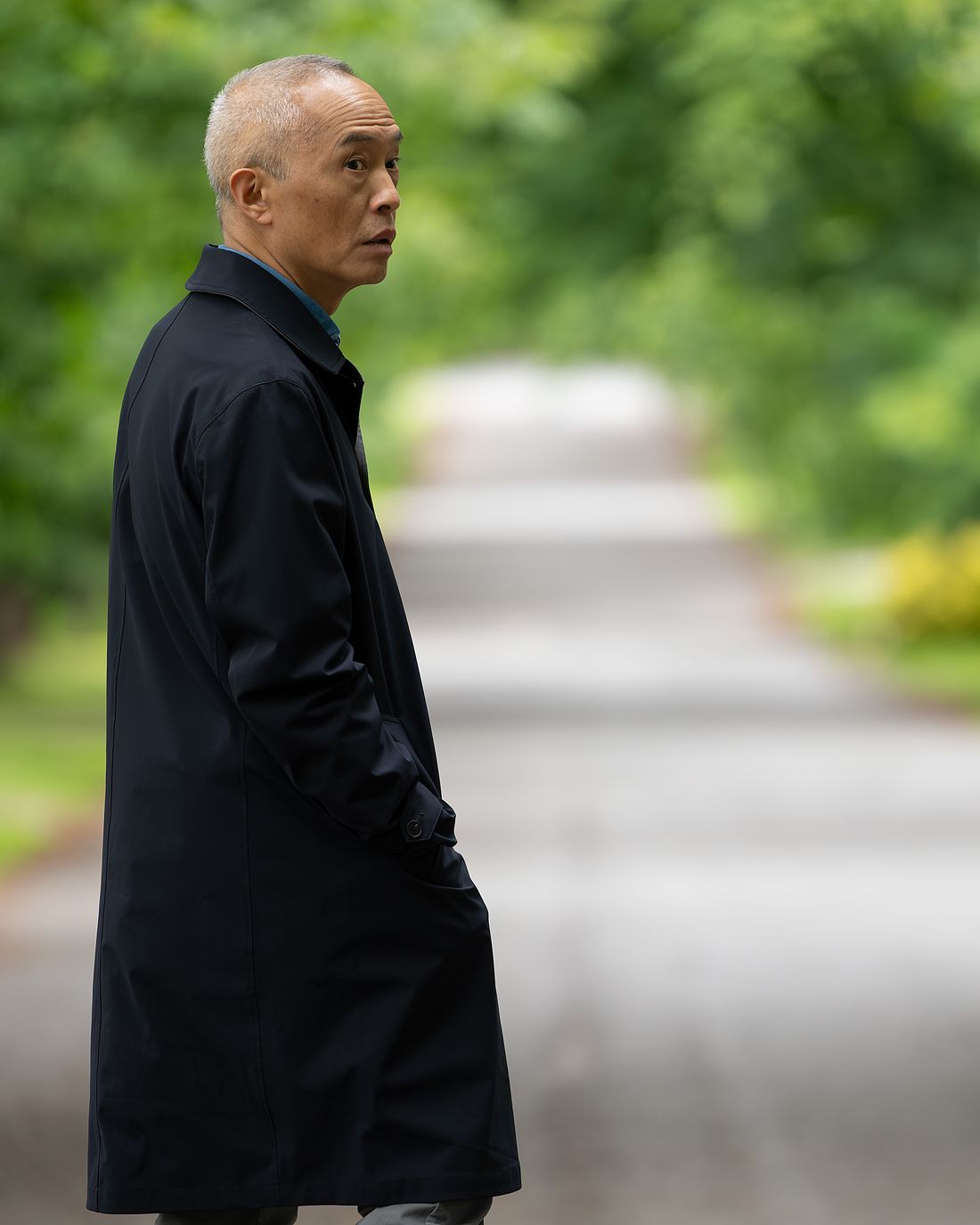
Eric Tao has left the high-stakes world of finance. Once a managing director at Pierpoint, he had a complex relationship with Harper Stern, recognizing a bit of himself in her. He initially mentored her, then tried to undermine her, and ultimately lost his job partly due to her actions. Surprisingly, he later went into business with her, forming the fund SternTao. Played by Ken Leung, Eric is a fascinating character – both manipulative and surprisingly sympathetic. He’s a man constantly striving for more, but unsure of what he’s actually seeking. He appears as a wise mentor, but is deeply lonely, and also a product of the very capitalist system he once strongly believed in. While climbing the corporate ladder, Eric damaged the lives of others, only to discover that reaching the top didn’t bring him fulfillment. He initially focuses solely on winning, but eventually craves recognition – both as an individual and as a partner – and this desire ultimately leads to his undoing.
Eric’s departure from the company is messy and upsetting, fitting with the show’s usual tone. He’s always been attracted to younger women, a habit he awkwardly jokes about with Harper. In the latest episode, he’s blackmailed by Whitney from Tender after having an affair with Dolly Bird, who turns out to be much younger than he believed – closer in age to his own daughter, Lily, with whom he struggles to connect. While SternTao deals a blow to Tender’s finances, Eric decides to keep the blackmail secret once he understands what Whitney knows. Instead, he unexpectedly signs over his share of SternTao to Harper, leading to a heartbreaking scene. Eric desperately pleads with Harper not to remember him this way, while Harper tearfully admits she’ll always associate him with this abandonment. It’s the most emotionally devastating split the show has ever portrayed.
Ken Leung has been a key part of the Industry series since it started, but he doesn’t know if he’ll return for a possible fifth season. He hasn’t been told anything yet. Currently, he’s viewing his character Eric’s departure as permanent, and feels it concludes a season where he based his performance on a single idea: Eric was asking for help.
I learned about Eric’s storyline – the blackmail, the company transfer to Harper, and his eventual departure – as the scripts were released. This is pretty typical for how the show works. I had a general idea of the season’s direction from the start. We discussed how to move the story forward after wrapping things up at the end of season three, and they mentioned potentially involving my family and kids, something we hadn’t really explored before. Eric hasn’t really been shown as a father. For me, season four was about his relationship with Lily. While I didn’t know the specifics of how the SternTao situation would unfold, I understood Eric’s motivations for partnering with Harper – it was all about his daughter.
Did you propose focusing on his family life? It felt like the natural direction to take, considering everything he’s built in his career is falling apart. His act of throwing the bat at the end of season three was a great way to show him breaking free from something he’d dedicated his life to – reaching the peak of his career only to find it wasn’t fulfilling. The next logical question is: how does this affect him outside of work? Everyone has a family, even if it’s complicated, and he has children to consider.
Let’s talk about rereading “Dear Henry” and your thoughts. What really struck me was the character Dolly, the woman Eric meets at the hotel. It didn’t feel like just a casual encounter, and I wanted to explore that more. Eric has always been someone who creates his own world, but in season four, that changes. He starts questioning what’s real and trying to understand his daughter, even though he doesn’t have a direct connection with her. He hopes to learn about her through Harper. I think with Dolly, he’s genuinely looking for a connection, unaware of her motivations. He’s drawn to her because she’s young and accessible, and he’s desperate to figure out how to connect with young women in general, hoping it will help him reach his daughter. He’s trying to understand how to communicate with her, and he’s worried that she’s starting to exhibit the same negative traits as him.
There was a scene we didn’t end up using, right after the first phone call. In it, Harper suggests they do something together, then calls his daughter and discovers she’s in trouble. He receives two urgent calls in a row, which jolts him out of his withdrawn, bored existence in the retirement community. This creates an emergency situation. I initially interpreted the subsequent betrayal as something deeply personal, and that shaped my approach to Harper’s relationship with Dolly. Although we don’t explore that angle in the final show, that was my starting point for the character and their connection.
We never actually saw how they first met. Originally, there was a scene planned where they met at a bar and another outside a bedroom, but those scenes were ultimately cut from the final version of the show.
This season, the show really delves into themes of pornography and the idea that sex is uniquely fulfilling. I was curious if there were conversations with Konrad and Mickey about how Eric’s sexuality was portrayed. Generally, we don’t have broad discussions. When I have questions, they’re very focused. Konrad and Mickey are always available, which is great, but overthinking things doesn’t help my performance. I find it more effective to react to Eric’s choices rather than try to control them. He’s a complex character, developed over four seasons and six years, and I get better results by following his lead. I’ve learned to trust my instincts about what feels authentic for him. Both Mickey and Konrad have observed that Industry seems to have a life of its own, emerging from the combined efforts of everyone involved rather than a strict plan. For me, playing Eric isn’t about having a pre-determined approach; it’s about letting his past experiences and my portrayal of him guide the performance. I try to understand him through his actions, rather than trying to define him.
Someone asked what Eric said this season. He’s really struggling and doesn’t understand what’s wrong, or how to fix it – he repeatedly asked for help. This is a huge change for him, because he used to be the one giving help, the one in control. But everything fell apart, he lost it all, and he kind of checked out. He became distant from his daughters, even though he finally had time to be with them. He’s now surrounded by people who remind him of someone from his past, someone who’s gone, because that’s all he’s ever known. He always believed working hard would lead to a relaxing life, but now he’s realized that’s not enough. He’s seeing everyone around him struggle, including himself, and he’s desperate for help.
There’s a powerful scene in “Habseligkeiten” where your character and Kenny are in an elevator. You apologize for firing him from Pierpoint, and he responds with, “It’s not the worst thing anyone’s ever done.” Your expression—a mix of pain, regret, and sadness—made me wonder if he was thinking about Adler. It’s clear he’s deeply haunted by what happened, and we even filmed a scene where Adler’s ghost appears to him.
I really enjoyed playing the scene with a *Hamletlike quality. It felt like a completely different episode – which is fitting, given the unpredictable nature of the show. The scene opens with the character waking up and noticing a breeze through the curtains. He checks on his wife and daughter, who are visiting, and has a tender moment, reminiscing about the past or what could have been. As he returns to the couch, he spots a figure in a suit on the terrace, hidden by the swaying curtains. When he approaches, the figure vanishes, leaving him questioning what he saw – was it a trick of the light or something else? This moment pushes him to try and understand what’s real, prompting him to call Dolly. The final version cuts directly from a brief glimpse of his family to the phone call, but originally, there was a visit from Adler’s ghost. So, absolutely, I believe he’s tormented by his past actions and what happened. He isn’t trying to escape his family; he’s trying to escape the weight of his history with Bill.
That really resonates with me. I’m curious about Eric’s motivations in a few scenes from “Dear Henry,” particularly the confrontation with Whitney on CNN after he discovers he’s being blackmailed. He pushes Harper to go on CNN and debate Whitney about Tender, and I interpreted that as his final, desperate attempt to protect everything. How did you approach Eric’s decision-making in that moment?
I hadn’t quite framed it that way myself, but that feels accurate. That scene was my only one with Max all season, and he was fantastic during rehearsals. Before the debate, Eric whispers a quote from The Art of War to Whitney, which I felt was a classic Eric move – him gathering all his resources for one last, heroic effort to save what matters most. It was a really powerful scene, and I was thrilled to be a part of it.
I talked to Charlie Heaton, and he explained that the show Industry is filmed in a very spontaneous, almost improvised way. They prioritize the actors’ natural reactions over strict continuity. I thought about what energy I wanted to bring to a specific scene, beyond just playing the character Eric. It was a formal setting, and I didn’t want Eric to seem comfortable or experienced with talk shows. I imagined him thinking, ‘What is this? It’s like a modern-day gladiator arena.’ That scene felt different from the more improvisational moments Charlie described. Sometimes, while filming, you stumble onto something unexpected, and the director keeps the camera rolling to see what happens. It’s exciting because you’re reacting authentically in the moment, and you’re trying to capture something real, something beyond just the plot. That happens throughout the show, but not as much in the CNN scene, which was very structured and required a specific kind of behavior.
Looking back, aside from what viewers saw on CNN, when do you think the biggest turning point of the season happened for you? It was definitely the scene where I was eating and Harper walked in. We had a really intense conversation where she slapped me and asked what I thought our relationship was. I responded by questioning if I was just a business partner to her, and she challenged me, asking what else I thought it could be. Given how things had been going between us, that question really shocked me. She immediately walked out, and it hit me hard – I realized things had changed. It felt like I was no longer in control, but rather things were happening to me. I actually had an unexpected emotional breakdown after she left. Another difficult moment was when I officially signed over the business to her – that also led to a breakdown I hadn’t anticipated.
It’s fascinating how much happens behind the scenes that doesn’t actually make it into the show. It makes me wonder where the line is between a character’s journey and what we ultimately see on screen. Sometimes, powerful experiences don’t quite fit, either because they’re too intense or because we haven’t developed the character enough to fully understand it. But as an actor, you still go through those moments, and that stays with you, regardless of whether it’s shown. It’s like there’s the official show, and then a whole other layer of experience happening alongside it. I think that depth is what creates a feeling, even if it’s not explicitly visible. I love that about this show – I don’t think I could have this conversation about any other one. It feels uniquely part of what makes Industry special.
Watching Eric officially end the partnership was really moving for me. I found myself wondering what he was going through after we stopped filming. He was clearly devastated, to the point where he asked everyone, even his lawyer, to leave him alone. Myha’la was really supportive and checked in on me throughout the following week, making sure I was doing alright. (Laughs)
That’s a great question! It’s hard to put into words how I approach a scene. I don’t really prepare for the scene itself, but I focus on being as open and ready as possible. Sometimes that’s easy, other times it takes effort. It’s something you can only prepare for in the moment – you can’t plan for it days or even hours ahead of time. That’s what’s so special about acting; it can’t really be taught. It’s about making a choice: Do I fully commit to this moment? And it’s not a mental decision, but a physical one. It’s amazing to be in a profession where that’s even an option.
You mentioned Eric views Harper as a younger version of himself, and that made me think – was Eric saying goodbye to a part of his past in that scene? Did you and Myha’la discuss that beforehand? We hadn’t, actually. We were being really considerate of each other leading up to it. Myha’la and I have a strong connection as actors – I know when it’s okay to be lighthearted, but that scene felt very delicate.
Someone asked if we filmed the scene many times. I didn’t, actually, because my face was swollen after that particular take, and I couldn’t keep repeating it. I do remember being given a choice about whose close-up would be shot first – mine or the other actor’s – and I asked to go first. I wanted to make a decision immediately when I was ready, rather than having to think about it later. I was happy I could do that.
Was that the final scene you filmed? I don’t believe so. The last thing we shot was a scene with me and Dolly in the bedroom – it’s funny because that same day we had the table read for the last episodes, and I wasn’t even in them! Everyone was on set. Right after the scene with Dolly, I was feeling a little self-conscious about something I was wearing under my clothes. I opened the door, ready to finish for the day, and there they all were – absolutely everyone! It was a really special and beautiful moment with the whole group.
The scene where I walk away was near the end of filming. Many scenes with the actress playing Serrana were cut, which I think is a shame because she’s fantastic, and I wish more people could have seen her work. Those deleted scenes actually provided important context for what did make it into the show. Right before I walk away, I notice Serrana is wearing a nose ring, and it unexpectedly triggers a reaction in me because it reminds me of Harper. I instantly regret getting upset, so I tell my wife I’m going to buy cigarettes just to get out of the situation. My daughter then runs off, and that’s when I turn and walk away – that’s the scene.
Were you surprised to hear Joni Mitchell’s “Both Sides Now” during that scene? Did you have any say in the music choice? I actually expected it to be silent. I had imagined a quiet, long walk – and we didn’t even film the entire thing. We did several takes, and I was asked to walk slowly and in a straight line. It was a really peaceful and thoughtful experience. The camera was always positioned behind him. The focus wasn’t on his emotions or destination; the story was simply about him walking away.
I have to ask if your character is going to die. I’m not sure, but I definitely feel like something is finishing. The way it happens makes that very clear.
Understanding what happened before their walk is important, especially Eric’s attempts to understand Lily and connect with her. He struggles with this – sometimes he makes progress, sometimes he doesn’t. The realization of what Whitney knows about him happens while Lily is speaking to him.
Okay, so she just laid her heart on the line – a clear ‘I love you’ moment. And honestly, it’s exactly what he’s been waiting for! It felt like a huge opportunity for connection, a chance to really see her, to meet her gaze when she’s being that vulnerable. But… he completely missed it. He wasn’t even present. It was frustrating to watch, honestly. A real missed connection.
In “Eyes Without a Face,” there’s a scene where Harper argues that we shouldn’t limit ourselves with ethics when our opponents don’t play by the rules. She worries we’ll lose if we don’t fight as ruthlessly as they do, and it made me think about Eric’s own moral compass at that point.
Watching Harper, I realized she’s becoming a lot like I used to be. It’s almost as if I unintentionally taught her my old ways, especially now when I’m actively trying to change and become a better father. I can’t really fault her, because I was the one who led by example. Eric, on the other hand, would be proud and take full responsibility for it. It was a revealing moment for him.
Does his sense of right and wrong evolve throughout the show? Definitely. He’s often surprised by how his actions impact others, realizing he didn’t intend certain consequences. It’s like he’s constantly recalibrating his intentions. This season, he starts to really reflect on his own behavior and its effects, something he never did before. He’s always been aware of the moral complexities of succeeding as a person of color in a competitive industry, and he grew up absorbing racism just to get where he is. He sees his morality as something that changes and adapts over time, rather than being fixed.
You mentioned Eric is really affected by Adler and the consequences of his choices. That made me think about his future, especially after Harper said, “Without an economic function, society buries you before you’re dead.” It got me wondering if, as an actor, you ever consider what happens to your character after the show ends?
I’m inspired by the quote, “Walker, there is no path. The path is made by walking.” That’s how I see Eric’s journey unfolding – his next actions will reveal his path. I focus on listening to the character and letting him guide me, rather than deciding what he’ll do. Trying to predict his future feels wrong. I do know he struggles with addiction, and he shares that with Harper – they both seem to crave a certain kind of excitement. I hope Eric realizes this about himself, but it’s also possible he won’t.
If this was to be the end of your time on the show, what’s the most important thing you’d say about playing Eric Tao? I never expected to have the chance to play a character with so much freedom to explore and improvise. It’s a role I’ll never forget, and I don’t see it as something that’s simply in the past. A part of Eric will always stay with me. It’s more than just gratitude; he’s become a part of who I am, and I feel incredibly fortunate. Roles like this don’t come along often in an actor’s career.
Read More
- United Airlines can now kick passengers off flights and ban them for not using headphones
- Katanire’s Yae Miko Cosplay: Genshin Impact Masterpiece
- How to Complete Bloom of Tranquility Challenge in Infinity Nikki
- All Itzaland Animal Locations in Infinity Nikki
- How to Get to the Undercoast in Esoteric Ebb
- Gold Rate Forecast
- A Dark Scream Theory Rewrites the Only Movie to Break the 2-Killer Rule
- Australia’s New Crypto Law: Can They Really Catch the Bad Guys? 😂
- Fire Force Season 3 Part 2 Episode 24 Release Date, Time, Where to Watch
- All Golden Ball Locations in Yakuza Kiwami 3 & Dark Ties
2026-02-16 08:58